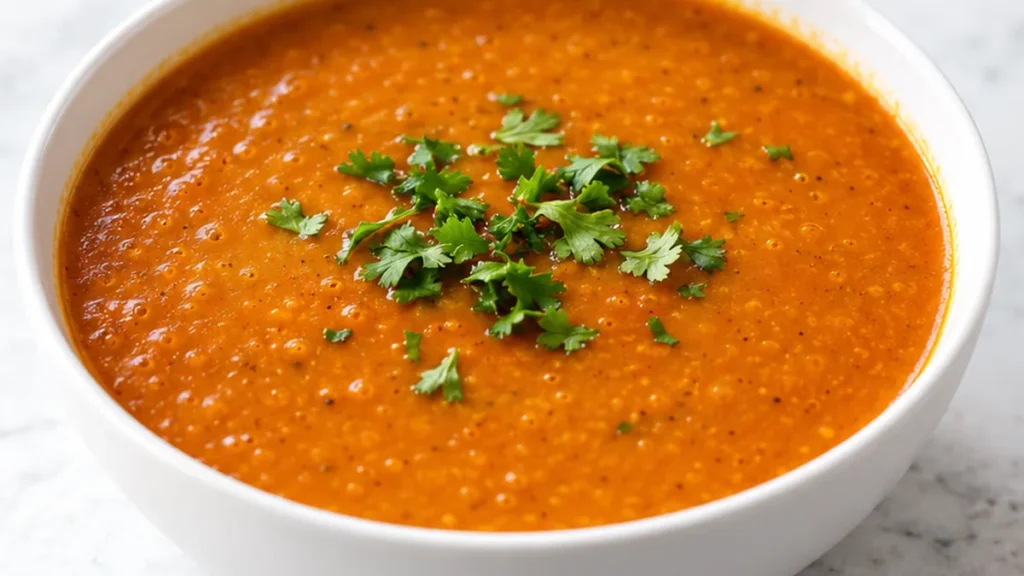
Citrus lentil soup is a nutritious dish that combines lentils with fresh citrus flavors. This recipe is straightforward and perfect for a healthy meal.
Key takeaways
- Citrus enhances flavor balance by providing acidity that brightens the soup.
- Monitor lentil cooking time to avoid mushiness and ensure texture.
- Ingredient swaps can significantly alter flavor profiles; choose wisely.
- Citrus lentil soup offers unique brightness compared to traditional lentil soups.
Citrus Lentil Soup
Ingredients
Instructions
- Add rinsed yellow pigeon peas, diced plum tomatoes, kosher salt, turmeric, red chili powder, cumin, and coriander to the Instant Pot. Add 3 cups of water and stir.
- Secure the lid and pressure cook on high for 15 minutes. Allow the pressure to release naturally.
- Open the Instant Pot and use an immersion blender to blend the lentils into a smooth puree.
- Stir in the fresh orange juice. Taste and adjust seasoning with salt and pepper. Optionally, add brown sugar to balance the tanginess.
- Garnish with finely chopped fresh cilantro leaves. Serve hot and enjoy!
The Role of Citrus in Flavor Balance
Citrus fruits, such as oranges and lemons, provide acidity that enhances the overall flavor profile of lentil soup. This acidity helps to cut through the earthiness of lentils, creating a more balanced dish. The ideal ratio is approximately 15-20% of the total liquid volume in the soup, which translates to about 150-200 ml of citrus juice for a standard pot of soup. This acidity not only brightens the flavors but also aids in digestion by stimulating gastric juices.
Common Issues with Citrus Lentil Soup
One common issue when making citrus lentil soup is overcooking the lentils, which can lead to a mushy texture. To avoid this, ensure that you monitor the cooking time closely, aiming for a tender yet firm texture, typically around 20-30 minutes for green or brown lentils. Another problem is the soup being too acidic. If this occurs, you can balance the acidity by adding a pinch of sugar or a small amount of baking soda to neutralize the acidity.
Failure: Lentils are mushy
Cause: Overcooking the lentils. Fix: Reduce the cooking time and check for doneness frequently.
Failure: Soup is too acidic
Cause: Excess citrus juice. Fix: Add a pinch of sugar or baking soda to balance the acidity.
Failure: Lack of flavor
Cause: Insufficient seasoning. Fix: Adjust the seasoning with salt and pepper, and consider adding herbs like thyme or bay leaves during cooking.
Failure: Unpleasant bitterness
Cause: Using the pith of citrus. Fix: Use only the zest and juice, avoiding the white pith which can impart bitterness.
Ingredient Swaps and Their Effects
When preparing citrus lentil soup, certain ingredient swaps can yield different flavor profiles and textures. For instance, swapping orange juice for lemon juice will result in a more tart and less sweet soup. Similarly, using vegetable broth instead of water can deepen the flavor, while adding a touch of coconut milk can introduce creaminess and a hint of sweetness without overpowering the citrus notes.
Swap: Orange juice for lemon juice
Result: A more tart flavor profile, which may appeal to those who prefer a sharper taste.
Swap: Vegetable broth for water
Result: A richer flavor base, enhancing the overall taste of the soup.
Swap: Coconut milk for water
Result: A creamier texture that adds sweetness, balancing the acidity of the citrus.
Swap: Fresh herbs for dried herbs
Result: Fresh herbs like cilantro or parsley will provide a brighter, fresher flavor compared to dried herbs.
Unique Aspects of Citrus Lentil Soup
What sets citrus lentil soup apart from other lentil soups is its bright, refreshing flavor profile, largely attributed to the citrus components. The combination of lentils with citrus is not commonly found in traditional soups, making this dish a unique offering. Furthermore, the nutritional benefits of lentils, combined with the vitamin C from citrus, create a dish that is both comforting and healthful, providing a good source of protein, fiber, and antioxidants.
Understanding the Impact of Ingredient Quality on Citrus Lentil Soup
The quality of the ingredients used in citrus lentil soup can significantly influence the final flavor profile and texture of the dish. Fresh, high-quality vegetables and lentils will yield a more vibrant soup. For instance, using organic carrots and celery can enhance the natural sweetness and earthiness, while fresh citrus fruits will provide a zesty brightness that elevates the entire dish. When selecting lentils, opt for those that are whole and free from any blemishes. This ensures even cooking and a better texture. Additionally, the freshness of herbs like parsley or cilantro can make a marked difference; dried herbs lack the aromatic potency of their fresh counterparts. Aim to use ingredients that are in season for the best results, as they tend to be more flavorful and nutrient-rich.
Adapting Citrus Lentil Soup for Dietary Preferences
This citrus lentil soup can be easily adapted to cater to various dietary preferences without compromising its integrity. For a vegan version, ensure the broth used is vegetable-based. If a gluten-free option is desired, check that the broth and any additional seasonings are free from gluten. To create a protein-rich variation, consider adding diced tofu or tempeh, which can absorb the soup’s flavors while providing a hearty texture. Additionally, for those avoiding legumes, quinoa or rice can be used as a substitute for lentils, offering a different yet satisfying base. These adaptations allow the dish to remain inclusive and enjoyable for a wider audience, while still delivering the refreshing citrus notes that define it.
Batch Scaling: Cooking for a Crowd or Meal Prep
Scaling the batch of citrus lentil soup can be straightforward, but attention to cooking times and ingredient ratios is crucial. When doubling or tripling the recipe, maintain the same proportions of lentils to liquid, typically a ratio of 1:3. However, be mindful that larger quantities may require slightly longer cooking times to ensure the lentils are tender. Additionally, when cooking in larger pots, heat distribution can vary, so stirring occasionally is essential to prevent sticking. This soup also freezes well, making it an excellent option for meal prep. Portion the soup into airtight containers, leaving space for expansion as it freezes. When reheating, adding a splash of water or broth can help restore its original consistency.
Enhancing Presentation and Serving Suggestions for Citrus Lentil Soup
Presentation can elevate the dining experience of citrus lentil soup significantly. Serving it in vibrant bowls can enhance its visual appeal. Consider garnishing with a drizzle of high-quality olive oil or a dollop of yogurt to add creaminess and richness. Fresh herbs, such as cilantro or parsley, sprinkled on top add a pop of color and freshness. Pairing the soup with crusty bread or a light salad can create a well-rounded meal. For a more gourmet touch, serve it alongside a citrus-infused olive oil for dipping or drizzling. This not only complements the flavors of the soup but also invites guests to customize their experience. The combination of flavors and textures will make for a memorable dish that stands out.
Understanding the Role of Cooking Time in Citrus Lentil Soup
The cooking time for citrus lentil soup is crucial for achieving the right texture and flavor. Lentils typically require about 20-30 minutes of simmering to become tender, but this can vary based on the type of lentils used. For instance, red lentils cook faster than green or brown lentils. Overcooking can lead to a mushy texture, while undercooking may leave them too firm. It’s essential to monitor the soup closely, especially during the last few minutes of cooking. A good practice is to start checking for doneness at the 15-minute mark for red lentils and 20 minutes for green or brown lentils. The addition of citrus juice should occur towards the end of cooking to preserve its bright flavor and nutritional value, as prolonged heat can diminish its freshness.
Choosing the Right Citrus for Your Lentil Soup
The choice of citrus fruits in this soup can dramatically influence the overall flavor profile. Common options include lemon, lime, and orange, each bringing a unique taste. Lemon provides a sharp acidity that can brighten the dish, while lime offers a more subtle, floral note. Orange, particularly when using its zest and juice, adds sweetness and depth. When selecting citrus, consider the seasonality and quality of the fruit. Fresh, in-season citrus will yield the best flavor. Additionally, the balance of acidity is crucial; too much can overpower the lentils, while too little may result in a flat taste. A good rule of thumb is to start with the juice of half a citrus fruit and adjust to taste, keeping in mind that the flavors will meld as the soup sits.
Understanding the Impact of Cooking Time on Citrus Lentil Soup
The cooking time for citrus lentil soup plays a crucial role in determining the texture and flavor of the dish. Lentils typically require 15 to 30 minutes of simmering, depending on the variety. Overcooking can lead to mushy lentils, while undercooking may result in a grainy texture. The acidity from the citrus can also influence cooking time; for instance, adding lemon or lime juice too early can hinder the softening of lentils due to their acidic nature. A good practice is to cook the lentils until they are just tender, then add citrus juice towards the end of cooking to maintain a vibrant flavor profile. Aim for a simmering temperature of around 85°C to 90°C (185°F to 194°F) for optimal results.
Choosing the Right Equipment for Citrus Lentil Soup
The choice of cooking equipment can significantly affect the outcome of your citrus lentil soup. A heavy-bottomed pot or Dutch oven is often recommended for even heat distribution, which prevents the lentils from sticking and burning. If using an Instant Pot or pressure cooker, the cooking time can be reduced to about 10 minutes under high pressure, but it’s essential to allow for natural pressure release to avoid splattering. Additionally, using a blender or immersion blender can help achieve a smoother consistency if desired. For those who prefer a chunky texture, a simple stirring with a wooden spoon can suffice. Always ensure your equipment is properly preheated to maintain consistent cooking temperatures and avoid any cold spots.
Pro tips
Pro tip: Best served immediately while hot!
Frequently asked questions
Can I use canned lentils for this soup?
Yes, you can use canned lentils to save time. Just rinse and drain them before adding to the soup in the last few minutes of cooking to heat through without overcooking.
What type of citrus works best in this recipe?
While oranges are the primary choice, lemons and limes can also be used for a different flavor profile. Each adds its unique acidity and brightness to the soup.
How can I make this soup vegan?
This soup is already vegan-friendly as it primarily consists of lentils, vegetables, and citrus. Ensure that any broth used is vegetable-based to maintain its vegan status.
Can I freeze citrus lentil soup?
Yes, you can freeze the soup. However, it’s best to add the citrus juice after thawing to preserve its fresh flavor and acidity.
More from Vegetable & Bean Soups →