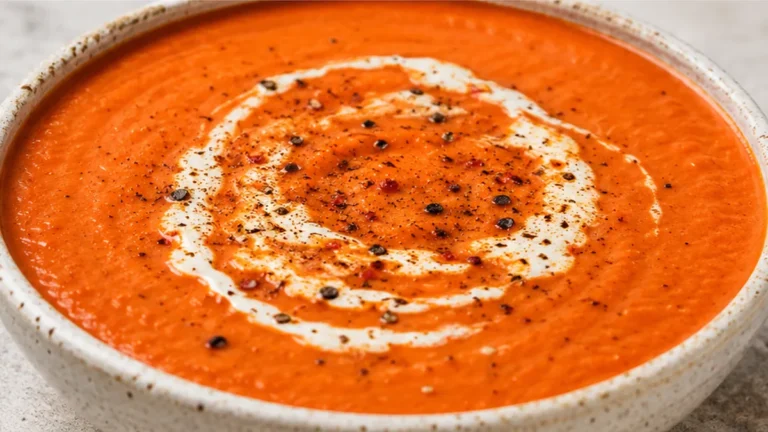
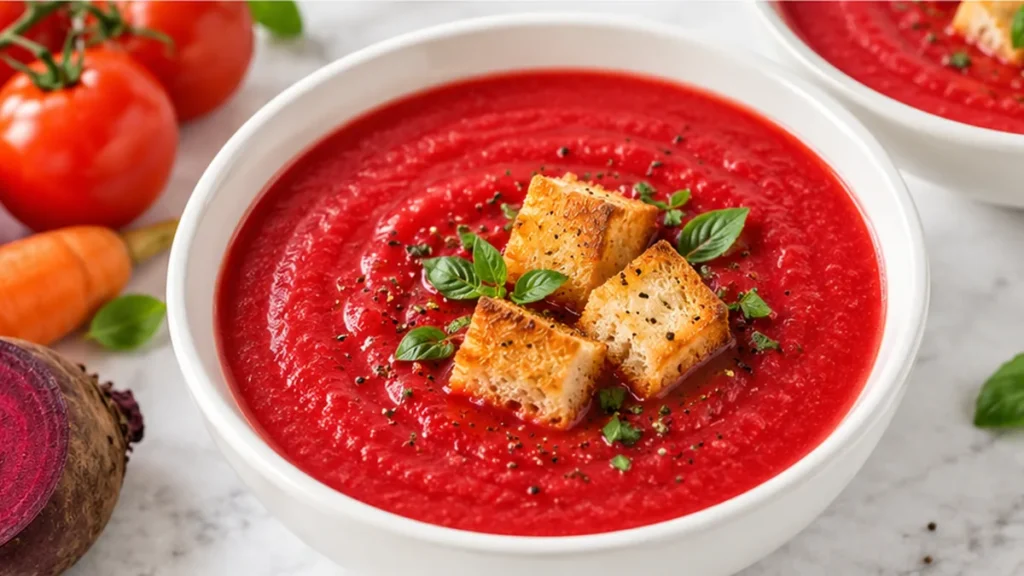
This creamy beetroot tomato soup is a nutritious blend of beetroot and tomatoes. It’s easy to prepare and packed with flavor, making it a great choice for lunch.
Key takeaways
- Use roasted beets to enhance sweetness and depth.
- Balance acidity with creaminess for a smooth texture.
- Address texture issues by adjusting thickness with starch or broth.
- Season thoughtfully with herbs and spices to elevate flavors.

Creamy Beetroot Tomato Soup
Ingredients
Instructions
- Add tomatoes, carrots, beet, cinnamon stick, and salt to the Instant Pot. Add 3 cups of water. Close the Instant Pot with the pressure release valve set to sealing. Pressure Cook for 10 minutes. Allow natural pressure release.
- Open the Instant Pot, remove the cinnamon stick, and discard it. Blend the soup using an immersion blender until smooth.
- Set the Instant Pot to Saute mode. Mix arrowroot flour in ¼ cup of water and slowly stir it into the soup.
- Heat ghee in a small pan over medium-low heat. Add cumin seeds and turn off the heat once they start to sizzle. Add the tadka to the soup.
- Add black pepper and adjust salt to taste. Bring the soup to a gentle boil and enjoy hot with crunchy croutons.
Understanding the Role of Beets in Flavor Development
Beetroots bring a unique sweetness and earthiness to the creamy beetroot tomato soup. The natural sugars in beets caramelize during cooking, enhancing their flavor profile. When roasted at around 200°C (400°F) for about 30-40 minutes, the Maillard reaction occurs, creating complex flavors that deepen the overall taste of the soup. This process is crucial for achieving a well-rounded flavor, as it balances the acidity of the tomatoes with the sweetness of the beets.
Balancing Acidity and Creaminess for Optimal Texture
The balance between acidity from tomatoes and the creaminess of the soup is essential for a satisfying mouthfeel. Using a combination of fresh tomatoes and canned varieties can enhance this balance. For instance, fresh tomatoes provide brightness, while canned tomatoes often have a richer flavor due to their concentrated nature. Incorporating cream or a dairy alternative at the end of cooking not only adds richness but also helps to mellow the acidity, creating a smooth, velvety texture.
Addressing Common Texture Issues in Soups
Texture is a critical aspect of any soup. If the creamy beetroot tomato soup turns out too thin, consider adding a starch, such as potato or a small amount of cornstarch mixed with water, to thicken it. Conversely, if the soup is too thick, adding vegetable broth or water can help achieve the desired consistency. Blending the soup until completely smooth is also essential; an immersion blender can offer a convenient solution for achieving a silky texture without transferring the soup to a traditional blender.
Enhancing Flavor with Seasoning and Herbs
Seasoning is key to elevating the flavors in creamy beetroot tomato soup. A pinch of salt is essential, but also consider adding spices like cumin or smoked paprika for depth. Fresh herbs, such as basil or dill, can be added at the end of cooking for a fresh burst of flavor. Experimenting with spices can make the soup unique, but it’s important to add them gradually to avoid overpowering the dish.
Understanding the Impact of Ingredient Quality on Flavor
The quality of the ingredients used in creamy beetroot tomato soup significantly affects the final flavor profile. Fresh, organic beetroots and ripe tomatoes will yield a sweeter and more vibrant soup. For beets, look for those that are firm and heavy for their size, indicating high moisture content and freshness. When selecting tomatoes, opt for varieties like Roma or San Marzano, known for their rich flavor and lower water content. The balance of sweetness from the beets and acidity from the tomatoes creates a harmonious base, making it essential to choose the best produce available.
Scaling the Recipe for Different Occasions
Scaling your creamy beetroot tomato soup recipe can be straightforward, but it requires attention to cooking times and ingredient ratios. When doubling or halving the recipe, maintain the same proportions of ingredients for consistency in flavor and texture. However, be mindful that cooking times may vary; larger batches might require longer simmering to ensure even cooking and flavor development. For smaller portions, consider using an immersion blender for a quick blend, while larger batches might benefit from a countertop blender for a smoother consistency.
Equipment Considerations for Optimal Blending
The equipment used to blend your creamy beetroot tomato soup can greatly influence its texture. A high-powered blender will produce a silkier soup, while a standard blender may leave small chunks, affecting the overall creaminess. If using an immersion blender, ensure to blend thoroughly to achieve a uniform consistency. Additionally, blending in batches can help manage the heat and prevent overflow. Always allow the soup to cool slightly before blending hot liquids to avoid splattering and ensure safety.
Pairing Suggestions to Enhance the Experience
Pairing your creamy beetroot tomato soup with complementary ingredients can elevate the dining experience. Consider serving it with a dollop of crème fraîche or a sprinkle of feta cheese for added creaminess and tang. Fresh herbs such as basil or dill can enhance the soup’s flavor, while crusty bread or grilled cheese sandwiches provide a satisfying contrast. For a more adventurous pairing, try serving the soup with a drizzle of balsamic reduction, which adds a sweet and tangy note that complements the earthy beets.
Understanding the Impact of Cooking Techniques on Flavor Development
The method of cooking can significantly influence the flavor profile of creamy beetroot tomato soup. Roasting the beets enhances their natural sweetness and adds depth through caramelization. This technique not only intensifies the earthy flavor of beets but also creates a complex base for the soup. When tomatoes are sautéed, they release their natural sugars, contributing to a sweeter and more robust flavor. Cooking these ingredients at a low temperature allows their flavors to meld together harmoniously, balancing the sweetness of the beets with the acidity of the tomatoes. Aim for a roasting temperature of around 200°C (400°F) for about 30-40 minutes to achieve optimal results.
How to Adjust Consistency for Desired Texture
The texture of creamy beetroot tomato soup is crucial for a satisfying experience. If the soup is too thick, you can adjust the consistency by adding more vegetable broth or water, gradually incorporating it until the desired thickness is achieved. Conversely, if the soup is too thin, consider simmering it uncovered for a few additional minutes to allow for evaporation and concentration of flavors. For a creamier texture, blending the soup until completely smooth is essential. A high-speed blender can create a velvety finish, while a standard blender may require more attention to ensure all ingredients are fully incorporated.
Choosing the Right Equipment for Optimal Results
Using the appropriate equipment can make a significant difference in the preparation of creamy beetroot tomato soup. A high-powered blender is ideal for achieving a silky smooth consistency, as it can efficiently break down the fibers of the beets and tomatoes. If you do not have a high-speed blender, an immersion blender can also work well, but it may require more time and effort to ensure a uniform texture. Additionally, a heavy-bottomed pot is recommended for cooking the soup, as it provides even heat distribution, reducing the risk of burning and allowing for better flavor development. Pay attention to the size of the pot; a larger pot allows for better evaporation and concentration of flavors.
Seasonal Variations and Ingredient Substitutions
Seasonality can greatly affect the flavor and quality of the ingredients used in creamy beetroot tomato soup. Fresh, ripe tomatoes in summer will yield a sweeter and more vibrant soup compared to those available in winter, which may be less flavorful. Consider using canned tomatoes during off-seasons, ensuring they are of high quality for the best taste. Additionally, if beets are not available, you can substitute them with roasted carrots or sweet potatoes for a different flavor profile while maintaining the soup’s creamy texture. However, be aware that this will alter the color and sweetness of the final dish.
Understanding the Role of Temperature Control in Creamy Beetroot Tomato Soup
Temperature control is crucial in achieving the perfect creamy beetroot tomato soup. When cooking the beets and tomatoes, maintaining a simmer rather than a boil is essential. Boiling can cause the vegetables to break down too quickly, resulting in a less vibrant color and texture. Aim for a temperature of around 90-95°C (194-203°F) during the simmering process. This gentle cooking allows the flavors to meld without compromising the integrity of the ingredients. Additionally, when blending the soup, ensure that the mixture is not too hot, as this can lead to splattering and uneven texture. Allow the soup to cool slightly before blending, or blend in batches if necessary to maintain safety and control.
Exploring the Impact of Ingredient Quality on Flavor and Texture
The quality of ingredients in your creamy beetroot tomato soup directly influences its flavor and texture. Fresh, organic beets will provide a sweeter, earthier flavor compared to older, less fresh beets. Similarly, using ripe, in-season tomatoes enhances the soup’s natural sweetness and acidity balance. Consider sourcing heirloom varieties for a more complex flavor profile. Additionally, the choice of cream or dairy can affect the soup’s creaminess; using a high-fat content cream will yield a richer texture, while lower-fat alternatives may lead to a thinner consistency. Always taste as you go and adjust seasoning accordingly, as fresh ingredients may require different amounts of salt and spices to bring out their best qualities.
Pro tips
Pro tip: Best served immediately while hot!
Frequently asked questions
Can I use frozen beets for this soup?
Yes, frozen beets can be used in creamy beetroot tomato soup. Just ensure they are thawed and drained well before adding to the pot to avoid excess moisture, which can alter the soup’s consistency.
How can I make this soup vegan?
To make the creamy beetroot tomato soup vegan, simply substitute dairy cream with coconut cream or a plant-based alternative like cashew cream. This will maintain the creamy texture while keeping the dish dairy-free.
What can I serve with creamy beetroot tomato soup?
This soup pairs wonderfully with crusty bread or a fresh salad. A dollop of yogurt or a sprinkle of feta cheese can add a nice contrast, but these can be omitted for a vegan option.
How long can I store leftover soup?
Leftover creamy beetroot tomato soup can be stored in the refrigerator for up to 3 days. For longer storage, consider freezing it in airtight containers, where it can last for up to 3 months.
More from Creamy Soups & Chowders →