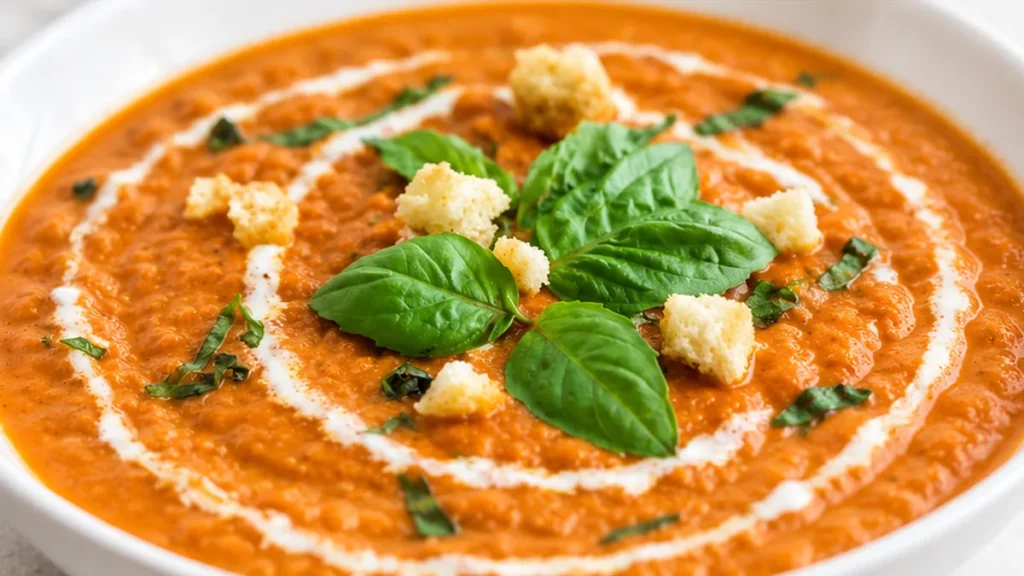
This creamy tomato basil soup is a simple yet satisfying dish. Made with fresh tomatoes and basil, it offers a rich flavor profile that warms the soul.
Key takeaways
- Use ripe tomatoes for sweetness and balance acidity with a touch of sugar if needed.
- Add cream slowly to prevent separation; keep the soup at a gentle simmer.
- Experiment with swaps like vegetable broth for depth or coconut milk for a dairy-free version.
- Control temperature carefully to maintain a smooth, creamy texture without curdling.
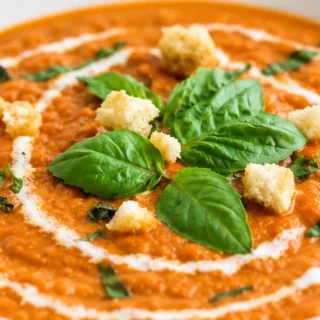
Creamy Tomato Basil Soup
Ingredients
Instructions
- Melt butter in a large pot over medium heat until browned and fragrant.
- Add diced celery, carrots, and onion. Cook until softened, about 8-10 minutes.
- Stir in minced garlic and cook for 1 minute until fragrant.
- Add tomato paste and cook, stirring, for 2 minutes.
- Pour in chicken broth, scraping up any browned bits from the bottom of the pot.
- Add diced tomatoes (undrained) and tomato sauce. Stir in sugar and bring to a simmer.
- Reduce heat to low, cover, and simmer for at least 20 minutes.
- Stir in fresh basil leaves just before serving.
Understanding the Creamy Tomato Basil Soup’s Flavor Profile
The rich, comforting taste of creamy tomato basil soup is largely due to the balance of acidity and sweetness in the tomatoes. Using ripe, in-season tomatoes can enhance the natural sweetness, while a touch of acidity helps to brighten the overall flavor. The addition of fresh basil contributes a fragrant herbal note that complements the tomatoes beautifully. Aim for a ratio of about 70% tomatoes to 30% cream to maintain a rich yet balanced flavor. This ratio allows for the soup to be creamy without overpowering the tomato essence.
Common Pitfalls and How to Avoid Them
One common issue when making creamy tomato basil soup is the separation of the cream when heated. This can happen if the cream is added too quickly or if the soup is boiled after adding the cream. To avoid this, add the cream slowly and heat the soup gently, keeping it at a simmer rather than a rolling boil. Another potential problem is the soup being too acidic. If you find your soup has a sharp tang, try adding a small amount of sugar or honey to balance the acidity. Lastly, under-seasoning can lead to a bland flavor; ensure you taste and adjust the seasoning throughout the cooking process.
Ingredient Swaps and Their Effects
Swapping ingredients can yield different textures and flavors in your creamy tomato basil soup. For instance, using canned tomatoes instead of fresh can provide a more consistent flavor, especially in off-seasons. However, fresh tomatoes are typically sweeter and can enhance the overall taste. Another swap is using vegetable broth instead of water for a deeper flavor profile; this can add umami notes that enrich the soup. If you’re looking for a dairy-free option, coconut milk can replace cream, offering a different flavor and a hint of sweetness, but it will alter the traditional taste.
Temperature Control for Optimal Creaminess
Temperature control is crucial when making creamy tomato basil soup. When incorporating cream, it should be done at a lower temperature to prevent curdling. Ideally, the soup should be kept at around 85°C (185°F) after the cream is added. This temperature allows the flavors to meld without compromising the cream’s texture. If you need to reheat the soup, do so gently over low heat and avoid boiling. Maintaining a consistent temperature throughout the cooking process ensures a smooth, velvety texture.
Optimal Serving Temperature for Creamy Tomato Basil Soup
Serving temperature plays a crucial role in enhancing the flavor and texture of creamy tomato basil soup. Ideally, this soup should be served hot, around 70-75°C (160-170°F). At this temperature, the creaminess is more pronounced, and the flavors of the tomatoes and basil are at their peak. If served too hot, the soup may scald the palate, while serving it lukewarm can dull the vibrant flavors. To maintain the ideal temperature, consider using a double boiler or a slow cooker on low heat when serving.
Batch Scaling: Adjusting Ingredients for Larger Quantities
Scaling a recipe for creamy tomato basil soup can be straightforward, but attention to ingredient ratios is essential. When increasing the batch size, maintain the same proportions of tomatoes, cream, and basil to ensure consistent flavor. For example, if doubling the recipe, use double the amount of each ingredient. However, be cautious with seasoning; it’s wise to add salt and pepper incrementally to taste, as larger batches may require different seasoning adjustments. Cooking time may also increase slightly, so monitor the soup’s consistency and flavor as it simmers.
Equipment Variations and Their Impact on Texture
The equipment used to prepare creamy tomato basil soup can significantly affect its final texture. A high-speed blender will yield a smoother soup compared to a standard blender or immersion blender. If using a food processor, be aware that the soup may retain some texture. Additionally, cooking methods differ; stovetop cooking allows for better control over the heat, while slow cookers can enhance flavors but may alter the texture slightly. Always consider your equipment’s capabilities when striving for the desired creaminess.
Seasonal Ingredients and Their Influence on Flavor
Using seasonal ingredients can greatly influence the flavor profile of creamy tomato basil soup. Fresh, ripe tomatoes in summer yield a sweeter, more vibrant soup, while winter tomatoes may be less flavorful. During colder months, consider roasting tomatoes to concentrate their flavors before blending. Additionally, fresh basil is more aromatic in summer; in winter, dried basil can be used, albeit with a different flavor intensity. Adjusting the quantity of basil based on its freshness can help maintain the soup’s signature taste throughout the year.
Understanding the Role of Fresh Ingredients in Flavor Development
The quality of the tomatoes and basil used in creamy tomato basil soup significantly impacts its flavor profile. Fresh, ripe tomatoes, especially varieties like San Marzano or heirloom, provide a natural sweetness and acidity that enhances the soup’s overall taste. Aim for tomatoes that are deep red and firm, as they will yield a richer flavor. Similarly, using fresh basil rather than dried will impart a vibrant aroma and a peppery finish that complements the creaminess of the soup. When selecting basil, look for bright green leaves without any browning or wilting. The balance between the acidity of the tomatoes and the sweetness of the cream is crucial; thus, using high-quality ingredients can elevate the dish from ordinary to extraordinary.
Batch Scaling: Adjusting Ingredients for Larger Quantities
When preparing creamy tomato basil soup in larger quantities, it is essential to maintain the flavor balance while adjusting the ingredient ratios. A general guideline is to maintain the ratio of tomatoes to cream at 4:1 for optimal creaminess. For instance, if you plan to make a batch of 2 liters, you would use approximately 1.5 kg of tomatoes and 375 ml of cream. It’s also important to consider the cooking time; larger batches may require additional time to simmer, allowing flavors to meld properly. Additionally, blending in batches can ensure a smooth texture, preventing the soup from becoming over-processed. Lastly, be mindful of seasoning adjustments; larger quantities may require more salt and pepper to achieve the desired flavor.
How Seasonal Variations Impact Flavor and Texture
The seasonality of ingredients plays a crucial role in the final outcome of creamy tomato basil soup. In summer, tomatoes are at their peak ripeness, providing a sweetness and depth of flavor that is hard to replicate in off-season months. Conversely, using canned tomatoes in winter can be a practical alternative, but they may lack the fresh taste of summer tomatoes. When basil is in season, it is more aromatic and flavorful, making it ideal for this dish. However, during colder months, basil can be substituted with other herbs like oregano or thyme, but this will alter the soup’s traditional flavor profile. Understanding these seasonal variations can help home cooks adapt the recipe to ensure the best possible flavor and texture throughout the year.
Understanding the Impact of Ingredient Quality on Creamy Tomato Basil Soup
The quality of the tomatoes you choose can significantly affect the flavor and texture of your creamy tomato basil soup. Fresh, ripe tomatoes will yield a sweeter, more robust flavor, while canned tomatoes can provide convenience without sacrificing too much taste, especially if they are San Marzano varieties. In terms of basil, using fresh basil leaves is crucial, as dried basil lacks the vibrant flavor that fresh herbs bring to the dish. Additionally, the cream used should ideally be of high quality; heavy cream will provide a richer texture, while lighter creams can yield a thinner consistency. When preparing your soup, consider the seasonality of your ingredients. Tomatoes are at their peak in late summer, making them sweeter and more flavorful, whereas winter tomatoes may be less flavorful and more acidic. This variability can impact the overall taste of your soup, so adjusting seasoning and sweetness may be necessary depending on the quality of your ingredients.
Batch Scaling: Adjusting Ratios for Larger Quantities
Scaling your creamy tomato basil soup recipe for larger gatherings requires careful adjustment of ingredient ratios to maintain flavor and consistency. A common mistake when doubling or tripling the recipe is to simply multiply each ingredient by the same factor, which can lead to imbalances in taste and texture. For instance, when increasing the amount of tomatoes, consider that the acidity may also increase, necessitating a reduction in seasoning like salt or sugar to balance the flavors. Additionally, the cooking time may require adjustment; larger batches may need more time to simmer thoroughly to blend flavors. A general guideline is to allow an extra 10-15 minutes for every additional liter of soup. When scaling up, also be mindful of the size of your pot; using a larger pot ensures even cooking and prevents scorching. Lastly, if using an immersion blender, ensure that the batch size fits comfortably within your blending vessel to achieve a smooth, creamy texture.
Pro tips
Pro tip: Best served immediately while hot!
Frequently asked questions
Can I use canned tomatoes instead of fresh?
Yes, canned tomatoes can be used and may provide a more consistent flavor, especially when fresh tomatoes are out of season. Look for high-quality canned tomatoes for the best results.
How can I thicken my soup if it’s too thin?
If your soup is too thin, you can blend a portion of it to create a thicker consistency. Alternatively, adding a cornstarch slurry or some cooked rice can help thicken the soup without altering the flavor significantly.
Is it possible to make this soup in advance?
Yes, creamy tomato basil soup can be made in advance. Store it in an airtight container in the refrigerator for up to three days. Reheat gently on the stove to maintain its creamy texture.
What can I serve with creamy tomato basil soup?
This soup pairs well with grilled cheese sandwiches, crusty bread, or a fresh salad. These accompaniments enhance the meal and provide a satisfying contrast to the soup’s creaminess.
More from Creamy Soups & Chowders →