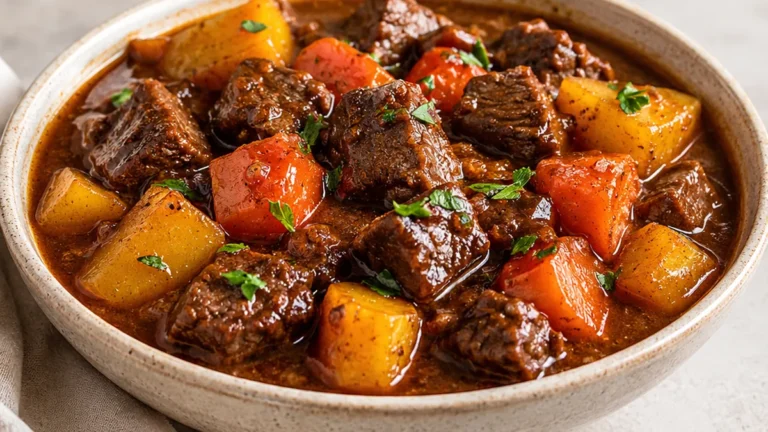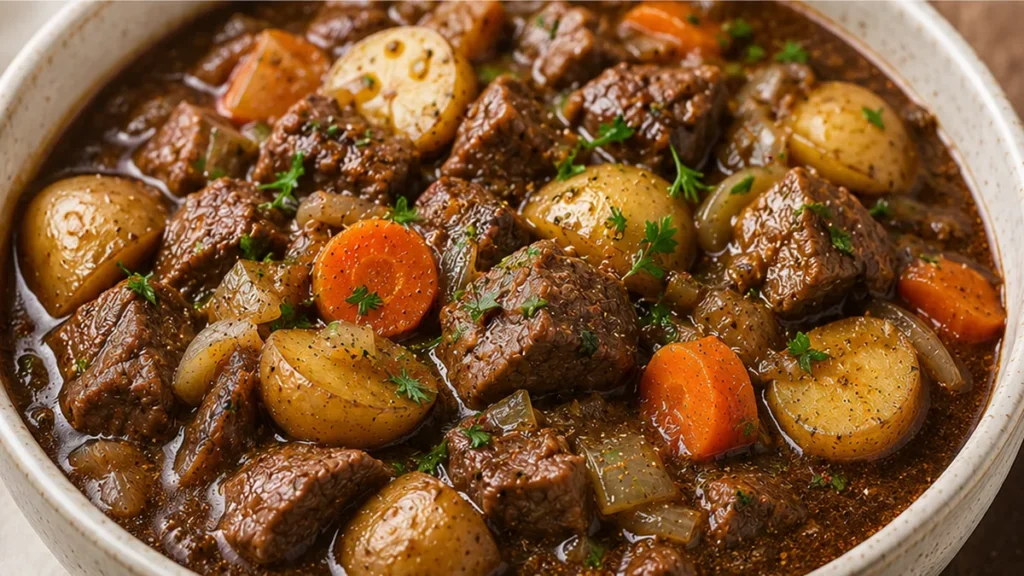
Guinness beef stew is a hearty and comforting dish that brings warmth on cold days. With rich flavors and tender beef, it is perfect for gatherings and family dinners. This recipe ensures that each bite is a burst of savory goodness, making it a favorite for many. What sets this Guinness beef stew apart is the depth of flavor that the Guinness beer adds, transforming a classic stew into something extraordinary. Gather your ingredients and enjoy the delightful experience of making this hearty meal that everyone will love.
Key takeaways
- Searing beef is key for flavor development.
- Slow braising tenderizes the meat and melds flavors.
- Deglazing with Guinness adds depth and complexity.
- Adjust cooking time and ingredient additions for optimal texture.
Guinness Beef Stew Recipe
Ingredients
- 2 pounds beef chuck roast, cubed
- 3 tablespoons all-purpose flour
- ½ teaspoon salt
- ½ teaspoon black pepper
- 3 tablespoons olive oil
- 2 medium yellow onions, chopped into ½” pieces
- 2 cups Guinness beer
- 5 cups beef broth
- 3 tablespoons tomato paste
- 1 pound baby potatoes, halved
Instructions
- Trim any excess fat from the beef. In a large bowl or freezer bag, combine flour, salt, & pepper. Add the beef and toss to coat.
- In a large Dutch oven or pot, heat the olive oil over medium-high heat. Shake off any excess flour from the beef and brown in small batches. Remove and set aside in a bowl.
- Add the onions to the pot, adding more oil as needed, and cook until they begin to soften, about 3 minutes. Remove and add to the beef cubes.
- Pour the Guinness into the pot while scraping up any brown bits in the pan with a spatula. Stir in broth, tomato paste, and the beef and onions.
- Bring to a boil, reduce the heat to medium-low, and simmer covered for 45 minutes.
- Add in the potatoes. Simmer for an additional 45 minutes or until the beef and potatoes are tender.
- Mix cornstarch and water to create a slurry. Slowly add the slurry to the boiling stew to reach desired consistency (you may not need all of the slurry).
Notes
The technique that makes it
The signature richness and depth of flavor in a Guinness beef stew come from a few key techniques. Firstly, searing the beef is crucial. By browning the cubed beef chuck roast in batches over medium-high heat with olive oil, you create the Maillard reaction. This process develops complex, savory flavors and a desirable crust on the meat that will carry through the long braise. Don’t overcrowd the pan, as this will steam the meat instead of searing it, leading to a less flavorful result. The flour coating on the beef not only helps in browning but also acts as a thickening agent for the stew later on.
Secondly, the slow braising process is essential for tenderizing the tough cuts of beef chuck and allowing the flavors to meld. Deglazing the pot with Guinness beer after searing the beef is another critical step. The dark, malty notes of the stout add a unique bitterness and sweetness that complements the beef. Scraping up any browned bits (fond) from the bottom of the pot ensures you capture all the developed flavor. Combining the Guinness with beef broth creates the braising liquid, which should be enough to partially submerge the ingredients. Low and slow cooking, typically in a Dutch oven or slow cooker, breaks down the connective tissues in the beef, making it incredibly tender and moist.
Finally, the addition of potatoes towards the end of the cooking time prevents them from becoming mushy. They absorb the rich stew liquid while retaining their shape and providing a satisfying texture. The tomato paste, cooked briefly with the onions before adding liquids, adds umami and a subtle acidity that balances the richness of the Guinness and beef.
Troubleshooting
- Problem: Stew is too thin. Fix: If your stew lacks the desired thickness after cooking, you can create a slurry by whisking together 1-2 tablespoons of cornstarch or flour with an equal amount of cold water until smooth. Stir this slurry into the simmering stew and cook for a few more minutes until it thickens.
- Problem: Beef is tough. Fix: Tough beef usually means it hasn’t been cooked long enough at a low temperature. Return the stew to the heat (covered) and continue to simmer gently for another 30-60 minutes, or until the beef is fork-tender. Ensure the liquid level is adequate.
- Problem: Stew tastes too bitter. Fix: The bitterness from Guinness can sometimes be pronounced. To counteract this, add a teaspoon of sugar or a tablespoon of brown sugar during the last 30 minutes of cooking. A splash of balsamic vinegar can also add a balancing sweetness and acidity.
- Problem: Potatoes are mushy. Fix: Potatoes should be added in the last 30-45 minutes of cooking. If they are already soft, they were likely added too early. For future stews, adjust the potato addition time. You can also try using a firmer potato variety that holds its shape better.
Substitutions
- Guinness Beer: If you don’t have Guinness or prefer not to use beer, you can substitute with an equal amount of dark, full-bodied beer like a stout or porter. Alternatively, for an alcohol-free version, use an additional 2 cups of beef broth combined with 1 tablespoon of molasses for color and a hint of richness.
- Beef Chuck Roast: Other cuts suitable for stewing include beef brisket, short ribs, or even lamb shoulder. Ensure the meat is well-marbled and cut into uniform cubes for even cooking. The cooking time may vary slightly depending on the cut.
- Baby Potatoes: Larger potatoes cut into 1-1.5 inch chunks can be used. Root vegetables like carrots, parsnips, or turnips can also be added alongside or in place of potatoes for varied flavor and texture. Add harder root vegetables earlier with the onions.
- Yellow Onions: Shallots or leeks can be substituted for yellow onions. Leeks will offer a milder, sweeter onion flavor. If using shallots, you may need more than two, as they are smaller and have a more concentrated flavor.
Pro tips
- For a deeper flavor, allow the stew to chill overnight and reheat before serving.
- Taste and adjust the seasoning before serving for the best flavor.
- Serve with crusty bread or over mashed potatoes for a delightful pairing.
Try this Guinness beef stew recipe and customize it with your favorite vegetables. Enjoy the rich flavors and warmth it brings!
More from Beef Soups & Stews →
Frequently asked questions
Can I make Guinness beef stew ahead of time?
Yes, Guinness beef stew often tastes even better the next day. The flavors have more time to meld and deepen. Allow it to cool completely, then refrigerate. Reheat gently on the stovetop or in the oven until heated through.
What is the best way to thicken Guinness beef stew?
The best ways to thicken are by dredging the beef in flour before searing, or by creating a slurry of cornstarch or flour with cold water and stirring it into the simmering stew towards the end of cooking.
How long should Guinness beef stew simmer?
The stew should simmer gently for at least 2 to 3 hours, or until the beef is fork-tender. The exact time depends on the cut of beef and the cooking vessel used. Low and slow is the key.
Can I use a different type of beer?
Yes, while Guinness provides a specific flavor, other dark, malty beers like stouts or porters can be substituted. For an alcohol-free option, use extra beef broth and a touch of molasses for color and depth.