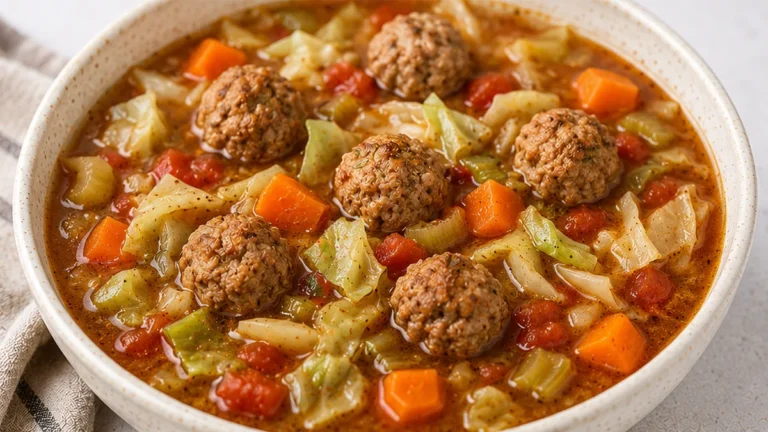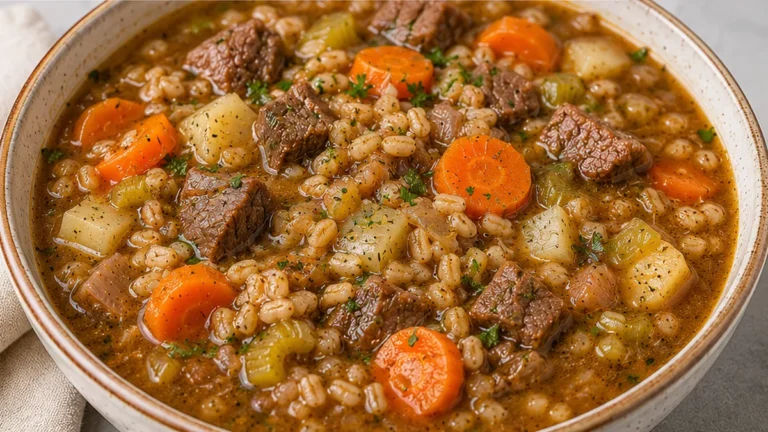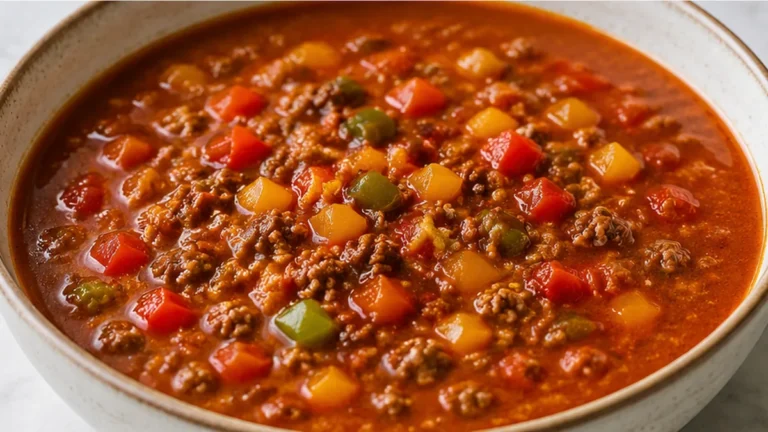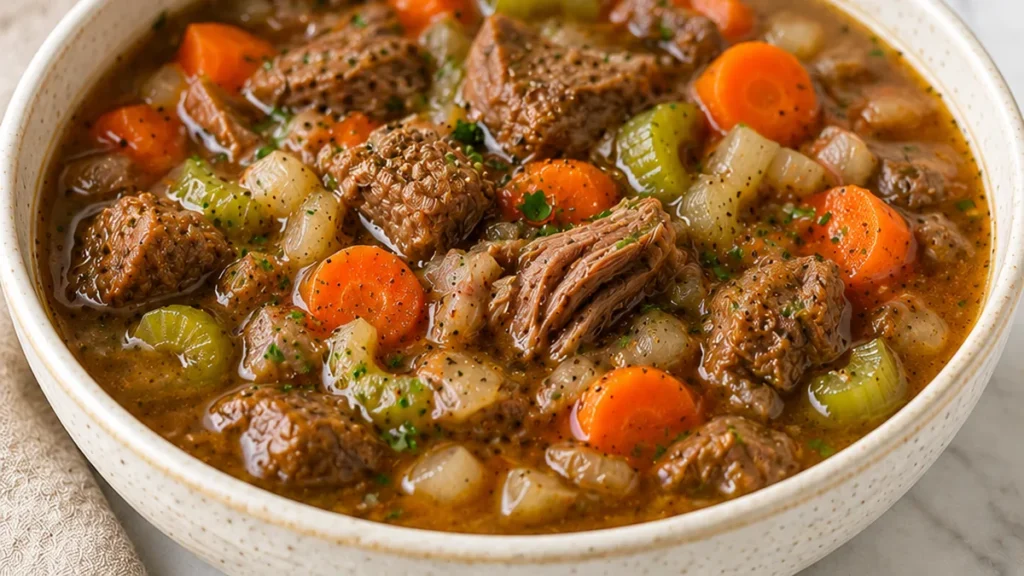
This fall-apart beef vegetable soup is the ultimate comfort food, packed with tender chunks of beef and hearty vegetables in a rich, savory broth. It’s perfect for a cozy fall or winter meal, requiring minimal hands-on time for maximum flavor. Forget tough, chewy stew meat. This beef soup recipe uses a simple technique to achieve incredibly tender beef that melts in your mouth. The combination of aromatic vegetables and a deeply flavored broth makes this a family favorite that’s surprisingly easy to prepare.
Key takeaways
- Sear beef in batches for optimal browning and flavor development.
- Slow, gentle simmering is crucial for tenderizing the beef.
- Dredging beef in flour before simmering aids in thickening and tenderizing.
- Adjust cooking times based on the cut of beef and desired vegetable tenderness.
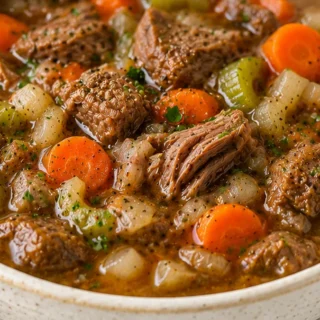
Fall Apart Beef Vegetable Soup!
Ingredients
- 1.5 tbsp olive oil, separated
- 500 g/1 lb stewing beef, cut into 1.75cm / 2/3″ cubes
- 1/2 tsp salt
- 1/2 tsp pepper
- 1 onion, chopped
- 3 garlic, minced (1 tbsp)
- 2 celery, cut into 0.8 cm / 1/3″ slices
- 3 carrots, cut into 0.5 cm / 1/5″ thick slices
- 4 tbsp flour
- 2 1/2 cups (625ml) beef broth/stock, low sodium
Instructions
- Heat 1 tbsp olive oil until very hot in a large, heavy-based pot over high heat.
- Pat beef dry with paper towels, then sprinkle with 1/2 tsp salt and 1/2 tsp pepper.
- Brown beef aggressively in 2 or 3 batches, adding more oil if needed. Remove browned beef into a bowl.
- If pot looks dry, add a touch more oil.
- Add 1 chopped onion and 1 tbsp minced garlic, cook for 2 minutes until fragrant.
- Add 3 carrot slices and 2 celery slices, cook for 2 minutes or until onion is translucent.
- Stir in 4 tbsp flour, then slowly pour in 2 1/2 cups beef broth while constantly stirring to avoid lumps.
- Add the browned beef back into the pot along with any accumulated juices.
Notes
The technique that makes it
The key to achieving fall-apart tender beef in this soup lies in the initial searing and the subsequent slow cooking process. Searing the beef cubes in batches over medium-high heat, ensuring not to overcrowd the pan, creates a flavorful Maillard reaction on the surface. This browning not only adds depth of flavor to the final soup but also helps to develop a crust that seals in the juices during the initial cooking stages. After searing, the beef is dredged in flour. This flour serves a dual purpose: it helps to thicken the soup as it cooks, creating a richer broth, and it also aids in tenderizing the meat by absorbing some of the moisture released during cooking. The subsequent simmering in beef broth allows the connective tissues in the stewing beef to break down slowly over time. This enzymatic breakdown transforms tough collagen into gelatin, which contributes to the unctuous mouthfeel and the desired ‘fall-apart’ texture. Low and slow cooking is paramount; a rapid boil can toughen the meat, while a gentle simmer ensures the gradual breakdown of muscle fibers.
Troubleshooting
- Tough Beef: If the beef remains tough after simmering, it likely needs more cooking time. Continue to simmer gently, covered, until tender. Ensure the heat is low enough to avoid boiling.
- Watery Soup: If the soup is too thin, the flour coating may have been insufficient or the simmering time too short for it to fully thicken. You can create a slurry of 1-2 tablespoons of flour or cornstarch mixed with an equal amount of cold water, then stir it into the simmering soup until thickened.
- Bland Flavor: Insufficient searing or seasoning can lead to a lack of depth. Ensure the beef is well-browned and that salt and pepper are added at the initial searing stage. Taste and adjust seasoning with more salt, pepper, or a splash of Worcestershire sauce towards the end of cooking.
- Mushy Vegetables: Adding vegetables too early can cause them to overcook. Carrots and celery should be added during the last 30-45 minutes of simmering to retain some texture.
Substitutions
- Beef Cut: While stewing beef (chuck, round) is ideal for slow cooking, you can substitute with pre-cut beef tips or even leftover roast beef, though cooking times will vary. Pre-cooked beef will require less simmering time, mainly to meld flavors.
- Beef Broth: If beef broth is unavailable, a rich chicken or vegetable broth can be used, though it will alter the final flavor profile. For a deeper flavor, consider adding a tablespoon of tomato paste during the initial sautéing of vegetables.
- Flour: Gluten-free cooks can substitute the all-purpose flour with a gluten-free flour blend or cornstarch for thickening. Use cornstarch as a slurry towards the end of cooking for best results, as it can break down if cooked for too long.
- Vegetables: Feel free to add other root vegetables like parsnips or potatoes, cut into similar sizes. Add heartier vegetables like potatoes earlier in the cooking process, while softer vegetables like peas can be added in the last 15 minutes.
Pro tips
- Ensure beef is patted very dry for a good sear.
- Don’t overcrowd the pot when browning beef; work in batches.
- For extra depth, use a good quality low-sodium beef stock.
- This soup freezes beautifully; cool completely before freezing.
Enjoy this hearty and comforting beef vegetable soup, perfect for any occasion. Serve with crusty bread for a complete meal.
More from Beef Soups & Stews →
Frequently asked questions
What is the best cut of beef for this soup?
Stewing beef, such as chuck roast or beef round, is ideal. These cuts have enough connective tissue that breaks down during slow cooking, resulting in tender, fall-apart meat. Avoid lean cuts like sirloin, as they can become dry and tough with extended cooking times.
How long should I simmer the soup?
Simmer the soup for at least 1.5 to 2 hours, or until the beef is fork-tender. The exact time will depend on the cut and size of the beef cubes. Ensure the heat is low and the liquid is barely simmering, not boiling, to prevent toughening.
Can I make this beef soup in a slow cooker?
Yes, this recipe is excellent for a slow cooker. Sear the beef and sauté the aromatics as directed, then transfer everything to the slow cooker. Cook on low for 6-8 hours or on high for 3-4 hours, adding vegetables during the last 1-2 hours of cooking.
How can I make the broth richer?
To enhance the broth’s richness, use a high-quality, full-sodium beef broth or stock. You can also add a tablespoon of tomato paste when sautéing the vegetables, or a splash of Worcestershire sauce or soy sauce towards the end of cooking for an umami boost.