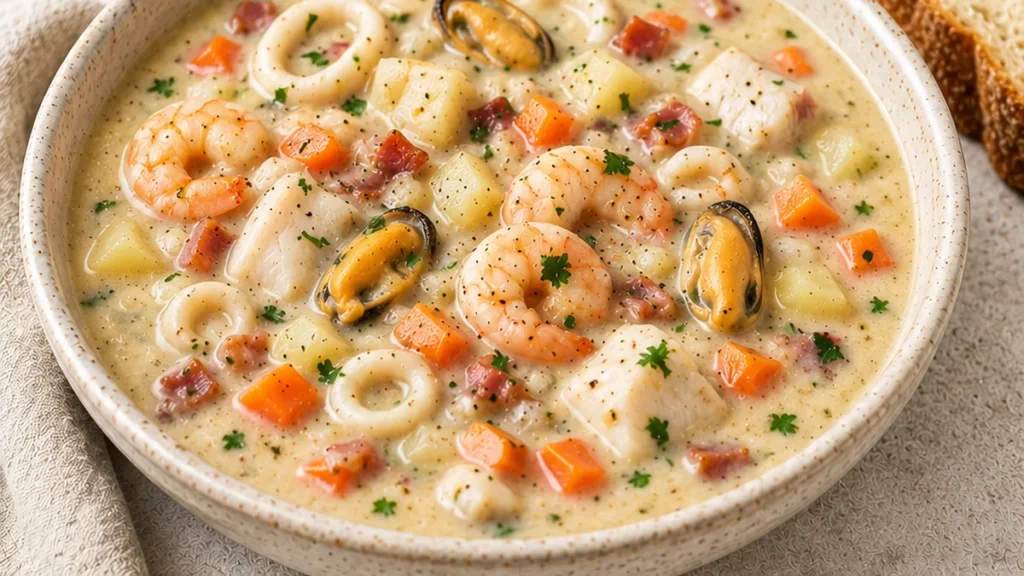
This creamy Seafood Chowder is the ultimate comfort food, brimming with oceanic flavors and tender textures. It’s a surprisingly easy recipe that brings the taste of the seaside right to your kitchen, perfect for a cozy evening meal. Our Seafood Chowder recipe is designed for both ease and exceptional flavor, using a blend of fresh and pre-cooked seafood for maximum taste and minimal fuss. Get ready to impress with this hearty, warming dish.
Key takeaways
- Render bacon fat for flavor base.
- Cook roux properly to avoid raw flour taste.
- Add cream gently at the end to prevent curdling.
- Add delicate seafood last to avoid overcooking.
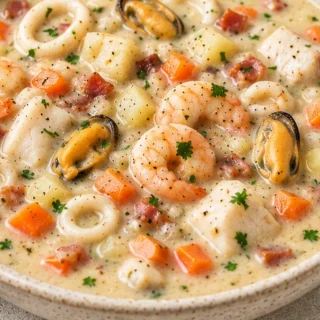
Creamy Seafood Chowder: Taste of the Ocean
Ingredients
- 650 g mixed fresh seafood (e.g., fish fillets, squid rings, prawns, cooked mussel meat)
- 50 g (3 tbsp) unsalted butter
- 100 g streaky bacon, chopped
- 2 cloves garlic, finely minced
- 1/2 cup chardonnay (or other dry white wine)
- 1/3 cup flour, plain/all-purpose
- 1 litre (4 cups) chicken stock/broth, low sodium
- 2 medium carrots, peeled, cut into pieces
- 2 large potatoes, peeled, cut into cubes
- 1 cup thickened cream / heavy cream
Instructions
- Prepare seafood: Separate cooked seafood (mussels, shrimp) from raw seafood. Cut any large fish pieces into 1″ cubes.
- Cook bacon: In a large pot, melt butter over medium heat. Add chopped bacon and cook for 3-4 minutes until edges are golden. Remove bacon to a bowl, leaving fat in the pot.
- Sauté garlic & deglaze: Add minced garlic to the pot and cook for 10 seconds until fragrant (do not brown). Pour in white wine, scraping up any browned bits from the bottom. Simmer rapidly for 3 minutes until wine has mostly evaporated.
- Make the base: Whisk in the flour to create a roux, cook for 1 minute. Gradually whisk in chicken stock until smooth. Bring to a simmer.
- Cook vegetables & bacon: Add potatoes, carrots, and cooked bacon to the pot. Simmer for 10 minutes until vegetables are tender.
- Add cream & raw seafood: Stir in the heavy cream. Add the raw seafood (fish, squid, prawns). Simmer gently for 3 minutes until the raw seafood is just cooked through.
- Finish & serve: Stir in the pre-cooked seafood (mussels, shrimp). Taste and adjust seasoning with salt and pepper. Serve immediately.
Notes
– For a lighter chowder, substitute milk for heavy cream, but be aware it will be less rich.
– This chowder is best served immediately after preparation for optimal texture and flavor. Nutrition information is an estimate, calculated automatically. Values vary with brands, substitutions and portion sizes.
The technique that makes it
The foundation of a truly exceptional seafood chowder lies in building layers of flavor and achieving the perfect creamy consistency without it becoming heavy or broken. It starts with rendering the bacon until crisp; the rendered fat is crucial for sautéing the aromatics and forming the roux. The roux, a mixture of butter and flour cooked together, is the thickening agent. Cooking the roux for a minute or two before adding liquid is essential to eliminate the raw flour taste and create a smooth, stable base for the chowder. Deglazing the pan with white wine after sautéing the garlic allows the wine’s acidity to lift any browned bits (fond) from the bottom of the pot, adding depth. Gradually whisking in the chicken stock prevents lumps and ensures a homogenous base. Simmering the vegetables in the stock until tender allows them to absorb the savory liquid. Finally, the cream is added at the very end, off the heat or on very low heat, to prevent it from curdling or separating. Gently warming the cream before adding can further minimize the risk of thermal shock.
Troubleshooting
- Chowder is too thin: If the chowder lacks thickness after adding the cream, you can create a slurry by mixing 1 tablespoon of cornstarch with 2 tablespoons of cold water. Whisk this slurry into the simmering chowder and cook for a minute or two until thickened.
- Chowder is lumpy: Lumps usually form when the flour or roux isn’t fully incorporated. You can try to whisk vigorously to break them up. For stubborn lumps, carefully pass the chowder through a fine-mesh sieve, or use an immersion blender on a low setting to smooth it out.
- Cream has separated or curdled: This often happens when cream is boiled. Ensure the chowder is off the heat or on the lowest possible setting when adding the cream. Gently warming the cream beforehand can also help. If separation occurs, whisking vigorously might help emulsify it slightly.
- Seafood is tough or rubbery: Overcooked seafood is the culprit. Add delicate seafood like fish fillets and prawns towards the end of the cooking process, only cooking them until just opaque and cooked through. Pre-cooked ingredients like mussels should be added even later, just to heat through.
Substitutions
- Bacon: For a less smoky flavor or a vegetarian option, omit the bacon and start by sautéing the aromatics in 1-2 tablespoons of olive oil or a neutral vegetable oil. The rendered fat adds flavor, so compensate with a little extra butter if omitting.
- White Wine: If you prefer not to use alcohol, substitute the white wine with an equal amount of extra chicken stock or a splash of lemon juice for acidity. The wine adds complexity, so these substitutions will result in a slightly simpler flavor profile.
- Chicken Stock: Vegetable stock can be used as a substitute for chicken stock, especially if aiming for a lighter flavor or a more vegetarian-leaning chowder (if bacon is omitted). Ensure it’s a good quality, low-sodium stock to control the overall saltiness.
- Cream: Evaporated milk can be used as a substitute for heavy cream. It provides a similar richness and creamy texture without the same risk of curdling when heated. The flavor will be slightly different but still delicious.
Pro tips
- Ensure all raw seafood is added in step 6 and cooked for only 3 minutes to avoid overcooking.
- For a lighter chowder, substitute milk for heavy cream, but be aware it will be less rich.
- This chowder is best served immediately after preparation for optimal texture and flavor.
Enjoy this hearty and flavorful Seafood Chowder, a perfect dish for any occasion. Serve with crusty bread for a complete meal.
More from Creamy Soups & Chowders →
Frequently asked questions
What is the best type of seafood for chowder?
A mix of firm white fish like cod or haddock, tender squid rings, succulent prawns, and pre-cooked mussels provides a variety of textures and oceanic flavors. The key is to use seafood that complements each other and cooks at different rates, ensuring nothing becomes overdone.
How do I make my seafood chowder thicker?
The primary thickening agent is the flour-based roux. If the chowder is still too thin after adding the cream, a cornstarch slurry (cornstarch mixed with cold water) can be whisked in and simmered briefly to achieve the desired consistency.
Can I make seafood chowder ahead of time?
Yes, you can make the chowder base (steps up to adding the cream and seafood) a day in advance. Store it covered in the refrigerator. Gently reheat the base before adding the cream and seafood just before serving to maintain the best texture and prevent the seafood from overcooking.
What can I serve with seafood chowder?
Seafood chowder is a hearty dish that pairs well with crusty bread for dipping, oyster crackers for added crunch, or a simple side salad with a light vinaigrette. These accompaniments balance the richness of the chowder.