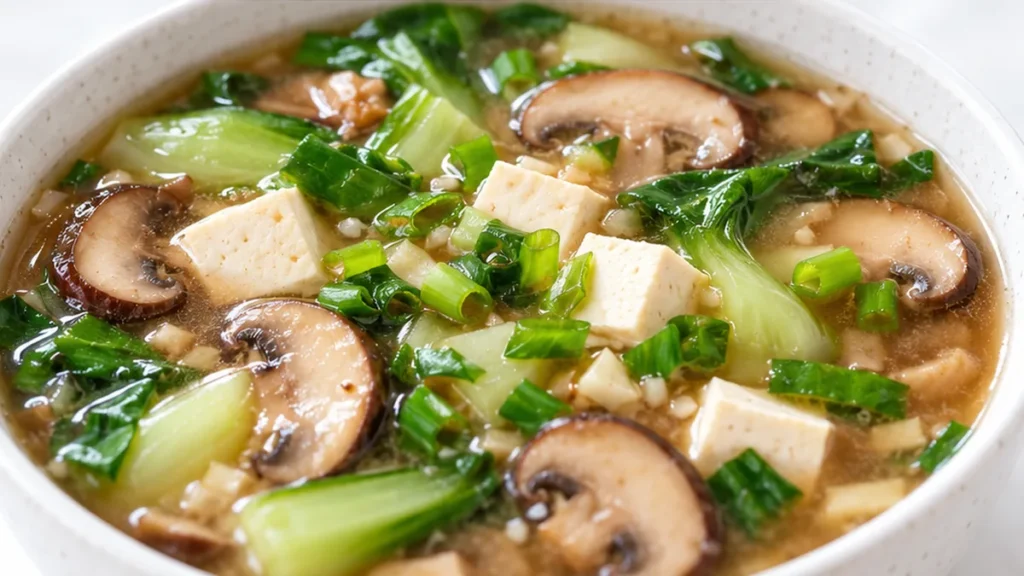
This is the easiest vegan miso soup you can make at home. With simple ingredients like tofu and seaweed, it’s quick to prepare and satisfying.
Key takeaways
- Use the right type of miso for flavor depth.
- Adjust miso quantity to avoid overpowering the soup.
- Incorporate ingredients based on their cooking times.
- Explore ingredient swaps for unique flavor profiles.
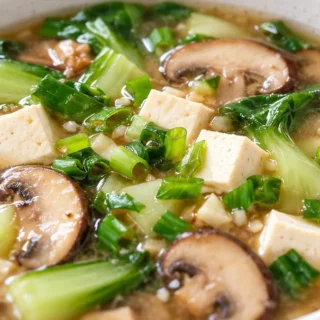
The Easiest Vegan Miso Soup
Ingredients
Instructions
- Heat 1/2 teaspoon avocado oil in a pot over medium heat. Add mushrooms and a pinch of salt. Cook until softened, about 3-4 minutes.
- Move mushrooms aside. Add remaining 1/2 teaspoon avocado oil and sauté minced garlic until fragrant, about 30 seconds.
- Add sliced baby bok choy and sauté for 1 minute until leaves just wilt.
- Pour in 1 1/2 cups water and 1/2 teaspoon tamari, then add tofu cubes. Bring to a simmer.
- Stir in 1 tablespoon white miso paste until dissolved. Taste and adjust tamari or miso if needed.
- Ladle soup into a bowl and garnish with sliced scallion. Serve immediately.
Understanding the Role of Miso in Flavor Development
Miso is a fermented soybean paste that serves as the backbone of this vegan miso soup, contributing umami flavor and depth. The fermentation process typically takes from a few months to several years, depending on the type of miso. The key to achieving the best flavor lies in selecting the right type of miso, with options ranging from white (milder and sweeter) to red (stronger and saltier). When using miso, it is essential to dissolve it in warm water rather than boiling liquid, as high temperatures can destroy its delicate flavors and probiotics.
Common Pitfalls When Making Miso Soup
One common issue with miso soup is the misjudgment of miso quantity. Too little can result in a bland soup, while too much can overpower the dish. A good starting ratio is about 1 tablespoon of miso per cup (240 ml) of water, adjusting based on personal taste. Another pitfall is not incorporating other ingredients properly; for instance, adding vegetables or tofu too early can lead to overcooked and mushy textures. Aim to add these ingredients based on their cooking times to maintain their integrity.
Ingredient Alternatives and Their Impacts
While the recipe calls for specific ingredients, there are several alternatives that can enhance or alter the soup’s profile. For instance, using seaweed like wakame can add a briny flavor, while substituting regular tofu with silken tofu results in a creamier texture. If you prefer a gluten-free option, tamari can replace soy sauce without sacrificing flavor. Each swap might change the nutritional profile slightly, so consider these adjustments based on dietary needs.
Unique Characteristics of This Vegan Miso Soup
This vegan miso soup stands out due to its simplicity and versatility. Unlike traditional miso soups that often include fish stock, this recipe maintains a fully plant-based approach while still achieving a rich flavor profile. The balance of miso, vegetables, and optional garnishes allows for endless customization, making it suitable for various dietary preferences. Additionally, the quick preparation time makes it an excellent option for a nutritious meal in under 30 minutes.
Understanding the Impact of Ingredient Quality on Flavor
The quality of ingredients used in the easiest vegan miso soup significantly affects the final flavor profile. Fresh vegetables, such as scallions and mushrooms, provide a vibrant taste, while aged miso can contribute depth and complexity. For instance, using organic miso may yield a more robust umami flavor compared to mass-produced varieties. Additionally, seasonal ingredients can enhance the soup’s taste; for example, using fresh spring greens adds a delicate sweetness. It’s crucial to select high-quality, fresh ingredients to ensure the soup’s flavor is at its best.
Make-Ahead Strategies for Convenience
This vegan miso soup can be prepared in advance, making it an excellent choice for meal prep. To do so, cook the base broth and vegetables, then store them separately from the miso paste. Miso should be added just before serving to preserve its probiotic benefits and flavor. When stored properly in an airtight container in the refrigerator, the soup base can last for up to three days. For longer storage, consider freezing the broth without the miso, which can be kept for up to three months. When ready to enjoy, simply thaw, reheat, and mix in the miso.
Scaling the Recipe for Larger Gatherings
Scaling the easiest vegan miso soup recipe is straightforward and allows for flexibility when serving larger groups. To maintain balance in flavors, increase the quantity of each ingredient proportionally. For instance, if doubling the recipe, use double the miso paste and adjust the liquid accordingly. It’s essential to taste as you go, especially when scaling, as the intensity of flavors can vary with batch size. Additionally, consider using a larger pot to ensure even cooking and prevent overflow.
Pairing Suggestions for a Complete Meal
This vegan miso soup pairs beautifully with a variety of dishes to create a satisfying meal. For a balanced meal, consider serving it alongside rice or quinoa, which complements the soup’s umami flavors. Adding a side of steamed or sautéed vegetables can enhance the nutritional profile. For those looking for protein, tofu or edamame makes an excellent addition. Additionally, a light salad with a citrus dressing can provide a refreshing contrast to the warmth of the soup, rounding out the dining experience.
Understanding the Importance of Umami in Miso Soup
The foundation of a great miso soup lies in its umami flavor, often derived from the miso paste itself, which contains fermented soybeans. This fermentation process enhances the depth of flavor, creating a savory profile that is both satisfying and complex. The balance of umami is crucial; too little can result in a bland soup, while too much can overpower the other ingredients. Aim for a ratio of about 1 tablespoon (15 grams) of miso paste per cup (240 ml) of broth to achieve the right depth of flavor. Adjusting this ratio allows for customization based on personal taste preferences or the specific type of miso used—white miso tends to be sweeter and milder, while red miso is more robust.
How to Properly Store and Reheat Leftover Miso Soup
Storing miso soup correctly is essential to maintain its flavor and texture. After cooking, allow the soup to cool completely before transferring it to an airtight container. It can be refrigerated for up to three days. When reheating, do so gently over low heat to prevent the miso from losing its beneficial properties. Avoid boiling the soup, as high temperatures can alter the flavor and nutritional benefits of the miso. If the soup thickens upon refrigeration, add a splash of water or vegetable broth to reach the desired consistency.
Choosing the Right Add-Ins for Seasonal Variations
The versatility of miso soup allows for seasonal adaptations, enhancing its appeal throughout the year. In spring, fresh greens like spinach or bok choy can be added for a burst of color and nutrients. Summer might call for light vegetables such as zucchini or corn, while fall can introduce hearty ingredients like mushrooms or squash. In winter, root vegetables like carrots and daikon radish can provide warmth and comfort. When selecting add-ins, consider their cooking times to ensure everything is perfectly tender by the time the soup is ready to serve.
Understanding the Role of Dashi in Vegan Miso Soup
While traditional miso soup often includes dashi made from fish, vegan versions rely on plant-based alternatives that still capture the essence of umami. Kombu, a type of seaweed, is a popular choice for creating a flavorful dashi substitute. To prepare, soak a piece of kombu in water for at least 30 minutes, then heat gently to extract its flavors without boiling, which can release bitterness. This process typically takes about 15-20 minutes at a temperature around 60-70°C (140-160°F). The resulting broth forms the base of the soup, enhancing its flavor profile significantly. Experimenting with additional ingredients like shiitake mushrooms or dried bonito flakes (vegan versions) can further deepen the umami experience.
Adjusting Texture and Consistency in Your Miso Soup
The texture of miso soup can vary greatly depending on the ingredients and cooking method. For a smoother consistency, consider using a blender to puree some of the soup before adding miso, which can create a creamier base. Conversely, if you prefer a chunkier texture, ensure that your vegetables are cut into larger pieces and added at the right time to maintain their shape. Additionally, the ratio of liquid to solid ingredients plays a crucial role; a typical guideline is to use about 1 liter of broth for every 100 grams of miso paste. Adjusting the amount of water or broth can also influence the soup’s thickness, so taste as you go to find your perfect balance.
Understanding the Impact of Cooking Time on Flavor Development
The cooking time of vegan miso soup significantly influences its flavor profile. A common mistake is overcooking the ingredients, which can lead to a loss of delicate flavors and nutrients. For optimal results, simmer the soup for about 10 to 15 minutes after adding the miso paste. This timeframe allows the flavors to meld without diminishing the fresh taste of the vegetables. If you prefer a bolder flavor, you can extend the simmering time slightly, but be cautious not to exceed 20 minutes. This balance ensures the umami notes from the miso are fully realized while preserving the integrity of your vegetables.
Equipment Considerations for Perfect Miso Soup
The choice of equipment can greatly affect the outcome of your vegan miso soup. Using a high-quality pot, preferably made of stainless steel or ceramic, helps distribute heat evenly, preventing hot spots that can lead to uneven cooking. Non-stick pans, while convenient, may not achieve the same depth of flavor due to their inability to develop fond. Additionally, consider using a whisk or a ladle to dissolve the miso paste thoroughly before adding it to the soup. This prevents clumps and ensures a smooth texture. If you have a hand blender, you can use it to puree part of the soup for a creamier consistency, but be careful not to over-blend, as you want to retain some texture from the vegetables.
Pro tips
Pro tip: Best served immediately while hot!
Frequently asked questions
Can I use any type of miso for this recipe?
While you can use different types of miso, white miso is recommended for its mild flavor, making it suitable for a wide audience. Red miso is stronger and can be used for a bolder taste, but adjust the quantity accordingly.
How can I make this soup gluten-free?
To make the soup gluten-free, use tamari instead of regular soy sauce. Additionally, ensure that the miso paste is gluten-free, as some brands may contain wheat.
What vegetables can I add to enhance the soup?
You can add a variety of vegetables such as spinach, mushrooms, or green onions. Just be mindful of their cooking times to maintain their texture and flavor.
Can I make this soup ahead of time?
While you can prepare the broth and chop the vegetables ahead of time, it’s best to add the miso and any delicate ingredients just before serving to preserve their flavors and textures.
More from Vegetable & Bean Soups →