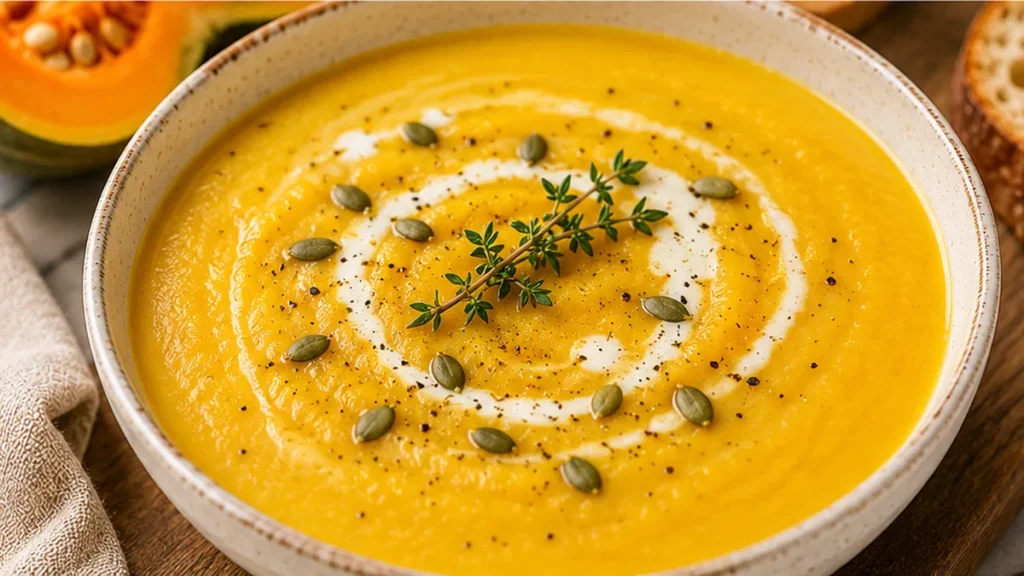
This acorn squash soup recipe is the perfect way to embrace fall flavors. It’s a creamy, comforting, and easy-to-make dish that highlights the natural sweetness of acorn squash, enhanced by aromatic herbs. this soup is sure to become a family favorite. Our simple process ensures a velvety smooth texture and a rich, satisfying taste. This acorn squash soup is ideal for a light lunch, an elegant appetizer, or a warming dinner starter.
Key takeaways
- Roasting acorn squash caramelizes its sugars for deeper flavor.
- Sauté aromatics gently to build a sweet flavor base.
- Simmer gently to meld flavors and achieve tender squash.
- Adjust seasoning and consistency after blending for the best result.
Golden Acorn Squash Soup Bliss!
Ingredients
- 3 pounds acorn squash (2 medium or 1 large (4 cups))
- 1 tablespoon olive oil
- 2 tablespoons butter
- 1 onion (½-inch diced)
- 1 carrot (chopped into 1-inch pieces)
- 2 ribs celery (chopped into 1-inch pieces)
- 1 clove garlic (minced)
- ½ teaspoon dried thyme leaves (or 1-2 sprigs fresh)
- ¼ teaspoon ground sage (or poultry seasoning)
- 3 cups chicken broth (or vegetable broth)
Instructions
- Preheat oven to 400°F (200°C). Cut squash in half and scoop out seeds. Cut each half again into quarters. Brush with olive oil. Place on a baking sheet and roast 30-35 minutes or until squash is fork-tender.
- While squash is roasting, heat butter in a large saucepan or Dutch oven over medium heat. Add diced onion and cook until slightly softened, about 5 minutes.
- Add chopped carrot, celery, minced garlic, dried thyme, and ground sage. Cook until slightly softened, about 5-7 minutes more.
- Once squash is roasted, scoop the flesh out of the skin and add it to the pot with the sautéed vegetables.
- Pour in the chicken broth. Bring the mixture to a boil, then reduce heat, cover, and simmer for about 15 minutes, allowing flavors to meld.
- Remove the pot from heat. Carefully blend the soup until smooth using an immersion blender or by transferring in batches to a regular blender (discard bay leaf and thyme stem if using fresh).
- Return the smooth soup to a gentle simmer. Stir in heavy cream to taste for extra richness. Season with salt and pepper to your preference.
Notes
– Add a pinch of nutmeg or cinnamon for extra warmth.
– Garnish with toasted pumpkin seeds or a swirl of cream.
– This soup can be made ahead and reheated gently. Nutrition information is an estimate, calculated automatically. Values vary with brands, substitutions and portion sizes.
The technique that makes it
The key to unlocking the rich, sweet flavor of acorn squash soup lies in proper preparation and gentle cooking. Acorn squash has a naturally dense, fibrous texture and a subtle sweetness that can be enhanced or masked depending on how it’s handled. Roasting the squash beforehand, even for a short period, caramelizes its natural sugars, deepening its flavor profile and making it easier to scoop from the rind. This caramelization is a Maillard reaction, where amino acids and reducing sugars interact under heat to create complex flavor compounds. Simply boiling the squash can result in a watery, less flavorful base. When sautéing the aromatics (onion, carrot, celery), ensure they are cooked until softened and translucent, but not browned. This process, known as sweating, releases their moisture and sweetens them, building a foundational flavor layer without introducing bitterness. The simmering stage is crucial for melding these flavors; avoid boiling vigorously, as this can break down the squash too much, leading to a gummy texture. A gentle simmer allows the flavors to infuse into the broth and the squash to become tender enough for smooth blending.
Troubleshooting
- Problem: Soup is too thin. Fix: Simmer uncovered for an additional 10-15 minutes to allow excess liquid to evaporate. Alternatively, create a slurry of 1 tablespoon cornstarch or flour mixed with 2 tablespoons cold water and stir it into the simmering soup until thickened.
- Problem: Soup is bland. Fix: Taste and adjust seasoning aggressively. Add more salt, pepper, or a pinch of cayenne for heat. Consider adding a squeeze of lemon juice or a splash of apple cider vinegar to brighten the flavors.
- Problem: Soup is gritty or fibrous. Fix: Ensure the squash was thoroughly cooked until very tender before blending. If blending with an immersion blender, blend for longer. For a smoother texture, pass the soup through a fine-mesh sieve after blending.
- Problem: Soup has a watery consistency. Fix: This often happens if the squash wasn’t roasted or if too much liquid was added. Reheat the soup and simmer uncovered to reduce the liquid. You can also blend in a small amount of cooked rice or a few soaked bread cubes to absorb excess moisture.
Substitutions
- Squash: Butternut squash or kabocha squash can be substituted for acorn squash. Expect a slightly different flavor profile; butternut is nuttier, and kabocha is sweeter and richer. The texture will be similar.
- Broth: Vegetable broth is an excellent vegetarian/vegan alternative to chicken broth. For a richer flavor, consider using mushroom broth. Water can be used in a pinch, but the soup will be less flavorful and may require more seasoning.
- Fat: Coconut oil or avocado oil can replace olive oil and butter for a dairy-free or vegan version. The flavor will be slightly altered, with coconut oil adding a subtle tropical note.
- Herbs: Fresh rosemary or a pinch of nutmeg can be used instead of thyme or sage. Sage can sometimes be overpowering, so use it judiciously. Poultry seasoning often contains sage, so adjust accordingly if using it.
Pro tips
- For an even smoother soup, strain it after blending.
- Add a pinch of nutmeg or cinnamon for extra warmth.
- Garnish with toasted pumpkin seeds or a swirl of cream.
- This soup can be made ahead and reheated gently.
Enjoy this delightful Acorn Squash Soup as a taste of autumn in every spoonful. Perfect for any occasion!
More from Vegetable & Bean Soups →
Frequently asked questions
Can I make this soup vegan?
Yes, you can easily make this acorn squash soup vegan. Substitute the butter with a vegan butter or olive oil, and use vegetable broth instead of chicken broth. Ensure all other ingredients are plant-based.
How can I make the soup smoother?
For an exceptionally smooth soup, use a high-powered blender or an immersion blender and blend for a longer duration. Passing the blended soup through a fine-mesh sieve will remove any remaining fibers or solids, ensuring a velvety texture.
What is the best way to store leftover soup?
Let the soup cool completely before storing it in an airtight container in the refrigerator. It will keep well for 3-4 days. Reheat gently on the stovetop or in the microwave.
Can I freeze acorn squash soup?
Yes, acorn squash soup freezes well. Allow it to cool completely, then transfer it to freezer-safe containers or bags, leaving some headspace for expansion. It can be stored in the freezer for up to 3 months.