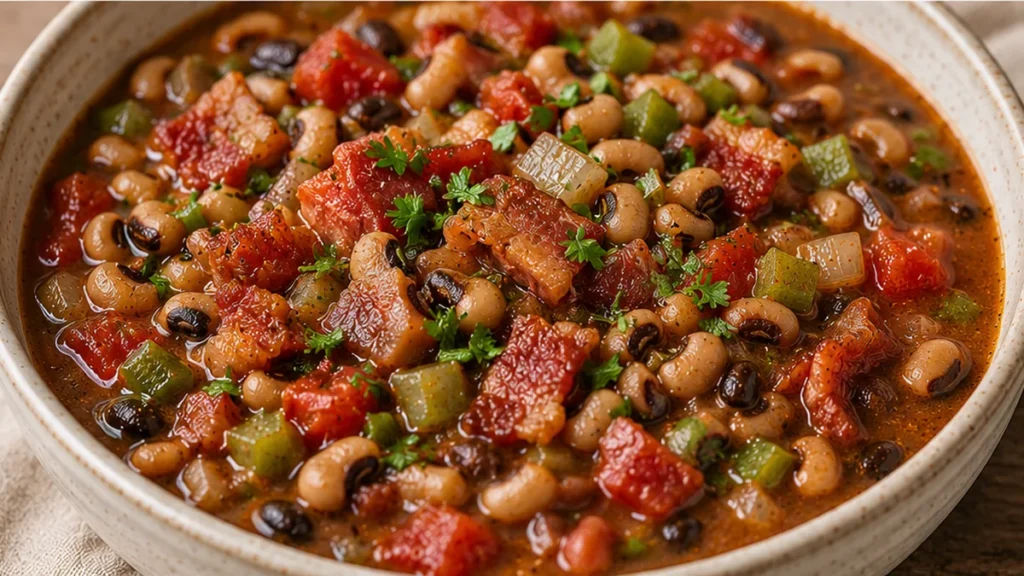
Black eyed peas with ham is a classic Southern dish, cherished for its rich, smoky flavor and comforting texture. This recipe offers a truly authentic taste, bringing together tender black eyed peas and savory ham hock for a stew that’s both hearty and deeply satisfying. It’s a dish I often turn to when I crave a meal that feels like a warm hug, perfect for chilly evenings or festive gatherings. Preparing black eyed peas from scratch allows for a depth of flavor that canned versions simply can’t match. The slow simmer gently melds all the ingredients, ensuring every spoonful of black eyed peas is infused with a delicious, complex profile. This recipe is designed to guide you through each step, making it accessible for home cooks eager to explore traditional Southern cuisine.
Key takeaways
- Soaking dried black eyed peas is crucial for even cooking.
- Build flavor by rendering bacon and sautéing aromatics separately before combining.
- The smoked ham hock is key to the dish's signature smoky, savory depth.
- Simmering allows all the distinct flavors to meld into a cohesive whole.
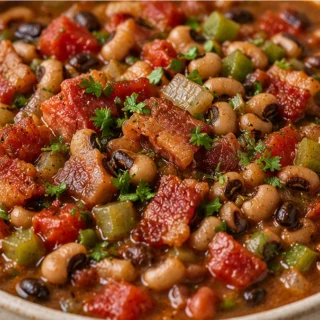
Southern Black Eyed Peas with Ham – Flavor Bomb!
Ingredients
- 1 pound black eyed peas (dry)
- 1 smoked ham hock
- 6 cups water (or low sodium chicken broth)
- 1 bay leaf
- ½ teaspoon dried thyme leaves
- 6 slices bacon
- 1 onion (diced)
- 2 ribs celery (diced)
- 2 cloves garlic (minced)
- 1 green bell pepper (diced)
Instructions
- Rinse black eyed peas and remove any debris. Place in a bowl/pot and soak 8 hours or overnight.
- In a large pot, combine ham hock, chicken broth, bay leaf and thyme. Bring to a boil over medium high heat. Reduce heat to a simmer and cover for 60-80 minutes.
- Meanwhile, in a frying pan, cook bacon until crisp. Remove bacon and set aside. Cook onion, celery and garlic in bacon grease until slightly tender.
- Add onion mixture, black eyed peas and green bell pepper to the pot and simmer an additional 45-65 minutes or until black eyed peas are tender skimming off any foam.
- Remove ham hock and cut off any meat from the bone. Add meat back to the pot with canned tomatoes (undrained), salt and pepper to taste. Simmer uncovered an additional 20 minutes or until black eyed peas reach desired consistency.
- Discard bay leaf, stir in bacon and season with salt and pepper if needed. Serve over rice with greens.
Notes
– Ensure the ham hock simmers long enough to become fork-tender. This is crucial for both flavor extraction and easily shredding the meat back into the stew. If the ham hock meat is not easily falling off the bone, continue simmering until it is.
– When adding the meat back, check the internal temperature of any reheated ham to ensure it reaches 165°F (74°C) to ensure food safety. – Leftover black eyed peas store wonderfully in an airtight container in the refrigerator for up to 3-4 days, or can be frozen for up to 3 months. Reheat gently on the stovetop, adding a splash of broth if needed to maintain consistency. Nutrition information is an estimate, calculated automatically. Values vary with brands, substitutions and portion sizes.
The technique that makes it
The foundation of this Southern black eyed peas recipe lies in building layers of flavor from the start. The smoked ham hock is crucial; it imparts a deep, smoky, and savory essence to the peas as they cook. Simmering the peas with the ham hock, water (or broth), bay leaf, and thyme allows these aromatics to meld and infuse the legumes. The initial cooking of the peas with the ham hock is a slow and steady process, ensuring they become tender and absorb the rich stock. Separately, rendering the bacon creates a flavorful fat that is then used to sauté the aromatic vegetables – onion, celery, garlic, and green bell pepper. This mirepoix, softened in bacon fat, adds sweetness, pungency, and vegetal notes that complement the smoky ham. Combining the sautéed vegetables with the cooked peas and ham hock in the final stage allows all these distinct flavor components to harmonize into a cohesive and robust dish. The slow simmer after combining ensures the flavors fully integrate.
Troubleshooting
- Failure: Peas are too hard and not tender. Fix: Ensure peas were soaked overnight or quick-soaked according to package directions. Continue simmering, adding more liquid if necessary, until tender. This can take longer than expected, especially with older dried peas.
- Failure: Dish lacks smoky flavor. Fix: The ham hock is essential for this. If it was not smoked or was too small, the smoky depth will be missing. Consider adding a dash of liquid smoke in the final stage, or next time, use a more generously sized or intensely smoked ham hock.
- Failure: Peas are mushy and falling apart. Fix: This can happen if peas are overcooked or if they were old and started to break down more easily. Reduce the heat and simmer gently for the remaining time, stirring minimally, to prevent further disintegration.
- Failure: Dish is too salty. Fix: Ham hocks and bacon can add significant salt. If the dish turns out too salty, try adding a peeled potato to the pot during the last 30 minutes of simmering; the potato can absorb some of the excess salt. Diluting with unsalted broth or water is another option.
Substitutions
- Smoked Ham Hock: Substitute with a smoked turkey wing or a piece of smoked ham butt. The flavor profile will be similar, though a turkey wing might be slightly less intensely smoky.
- Bacon: Use pancetta for a similar rendered fat and salty pork flavor, or omit entirely and sauté vegetables in a tablespoon of olive oil or butter, accepting a slight reduction in smoky depth.
- Green Bell Pepper: A poblano pepper can be used for a mild, earthy heat, or a red bell pepper for a touch more sweetness.
- Water/Broth: Low-sodium chicken broth will add a richer base flavor than water. Vegetable broth can be used for a vegetarian option, but omit the ham hock and bacon and rely on other seasonings for depth.
Pro tips
- For the most authentic flavor, allow your black eyed peas to soak overnight; this also helps reduce cooking time and improves texture.
- Ensure the ham hock simmers long enough to become fork-tender. This is crucial for both flavor extraction and easily shredding the meat back into the stew. If the ham hock meat is not easily falling off the bone, continue simmering until it is.
- When adding the meat back, check the internal temperature of any reheated ham to ensure it reaches 165°F (74°C) to ensure food safety. – Leftover black eyed peas store wonderfully in an airtight container in the refrigerator for up to 3-4 days, or can be frozen for up to 3 months. Reheat gently on the stovetop, adding a splash of broth if needed to maintain consistency.
This black eyed peas with ham recipe is a true testament to the power of simple, wholesome ingredients coming together to create something extraordinary. Enjoy this comforting dish with your loved ones, and don’t hesitate to experiment with your favorite greens or cornbread on the side. Happy cooking!
More from Vegetable & Bean Soups →
Frequently asked questions
What is the best way to prepare dried black eyed peas?
Dried black eyed peas should ideally be soaked overnight in plenty of water. Alternatively, a quick soak method involves boiling them for a minute, then letting them sit covered off the heat for an hour. This ensures they cook evenly and become tender.
Can I use canned black eyed peas instead of dried?
Yes, you can substitute canned black eyed peas for dried. Drain and rinse two 15-ounce cans of peas. Add them during the last 15-20 minutes of cooking, just long enough to heat through and absorb the flavors, to prevent them from becoming mushy.
How long do black eyed peas typically take to cook?
After soaking, dried black eyed peas usually take about 45 minutes to 1.5 hours to become tender when simmered. The exact time depends on the age of the peas and the cooking method. Older peas may take longer.
Is it essential to use a smoked ham hock?
The smoked ham hock is fundamental to achieving the classic Southern flavor profile, providing a deep, smoky, and savory base. While you can make the dish without it, the resulting flavor will be significantly less complex and lack the signature smokiness.