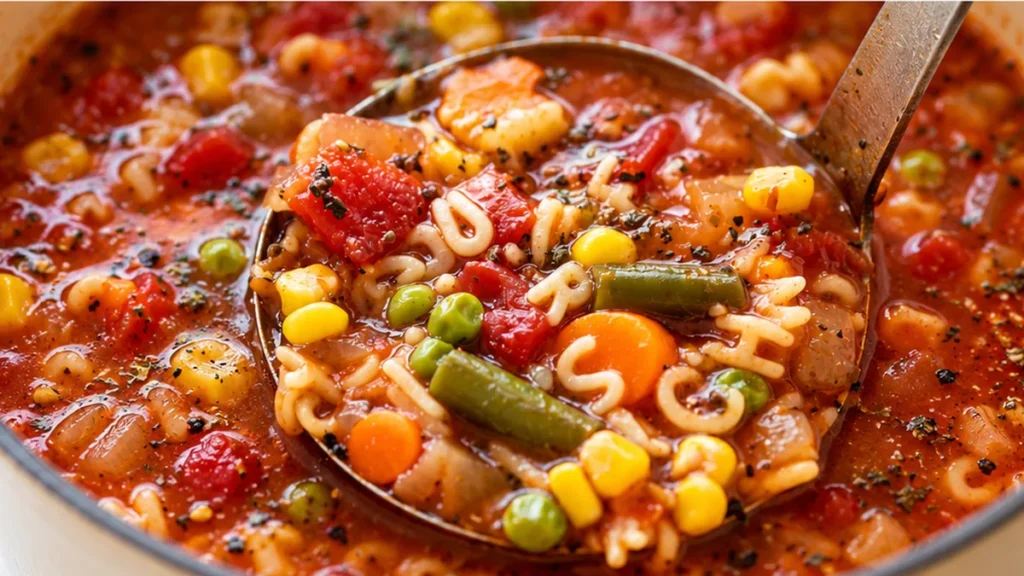
This homemade alphabet soup is a simple way to encourage kids to eat their veggies. Using pantry staples, this recipe is quick to prepare and customizable.
Key takeaways
- Use quality vegetable broth for enhanced flavor and nutrition.
- Choose a variety of colorful vegetables for visual appeal and balanced nutrition.
- Adjust seasoning gradually to achieve a well-rounded flavor profile.
- Sauté aromatics first to build a flavorful base for your soup.
Alphabet Vegetable Soup for Kids!
Ingredients
- 1 tablespoon olive oil
- 3 garlic cloves, minced
- 1 cup chopped yellow onion
- 1 tablespoon Italian seasoning
- 3/4 teaspoon salt
- 3/4 teaspoon dried thyme
- 1/4 teaspoon fresh ground black pepper
- 8 cups vegetable broth
- 3 cups mixed vegetables
- 1 medium potato, peeled & chopped
Instructions
- Heat the olive oil over medium heat in a 5-quart pot. Add the garlic, onion, Italian seasoning, salt, thyme, and pepper. Stir and cook for 5 minutes as the onion softens.
- Add 8 cups of vegetable broth, 3 cups of mixed vegetables, 1 medium potato, 1 bay leaf, 2 tablespoons of tomato paste, and 1 can of diced tomatoes. Bring to a boil, then add uncooked pasta.
- Cover and simmer for 30 minutes. Remove the bay leaf before serving.
- Serve soup warm and top with fresh parmesan cheese, if desired.
- Cover and store leftovers in the refrigerator for up to a week. To reheat, pour into a pot over medium heat and cook until warm.
Video
Notes
Understanding the Importance of Vegetable Broth in Alphabet Soup
The base of any good soup, especially in a vegetable alphabet soup, is the broth. Using a quality vegetable broth not only enhances the flavor but also provides essential nutrients. Ideally, a homemade broth is preferable, as it allows for control over the ingredients and sodium levels. A good ratio for broth to vegetables in soups is generally 2:1, ensuring a rich and flavorful base.
Choosing the Right Mixed Vegetables
The choice of mixed vegetables can greatly affect the taste and nutritional profile of your alphabet soup. Common options include carrots, peas, and corn, which add sweetness and color. When selecting vegetables, consider their cooking times; for instance, denser vegetables like carrots should be chopped smaller to cook evenly with softer vegetables like peas. Aim for a balance of textures and colors to make the soup visually appealing and nutritious.
How Seasoning Can Transform Your Soup
Seasoning plays a crucial role in elevating the flavors of your alphabet soup. The combination of Italian seasoning, thyme, and black pepper creates a well-rounded flavor profile. When adding herbs and spices, it’s essential to consider their potency; dried herbs are more concentrated than fresh ones. A general guideline is to use one-third the amount of dried herbs as you would fresh. Additionally, taste the soup as it simmers to adjust seasoning gradually, ensuring the final flavor is just right.
Cooking Techniques for Perfect Alphabet Soup
The cooking technique can significantly impact the final outcome of your soup. Start by sautéing garlic and onion in olive oil to build a flavor base. This step releases essential oils and enhances sweetness. When adding the broth, bring the mixture to a boil before reducing it to a simmer. This method allows the flavors to meld together while preventing overcooking of the vegetables. A simmering time of about 20-30 minutes is ideal, as it allows the vegetables to soften without losing their nutrients.
Understanding the Make-Ahead and Storage Behavior of Alphabet Vegetable Soup
Preparing alphabet vegetable soup in advance can be a time-saver for busy families. When made ahead, the flavors meld beautifully, enhancing the overall taste. However, it’s crucial to consider how ingredients react over time. For instance, starchy vegetables like potatoes can absorb too much liquid if stored for extended periods, leading to a mushy texture. To maintain the soup’s integrity, consider storing the broth and vegetables separately. This way, you can cook the vegetables fresh when ready to serve, ensuring they retain their texture and flavor. Additionally, alphabet vegetable soup can be stored in an airtight container in the refrigerator for up to 3 days or frozen for up to 3 months. When reheating, add a splash of broth to restore its original consistency.
Scaling the Batch for Large Gatherings
Scaling your alphabet vegetable soup recipe is straightforward, making it an excellent choice for gatherings. When doubling or tripling the recipe, maintain the same ratios for ingredients to ensure consistent flavor. However, be mindful of the cooking time; larger batches may require slightly longer simmering to achieve the desired tenderness in the vegetables. Using a larger pot or multiple pots can help manage the cooking process efficiently. If you plan to serve a large crowd, consider preparing the soup in advance and reheating it just before serving. This approach allows you to focus on other meal components while ensuring your soup is delicious and ready to enjoy.
Choosing the Right Equipment for Cooking Alphabet Soup
The equipment you use can significantly impact the cooking process and final outcome of your alphabet vegetable soup. A heavy-bottomed pot or Dutch oven is ideal for even heat distribution, preventing the soup from scorching. If you prefer a quicker cooking method, a pressure cooker can be a game-changer, reducing cooking time while intensifying flavors. For those who enjoy a smoother texture, an immersion blender can be used to puree part of the soup, creating a creamy consistency without transferring it to a blender. Additionally, using a fine mesh strainer can help achieve a clearer broth if desired. Ultimately, the right equipment can enhance your cooking experience and the quality of your soup.
How Seasonal Changes Affect Ingredient Quality in Your Soup
The quality of ingredients used in your alphabet vegetable soup can vary significantly with the seasons. Fresh, local produce is often best during its peak season, offering superior flavor and nutritional value. For example, summer vegetables like zucchini and bell peppers will taste sweeter and more vibrant than those sourced out of season. Conversely, root vegetables like carrots and potatoes are typically at their best in the fall and winter months. When making your soup, consider adjusting your vegetable choices based on seasonal availability. Not only will this enhance the flavor profile of your dish, but it will also support local farmers and reduce your carbon footprint. Additionally, seasonal ingredients can introduce new flavors and textures, keeping your soup exciting throughout the year.
Understanding the Nutritional Impact of Ingredients in Alphabet Vegetable Soup
The choice of ingredients in your alphabet soup significantly affects its nutritional profile. For instance, using a variety of mixed vegetables not only enhances flavor but also increases the soup’s vitamin and mineral content. Carrots, peas, and spinach are excellent for providing essential nutrients like beta-carotene, fiber, and iron. Aiming for a colorful mix can ensure a range of antioxidants, which are vital for children’s health. Additionally, the use of vegetable broth as a base instead of water adds depth of flavor while keeping the soup low in calories and fat. It’s important to note that fresh vegetables typically offer more nutrients than frozen or canned options, which can lose some of their nutritional value during processing.
How to Adjust Cooking Times for Different Vegetable Textures
Cooking times can vary significantly based on the types of vegetables used in your alphabet soup. For example, root vegetables like potatoes and carrots require longer cooking times to become tender, while softer vegetables such as zucchini or bell peppers cook quickly. To achieve a harmonious texture in your soup, consider adding harder vegetables first and allowing them to simmer for a longer period before introducing softer ones. A general guideline is to cook root vegetables for about 10-15 minutes before adding quicker-cooking varieties. This method ensures that all vegetables are perfectly cooked, providing a pleasant mouthfeel and avoiding mushiness.
Pairing Alphabet Vegetable Soup with Complementary Dishes
When serving alphabet vegetable soup, pairing it with complementary dishes can elevate the meal experience. For instance, a side of whole-grain bread or a simple salad can provide additional fiber and nutrients, making for a well-rounded meal. Cheese quesadillas or grilled cheese sandwiches can also be great accompaniments, appealing to children’s tastes while enhancing the overall flavor profile of the meal. Additionally, consider serving the soup with a sprinkle of fresh herbs or a dollop of yogurt on top for added flavor and creaminess. These pairings not only make the meal more enjoyable but also introduce children to new tastes and textures.
Understanding the Make-Ahead and Storage Behavior of Alphabet Vegetable Soup
Making alphabet vegetable soup ahead of time can be a real time-saver for busy families. The flavors actually deepen and improve when the soup is allowed to sit, making it an excellent candidate for meal prep. When stored in an airtight container, the soup can last in the refrigerator for up to three days. For longer storage, consider freezing the soup. However, it’s important to note that the texture of the vegetables may change after thawing. To maintain the best quality, freeze the soup without the pasta or alphabet letters, as they can become mushy. When reheating, add fresh pasta to ensure a delightful texture and taste.
How to Scale the Batch for Large Gatherings
Scaling up your alphabet vegetable soup for larger gatherings is straightforward, but attention to ingredient ratios and cooking times is key. For every additional 4 servings, increase the vegetable broth by 1 liter and add an extra cup of mixed vegetables. Be cautious with the seasoning; start with half the amount suggested, then taste and adjust as necessary. Cooking time may also vary; larger batches may require a longer simmer to ensure all flavors meld properly. Remember to use a larger pot to accommodate the increased volume, and stir occasionally to prevent sticking.
Pro tips
- Use alphabet-shaped pasta for maximum fun! – Feel free to swap in your family’s favorite vegetables. Peas, corn, green beans, and carrots are all great additions.
- For a thicker soup, you can add a bit more pasta or potatoes, or simmer uncovered for a few extra minutes.
- Store leftovers in an airtight container in the refrigerator for up to 5 days. The pasta will continue to absorb liquid.
Enjoy this heartwarming bowl of Alphabet Vegetable Soup with your family, and watch the smiles appear with every letter! It’s a simple dish that brings big joy.
Frequently asked questions
Can I use frozen vegetables in my alphabet soup?
Yes, frozen vegetables can be used in your alphabet soup. They are often flash-frozen at peak freshness, retaining their nutrients and flavor. Just add them directly to the soup without thawing, but be mindful that they may require slightly less cooking time than fresh vegetables.
How can I make this soup more filling?
To make your alphabet soup more filling, consider adding protein sources like beans, lentils, or cooked chicken. Additionally, incorporating pasta or rice can also enhance the heartiness of the soup while still keeping it kid-friendly.
How long can I store leftover alphabet soup?
Leftover alphabet soup can be stored in an airtight container in the refrigerator for up to 3-4 days. For longer storage, consider freezing it in portions. Just remember that pasta may become mushy when reheated, so it’s best to cook it separately and add it before serving.
What is the best way to reheat alphabet soup?
The best way to reheat alphabet soup is on the stovetop over medium heat, stirring occasionally until heated through. If the soup has thickened, add a splash of broth or water to reach your desired consistency. Microwave reheating is also an option; just be sure to stir halfway through for even heating.
More from Vegetable & Bean Soups →