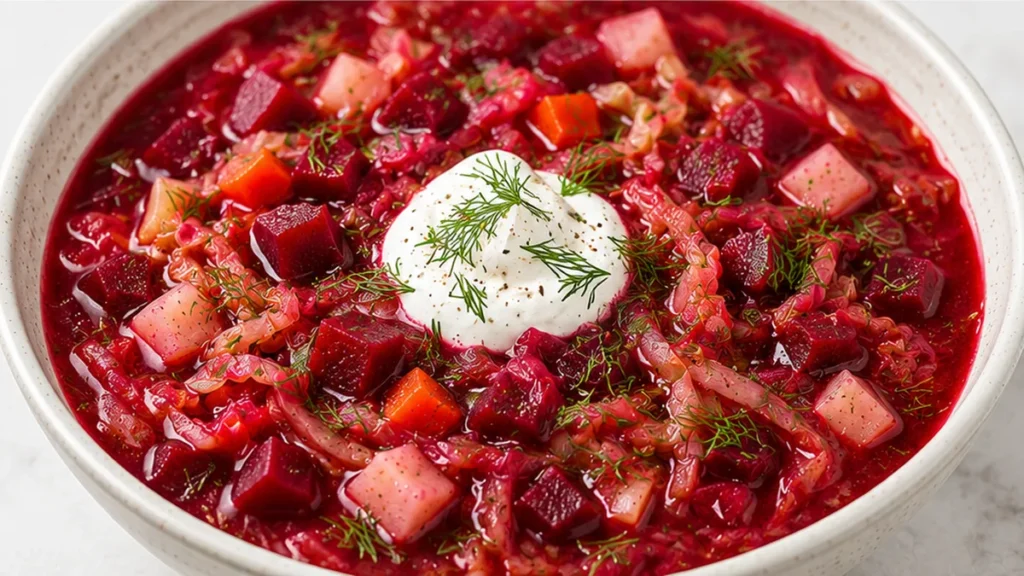
This borscht recipe brings the rich, earthy flavors of traditional beet soup right to your kitchen. A truly comforting and bright dish, it’s perfect for chilly evenings or a light yet satisfying lunch. This soup is not only beautiful with its deep red hue but also packed with nutrient-rich vegetables. I remember the first time I tried to get the color right for my borscht recipe; I realized the secret was in not overcooking the beets initially, keeping that gorgeous ruby red intact. This borscht recipe balances the sweetness of beets with the tang of lemon, creating a harmonious blend that will delight your palate.
Key takeaways
- Beets are sensitive to heat and pH; handle them carefully to preserve color and flavor.
- Add lemon juice at the end to brighten taste and stabilize beet pigments.
- Uniform vegetable cuts ensure even cooking.
- Balance earthiness with the acidity of lemon juice.
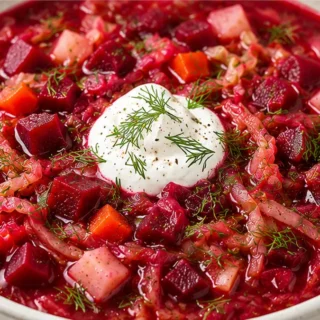
Vibrant Borscht: Delicious Beet Soup!
Ingredients
- 2 tablespoons olive oil
- 4 beets (peeled and diced ½ inch, approx 1 ½ pounds)
- 2 carrots (diced ½ inch)
- 1 large russet potato (peeled and diced ½ inch)
- ½ small green cabbage (thinly sliced)
- 2 cloves garlic (minced)
- 4 cups vegetable broth
- 4 cups beef broth
- 2 tablespoons chopped fresh dill
- 2 tablespoons fresh lemon juice
Instructions
- In a large soup pot, heat the olive oil over medium-high heat. Add the beets, carrots, potatoes, and cabbage. Cook stirring occasionally until slightly softened, about 10 minutes.
- Add the garlic and cook for 30 seconds or until fragrant.
- Pour in the vegetable broth and beef broth. Simmer uncovered for 20-25 minutes or until the beets and carrots are tender.
- Stir in the fresh dill and lemon juice. Taste and season with salt and black pepper.
- Serve with a dollop of sour cream and additional fresh dill.
Notes
– If you prefer a vegetarian version, simply use only vegetable broth and omit the beef broth.
– Borscht can be made ahead of time and tastes even better the next day. Store it in an airtight container in the refrigerator for up to 3-4 days.
– To reheat, gently warm on the stove over medium-low heat until heated through. Nutrition information is an estimate, calculated automatically. Values vary with brands, substitutions and portion sizes.
The technique that makes it
The bright color and earthy sweetness of this borscht recipe are primarily achieved through the careful handling of the beets. Beets contain betalains, pigments that are sensitive to heat and pH. To preserve their intense color and flavor, it’s crucial not to overcook them. Sautéing the diced beets briefly with the carrots and potatoes before adding the broth helps to slightly soften them and begin releasing their juices. Adding the lemon juice towards the end of the cooking process is also vital. Lemon juice, an acid, not only brightens the flavor but also helps to stabilize the betalain pigments, preventing them from turning a dull brown. A gentle simmer rather than a rolling boil will also help maintain the integrity of the vegetables and the soup’s color. Ensure the vegetables are cut into uniform, bite-sized pieces so they cook evenly.
Troubleshooting
- Failure: Borscht color is dull or brownish. Fix: This often happens from overcooking or adding acid too early. Ensure beets are not overcooked and add lemon juice only in the last 5-10 minutes of simmering. Avoid prolonged boiling.
- Failure: Borscht tastes too earthy or bitter. Fix: The earthiness can be balanced with acid and sweetness. Ensure you use the full amount of lemon juice. A pinch of sugar or a touch of honey can also counteract bitterness if needed, though this recipe relies on the natural sweetness of the vegetables.
- Failure: Vegetables are mushy. Fix: This is usually a result of over-simmering. Cut vegetables into uniform ½ inch dice and simmer only until tender, typically 20-30 minutes after adding the broth.
- Failure: Soup is too thin. Fix: While this recipe is designed for a brothy soup, you can thicken it slightly by mashing a few pieces of potato against the side of the pot towards the end of cooking, or by simmering uncovered for an additional 10-15 minutes to allow some liquid to evaporate.
Substitutions
- Beets: If fresh beets are unavailable, you can use pre-cooked, vacuum-sealed beets. Note that their flavor might be slightly less intense, and you may need to adjust seasoning. The color might also be slightly less bright.
- Broth: For a vegetarian or vegan version, substitute the beef broth entirely with vegetable broth. The flavor will be lighter, and you might want to add a bay leaf or a pinch of smoked paprika for depth.
- Potato: Any waxy potato variety like Yukon Gold can be used instead of russet. Avoid starchy potatoes like Idaho if you want to prevent the soup from becoming too thick and mushy.
- Fresh Dill: Dried dill can be used, but use about 1 teaspoon instead of 2 tablespoons, and add it earlier in the cooking process to allow its flavor to infuse. Fresh dill provides a brighter, more aromatic finish.
Pro tips
- For an even deeper flavor, roast the beets before dicing and adding them to the soup.
- If you prefer a vegetarian version, simply use only vegetable broth and omit the beef broth.
- Borscht can be made ahead of time and tastes even better the next day. Store it in an airtight container in the refrigerator for up to 3-4 days.
- To reheat, gently warm on the stove over medium-low heat until heated through.
Enjoy this soulful borscht recipe that’s as nourishing as it is delicious. Feel free to customize with your favorite additions like a touch of apple cider vinegar for extra tang or a sprinkle of caraway seeds. Happy cooking!
More from Beef Soups & Stews →
Frequently asked questions
Can I make this borscht recipe ahead of time?
Yes, borscht often tastes even better the next day as the flavors meld. Store it in an airtight container in the refrigerator for up to 3-4 days. Reheat gently on the stovetop, avoiding a hard boil.
What is the best way to cut the vegetables for borscht?
Cutting all the vegetables into uniform ½ inch dice is key for this borscht recipe. This ensures that all the ingredients cook evenly, preventing some vegetables from becoming mushy while others remain undercooked.
How can I make this borscht recipe vegetarian?
To make this borscht recipe vegetarian or vegan, simply omit the beef broth and use 8 cups of vegetable broth instead. You might consider adding a bay leaf or a pinch of smoked paprika to the broth for added depth of flavor.
Why is my borscht not as vibrantly red as expected?
The bright red color in borscht comes from the beets’ betalain pigments, which are sensitive to heat and acid. Overcooking or adding acidic ingredients too early can cause the color to fade. Add lemon juice towards the end of cooking.