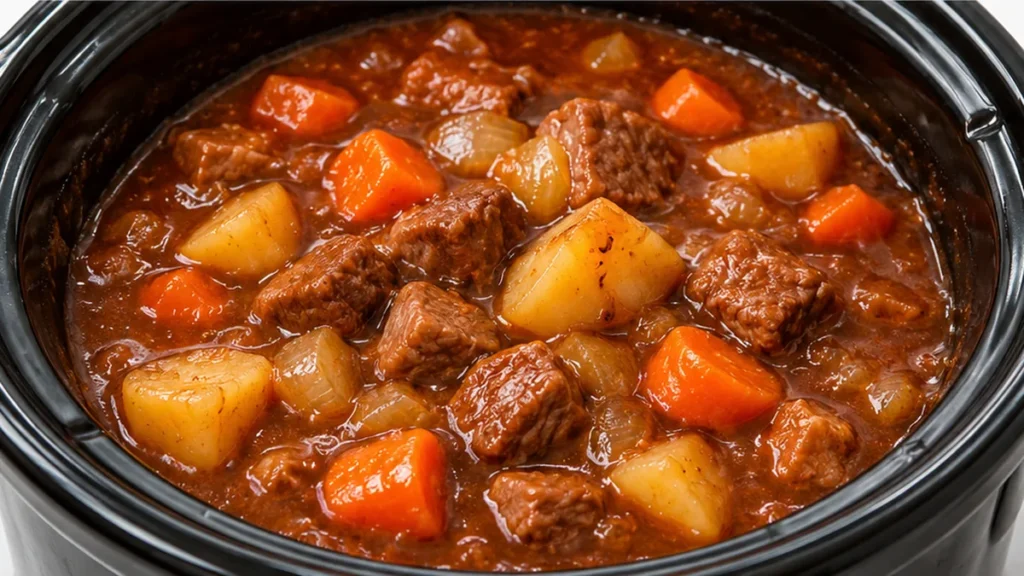
This comforting slow cooker beef stew is a simple yet satisfying dish. Packed with tender beef and vegetables, it’s perfect for any weeknight meal.
Key takeaways
- Choose tougher cuts like chuck roast for tenderness
- Balance flavors with browning and deglazing
- Select vegetables based on cooking times
- Avoid overcrowding the slow cooker for even cooking
Comforting Slow Cooker Beef Stew
Ingredients
Instructions
- Add all ingredients into your slow cooker.
- Stir to ensure all ingredients are submerged.
- Cover and cook on Low for 6-7 hours or High for 5-6 hours.
- To thicken, whisk together 2 tablespoons cornstarch and 4 tablespoons water, then stir into the stew.
How to Achieve Tender Beef in Your Stew
The key to a comforting slow cooker beef stew lies in the choice and preparation of the beef. Opt for tougher cuts like chuck roast, which benefit from slow cooking. These cuts contain more connective tissue, which breaks down over time, resulting in tender meat. Aim for a cooking temperature of around 95°C (203°F) for optimal tenderness. Cooking for 8-10 hours allows for complete breakdown of collagen, enhancing the stew’s texture.
Balancing Flavors for a Rich Stew
The depth of flavor in your beef stew is crucial. Start by browning the beef to develop the Maillard reaction, which adds complexity. Use aromatics like onions and garlic, and consider adding a splash of red wine or balsamic vinegar to deglaze the pan and incorporate those browned bits. A good ratio of liquid to solids is essential; aim for about 1 liter of broth for every 1 kg of meat. This ensures your stew is neither too watery nor too thick.
Vegetable Selection and Their Cooking Times
Different vegetables have varying cooking times, which can impact the overall texture of your stew. Root vegetables like carrots and potatoes hold up well during long cooking times, while delicate vegetables like peas should be added later. For a well-rounded stew, cut vegetables into uniform sizes to ensure even cooking. A general guideline is to add hard vegetables in the first half of cooking and softer ones in the last hour.
Common Pitfalls and Their Solutions
One common issue with slow cooker beef stew is the potential for a bland flavor. To combat this, season the beef before browning and adjust seasoning throughout the cooking process. Another frequent mistake is overcrowding the slow cooker, which can lead to uneven cooking. Stick to the recommended capacity of your slow cooker to ensure proper heat circulation. Lastly, if your stew turns out too thin, thicken it by mixing a tablespoon of cornstarch with water and stirring it in during the last 30 minutes of cooking.
Understanding How to Scale Your Slow Cooker Beef Stew
When preparing a comforting slow cooker beef stew, scaling the recipe can be essential for feeding a larger crowd or meal prepping. The ingredients can generally be increased proportionally; however, be mindful of the slow cooker’s capacity. Most standard slow cookers hold between 4 to 6 quarts. If you’re doubling the recipe, ensure you don’t exceed this limit, as overcrowding can lead to uneven cooking. Additionally, when scaling up, consider extending the cooking time slightly, as a larger volume may require more time to reach the desired temperature throughout. For example, if the original recipe calls for 8 hours on low, you might increase it to 9 or 10 hours for a doubled batch.
Equipment Variations and Their Impact on Your Stew
The type of slow cooker you use can significantly affect the outcome of your beef stew. Different models have varying heat settings and efficiencies. For instance, some slow cookers cook hotter than others, which can lead to overcooked meat if not monitored. If using a programmable slow cooker, ensure to check the manufacturer’s recommendations for cooking times. Additionally, consider using a cast-iron Dutch oven as an alternative; it retains heat exceptionally well and can be transferred from stovetop to oven, allowing for a different cooking technique that can enhance the stew’s flavor profile.
How Ingredient Quality Influences Flavor and Texture
The quality of the ingredients used in your comforting slow cooker beef stew can make a notable difference in the final dish. Fresh, high-quality vegetables and cuts of beef will yield a more robust flavor and better texture. For example, using chuck roast that has good marbling will result in more tender meat once cooked. Seasonal vegetables, such as root vegetables in the fall and winter, provide a deeper flavor than out-of-season produce. It’s also wise to consider the source of your ingredients; locally sourced or organic options often have superior taste and freshness, enhancing the overall dish.
Best Practices for Serving and Pairing Your Stew
Serving your comforting slow cooker beef stew can be as important as the cooking process itself. A well-prepared stew can be served over a bed of mashed potatoes or alongside crusty bread, which helps soak up the rich broth. Consider garnishing with fresh herbs like parsley or thyme to add a pop of color and freshness. Pairing the stew with a robust red wine, such as a Cabernet Sauvignon or a Merlot, complements the rich flavors of the beef. For a lighter option, a crisp green salad with a tangy vinaigrette can balance the hearty stew, creating a well-rounded meal.
Understanding the Effects of Make-Ahead Preparation on Flavor
Preparing your comforting slow cooker beef stew in advance can significantly enhance its flavor profile. When you make the stew ahead of time, the ingredients have more time to meld together, allowing the spices and seasonings to penetrate the meat and vegetables. This can lead to a richer, more complex taste. However, it’s essential to consider how you store it. To maintain the best flavor and texture, cool the stew completely before transferring it to an airtight container. Store it in the refrigerator for up to three days or freeze it for longer storage. When reheating, do so gently to avoid overcooking the beef, which can lead to toughness.
Batch Scaling: Adjusting Ingredients for Larger Portions
Scaling your comforting slow cooker beef stew recipe for larger gatherings requires careful consideration of ingredient proportions. A common mistake is to simply multiply each ingredient by the number of servings needed. However, the cooking time and the size of your slow cooker also play crucial roles. For instance, if you double the recipe, you may need to increase the cooking time by about 30 minutes to an hour, depending on your slow cooker model. Additionally, ensure that your slow cooker is not overfilled; it should be no more than three-quarters full for optimal cooking. This prevents uneven cooking and helps maintain the stew’s quality.
How Seasonal Ingredients Influence Your Stew’s Profile
The quality and type of ingredients you use in your comforting slow cooker beef stew can vary with the seasons, impacting both flavor and nutrition. In winter, root vegetables like carrots, parsnips, and potatoes are at their peak, offering hearty textures and flavors. In contrast, summer might bring fresher herbs and lighter vegetables, which can brighten the stew. When using seasonal produce, adjust your cooking times accordingly; for example, tender vegetables like zucchini will require less cooking time than denser root vegetables. Additionally, consider the impact of ingredient freshness on taste; locally sourced, in-season ingredients often yield a more vibrant and flavorful stew.
Understanding the Impact of Make-Ahead Preparation on Flavor Development
Make-ahead preparation can significantly enhance the flavor profile of your comforting slow cooker beef stew. When you prepare the stew in advance and allow it to rest, the flavors have more time to meld and deepen. This is due to a process called flavor integration, where the spices and aromatics infuse into the meat and vegetables over time. For optimal results, consider preparing your stew a day ahead. Refrigerate it overnight, and then reheat it gently before serving. This not only improves the taste but also allows for easier fat removal, as any excess fat will solidify on the surface, making it easier to skim off. However, when reheating, ensure that the stew reaches an internal temperature of at least 74°C (165°F) to ensure food safety.
Choosing the Right Equipment for Optimal Results
The equipment you use can greatly affect the outcome of your comforting slow cooker beef stew. Different slow cookers have varying heat settings and efficiencies. For instance, some models may run hotter than others, which can lead to overcooked or dry meat if not monitored closely. If your slow cooker tends to run hot, consider using a lower setting or reducing the cooking time. Additionally, the shape and size of your slow cooker can impact how evenly the stew cooks. A wider, shallow cooker may evaporate liquid faster than a deeper one, leading to a thicker stew. Always consult your slow cooker’s manual for specific guidelines on cooking times and settings. Understanding these nuances will help you achieve a consistently delicious stew every time.
Pro tips
Pro tip: Best served immediately while hot!
Frequently asked questions
What type of beef is best for slow cooker beef stew?
For a comforting slow cooker beef stew, tougher cuts like chuck roast or brisket are ideal. These cuts contain more connective tissue, which breaks down during long cooking, resulting in tender meat.
How can I enhance the flavor of my stew?
Enhance your stew’s flavor by browning the meat before adding it to the slow cooker. Incorporating aromatics like onions and garlic, and deglazing with red wine or broth can also add depth to the dish.
Can I add vegetables at the start of cooking?
Yes, root vegetables like carrots and potatoes can be added at the start of cooking as they hold up well. However, softer vegetables should be added in the last hour to prevent them from becoming mushy.
What should I do if my stew is too thin?
If your stew turns out too thin, you can thicken it by mixing a tablespoon of cornstarch with water and stirring it in during the last 30 minutes of cooking. This will help achieve a more desirable consistency.
More from Slow Cooker Soups →