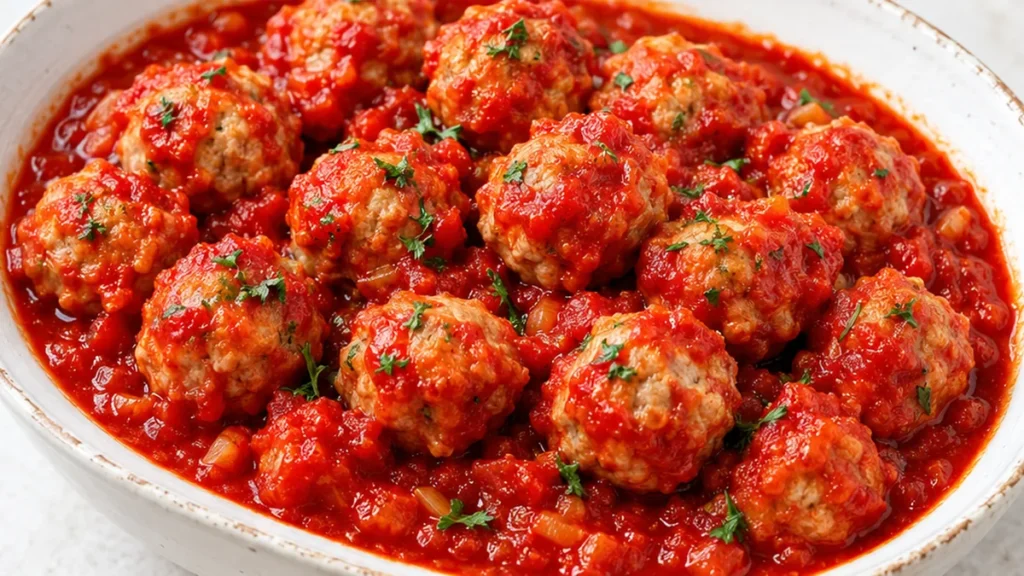
Turkey meatballs can sometimes be dry, but this slow cooker recipe guarantees tender, melt-in-your-mouth results every time. The magic lies in the combination of lean ground turkey, panko breadcrumbs for moisture, and a blend of fresh herbs that infuse every bite with aroma. This recipe is designed for maximum flavor with minimal effort, making it a weeknight savior. We’ll guide you through forming perfect meatballs and then let your slow cooker do the heavy lifting. Get ready to impress yourself and your family with these delicious turkey meatballs that are a step above the rest.
Key takeaways
- Use a proper ratio of breadcrumbs to turkey for moisture and structure.
- Avoid overcooking to prevent dryness; aim for an internal temperature of 74°C (165°F).
- Enhance flavors with fresh herbs and cheeses for a more complex taste.
- Experiment with spice levels and sauces to customize your turkey meatballs.
Turkey Meatballs That Melt in Your Mouth
Ingredients
- 2 lbs (907g) 93% lean ground turkey
- 1 large egg
- 2/3 cup (40g) panko breadcrumbs
- 2 tablespoons extra virgin olive oil
- 1/3 cup freshly grated parmesan cheese
- 3 cloves garlic, minced
- 2 teaspoons dried oregano
- 2 teaspoons dried basil
- 1 teaspoon dried thyme
- 1 and 1/2 teaspoons salt
Instructions
- In a large bowl, mix ground turkey, egg, panko, olive oil, parmesan, minced garlic, oregano, basil, thyme, and salt until just combined. Do not overmix.
- Scoop about 2 tablespoons of the mixture per meatball. Roll into balls and place on a parchment-lined baking sheet. You should have 30-34 meatballs.
- Lightly grease a slow cooker (4-quart or larger) with nonstick spray or olive oil. Pour 1 can of crushed tomatoes over the meatballs.
- Heat 1 Tablespoon of olive oil in a large skillet over medium-high heat. Sear meatballs in batches for about 1 minute per side until browned. Transfer browned meatballs to the slow cooker.
- Cover and cook on low for 6-7 hours or on high for 4 hours.
- Serve warm meatballs with sauce over pasta, in sub rolls, or on their own. Garnish with fresh herbs or parmesan if desired.
Video
Notes
The Importance of Ingredient Ratios in Turkey Meatballs
The balance of ingredients in turkey meatballs is crucial for achieving the desired texture and flavor. Ground turkey, being a lean meat, requires moisture and binding agents to prevent dryness. The inclusion of panko breadcrumbs and egg provides the necessary moisture retention and structure. The typical ratio of breadcrumbs to meat should be around 1:3, ensuring the meatballs hold together while remaining tender. Additionally, using 93% lean ground turkey strikes a balance between flavor and health, allowing for a juicy result without excessive fat.
Common Issues with Cooking Turkey Meatballs
One of the most common issues when making turkey meatballs is dryness. This often occurs due to overcooking or using too lean of a meat. To combat this, ensure that the internal temperature of the meatballs reaches 74°C (165°F) without exceeding it. Another issue could be the meatballs falling apart during cooking. This can happen if there isn’t enough binding agent; adding more breadcrumbs or an extra egg can help. Lastly, under-seasoning is a frequent pitfall; turkey meat tends to absorb flavors less than fattier meats, so be generous with herbs and spices.
Flavor Enhancements and Variations
While the base recipe for turkey meatballs is delicious, variations can elevate the dish. For instance, swapping out the parmesan cheese for feta can introduce a tangy flavor, while adding chopped fresh herbs instead of dried can enhance freshness. If you’re looking for a spicier kick, consider incorporating crushed red pepper flakes or minced jalapeños. Each swap not only alters the flavor profile but also influences the texture and moisture content, so adjustments may be necessary to maintain the meatball’s integrity.
Why Turkey Meatballs Are Unique
Turkey meatballs are distinct from their beef or pork counterparts due to their leaner composition, which results in a different mouthfeel and flavor. The use of turkey often requires careful seasoning to ensure the meat does not taste bland. Unlike other meatballs, turkey meatballs can be a versatile canvas for various cuisines, adapting well to different sauces, such as marinara, teriyaki, or even a creamy mushroom sauce. This adaptability makes them a popular choice for health-conscious eaters.
How to Prepare Turkey Meatballs Ahead of Time
Making turkey meatballs in advance is a great way to save time during busy weeknights. To prepare them ahead of time, mix your ingredients as per the recipe and form the meatballs. Place them on a baking sheet lined with parchment paper and freeze them until solid. Once frozen, transfer the meatballs to a freezer bag. They can be stored for up to three months. When ready to cook, you can bake them directly from frozen, adding an extra 10-15 minutes to the cooking time. This method maintains their moisture and flavor, ensuring they still melt in your mouth.
Scaling Up the Recipe for Larger Gatherings
If you’re planning to serve a larger crowd, scaling up your turkey meatball recipe is straightforward. Simply multiply the ingredients by your desired batch size. However, keep in mind that cooking times may vary. For larger batches, you may need to cook the meatballs in batches to ensure even cooking. Use a meat thermometer to check that the internal temperature reaches 74°C (165°F). Additionally, consider the size of your cooking equipment; using a larger pan can help avoid overcrowding, which can lead to steaming instead of browning.
Choosing the Right Equipment for Cooking Turkey Meatballs
The equipment you use can significantly affect the outcome of your turkey meatballs. A heavy-bottomed skillet or a cast-iron pan is ideal for achieving a nice sear on the meatballs, enhancing their flavor through the Maillard reaction. If you prefer baking, a rimmed baking sheet allows for even heat distribution, ensuring all sides cook uniformly. For those who enjoy a more hands-off approach, using an air fryer can yield perfectly cooked meatballs with less oil. Regardless of the method, ensure your cooking surface is preheated to achieve the best results.
Seasonal Considerations for Turkey Meatballs
The quality of your ingredients can vary seasonally, impacting the flavor of your turkey meatballs. Fresh herbs, for example, are more potent in the summer months, while dried herbs may be more suitable in winter. Additionally, consider adjusting your spices based on the season; warming spices like cinnamon or nutmeg can add depth in colder months, while bright flavors like lemon zest can enhance summer dishes. Always taste and adjust your seasoning as you go, as the freshness of your ingredients will directly influence the final dish.
Why Proper Storage of Turkey Meatballs Matters
Storing turkey meatballs correctly is essential for maintaining their texture and flavor. After cooking, allow the meatballs to cool to room temperature before transferring them to an airtight container. They can be stored in the refrigerator for up to three days or frozen for up to three months. When reheating, ensure they reach an internal temperature of 75°C (165°F) to ensure food safety. Proper storage prevents texture degradation, which can occur when moisture is lost or absorbed from other foods.
Adjusting Cooking Times for Different Sizes of Turkey Meatballs
The size of your turkey meatballs significantly affects cooking time. Smaller meatballs (about 2.5 cm in diameter) typically require around 15-20 minutes in a 200°C (400°F) oven, while larger ones (up to 5 cm) may take 25-30 minutes. A meat thermometer can be a reliable tool, ensuring that the internal temperature reaches 74°C (165°F). Adjusting the size affects not only cooking times but also the meatball’s moisture retention; larger meatballs may require more care to stay juicy.
Choosing the Right Sauce Pairings for Turkey Meatballs
The sauce you choose can elevate your turkey meatballs and complement their flavors. Tomato-based sauces, such as marinara, provide acidity that balances the richness of the meat. Creamy sauces, like Alfredo, can add a luxurious texture but may mask the meatballs’ flavor. For a lighter option, consider a lemon-butter sauce, which enhances the turkey’s natural flavors. Pairing with different sauces can transform the dish entirely, making it versatile for various occasions.
Understanding the Role of Moisture in Turkey Meatballs
Moisture control is crucial for achieving tender turkey meatballs. Ground turkey, being leaner than beef or pork, can easily dry out during cooking. To maintain moisture, it’s essential to balance the ingredients. The addition of panko breadcrumbs helps absorb moisture and creates a light texture, while the egg acts as a binder, providing both moisture and structure. Aim for a mixture that feels slightly tacky but not overly wet; this ensures the meatballs hold together without becoming dense. A common ratio is about 1/3 cup of breadcrumbs for every pound of meat. If you find your mixture too dry, consider adding a tablespoon of milk or broth. Conversely, if it’s too wet, increase the breadcrumbs incrementally.
Optimal Cooking Techniques for Juicy Turkey Meatballs
The cooking method you choose significantly impacts the juiciness of turkey meatballs. Baking is a popular method that allows for even cooking without added fat, but it can sometimes lead to a drier texture. To combat this, consider broiling the meatballs for a few minutes at the end of baking to achieve a caramelized exterior while keeping the inside moist. Alternatively, pan-frying in a bit of olive oil not only adds flavor but also creates a crispy crust, locking in moisture. If using a slow cooker, be mindful of cooking time; overcooking can lead to a rubbery texture. A cooking temperature of around 190°C (375°F) is ideal for baking, ensuring the meatballs reach an internal temperature of 74°C (165°F) without drying out.
Understanding the Impact of Ingredient Quality on Turkey Meatballs
The quality of ingredients significantly influences the flavor and texture of turkey meatballs. For instance, using fresh garlic instead of pre-minced can enhance the overall taste, as fresh garlic has a more potent flavor profile. Similarly, opting for high-quality extra virgin olive oil can contribute to a richer taste. When it comes to the ground turkey, the fat content matters; 93% lean turkey is a good choice as it retains moisture while keeping the meatballs lighter than those made with higher fat content. Additionally, the freshness of the panko breadcrumbs can affect the texture. Stale breadcrumbs may lead to a denser meatball, while fresh panko helps achieve that desired melt-in-your-mouth quality. Always check the expiration dates on your ingredients to ensure optimal flavor and texture.
Batch Scaling for Large Gatherings: Maintaining Quality in Turkey Meatballs
When scaling up the turkey meatball recipe for larger gatherings, it’s crucial to maintain the balance of ingredients to ensure consistent flavor and texture. For instance, if doubling the recipe, consider increasing the seasonings by about 1.5 times instead of doubling them outright, as flavors can become overpowering. It’s also advisable to mix the ingredients in smaller batches to ensure even distribution of spices and moisture. Furthermore, cooking times may vary; larger batches may require longer cooking times to ensure that the center of the meatballs reaches a safe temperature of 74°C (165°F). Using multiple baking sheets can help achieve even cooking, as overcrowding can lead to steaming rather than browning. Keeping these factors in mind will allow you to serve delicious turkey meatballs even when feeding a crowd.
Pro tips
- Don’t overmix the meatball mixture; it can make the meatballs tough.
- Searing the meatballs before slow cooking adds a depth of flavor and helps them hold their shape.
- Adjust cooking time based on your slow cooker; low for 6-7 hours or high for about 4 hours works well.
- Store leftovers tightly covered in the refrigerator for up to 1 week.
Enjoy these incredibly tender and flavorful slow cooker turkey meatballs! They are a versatile dish that’s sure to become a family favorite.
Frequently asked questions
Can I use ground turkey with a higher fat content?
Yes, using ground turkey with a higher fat content can result in juicier meatballs. However, it may also increase the calorie count and fat content of the dish. Adjust seasonings accordingly to balance the flavors.
How do I know when my turkey meatballs are done cooking?
The best way to check for doneness is to use a meat thermometer. Turkey meatballs should reach an internal temperature of 74°C (165°F) to ensure they are cooked through and safe to eat.
Can I freeze turkey meatballs for later use?
Absolutely! Turkey meatballs freeze well. After cooking, let them cool completely, then store in an airtight container or freezer bag. They can be frozen for up to three months and reheated in the oven or microwave.
What can I serve with turkey meatballs?
Turkey meatballs pair well with a variety of sides, such as spaghetti, mashed potatoes, or a fresh salad. They also work great in sandwiches or as appetizers with dipping sauces for a versatile meal option.
More from Broths & Noodle Soups →