
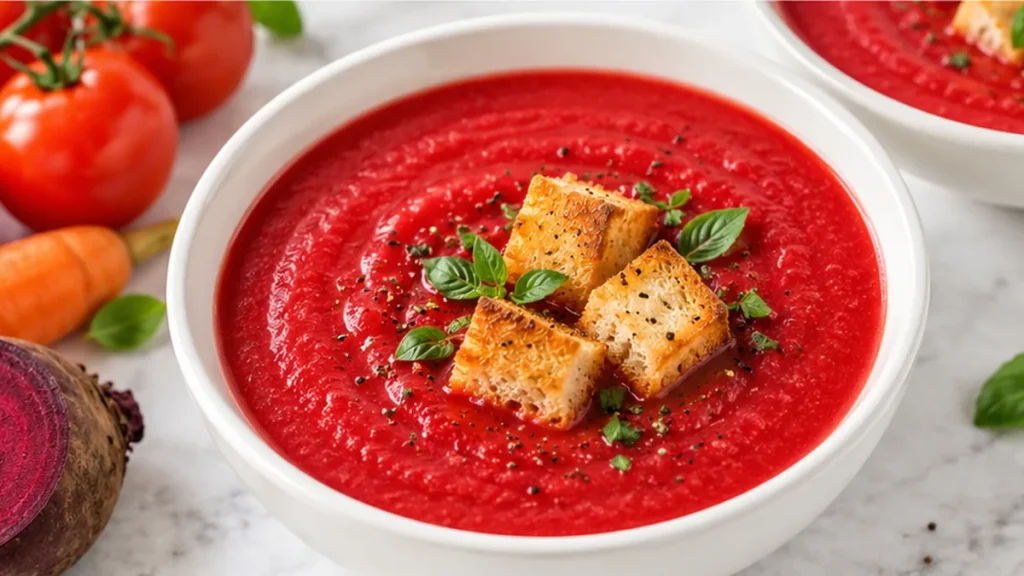
This creamy beetroot tomato soup is a nutritious blend of beets and tomatoes. It’s simple to prepare and perfect for a comforting meal.
Key takeaways
- Balancing sweetness and acidity is key to flavor.
- Roasting ingredients can enhance depth and sweetness.
- Adjust consistency with broth or pureed vegetables.
- Unique color and nutritional benefits from beets make this soup special.

Creamy Beetroot Tomato Soup
Ingredients
Instructions
- Add tomatoes, carrots, beet, cinnamon stick, and salt to the Instant Pot. Add 3 cups of water. Close the Instant Pot with the pressure release valve set to sealing. Pressure Cook for 10 minutes. Allow natural pressure release.
- Open the Instant Pot, remove the cinnamon stick, and discard it. Blend the soup using an immersion blender until smooth.
- Set the Instant Pot to Saute mode. Mix arrowroot flour in ¼ cup of water and slowly stir it into the soup.
- Heat ghee in a small pan over medium-low heat. Add cumin seeds and turn off the heat once they start to sizzle. Add the tadka to the soup.
- Add black pepper and adjust salt to taste. Bring the soup to a gentle boil and enjoy hot with crunchy croutons.
The Role of Ingredients in Creamy Beetroot Tomato Soup
The success of creamy beetroot tomato soup relies heavily on the quality and balance of its ingredients. Beetroots, with their earthy sweetness, not only add vibrant color but also contribute to the soup’s natural sweetness. Tomatoes, particularly ripe varieties, provide acidity that balances the sweetness of the beets. The creaminess often comes from dairy or plant-based alternatives, which can enhance the texture and mouthfeel of the soup. For optimal flavor, using fresh herbs and spices can elevate the dish significantly. For instance, a touch of garlic and onion can provide depth, while herbs like basil or thyme can introduce aromatic notes.
Common Issues and Solutions in Preparation
When preparing creamy beetroot tomato soup, several pitfalls can arise. One common issue is the soup being too thick or too thin. If the soup is too thick, it can be remedied by gradually adding more broth or water until the desired consistency is achieved. Conversely, if the soup is too thin, pureeing additional cooked beets or adding a starch like potato can help thicken it. Another frequent problem is an unbalanced flavor; if the soup tastes overly sweet, adding a splash of vinegar or lemon juice can help to brighten and balance the flavors. Additionally, if the soup lacks depth, consider roasting the beets and tomatoes beforehand to enhance their natural sweetness and complexity.
Ingredient Swaps and Their Impacts
Substituting ingredients in creamy beetroot tomato soup can yield different flavor profiles and textures. For example, swapping heavy cream for coconut milk will provide a dairy-free option with a subtle sweetness, but it may also impart a distinct coconut flavor. If fresh tomatoes are unavailable, canned tomatoes can be used, although they may result in a slightly different acidity level. Using smoked paprika instead of regular paprika can introduce a smoky depth, which complements the earthiness of the beets. Lastly, swapping fresh herbs for dried ones can work in a pinch, but the flavor will be less vibrant, so adjust the quantity accordingly.
Unique Characteristics of Creamy Beetroot Tomato Soup
This soup stands out from other tomato-based soups due to its unique combination of beets and tomatoes, which creates a striking color and a complex flavor profile. The natural sweetness of the beets contrasts beautifully with the acidity of the tomatoes, resulting in a well-rounded dish. Additionally, this soup can be served hot or cold, making it versatile for different seasons. The vibrant color also makes it visually appealing, adding an element of excitement to any meal. Furthermore, the nutritional benefits of beets, such as their high fiber content and antioxidants, make this dish not only delicious but also healthful.
Understanding the Impact of Ingredient Quality on Flavor
The flavor profile of creamy beetroot tomato soup is heavily influenced by the quality of its ingredients. Fresh, high-quality tomatoes contribute a natural sweetness and acidity that enhances the overall taste. When selecting beetroots, look for firm, unblemished specimens, as older or damaged beets can impart a woody flavor. Additionally, the choice of vegetable broth can affect the soup’s depth; homemade broth typically provides a richer taste compared to store-bought versions, which may contain preservatives. The freshness of herbs and spices also plays a critical role; using dried herbs can lead to a less vibrant flavor compared to fresh herbs, which release essential oils and aromas when chopped or bruised.
Batch Scaling: Adjusting Ingredients for Larger Portions
Scaling the recipe for creamy beetroot tomato soup is straightforward, but careful consideration of ingredient ratios is crucial. When doubling or tripling the recipe, maintain the same proportions of beetroots, tomatoes, and liquids to ensure consistent flavor and texture. However, be mindful that cooking times may vary; larger batches may require additional simmering time to achieve the desired consistency. It’s also essential to use a pot large enough to accommodate the increased volume, as overcrowding can lead to uneven cooking. For example, if you are making a batch for a gathering, consider using an immersion blender to puree the soup directly in the pot, which saves time and reduces the need for extra equipment.
Optimal Serving Suggestions for Creamy Beetroot Tomato Soup
Serving creamy beetroot tomato soup can be an opportunity to elevate the dish with complementary flavors and textures. A swirl of crème fraîche or a dollop of Greek yogurt adds a tangy creaminess that balances the sweetness of the beets and tomatoes. For added texture, consider garnishing with toasted seeds or nuts, such as pumpkin seeds or pine nuts, which provide a satisfying crunch. Pairing the soup with crusty bread or a fresh salad can create a well-rounded meal. Additionally, consider serving the soup chilled during warmer months, as the flavors become more pronounced when served cold, offering a refreshing alternative to the traditional hot version.
Make-Ahead Strategies for Busy Cooks
Preparing creamy beetroot tomato soup in advance can save time and enhance flavors. The soup can be made a day or two ahead, as the flavors meld and deepen during storage. To store, allow the soup to cool completely before transferring it to an airtight container; it can be refrigerated for up to three days. For longer storage, consider freezing portions in freezer-safe containers. When reheating, gently warm the soup on the stove, adding a splash of broth or water if needed to restore its creamy texture. Be cautious not to boil the soup, as this can alter the texture and flavor. Additionally, fresh garnishes should be added just before serving to maintain their vibrancy and crunch.
Maximizing Flavor Through Ingredient Quality in Creamy Beetroot Tomato Soup
The quality of ingredients significantly influences the final flavor profile of creamy beetroot tomato soup. For instance, using fresh tomatoes instead of canned can enhance the soup’s sweetness and acidity balance. A study from the National Institutes of Health indicates that fresh produce retains more nutrients and flavors than their processed counterparts. Additionally, selecting organic beetroot can impart a more robust earthiness, while the choice of dairy or non-dairy cream can alter the creaminess and mouthfeel. The balance between these ingredients is crucial; for example, if the tomatoes are particularly sweet, a slightly higher acidity from lemon juice can help create a well-rounded flavor. Aim for a ratio of 2:1 for tomatoes to beets for balanced sweetness and acidity. This attention to ingredient quality not only affects the taste but also the nutritional value of the soup, making it a healthier option.
Understanding the Impact of Cooking Techniques on Creamy Beetroot Tomato Soup
The method of cooking can greatly affect the texture and flavor of creamy beetroot tomato soup. Sautéing the onions and garlic before adding the tomatoes and beets allows for the development of a deeper flavor, as the Maillard reaction occurs. This browning process enhances the soup’s overall taste. Aiming for a sauté time of about 5-7 minutes at medium heat can yield optimal results. Furthermore, blending the soup while it is still hot ensures a smooth texture; however, blending in batches can sometimes lead to uneven consistency. Using an immersion blender is recommended for a more uniform texture, as it allows for continuous blending without the need to transfer hot liquids. Lastly, simmering the soup for an additional 10-15 minutes after blending can help meld the flavors together, creating a harmonious dish.
Understanding the Best Methods for Storing and Reheating Creamy Beetroot Tomato Soup
Proper storage and reheating are crucial for maintaining the flavor and texture of creamy beetroot tomato soup. To store, allow the soup to cool completely before transferring it to an airtight container. It can be refrigerated for up to 3 days. For longer storage, consider freezing the soup; it can last up to 3 months in the freezer. When reheating, do so gently on the stove over low heat, stirring frequently to prevent separation of the cream and to ensure even heating. If the soup appears too thick after reheating, add a splash of vegetable broth or water to achieve your desired consistency.
Choosing the Right Equipment for Optimal Results in Creamy Beetroot Tomato Soup
The equipment you use can significantly affect the outcome of creamy beetroot tomato soup. A high-quality blender is essential for achieving a smooth texture. Consider using a high-speed blender, which can create a velvety consistency without leaving any chunks. If you prefer a chunkier soup, an immersion blender may be a better option, allowing you to control the texture while blending directly in the pot. Additionally, using a heavy-bottomed pot ensures even heat distribution, preventing the soup from scorching, especially when simmering for extended periods. The right tools not only enhance the cooking process but also contribute to the final flavor and presentation of the dish.
Pro tips
Pro tip: Best served immediately while hot!
Frequently asked questions
Can I make creamy beetroot tomato soup in advance?
Yes, this soup can be made ahead of time. In fact, the flavors often improve after sitting in the refrigerator for a day. Just reheat gently before serving, adding a splash of water or broth if it thickens too much.
What can I use instead of cream for a dairy-free option?
Coconut milk or cashew cream are excellent alternatives to traditional cream. They add a rich texture while keeping the soup dairy-free, though they will impart their own flavors.
How can I adjust the sweetness of the soup?
If the soup is too sweet, you can balance it by adding a splash of vinegar or lemon juice. This acidity will help to cut through the sweetness of the beets and tomatoes.
What herbs pair well with creamy beetroot tomato soup?
Fresh herbs like basil, dill, or thyme complement the flavors of beetroot and tomato beautifully. You can also experiment with spices like cumin or smoked paprika for an added depth of flavor.
More from Creamy Soups & Chowders →