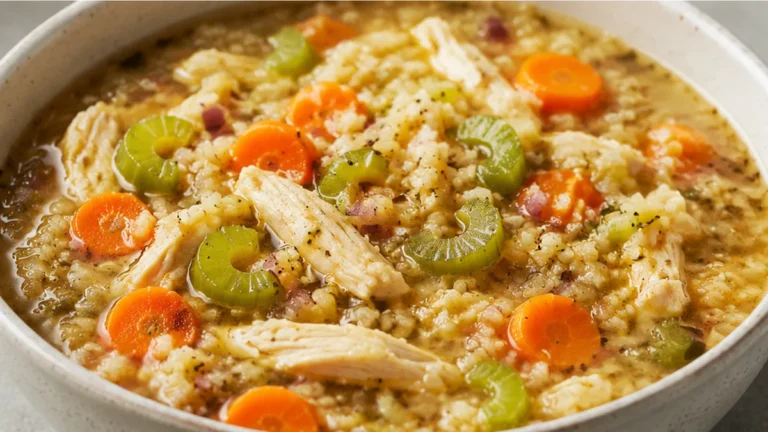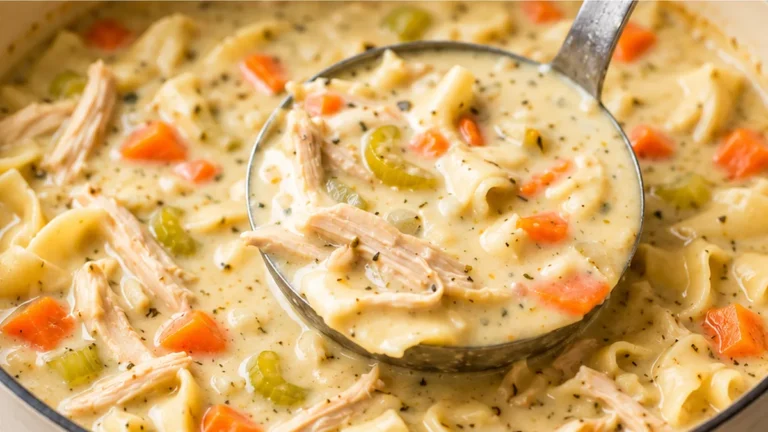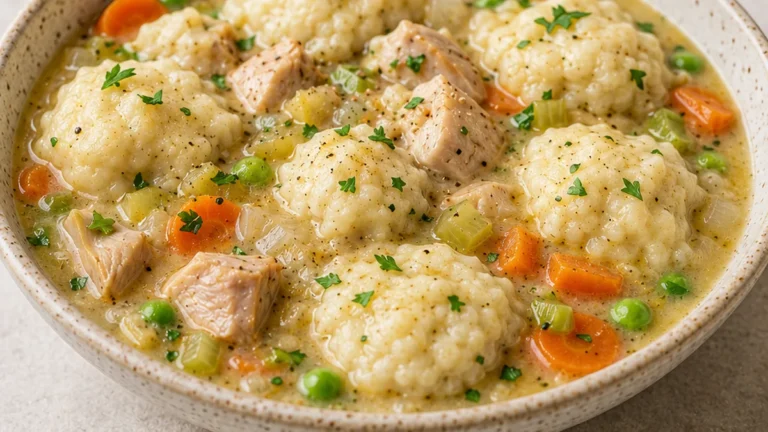
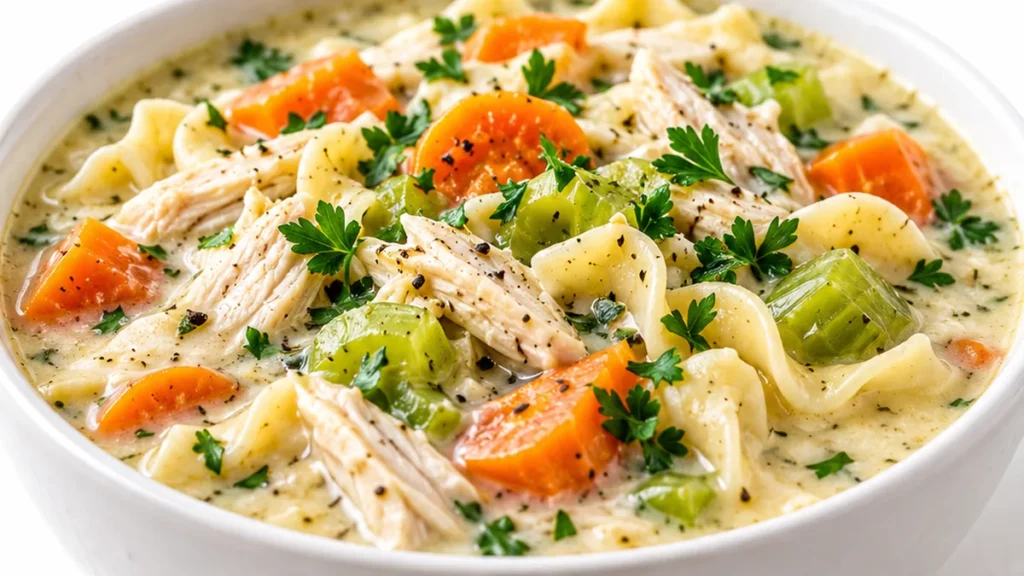
This creamy chicken noodle soup in just 3 mins is a quick solution for a hearty meal. Using rotisserie chicken saves time while delivering rich flavor.
Key takeaways
- A roux is essential for thickening and flavor.
- Tempering cream prevents curdling.
- Adding noodles at the end ensures they remain al dente.
- Quick-cooking methods make this soup ideal for busy nights.

Creamy Chicken Noodle Soup in 3 Mins
Ingredients
Instructions
- Press the Saute button on the Instant Pot and adjust to High.
- When the pot reads HOT, add olive oil. Add the onion, sauté until slightly translucent.
- Add garlic, carrots, and celery. Mix and sauté for 2 minutes.
- Add the chicken breasts, chicken broth, and 3/4 of the fresh parsley.
- Press CANCEL/OFF, place the lid on, and cook on High Pressure for 3 minutes.
- Carefully release the pressure in short bursts for about 5 minutes.
- Remove the lid, set to High Saute, and stir in the reserved herbs and cooked noodles.
- Serve hot!
Understanding the Creamy Base of Chicken Noodle Soup
The foundation of a creamy chicken noodle soup lies in the balance of ingredients that create a rich and velvety texture. The use of heavy cream or a roux helps achieve the desired creaminess. A roux, made from equal parts flour and fat, is cooked until it reaches a light golden color, which not only thickens the soup but also adds depth of flavor. Aim for a ratio of about 30 grams of flour to 30 grams of butter for a perfect roux. Adding the cream at the end of cooking ensures it doesn’t curdle, maintaining a smooth consistency.
Common Issues and Fixes in Creamy Chicken Noodle Soup
When making creamy chicken noodle soup, several common issues can arise. Here are some failure-fix pairs:
- Issue: Soup is too thin.
- Fix: Thicken with a cornstarch slurry (1 tablespoon cornstarch mixed with 2 tablespoons cold water) or add more roux.
- Issue: Curdled cream.
- Fix: Temper the cream by gradually adding hot broth to it before mixing it back into the soup.
- Issue: Overcooked noodles.
- Fix: Add noodles towards the end of cooking and cook only until al dente.
Ingredient Swaps for Enhanced Flavor
Substituting ingredients can yield different results in flavor and texture. Here are some effective swaps:
- Swap: Use half-and-half instead of heavy cream for a lighter version.
- Expected Result: Creaminess is reduced, but it still retains a pleasant texture.
- Swap: Replace egg noodles with whole wheat pasta.
- Expected Result: A nuttier flavor and increased fiber content.
- Swap: Use vegetable broth instead of chicken broth for a vegetarian option.
- Expected Result: A different but equally comforting flavor profile.
Unique Characteristics of This Soup
This creamy chicken noodle soup stands out due to its quick preparation time—ready in just three minutes. Unlike traditional recipes that simmer for hours, this method utilizes pre-cooked chicken and quick-cooking noodles, making it an ideal choice for busy weeknights. The use of frozen vegetables can also speed up the process without sacrificing nutrition or flavor.
How to Store and Reheat Creamy Chicken Noodle Soup Effectively
Proper storage of creamy chicken noodle soup is crucial to maintain its texture and flavor. Allow the soup to cool completely before transferring it to an airtight container. It can be stored in the refrigerator for up to 3-4 days. For longer storage, consider freezing the soup in individual portions. When reheating, do so gently on the stove over low heat, stirring frequently to prevent the cream from separating. If the soup appears too thick after refrigeration, add a splash of broth or water to restore its desired consistency.
Scaling Up Your Creamy Chicken Noodle Soup Recipe
When scaling up the recipe for a larger gathering, it’s important to maintain the same ratios of ingredients to ensure consistent flavor and texture. For instance, if you’re doubling the recipe, use twice the amount of chicken, noodles, and broth. However, be mindful of the cooking time; larger quantities may require additional time to simmer and heat through. Also, consider using a larger pot to accommodate the increased volume without overcrowding, which can affect cooking efficiency.
Choosing the Right Equipment for Optimal Results
The equipment you use can significantly impact the outcome of your creamy chicken noodle soup. A heavy-bottomed pot is ideal for even heat distribution, preventing scorching. If using an immersion blender to puree any ingredients for a creamier texture, ensure it’s powerful enough to handle the soup’s thickness. Additionally, a good-quality knife for chopping vegetables can enhance preparation speed and consistency. Investing in a reliable slow cooker can also provide a hands-off approach for developing deeper flavors over a longer cooking time.
Seasonal Adjustments for Creamy Chicken Noodle Soup
The quality and type of ingredients can vary with the seasons, affecting the final taste of your creamy chicken noodle soup. In spring and summer, opt for fresh, in-season vegetables like peas and asparagus to add brightness. In the fall and winter, root vegetables such as carrots and parsnips can provide a heartier flavor. Additionally, consider adjusting the herbs and spices based on seasonal availability; fresh herbs often provide a more vibrant flavor compared to dried ones. This adaptability not only enhances flavor but also aligns with seasonal cooking practices.
Understanding the Role of Broth in Creamy Chicken Noodle Soup
The broth is a critical component of creamy chicken noodle soup, influencing both flavor and texture. A well-made broth enhances the overall richness and depth of the soup. For optimal results, consider using homemade broth, which can be made by simmering chicken bones, vegetables, and herbs for several hours. This process extracts collagen and minerals, resulting in a gelatinous texture that contributes to a creamy mouthfeel. If using store-bought broth, opt for low-sodium varieties to control salt levels in your soup. The ideal broth-to-cream ratio is approximately 3:1, ensuring that the soup remains creamy without being overly rich.
Choosing the Right Noodles for Texture and Flavor
The type of noodles you choose can significantly affect the texture and overall experience of your creamy chicken noodle soup. Egg noodles are a classic choice due to their ability to hold onto the creamy broth and provide a satisfying bite. Alternatively, whole wheat or gluten-free noodles can be used, but they may alter the flavor and texture slightly. When cooking the noodles, it’s essential to undercook them slightly before adding them to the soup, as they will continue to absorb liquid and soften during the final cooking phase. Aim for al dente noodles to maintain a pleasant texture.
Adapting Creamy Chicken Noodle Soup for Seasonal Ingredients
Seasonal ingredients can transform your creamy chicken noodle soup, enhancing its freshness and flavor profile. In spring, consider adding peas and asparagus for a bright, vibrant taste. Summer allows for the incorporation of fresh herbs like basil or cilantro, which can elevate the dish. In autumn, root vegetables such as carrots and sweet potatoes can add sweetness and depth. Winter months may call for heartier greens like kale or spinach. Adjusting the soup’s seasoning to complement these ingredients is vital; fresh herbs should be added at the end of cooking to preserve their flavor, while root vegetables may need longer cooking times to soften.
Understanding the Creamy Texture in Chicken Noodle Soup
The creaminess of chicken noodle soup is primarily achieved through the emulsification of fats and liquids. When making the soup, it’s crucial to control the temperature to avoid separating the cream. Ideally, the soup should simmer at a low temperature, around 85-90°C (185-194°F). If the mixture gets too hot, the fat can separate, leading to a greasy texture. To achieve the perfect creamy consistency, consider adding a roux made from equal parts butter and flour, cooking it until golden before incorporating it into the broth. This technique not only thickens the soup but also enhances the flavor.
Batch Scaling for Family Gatherings
When scaling your creamy chicken noodle soup recipe for larger gatherings, it’s essential to adjust cooking times and ingredient proportions carefully. Doubling the recipe can be straightforward, but remember that larger batches may require longer cooking times to ensure even heating and thorough cooking of the noodles. For instance, if the original recipe calls for 200 grams of noodles, you might increase it to 400 grams for a doubled batch, but keep an eye on the cooking time to prevent overcooking. Additionally, consider using a larger pot that allows for proper stirring and prevents the ingredients from sticking to the bottom, which can lead to burning. Maintaining the right ratios of broth to cream is also vital to ensure the soup retains its creamy texture, so aim for a ratio of 4:1 broth to cream even when scaling.
Understanding the Impact of Ingredient Quality on Flavor
The quality of ingredients used in creamy chicken noodle soup plays a significant role in the overall flavor profile of the dish. Fresh, high-quality chicken will yield a more robust and savory broth compared to frozen or lower-grade options. Similarly, using homemade broth can enhance the depth of flavor, as it tends to be richer and more complex than store-bought varieties. When selecting vegetables, opt for seasonal produce; fresh carrots and celery not only contribute to the flavor but also add texture and nutritional value. Additionally, consider the quality of the dairy used to create the creamy base. Full-fat cream or a rich, flavorful milk can significantly improve the soup’s creaminess and mouthfeel. In contrast, low-fat or non-dairy alternatives may result in a thinner, less satisfying texture. Therefore, prioritizing ingredient quality can elevate your creamy chicken noodle soup from ordinary to exceptional.
Batch Scaling for Optimal Flavor Concentration
When scaling up creamy chicken noodle soup for larger gatherings, it is essential to maintain the flavor concentration and texture. A common mistake is to simply increase all ingredients proportionally, which can dilute the flavors. Instead, consider increasing the base ingredients, such as broth and chicken, while adjusting seasonings and cream to taste. For instance, if doubling the recipe, you may want to add only 1.5 times the amount of salt and spices initially, then adjust based on taste as the soup simmers. Additionally, cooking in larger batches may require longer cooking times to ensure even heat distribution. Stirring frequently is crucial to prevent the soup from sticking to the bottom of the pot. Finally, allow the soup to cool before refrigerating, as this helps preserve the creamy texture. Proper cooling and storage techniques are vital when preparing large quantities, ensuring that the soup maintains its quality when reheated.
Pro tips
Pro tip: Best served immediately while hot!
Frequently asked questions
Can I use rotisserie chicken for this soup?
Yes, rotisserie chicken is a great option for saving time. Just shred the chicken and add it to the soup as you would with any cooked chicken.
What type of noodles work best in creamy chicken noodle soup?
Egg noodles are traditional, but you can also use any quick-cooking pasta. Just be mindful of cooking times to avoid mushy noodles.
Can I make this soup ahead of time?
While you can prepare the base ahead, it’s best to add the cream and noodles just before serving to maintain the desired texture and prevent the noodles from becoming overcooked.
How can I make this soup healthier?
To make the soup healthier, consider using low-fat dairy options, adding more vegetables, or using whole grain pasta for added fiber.
More from Chicken Soups →