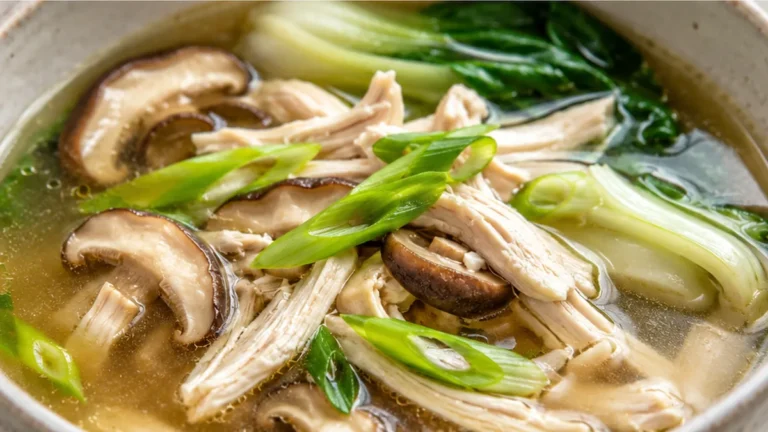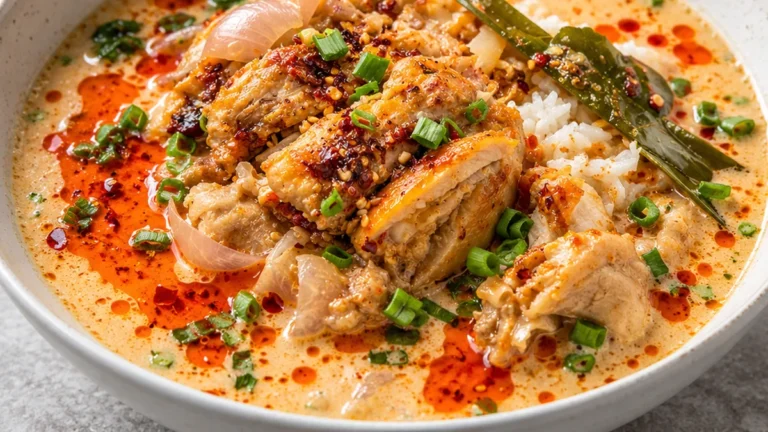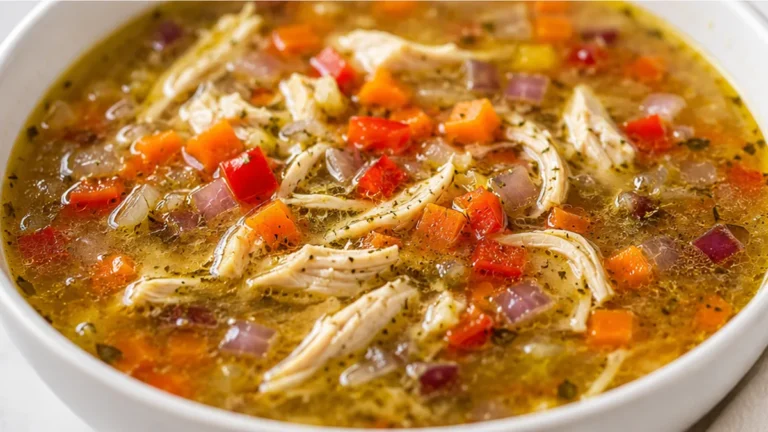
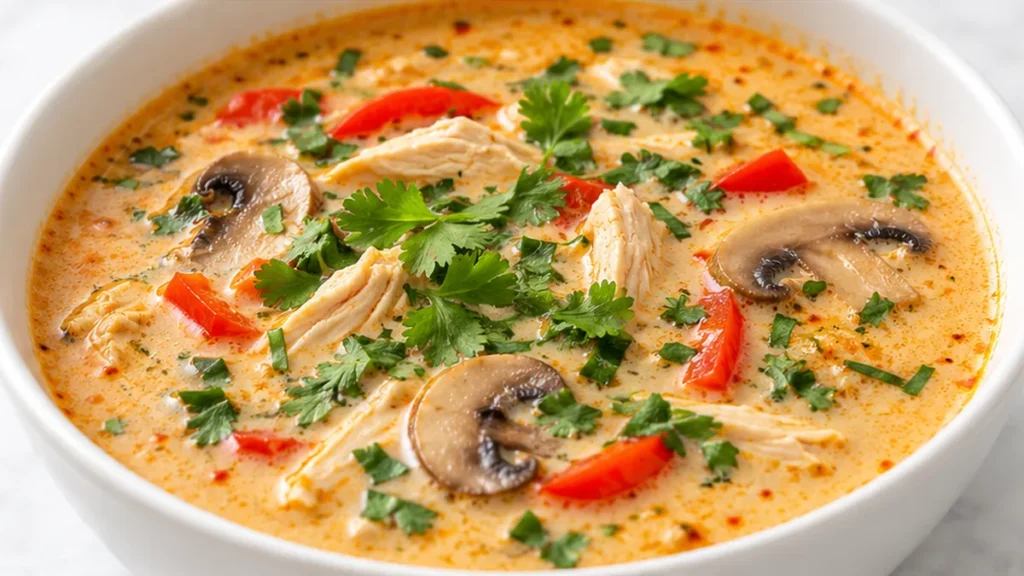
Thai chicken soup, or Tom Kha Gai, is a mix of sweet, spicy, and savory flavors with a luxurious coconut milk base. This quick version captures that authentic taste in under 30 minutes, making it perfect for any night of the week. The key is balancing the rich coconut milk with the aromatic ginger, garlic, and the distinct kick of sambal oelek. This thai chicken soup recipe is designed for home cooks who want incredible flavor without spending hours in the kitchen. We’ve streamlined the process to highlight the bright ingredients and create a deeply satisfying meal that feels both comforting and exotic.
Key takeaways
- Coconut milk adds creaminess and sweetness, essential for balance.
- Fish sauce and sugar enhance umami and flavor complexity.
- Avoid overcooking chicken to maintain tenderness and moisture.
- Fresh ingredients are crucial for authentic flavors in the soup.

Thai Coconut Chicken Soup
Ingredients
- 2 teaspoons canola oil
- 1 cup sliced mushrooms
- 1/2 cup chopped red bell pepper
- 4 teaspoons minced peeled fresh ginger
- 3 garlic cloves, minced
- 2 teaspoons sambal oelek (ground fresh chile paste)
- 3 cups low sodium chicken stock
- 1 1/4 cups light coconut milk
- 4 teaspoons fish sauce
- 1 tablespoon granulated sugar
Instructions
- Heat a Dutch oven over medium heat. Add oil to pot. Add mushrooms, pepper, ginger, and garlic. Saute for 3 minutes, stirring occasionally.
- Add sambal oelek and cook for another minute.
- Add chicken stock, coconut milk, fish sauce, and sugar. Bring to a boil; reduce heat to low and simmer for 10 minutes.
- Add chicken to pot and cook 1 minute, or until heated through. Pour soup into bowls and garnish with green onion and cilantro.
Video
Notes
Understanding the Role of Coconut Milk in Thai Chicken Soup
Coconut milk is a key ingredient in Thai chicken soup, providing a creamy texture and a subtle sweetness that balances the dish’s spicy elements. The fat content in coconut milk, typically around 17-24%, helps to create a rich mouthfeel and enhances the absorption of flavors from spices and aromatics. When using light coconut milk, the fat content is reduced, which may alter the soup’s overall richness. It’s essential to stir the coconut milk well before adding it to the soup to ensure an even distribution of flavor.
Balancing Flavors: The Importance of Fish Sauce and Sugar
Fish sauce and sugar play critical roles in achieving the authentic flavor profile of Thai chicken soup. Fish sauce, with its umami characteristics, adds depth and a savory note that complements the sweetness of the coconut milk. Typically, a ratio of 1 tablespoon of fish sauce per cup of liquid is a good starting point. Sugar, on the other hand, counterbalances the heat from the sambal oelek and enhances the overall flavor complexity. A standard guideline is to start with a teaspoon of sugar per serving and adjust according to taste.
Common Mistakes and How to Avoid Them
- Overcooking the Chicken: If the chicken is cooked for too long, it can become tough and dry. Aim for a cooking time of 10-15 minutes for tender chicken pieces.
- Too Much Heat: Using excessive sambal oelek can overpower the dish. Start with a smaller amount and gradually increase to taste.
- Not Using Fresh Ingredients: Fresh ginger and garlic provide robust flavors that dried versions cannot match. Always opt for fresh when possible.
Ingredient Substitutions and Their Effects
- Substituting Canola Oil with Coconut Oil: This swap will enhance the coconut flavor but may alter the overall taste balance.
- Using Vegetable Stock Instead of Chicken Stock: This will make the soup vegetarian, but you may lose some depth of flavor.
- Replacing Sambal Oelek with Sriracha: Sriracha is sweeter and less spicy, which may change the soup’s heat level.
A Unique Feature of Thai Chicken Soup
Unlike many other soups, Thai chicken soup often incorporates fresh herbs like cilantro and Thai basil at the end of cooking. This not only adds freshness but also enhances the aromatic profile of the dish. The herbs should be added just before serving to retain their vibrant flavor and color.
How to Properly Store and Reheat Thai Coconut Chicken Soup
Storing Thai chicken soup correctly is essential to maintain its flavors and textures. After cooking, allow the soup to cool to room temperature before transferring it to an airtight container. It can be refrigerated for up to 3 days. For longer storage, consider freezing the soup. When freezing, leave some space in the container as the soup will expand. To reheat, thaw in the refrigerator overnight if frozen, then heat gently on the stove over medium heat, stirring occasionally. Avoid boiling, as this can alter the texture of the coconut milk and make it separate.
Adjusting Portions: How to Scale Your Thai Chicken Soup Recipe
Scaling a recipe can be straightforward, but it requires attention to detail, especially with flavors. For instance, if you double the recipe, you might not need to double the fish sauce or sambal oelek, as these ingredients can overpower the dish. A good rule of thumb is to increase these potent ingredients by 1.5 times for every doubling of the base ingredients. Additionally, ensure that your cooking vessel can accommodate the increased volume without overcrowding, which can affect the cooking time and flavor development.
Choosing the Right Equipment for Optimal Results
The equipment you use can significantly affect the outcome of your Thai chicken soup. A heavy-bottomed pot is ideal for even heat distribution, preventing burning. If you have a Dutch oven, it’s an excellent choice as it retains heat well. For those with an electric pressure cooker or Instant Pot, this can speed up the cooking process and infuse flavors more deeply in less time. However, keep in mind that the texture of the vegetables may differ, as they can become softer in a pressure cooker.
Seasonal Ingredient Quality and Its Impact on Flavor
The quality of ingredients can vary significantly with the seasons, impacting the overall flavor of your Thai chicken soup. For instance, fresh ginger and garlic are best when in season, offering more robust flavors. Similarly, using fresh, high-quality mushrooms and bell peppers will enhance the soup’s taste and texture. In the off-season, consider using frozen vegetables, which are often flash-frozen at peak ripeness, retaining more nutrients and flavor than out-of-season fresh produce.
Understanding the Make-Ahead Benefits of Thai Coconut Chicken Soup
Preparing Thai coconut chicken soup in advance can enhance its flavors and save time during busy weeknights. When made ahead, the soup allows the spices and ingredients to meld together, resulting in a richer taste. To make this soup in advance, cook it fully and then cool it quickly to prevent bacterial growth. Store it in an airtight container in the refrigerator for up to three days or freeze it for up to three months. When reheating, do so gently over low heat to maintain the integrity of the coconut milk and prevent separation. This method not only preserves the flavors but also makes it a convenient meal option for future enjoyment.
Scaling Your Thai Coconut Chicken Soup Recipe
Scaling the recipe for Thai coconut chicken soup can be straightforward, but attention to ingredient ratios is crucial for maintaining flavor balance. For larger batches, consider increasing the canola oil, ginger, garlic, and sambal oelek proportionally to ensure the soup retains its aromatic qualities. However, when scaling up the coconut milk and chicken stock, you may need to slightly adjust the fish sauce and sugar to avoid overpowering the dish. A good rule of thumb is to taste and adjust as you scale, ensuring that the essence of the soup remains intact. This flexibility allows you to cater to gatherings or meal prep without sacrificing quality.
Choosing the Right Equipment for Optimal Thai Coconut Chicken Soup
The equipment you use can significantly affect the outcome of your Thai coconut chicken soup. A heavy-bottomed pot or Dutch oven is ideal for even heat distribution, which helps prevent scorching and allows for proper simmering. Using a sharp knife for slicing vegetables ensures uniform cooking, while a good-quality immersion blender can help achieve a smooth consistency if desired. Additionally, a fine mesh strainer can be useful for removing any solids if you prefer a clearer broth. Investing in the right tools can enhance your cooking experience and lead to a more flavorful and visually appealing soup.
Understanding the Make-Ahead Benefits of Thai Coconut Chicken Soup
One of the standout features of Thai Coconut Chicken Soup is its make-ahead potential. Preparing this dish in advance not only enhances the flavors but also allows for flexibility in meal planning. When made ahead, the soup can be stored in an airtight container in the refrigerator for up to three days. The key to successful make-ahead preparation lies in undercooking certain ingredients, such as the vegetables, to ensure they retain their texture when reheated. Additionally, consider separating the soup base from any garnishes, such as fresh herbs or lime wedges, to maintain freshness and vibrancy. If you plan to freeze the soup, do so before adding coconut milk, as this ingredient can alter the texture upon thawing. Instead, add the coconut milk when reheating, which will help to preserve the creamy consistency and rich flavor of the dish.
How to Scale Your Thai Coconut Chicken Soup Recipe
Scaling your Thai Coconut Chicken Soup recipe is straightforward and can be done without compromising flavor. Whether you’re cooking for a small family or a large gathering, adjust the ingredient quantities proportionally. For instance, if doubling the recipe, use four teaspoons of sambal oelek instead of two, and increase the chicken stock and coconut milk accordingly. Keep in mind that the cooking time may need slight adjustments; larger batches may require a longer simmering time to ensure all ingredients are fully cooked and flavors meld. Additionally, be mindful of the pot size; using a pot that is too small can lead to uneven cooking. If you’re using a slow cooker, scaling up may also require you to increase the cooking time. Always taste and adjust seasonings as needed, especially when increasing the volume of the soup, to maintain the balance of flavors.
Pro tips
- For extra heat, add more sambal oelek or a pinch of red pepper flakes.
- Garnish generously with fresh cilantro and sliced green onions for freshness.
- Don’t have fish sauce? Soy sauce can be used in a pinch, but it will alter the authentic flavor profile.
- If you don’t have lime juice, a splash of rice vinegar can add a touch of acidity.
Enjoy this fresh and comforting Thai chicken soup! It’s a quick, flavorful dish that’s perfect for a weeknight meal or a cozy dinner.
Frequently asked questions
Can I use shrimp instead of chicken in this recipe?
Yes, shrimp can be a delicious alternative. Just be sure to adjust the cooking time, as shrimp cooks much faster than chicken, typically only needing 3-5 minutes.
What can I do if the soup is too spicy?
If the soup is too spicy, you can reduce the heat by adding more coconut milk or a splash of lime juice to balance the flavors. Additionally, a bit of sugar can help counteract the heat.
How do I store leftovers of Thai chicken soup?
Store leftovers in an airtight container in the refrigerator for up to 3 days. Reheat gently on the stove, adding a little water or coconut milk if it thickens too much.
Can I make this soup vegan?
Yes, you can make a vegan version by substituting chicken with tofu or a variety of vegetables and using vegetable stock instead of chicken stock. Fish sauce can be replaced with soy sauce or a vegan fish sauce alternative.
More from Chicken Soups →