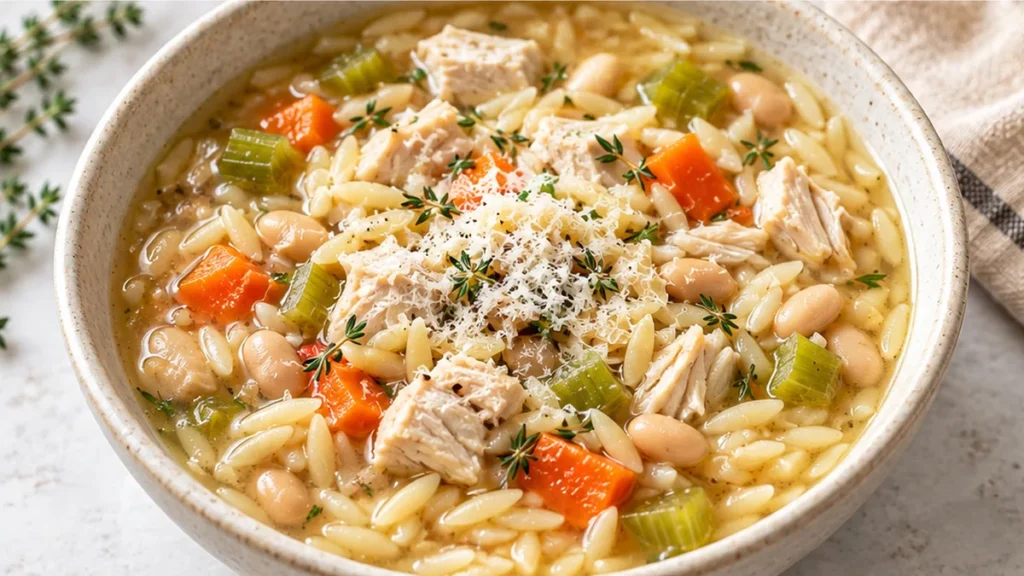
This cozy chicken orzo soup combines tender chicken and orzo pasta in a flavorful broth. It’s a simple, nourishing dish that warms the soul.
Key takeaways
- Cook orzo al dente for the best texture.
- Use homemade or low-sodium broth for depth of flavor.
- Incorporate fresh herbs and a splash of lemon for brightness.
- Add vegetables and chicken at the right time to enhance texture.
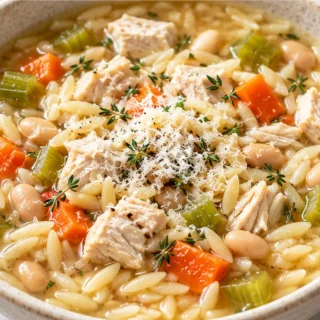
Cozy Chicken Orzo Soup: Comfort in a Bowl!
Ingredients
Instructions
- Pour 2 tablespoons extra virgin olive oil into a large pot (about 5 quart capacity) and place over medium heat. Add 1 cup chopped onion, 1 cup chopped carrot, 1 cup chopped celery, and a pinch of kosher salt. Cook until the vegetables are softened, about 5 minutes.
- Stir in 2 teaspoons finely chopped garlic and cook 1 minute. Add 1 15-ounce can white beans (cannellini or navy) including the can liquid, 2 thin slices fresh lemon, 5 cups chicken broth, and 1 small Parmesan cheese rind (if you have one). Add ½ teaspoon of kosher salt. Turn up the heat and bring to a gentle simmer. Cook 10 minutes.
- Add 1 cup dried orzo pasta. Cook about 8 minutes, or until the pasta is al dente. Stir frequently to prevent the pasta from sticking to the bottom of the pot.
- Add 2 cups cooked chicken, 2 teaspoons chopped fresh thyme and ½ cup freshly grated Parmesan cheese. Cook a few more minutes to heat up the chicken.
- Remove the lemon slices and Parmesan rind. Serve the soup with additional grated Parmesan cheese sprinkled on top.
The Importance of Properly Cooking Orzo
Orzo is a unique pasta shape that resembles rice and is often used in soups. To achieve the perfect texture in your cozy chicken orzo soup, it’s essential to cook the orzo just right. Cooking orzo for about 8-10 minutes in boiling water ensures it reaches an al dente texture, which means it should be firm to the bite. Overcooking can lead to mushy orzo, which detracts from the overall texture of the soup.
Balancing Flavors: The Role of Seasoning
Seasoning is critical in enhancing the flavors of your cozy chicken orzo soup. Start with a base of aromatics like onions, garlic, and carrots, which should be sautéed until fragrant. Adding salt early on helps to draw out the moisture and flavors from the vegetables. Consider using fresh herbs like thyme or parsley towards the end of cooking for a burst of freshness. A splash of lemon juice can also brighten the soup, balancing the savory notes with acidity.
Understanding Broth Selection for Depth of Flavor
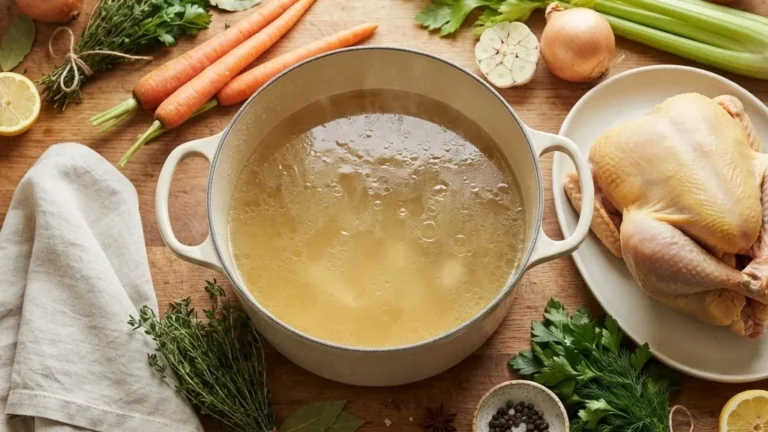
The choice of broth significantly impacts the flavor profile of your soup. Homemade chicken broth is ideal as it provides a rich, deep flavor. If using store-bought broth, opt for low-sodium versions to control the saltiness. For a more robust flavor, consider simmering the broth with additional herbs and spices, such as bay leaves or peppercorns, before adding it to the soup. This extra step can elevate the dish and create a more complex flavor.
Enhancing Texture with Vegetables and Chicken
Incorporating a variety of vegetables not only adds nutrition but also enhances the texture of your cozy chicken orzo soup. Diced celery, chopped spinach, or peas can be excellent additions. When it comes to chicken, using boneless, skinless chicken thighs can yield a juicier result compared to breasts, as they have a higher fat content. Ensure that the chicken is cooked through and tender, which can be achieved by simmering it gently in the soup until fully cooked.
Common Mistakes and How to Avoid Them
One common mistake is adding the orzo too early, which can lead to overcooked pasta. Always add it towards the end of the cooking process to maintain its texture. Another mistake is neglecting to taste and adjust seasoning throughout the cooking process. Regularly tasting the soup allows you to balance flavors effectively. Lastly, be cautious with the heat; cooking on too high a flame can lead to uneven cooking and burning.
Understanding the Impact of Ingredient Quality on Flavor
The quality of the ingredients used in cozy chicken orzo soup significantly influences the final flavor. Fresh, high-quality chicken will yield a richer broth compared to frozen or lower-grade options. Similarly, using homemade or high-quality store-bought chicken broth enhances the overall taste. Seasonal vegetables, such as carrots and celery, provide better flavor when they are fresh and in season. Selecting organic or locally sourced ingredients can also elevate the dish, as they often have more vibrant flavors due to better growing conditions. For instance, using heirloom tomatoes instead of standard varieties can add a unique sweetness and acidity to the soup. The freshness of herbs, particularly parsley or thyme, can also affect the aromatic profile of the soup. Always consider the source and quality of your ingredients to ensure the best possible outcome.
Batch Scaling: Adjusting Ingredients for Larger Portions
When scaling cozy chicken orzo soup for a larger gathering, it is essential to maintain the correct ratios of ingredients to preserve the flavor profile. A common guideline is to increase the quantities of the main ingredients—such as chicken, orzo, and vegetables—while adjusting the broth accordingly. For every additional liter of broth, consider adding approximately 200 grams of orzo and 300 grams of chicken. However, be cautious with spices and seasonings; these should be adjusted gradually and tasted as you go to avoid overpowering the dish. Cooking time may also increase slightly, so monitor the soup closely to ensure the chicken remains tender and the orzo is cooked perfectly. Additionally, using a larger pot can help distribute heat evenly, preventing any sticking or burning.
Make-Ahead Strategies for Cozy Chicken Orzo Soup
Cozy chicken orzo soup is an excellent candidate for meal prep or make-ahead cooking. To prepare in advance, cook the soup up to the point where the orzo is added. This allows the flavors to meld without compromising the texture of the pasta. Store the soup base in an airtight container in the refrigerator for up to three days. When ready to serve, reheat the broth and add the orzo, cooking it until al dente. This method prevents the orzo from becoming mushy during storage. Alternatively, the soup can be frozen in portions for up to three months. To reheat, thaw overnight in the refrigerator and warm on the stove, adding a splash of broth or water to restore the desired consistency.
Choosing the Right Equipment for Optimal Results
The equipment used to prepare cozy chicken orzo soup can greatly affect the cooking process and final result. A heavy-bottomed pot, such as a Dutch oven, is ideal for even heat distribution and prevents scorching. If using a slow cooker, sear the chicken and vegetables first in a skillet to develop flavor before transferring them to the slow cooker. This step enhances the depth of the soup. For those using an Instant Pot, ensure to adjust the cooking time accordingly; typically, the soup will cook in about 10-15 minutes under high pressure. Additionally, using a fine-mesh strainer can help achieve a clearer broth by removing any impurities or foam that may form during cooking.
Understanding the Role of Broth in Flavor Development
The broth you choose for your cozy chicken orzo soup can significantly affect the overall flavor profile. A homemade broth, simmered for several hours, allows for a depth of flavor that store-bought options often lack. Aim for a broth that is rich and well-seasoned, as it will serve as the foundation of your soup. For optimal results, consider using a ratio of 1 liter of broth for every 100 grams of orzo. This ensures that the pasta absorbs enough flavor while maintaining its texture. If you prefer a lighter soup, opt for a low-sodium broth and adjust the seasoning as necessary. Additionally, the temperature at which you add the broth can impact the cooking time of the orzo; adding cold broth can extend cooking time, while warm broth can help maintain the desired consistency.
Adjusting for Seasonal Ingredients and Freshness
Seasonal ingredients can dramatically alter the taste and quality of your cozy chicken orzo soup. For instance, using fresh vegetables like carrots and celery in the winter provides a heartier flavor, while spring vegetables such as asparagus or peas can lighten the dish. When using fresh herbs, the general guideline is to use about three times as much fresh as dried; for example, if a recipe calls for 1 teaspoon of dried thyme, use 1 tablespoon of fresh thyme. The quality of your chicken also plays a crucial role; free-range or organic chicken often offers a richer flavor than conventional options. Remember, the freshness of your ingredients will directly correlate with the soup’s final taste and aroma, making it essential to adjust your ingredient choices based on what’s available seasonally.
Understanding the Role of Orzo in Texture and Consistency
Orzo, a type of pasta shaped like rice, plays a crucial role in the texture and consistency of cozy chicken orzo soup. The starch released from the orzo as it cooks contributes to the soup’s creamy texture, enhancing its comforting nature. Cooking the orzo directly in the soup allows it to absorb the broth, infusing the dish with flavor. However, it’s essential to monitor the cooking time closely; overcooked orzo can become mushy, altering the soup’s overall mouthfeel. Ideally, orzo should be cooked al dente, which typically takes about 8-10 minutes in the simmering broth. This ensures that it retains some bite and does not disintegrate into the soup. Additionally, the ratio of liquid to orzo is vital: a standard ratio is about 1 cup of orzo to 4 cups of broth. Adjusting this ratio can lead to either a heartier soup or a more broth-heavy version, depending on personal preference.
Pairing Ingredients for Enhanced Flavor Profiles
The flavor profile of cozy chicken orzo soup can be significantly enhanced by the careful selection and pairing of ingredients. Fresh herbs, such as thyme and parsley, not only add vibrant color but also elevate the aromatic quality of the dish. When using dried herbs, remember that they are more concentrated, so reduce the quantity accordingly—typically, 1 teaspoon of dried herbs can replace 1 tablespoon of fresh. Additionally, incorporating vegetables like carrots and celery not only provides texture but also contributes natural sweetness and depth to the soup. For a more robust flavor, consider adding a splash of white wine or a squeeze of lemon juice just before serving; this acidity can brighten the overall taste. Lastly, the quality of the chicken used matters significantly; using free-range or organic chicken can impart a richer flavor to the broth, making the soup more satisfying.
Pro tips
Pro tip: Best served immediately while hot!
Frequently asked questions
Can I use other types of pasta instead of orzo?
Yes, you can substitute orzo with other small pasta shapes like ditalini or acini di pepe. However, cooking times may vary, so adjust accordingly to ensure the pasta is cooked al dente.
How can I make this soup vegetarian?
To make a vegetarian version of cozy chicken orzo soup, replace chicken with chickpeas or tofu and use vegetable broth instead of chicken broth. This will maintain the soup’s heartiness while keeping it plant-based.
What can I do if my soup is too salty?
If your soup is too salty, you can add more liquid, such as water or unsalted broth, to dilute the saltiness. Adding a diced potato can also help absorb some of the salt while cooking.
How do I store leftovers of this soup?
Store leftovers in an airtight container in the refrigerator for up to 3 days. The orzo may absorb some broth, so you may need to add a bit of water or broth when reheating to restore the desired consistency.
More from Chicken Soups →