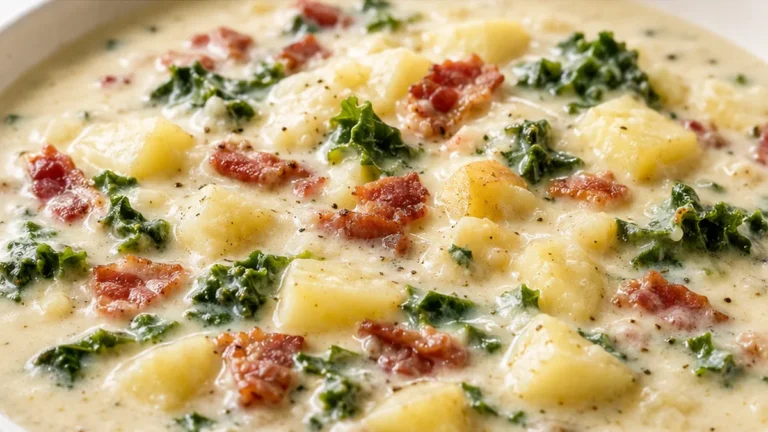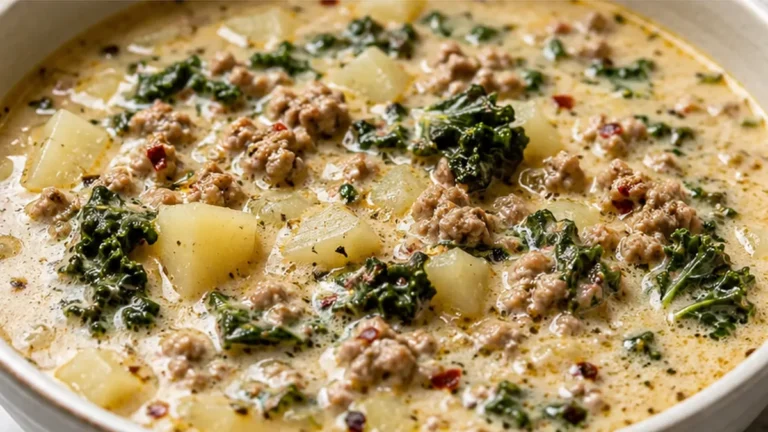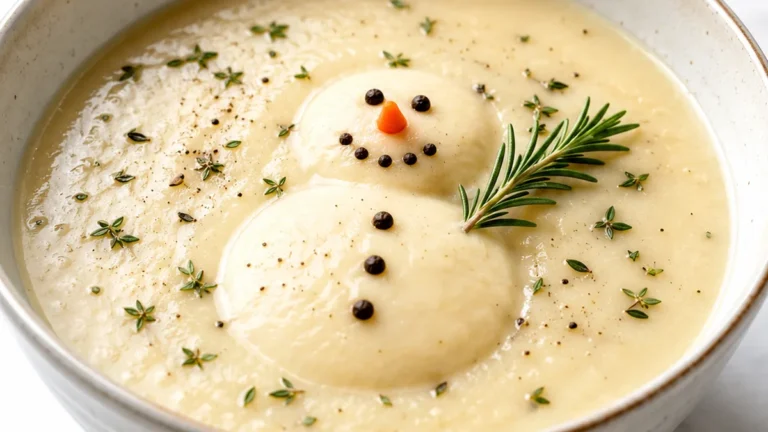
This ham chowder recipe delivers classic comfort. It balances savory ham with sweet corn and tender potatoes in a rich, creamy broth. Perfect for a weeknight meal.
Key takeaways
- Building a proper roux is key for thickening.
- Gradually add liquids to prevent lumps.
- Add pre-cooked ingredients like ham and corn at the end.
- Adjust consistency with additional liquid or a slurry if needed.

Creamy Ham & Corn Chowder: Instant Comfort Food
Ingredients
- 1 1/2 cups ham, roughly chopped
- 1/2 tbsp olive oil
- 3 tbsp butter
- 1 garlic clove, minced
- 1 small onion, diced (yellow, brown or white)
- 2 potatoes, peeled and diced into 8mm / 1/3″ cubes
- 1 1/2 cups frozen corn (or drained canned corn)
- 5 tbsp flour
- 2 cups milk
- 1 cup chicken stock
Instructions
- Melt butter in a large saucepan over medium heat.
- Add the onion and garlic and sauté for 5 minutes until translucent. Do not let the onion brown.
- Add the flour and whisk until mixed through the butter. Pour 1 cup of milk in and whisk until it starts to thicken (around 1 1/2 minutes), then pour the remaining cup of milk in. Whisk until it thickens – around 1 to 1 1/2 minutes. Then add the chicken stock, and 1 1/2 cups of water and whisk until combined.
- Increase heat to medium high and add the potatoes into the soup. Cook for 10 to 12 minutes, whisking fairly regularly to ensure the soup doesn’t stick to the bottom of the saucepan. The soup will thicken as it cooks. Use the remaining 1/2 cup of water if the soup gets too thick before the potato has finished cooking.
- Just before the potato has finished cooking, add the corn in (just to heat it through).
- While the potato is cooking, heat olive oil in a small fry pan over high heat. Add the ham and sauté for 1 – 2 minutes until nicely browned. Remove fry pan from the heat and set aside.
- When the potato is cooked (tender but still holding its shape), remove the soup from the stove and stir through most of the thyme and ham (reserve a bit for garnish).
- If the soup is too thick for your liking, use water (or milk) to get the soup to your desired consistency. Add the salt and 5 grinds of black pepper, then do a taste test and adjust the saltiness if required.
Notes
– Ensure potatoes are diced uniformly for even cooking. They should be tender but hold their shape.
– Adjust soup consistency with extra water or milk if it becomes too thick during cooking. Nutrition information is an estimate, calculated automatically. Values vary with brands, substitutions and portion sizes.
The technique that makes it
The foundation of a great ham chowder lies in building a rich, flavorful base and achieving the perfect creamy consistency. We start by sautéing the aromatics – garlic and onion – in a combination of olive oil and butter. This process, known as sweating, gently cooks the vegetables, releasing their natural sweetness and aroma without browning them, which could impart a bitter taste. The butter adds richness, while the olive oil provides a slightly higher smoke point.
Next, the flour is incorporated to create a roux. This is a crucial step for thickening the chowder. By cooking the flour with the fat (butter and oil), you toast it slightly, removing the raw flour taste and creating a smooth, lump-free base. Stirring the flour in for a minute or two before adding liquids ensures it’s well-cooked. Gradually whisking in the milk and chicken stock is essential to prevent lumps. Adding the liquid slowly allows the starch molecules in the flour to hydrate and swell, creating a smooth, velvety texture. The potatoes are added next and simmered until tender, absorbing the flavors of the broth. Finally, the pre-cooked ham and corn are added towards the end, just long enough to heat through, preserving their texture and flavor without becoming mushy or overcooked.
Troubleshooting
- Chowder is too thin: If your chowder hasn’t thickened to your liking, you can create a slurry by whisking 1-2 tablespoons of cornstarch or flour with an equal amount of cold water or milk. Stir this mixture into the simmering chowder and cook for a few more minutes until it reaches the desired consistency.
- Chowder is too thick: To thin a chowder that has become too dense, gradually whisk in more chicken stock or milk, a quarter cup at a time, until the desired consistency is achieved. Be sure to heat it through after adding more liquid.
- Lumps in the chowder: Lumps are usually caused by adding liquid too quickly to the roux. To fix this, you can try to whisk vigorously to break them up. If that doesn’t work, carefully strain the chowder through a fine-mesh sieve, pressing on the solids to extract the liquid, then return the smooth liquid to the pot.
- Ham is too salty: If your ham is particularly salty, consider rinsing it under cold water before chopping and adding it to the chowder. You can also adjust the saltiness by adding a bit more liquid (milk or stock) and omitting any additional salt until tasting.
Substitutions
- Ham: Diced cooked bacon or shredded cooked chicken can be used in place of ham for a different flavor profile. The result will be a bacon chowder or chicken chowder, respectively, with a similar creamy texture.
- Potatoes: Sweet potatoes or butternut squash can be substituted for regular potatoes. This will add a subtle sweetness and change the color of the chowder, offering a slightly different nutritional profile and flavor.
- Milk: Evaporated milk can be used for a richer, creamier consistency. Non-dairy alternatives like unsweetened almond milk or soy milk can be used for a dairy-free version, though the flavor and creaminess may vary.
- Chicken Stock: Vegetable stock can be used as a substitute for chicken stock to make the chowder vegetarian-friendly (ensure ham is omitted or replaced with a vegetarian alternative). The flavor will be lighter and less savory.
Pro tips
- Use low-fat milk for a lighter chowder, or full-fat for extra richness.
- Ensure potatoes are diced uniformly for even cooking. They should be tender but hold their shape.
- Adjust soup consistency with extra water or milk if it becomes too thick during cooking.
Enjoy this delightful ham and corn chowder, a perfect balance of flavors and textures. Serve hot and savor every spoonful!
More from Creamy Soups & Chowders →
Frequently asked questions
Can I use fresh corn instead of frozen?
Yes, you can use fresh corn. You’ll need about 1 1/2 cups of fresh corn kernels. It’s best to add fresh corn during the last 5-10 minutes of simmering to ensure it cooks through and retains a slight crispness, similar to frozen corn.
What kind of ham is best for chowder?
Fully cooked ham, such as leftover baked ham or pre-cubed ham from the deli counter, works best. This ensures the ham is tender and flavorful without needing to cook for an extended period within the chowder itself.
How can I make this chowder richer?
For a richer chowder, you can substitute half-and-half or heavy cream for some or all of the milk. You could also add a tablespoon of butter at the very end, stirring it in until melted, for an extra boost of richness and silky texture.
Can I make this chowder ahead of time?
Yes, ham chowder can be made ahead. Store it in an airtight container in the refrigerator for up to 3 days. Reheat gently on the stovetop over low heat, adding a splash of milk or stock if it has thickened too much during storage.