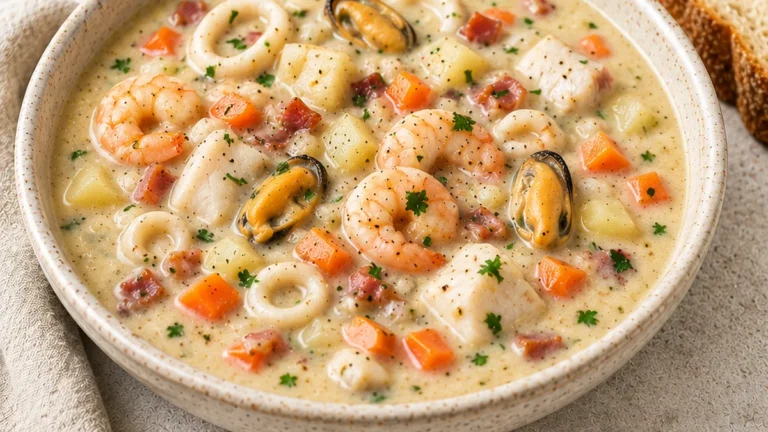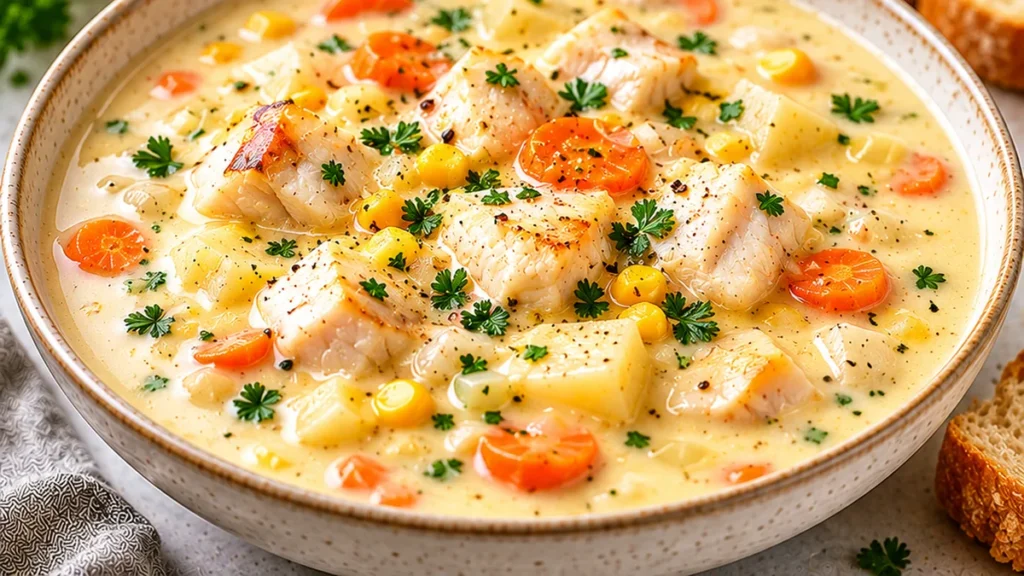
This fish chowder is the ultimate comfort food, perfect for a cozy evening. It’s surprisingly simple to prepare, using readily available ingredients to create a rich, creamy, and deeply satisfying soup. The combination of tender fish, tender vegetables, and a velvety broth makes this fish chowder a guaranteed crowd-pleaser. this recipe for fish chowder offers a delightful culinary experience. It’s a wholesome meal that warms you from the inside out, proving that delicious homemade soup doesn’t need to be complicated.
Key takeaways
- The foundation of a great fish chowder is a well-cooked roux and properly sautéed aromatics.
- Gradually add liquids to the roux while whisking to prevent lumps and ensure even thickening.
- Adjust seasoning and cooking times to avoid blandness or mushy vegetables.
- Substitutions can be made, but be mindful of how they will affect the final flavor and texture.
Creamy Fish Chowder: Comfort in a Bowl!
Ingredients
- 40 g / 3 tbsp butter (, unsalted )
- 2 garlic cloves (, minced)
- 1 small onion (, finely chopped)
- 2 small carrots (, halved, cut into 0.5cm / 1/5″ slices)
- 1/2 cup (125ml) dry white wine (can skip)
- 1/4 cup (35g) flour ( (plain / all purpose))
- 3 cups (750 ml) milk (, any fat %)
- 2 cups (500 ml) fish stock, clam juice OR chicken stock, preferably low sodium (Note 1)
- 2 cups potato (, 1.5 cm/ 0.5″ cubes (~1 large potato))
- 1 cup corn (, frozen or canned (drained))
Instructions
- Melt butter in a large pot over medium heat.
- Add garlic and onion, cook for 5 minutes until translucent but not golden.
- Add carrots and stir through.
- Turn heat up to high and add wine. Stir then let it simmer rapidly until it’s mostly evaporated.
- Add flour and stir for 30 seconds – it will become sludgy!
- Slow pour in broth while stirring to dissolve paste, then stir in milk.
- Add potato, corn, salt and pepper. Bring to simmer then turn heat down so it’s simmering gently.
- Cook for 8 minutes, stirring every now and then, or until potato is almost cooked.
Notes
– Ensure potatoes are cut into even cubes for uniform cooking.
– Stir frequently during the simmering stage to prevent sticking. Nutrition information is an estimate, calculated automatically. Values vary with brands, substitutions and portion sizes.
The technique that makes it
The key to a truly creamy and well-textured fish chowder lies in building a proper base and understanding how the ingredients interact. We start by sautéing the aromatics – garlic, onion, and carrots – in butter. This process, known as sweating, gently cooks the vegetables, releasing their natural sweetness and flavor without browning them excessively. Browning can introduce bitterness, which we want to avoid in a delicate chowder. Following this, the addition of white wine (if using) serves to deglaze the pan, lifting any flavorful bits stuck to the bottom and adding a layer of acidity that balances the richness of the milk and cream later on. The flour is then whisked in to create a roux. Cooking the roux for a minute or two is crucial; this toasts the flour slightly, removing the raw flour taste and ensuring a smoother, more cohesive chowder. The liquid (milk and stock/clam juice) is added gradually while whisking constantly. This slow incorporation prevents lumps from forming and allows the starch in the flour to hydrate and thicken the liquid evenly. The potatoes are then simmered until tender, releasing some of their starch into the chowder, which further contributes to its creamy consistency. Finally, the corn is added towards the end to retain its texture and sweetness. The residual heat is enough to warm it through without making it mushy.
Troubleshooting
- Chowder is lumpy: This usually happens if the liquid wasn’t added gradually to the roux, or if the roux wasn’t cooked sufficiently. To fix, carefully whisk the chowder over low heat. If lumps persist, you can try passing a portion of the chowder through a fine-mesh sieve and whisking it back in, or use an immersion blender very briefly on a low setting to break up the lumps.
- Chowder is too thin: If the chowder lacks thickness, it means the roux ratio was insufficient for the amount of liquid, or the potatoes didn’t release enough starch. To thicken, create a slurry by whisking together 1 tablespoon of cornstarch or flour with 2 tablespoons of cold water or milk. Stir this slurry into the simmering chowder and cook for a few more minutes until thickened.
- Chowder is bland: Insufficient seasoning or not developing enough flavor in the base can lead to a bland chowder. Ensure you’ve seasoned adequately with salt and pepper throughout the cooking process, especially after adding the liquids. You can also enhance flavor by simmering with a bay leaf or adding a pinch of dried thyme with the aromatics. A squeeze of lemon juice at the end can also brighten the flavors.
- Vegetables are mushy: This occurs from overcooking, particularly the potatoes and corn. Ensure potatoes are cut into uniform, appropriate-sized cubes and are not boiled past tenderness. Add frozen or canned corn only in the last few minutes of cooking to preserve its texture.
Substitutions
- Fish Stock/Clam Juice: If you don’t have fish stock or clam juice, chicken stock is a suitable alternative, though it will impart a slightly different flavor profile. Vegetable stock can also be used for a vegetarian version, but ensure it’s flavorful. For an even richer flavor, you could use a combination of milk and heavy cream for part of the liquid.
- White Wine: The white wine adds a subtle complexity and acidity that balances the richness. If omitting, you can replace it with an equal amount of extra fish stock or chicken stock, or add a tablespoon of lemon juice or white wine vinegar at the end of cooking to mimic the acidity.
- Potatoes: While Yukon Gold or red potatoes hold their shape well, other waxy potato varieties can be used. Avoid starchy potatoes like Russets, as they tend to break down too much and can make the chowder overly thick and pasty. Sweet potatoes could be used for a different flavor profile and color.
- Corn: Fresh corn kernels cut from the cob can be used instead of frozen or canned. You might need to add them slightly earlier if using fresh corn to ensure they cook through. If you don’t have corn, peas are a good substitute, added in the last few minutes of cooking.
Pro tips
- For best results, use a good quality fish stock.
- Ensure potatoes are cut into even cubes for uniform cooking.
- Stir frequently during the simmering stage to prevent sticking.
Enjoy this hearty fish chowder as a satisfying main course or a delightful starter. It’s a classic for a reason!
More from Creamy Soups & Chowders →
Frequently asked questions
What kind of fish is best for fish chowder?
For a creamy fish chowder, flaky white fish like cod, haddock, or pollock work wonderfully. These varieties hold their shape well and absorb the creamy broth beautifully. Avoid oily fish as they can overpower the delicate flavors of the chowder, leading to a less balanced taste.
How do I make creamy fish chowder thicker?
To thicken your fish chowder, you can create a roux by melting butter and whisking in an equal amount of flour, cooking for a minute before adding liquid. Alternatively, mash some of the cooked potatoes against the side of the pot or stir in a cornstarch slurry (cornstarch mixed with cold water) towards the end of cooking.
Can I make fish chowder ahead of time?
Yes, fish chowder can be made a day in advance. Store it in an airtight container in the refrigerator. The flavors will meld beautifully overnight. Reheat gently on the stovetop over low heat, being careful not to overcook the fish. You may need to add a splash of milk or cream to restore consistency.
How long does fish chowder last in the fridge?
Creamy fish chowder is best enjoyed within 2-3 days when stored properly in an airtight container in the refrigerator. After this period, the texture of the fish may degrade, and the flavors might not be as fresh. Always ensure it’s reheated thoroughly before serving.