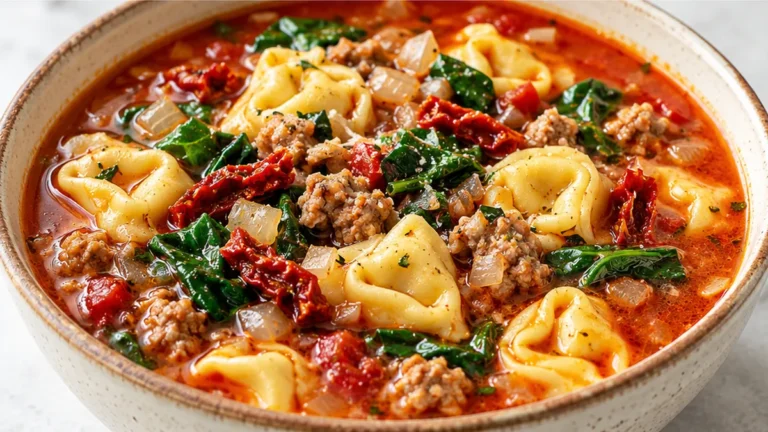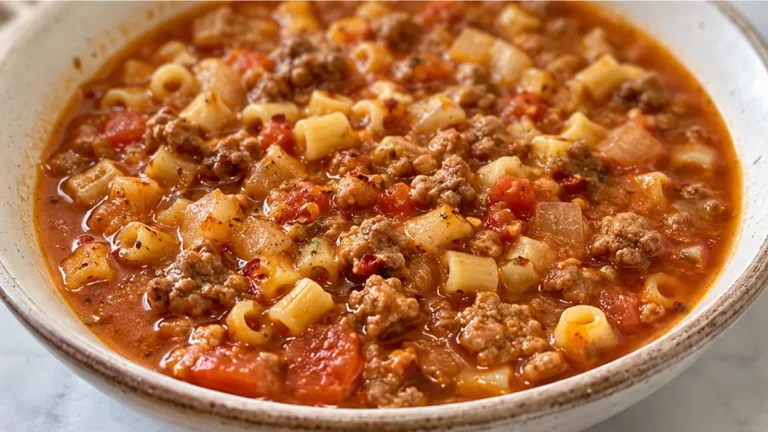
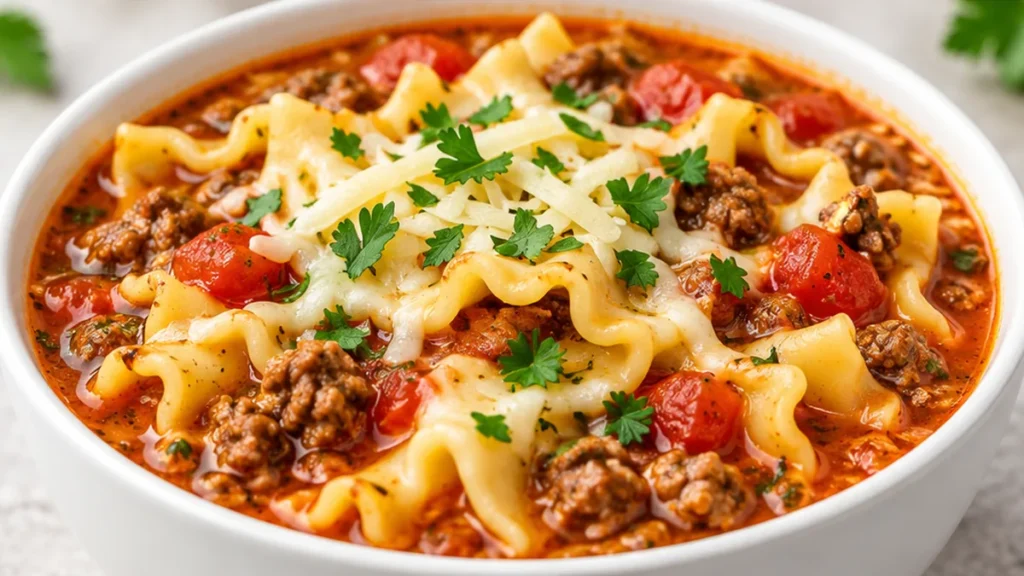
This lasagna soup with olive oil is a comforting dish that combines classic flavors in a simple recipe. It’s perfect for a weeknight meal or a cozy gathering.
Key takeaways
- Using olive oil enhances flavor and aids in nutrient absorption.
- Avoid overcooking pasta by cooking it separately.
- Allow the soup to simmer for at least 20 minutes for the best flavor.
- Ingredient swaps can significantly alter the dish’s richness and texture.
Easy Lasagna Soup: Comfort in Every Spoonful!
Ingredients
Instructions
- Heat olive oil in a large pot or Dutch oven over medium heat. Add chopped onions and cook until softened, about 5 minutes. Stir in minced garlic and cook for another minute until fragrant.
- Add ground beef to the pot, breaking it up with a spoon. Cook until browned, draining any excess grease.
- Stir in diced tomatoes, tomato sauce, chicken broth, liquid smoke (if using), and Worcestershire sauce. Bring the mixture to a simmer.
- Break the lasagna noodles into smaller, bite-sized pieces (about 2-3 inches long). Add the broken noodles to the simmering soup. Cook according to package directions, usually 8-10 minutes, or until the noodles are al dente.
- Taste and adjust seasonings as needed. If desired, stir in a splash of heavy cream or a spoonful of ricotta cheese for extra creaminess.
- Ladle the hot soup into bowls. Serve immediately, topped with a dollop of ricotta cheese, a sprinkle of fresh parsley, and a generous amount of shredded mozzarella or Parmesan cheese for that perfect cheese pull!
Understanding the Role of Olive Oil in Lasagna Soup
Olive oil is a cornerstone ingredient in many Mediterranean dishes, including lasagna soup. Its role transcends mere flavor; it acts as a vital component in the cooking process. When sautéing vegetables, olive oil helps to release their natural sugars, enhancing the overall sweetness and depth of flavor. Additionally, the fat content in olive oil aids in the absorption of fat-soluble vitamins from other ingredients, making your dish not only tastier but also more nutritious.
Common Pitfalls and How to Avoid Them
Making lasagna soup can be straightforward, but several common mistakes can lead to a less-than-ideal outcome. One frequent issue is overcooking the pasta, which can result in a mushy texture. To prevent this, cook the pasta separately and add it just before serving. Another common error is not allowing the flavors to meld. A simmering time of at least 20 minutes is crucial for the ingredients to come together harmoniously.
Ingredient Swaps and Their Effects
Substituting ingredients in lasagna soup can yield different results. For example, using ground turkey instead of beef will create a lighter dish, but it may lack the richness typically associated with traditional lasagna. Similarly, swapping out ricotta for cottage cheese can reduce the creaminess while still providing a similar texture. Each swap has its trade-offs, so consider the desired outcome before making changes.
Unique Characteristics of Lasagna Soup
Lasagna soup stands out from traditional lasagna due to its soup-like consistency, which allows for a more varied texture experience. The combination of broth, pasta, and cheese creates a comforting dish that is easy to serve and enjoy. Unlike traditional lasagna, which can be cumbersome to prepare, lasagna soup offers a quicker cooking time and simpler assembly, making it a perfect weeknight meal.
Understanding the Make-Ahead Potential of Lasagna Soup
Lasagna soup is an excellent candidate for meal prep, allowing flavors to meld beautifully over time. For optimal results, prepare the soup base, including the broth, vegetables, and proteins, and store it separately from the pasta. This prevents the noodles from becoming mushy. When ready to serve, reheat the soup and add freshly cooked pasta, which can be done in just a few minutes. Store the soup in an airtight container in the refrigerator for up to three days or freeze it for up to three months. If freezing, consider portioning it out to make reheating easier.
Scaling the Batch for Different Occasions
One of the great advantages of lasagna soup is its scalability. Whether you’re cooking for a small family or a large gathering, adjusting the recipe is straightforward. To scale up, simply multiply each ingredient by the desired factor. For example, if doubling the recipe, use twice the amount of broth, vegetables, and proteins, ensuring to maintain the same cooking times. Conversely, if you need to make a smaller batch, reducing the ingredients proportionally will yield a delicious result without compromising flavor. Just remember to adjust seasoning to taste, as larger batches might require slightly more seasoning to maintain flavor balance.
Choosing the Right Equipment for Cooking Lasagna Soup
The equipment you use can significantly affect the outcome of your lasagna soup. A heavy-bottomed pot or Dutch oven is ideal for even heat distribution, preventing the soup from scorching. If you prefer a hands-off approach, a slow cooker can be used to develop flavors over several hours. An immersion blender can also be handy if you desire a smoother texture. Additionally, if you’re making a large batch, consider using a stock pot to accommodate the increased volume. Always ensure your chosen pot has enough capacity to prevent spills during cooking.
Seasonal Ingredients and Their Impact on Flavor
The quality and seasonality of your ingredients can greatly influence the taste of lasagna soup. In the summer, fresh tomatoes, zucchini, and basil can elevate the dish with vibrant flavors, while in the winter, you might opt for heartier vegetables like carrots and kale. Using fresh herbs during their peak season will enhance the aroma and overall taste. When using canned or frozen ingredients, select high-quality products to ensure the best results. Adjusting your ingredient choices based on the season can help create a more dynamic and flavorful soup experience.
Understanding the Make-Ahead and Storage Behavior of Lasagna Soup
Lasagna soup is a versatile dish that can be prepared in advance, making it ideal for busy weeknights or meal prepping. When making this soup ahead of time, consider cooking the pasta separately and adding it just before serving. This prevents the noodles from becoming overly soft and mushy. Store the soup in an airtight container in the refrigerator for up to three days. For longer storage, consider freezing the soup without the pasta. When you’re ready to enjoy it, simply reheat on the stove and add freshly cooked pasta. This method preserves both flavor and texture, ensuring a delightful meal every time.
Scaling the Batch for Different Occasions
One of the great advantages of lasagna soup is its adaptability for various serving sizes. When scaling the recipe, maintain the ingredient ratios to ensure consistent flavor. For example, if you want to double the recipe, simply double each ingredient, including the olive oil, which enhances the overall richness. Be mindful of your pot size; a larger pot may be necessary to accommodate the increased volume. Additionally, adjust cooking times slightly, as a larger batch may take longer to come to a simmer. This dish is perfect for gatherings, as it can easily be made in bulk and served directly from the pot.
Seasonal Ingredients and Their Impact on Flavor
The quality and type of ingredients used in lasagna soup can significantly influence its flavor profile. In the winter, using hearty vegetables like kale or spinach can add depth and nutrition, while summer might call for fresh tomatoes and basil to brighten the dish. Opting for seasonal produce not only enhances flavor but also supports local agriculture. For instance, ripe summer tomatoes provide a sweeter base for the soup compared to out-of-season varieties. Additionally, consider incorporating seasonal herbs or spices; a sprinkle of fresh oregano or thyme can elevate the taste and add a unique twist to your lasagna soup.
How to Perfectly Store and Reheat Lasagna Soup
Storing lasagna soup properly can significantly affect its taste and texture. For optimal storage, allow the soup to cool completely before transferring it to an airtight container. It can be refrigerated for up to 3-4 days. If you want to store it for a longer period, consider freezing it. When freezing, portion the soup into individual servings to make reheating easier. To reheat, thaw the soup overnight in the refrigerator and then heat it gently on the stove over medium heat, stirring occasionally. If the soup appears too thick after reheating, add a splash of broth or water to reach your desired consistency. Reheating in the microwave is also an option; use a microwave-safe container and heat in short intervals, stirring in between.
Understanding the Role of Olive Oil in Flavor Development
Olive oil plays a crucial role in enhancing the flavor profile of lasagna soup. When used as a base for sautéing vegetables, it helps to release their natural sugars, resulting in a richer taste. The quality of olive oil can significantly influence the final dish; extra virgin olive oil is recommended for its robust flavor and health benefits. Additionally, drizzling a bit of olive oil on top of the soup just before serving can add a finishing touch, providing a delightful aroma and a glossy appearance. The oil also contributes to a silky mouthfeel, balancing the acidity of the tomatoes and the creaminess of any dairy added. Experimenting with different types of olive oil, such as flavored or infused varieties, can lead to exciting new dimensions in your lasagna soup.
Pro tips
Pro tip: Best served immediately while hot!
Frequently asked questions
Can I make lasagna soup ahead of time?
Yes, lasagna soup can be made ahead of time. However, it’s best to store the pasta separately to prevent it from becoming soggy. You can reheat the soup and add the cooked pasta just before serving for optimal texture.
What can I use instead of ricotta cheese?
If you don’t have ricotta cheese, cottage cheese is a great substitute. It provides a similar texture but is slightly less creamy. You can also blend it for a smoother consistency if desired.
How do I store leftovers?
Store leftovers in an airtight container in the refrigerator for up to three days. To reheat, add a splash of broth to maintain the soup’s consistency, as it may thicken when stored.
Can I freeze lasagna soup?
Yes, lasagna soup can be frozen. Allow it to cool completely before transferring it to a freezer-safe container. It can be stored for up to three months. Thaw in the refrigerator overnight before reheating.
More from Broths & Noodle Soups →