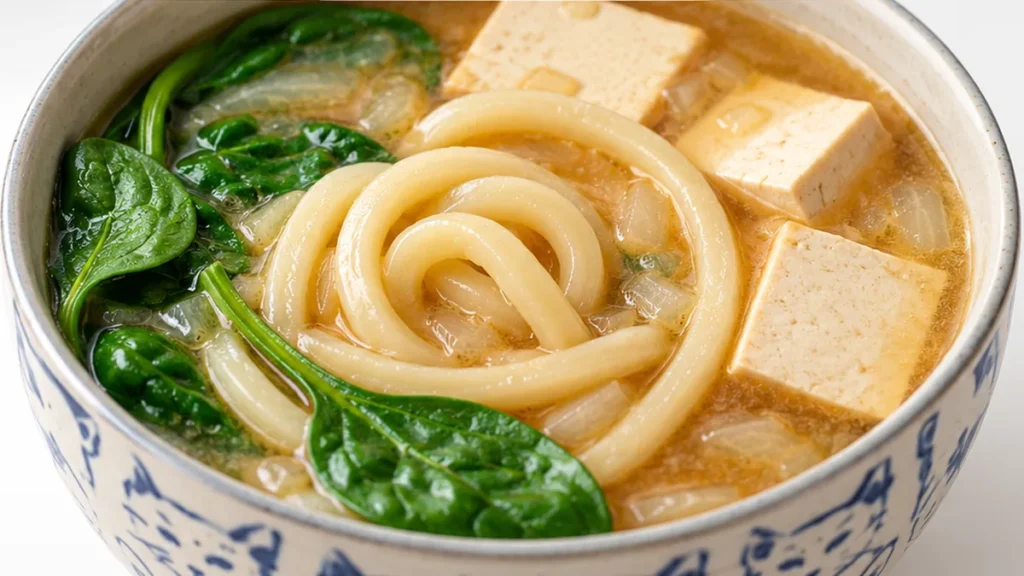
Udon noodle soup is a comforting dish that combines thick noodles with a flavorful broth. This recipe highlights the importance of a homemade dashi for depth.
Key takeaways
- The quality of the broth is crucial for flavor balance.
- Proper cooking time for udon noodles prevents mushiness.
- Ingredient substitutions can alter the dish’s authenticity and taste.
- Toppings add unique flavors and textures to enhance the experience.
Udon Noodle Soup
Ingredients
Instructions
- Cook frozen udon noodles according to package directions, then drain (about 5-7 minutes).
- While noodles cook, heat avocado oil in a soup pot over medium heat. Sauté chopped onion until translucent, about 3-4 minutes.
- Add minced garlic and cook until fragrant, about 1 minute more.
- Stir in water, bouillon paste, white miso paste, tamari, sriracha, and tahini. Whisk until the miso and tahini are fully dissolved into a smooth broth.
- Add cubed tofu and a large handful of baby spinach to the broth. Cook until the spinach wilts.
- Divide the drained udon noodles between two bowls. Ladle the hot miso tahini broth, spinach, and tofu over the noodles.
Understanding Udon Noodle Soup’s Core Ingredients
Udon noodle soup is a simple yet profound dish that hinges on its core ingredients. The udon noodles, made from wheat flour, water, and salt, are thick and chewy, providing a unique texture that sets them apart from other noodle types. The broth, typically made from dashi, soy sauce, and mirin, serves as the flavor backbone. The balance of umami from the dashi and sweetness from the mirin creates a rich, comforting base. To achieve the best flavor, it’s important to use high-quality dashi, which can be made from kombu (sea kelp) and bonito flakes, or purchased pre-made.
Mastering Broth Preparation for Optimal Flavor
The broth is crucial in udon noodle soup, as it is the foundation of the dish. A well-prepared broth can elevate the overall taste significantly. To achieve this, consider simmering your dashi for at least 20 minutes to extract maximum flavor. The ratio of dashi to soy sauce typically hovers around 4:1, allowing the umami to shine without overpowering the dish. Additionally, adding a touch of sake or mirin can enhance the sweetness and complexity of the broth. Always taste and adjust seasoning towards the end of cooking to ensure a balanced flavor profile.
Common Issues and Solutions in Udon Noodle Soup Preparation
One common issue faced when preparing udon noodle soup is overcooked noodles, which can become mushy and lose their appealing texture. To avoid this, cook the udon noodles according to the package instructions, usually around 8-10 minutes, and then rinse them under cold water to stop the cooking process. Another issue is an overly salty broth. This can happen if the soy sauce is added too early or in excess. To remedy this, dilute the broth with water or add additional dashi to balance the saltiness. Lastly, if the broth lacks depth, consider simmering it longer or incorporating additional aromatics like ginger or garlic.
Ingredient Substitutions and Their Impact
Substituting ingredients in udon noodle soup can lead to varying results. For instance, using chicken broth instead of dashi will create a different flavor profile, leaning towards a more savory and hearty soup. If you can’t find udon noodles, consider using soba noodles, but be aware that they will provide a nuttier flavor and different texture. If you prefer a vegetarian version, you can replace bonito flakes with dried shiitake mushrooms for a similar umami effect. Each substitution will alter the dish’s authenticity, so choose based on your desired outcome.
The Unique Aspect of Udon Noodle Soup
One distinctive characteristic of udon noodle soup is the use of toppings, which can vary widely from region to region. Common toppings include sliced green onions, tempura, and kamaboko (fish cake), each adding texture and flavor. The choice of toppings can significantly impact the soup’s overall experience, making it a versatile dish that can be tailored to individual preferences. This adaptability is a hallmark of udon noodle soup, allowing it to remain a beloved comfort food across various cultures.
How to Effectively Scale Udon Noodle Soup for Larger Gatherings
Scaling a recipe like udon noodle soup requires careful consideration of ingredient ratios and cooking times. When increasing the batch size, maintain the same proportions of broth to noodles to ensure consistency in flavor and texture. For instance, if you double the recipe, use twice the amount of broth, noodles, and other ingredients. However, be mindful that cooking times may vary; larger quantities may require additional time to reach the desired temperature without compromising the noodles’ texture. A good rule of thumb is to add 5-10 minutes to the simmering time, checking for doneness periodically. Additionally, larger pots can have uneven heat distribution, so stir more frequently to avoid sticking.
Understanding Equipment Variations and Their Impact on Udon Noodle Soup
The choice of cooking equipment can significantly influence the outcome of udon noodle soup. For instance, using a heavy-bottomed pot can provide better heat retention and distribution, leading to a more evenly cooked broth. Conversely, a thin pot may cause hot spots, resulting in uneven cooking. If using an electric stove, the heat control might be less precise, requiring adjustments in cooking times. Moreover, the type of noodle pot can affect how the noodles cook; a wider pot allows for better movement, preventing clumping. If using a pressure cooker, the cooking time for the broth can be reduced, but it’s important to release pressure gradually to avoid splattering.
Seasonal Ingredient Quality and Its Effect on Flavor
Ingredient quality can vary significantly with the seasons, affecting the overall flavor of udon noodle soup. Fresh vegetables like bok choy or green onions will have different tastes and textures depending on their seasonality. For instance, spring onions in the spring are sweeter and more tender than those harvested in winter. Additionally, using seasonal produce can enhance the nutritional profile of the soup. For instance, incorporating fresh mushrooms in the fall can add depth to the broth, while summer vegetables can provide a lighter, more refreshing flavor. Always prioritize fresh, local ingredients when possible, as they can drastically improve the final dish.
Best Practices for Storing and Reheating Udon Noodle Soup
Storing udon noodle soup requires attention to detail to maintain its quality. It is best to store the broth and noodles separately, as noodles can absorb broth and become mushy over time. Cool the broth to room temperature before refrigerating in an airtight container for up to three days. When reheating, bring the broth to a simmer before adding the noodles, which should only be cooked for a few minutes until heated through. For longer storage, consider freezing the broth in portions; it can last up to three months in the freezer. When ready to use, thaw it overnight in the refrigerator and then reheat as described.
Understanding the Importance of Broth Clarity in Udon Noodle Soup
The clarity of the broth in udon noodle soup is crucial for both visual appeal and flavor perception. A clear broth indicates that impurities and sediments have been effectively removed during the cooking process. To achieve this, it is essential to start with cold water and bring it to a gentle simmer rather than a rolling boil. This technique helps to extract flavors without emulsifying fats and proteins that cloud the broth. Additionally, skimming off the surface scum during the initial stages of simmering can significantly enhance clarity. Aim for a simmering temperature of around 85°C to 90°C (185°F to 194°F) for optimal extraction. If the broth becomes cloudy, it may be due to boiling too vigorously or not straining it properly. For a clearer broth, consider using a fine mesh strainer or cheesecloth to filter out any remaining solids after cooking.
Optimal Timing for Udon Noodle Cooking and Serving
Timing is critical when preparing udon noodle soup, especially regarding the cooking of the noodles. Udon noodles require careful attention to ensure they are perfectly al dente, providing the ideal texture that complements the broth. Typically, fresh udon noodles should be cooked for about 3 to 5 minutes, while dried noodles may take 8 to 10 minutes. To prevent overcooking, prepare the noodles separately and add them to the broth just before serving. This method allows the noodles to maintain their texture and prevents them from becoming mushy. Additionally, consider the serving temperature of the broth. A hot broth (around 80°C to 85°C or 176°F to 185°F) is ideal to warm the noodles without further cooking them. Serve immediately after combining the noodles and broth for the best experience. Pairing with fresh toppings, such as sliced green onions and tempura, enhances both flavor and presentation.
How to Prepare Udon Noodle Soup for Meal Prepping
When meal prepping udon noodle soup, it’s essential to consider the components that can be stored separately to maintain the best texture and flavor. The broth can be made in advance and stored in the refrigerator for up to three days or frozen for up to three months. Udon noodles, however, are best cooked fresh, as they tend to absorb the broth and become mushy when stored. To prepare for quick meals, chop and store your vegetables and proteins in airtight containers. When ready to eat, simply heat the broth, add the prepped ingredients, and cook the noodles separately. This method ensures that each component retains its quality, resulting in a delicious and satisfying meal.
Understanding the Role of Broth Quality in Udon Noodle Soup
The quality of the broth is crucial in udon noodle soup, as it serves as the foundation for flavor. A well-prepared broth should be rich, savory, and aromatic, typically achieved by simmering ingredients like kombu, katsuobushi, or chicken bones for several hours. The balance of umami flavors is essential; using a combination of dried shiitake mushrooms and soy sauce can enhance depth. If the broth is too salty, consider adding water or unsalted stock to dilute it, but be cautious not to lose flavor. In contrast, a weak broth can be fortified by simmering it longer or adding more concentrated flavoring agents like miso or dashi. The goal is to achieve a well-rounded broth that complements the udon and other ingredients.
Pro tips
Pro tip: Best served immediately while hot!
Frequently asked questions
What type of noodles are best for udon noodle soup?
Udon noodles, made from wheat flour, are best for this dish due to their thick, chewy texture. They absorb the broth well and provide a satisfying bite. Fresh udon noodles are preferable, but dried ones can also work if cooked properly.
Can I make udon noodle soup vegetarian?
Yes, udon noodle soup can easily be made vegetarian by using vegetable broth instead of dashi. Additionally, replace any fish-based toppings with vegetables like shiitake mushrooms or tofu for added protein and flavor.
How can I store leftover udon noodle soup?
Leftover udon noodle soup can be stored in an airtight container in the refrigerator for up to three days. However, it is best to store the noodles and broth separately to prevent the noodles from becoming mushy.
What are some common toppings for udon noodle soup?
Common toppings include sliced green onions, tempura, kamaboko (fish cake), and nori (seaweed). These toppings not only enhance the flavor but also add texture and visual appeal to the dish.
More from Broths & Noodle Soups →