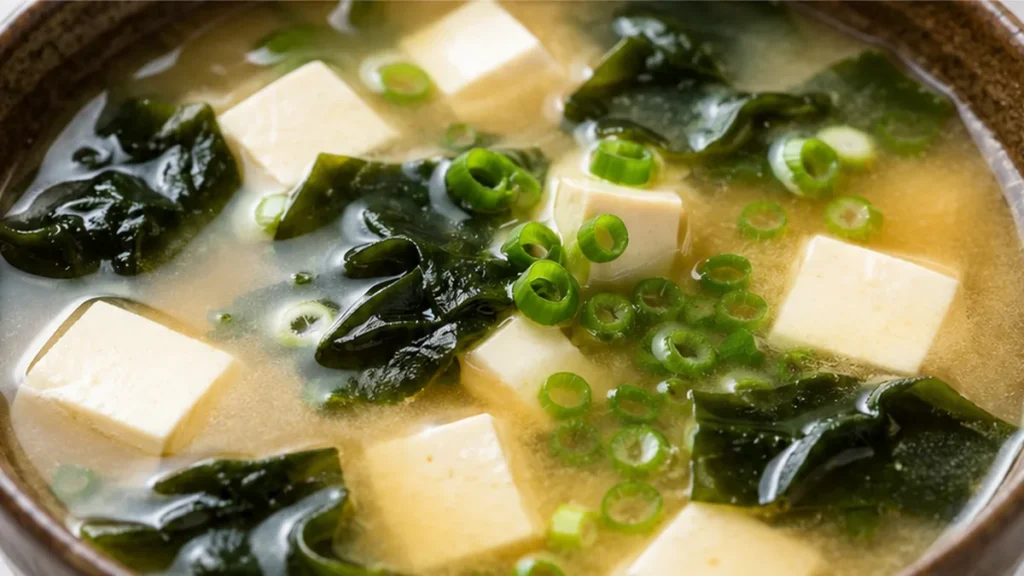
The key to a truly satisfying miso soup lies not in complexity, but in technique: gently dissolving the miso off the heat preserves its delicate umami and probiotic benefits. This recipe is designed for speed and simplicity, perfect for a quick lunch or a comforting starter. Using quality ingredients like good dashi and fresh miso paste makes all the difference, ensuring a rich yet light flavor profile.
Key takeaways
- Use dashi stock as the base for authentic flavor.
- Add miso paste at low temperature to preserve its properties.
- Adjust saltiness by diluting with water or dashi.
- Handle tofu gently to maintain its texture.
Easy Miso Soup Recipe
Ingredients
- 2 cups dashi stock (prepared)
- 1-2 teaspoons dried wakame
- 1 1/2 tablespoons chopped green onion
- 2 heaping tablespoons miso paste
- 1/2 cup silken tofu (cubed)
- 1 teaspoon sesame oil
Instructions
- Gently heat the dashi stock in a saucepan until warm.
- Stir in the dried wakame and chopped green onion.
- Remove from heat and whisk miso paste with warm dashi until smooth.
- Stir the miso mixture back into the pot without boiling.
- Add cubed silken tofu and let it stand for 5 minutes to warm through.
Video
Notes
– Never boil miso soup after adding the miso paste; it can destroy its delicate flavor and beneficial enzymes.
– For a heartier soup, add other ingredients like mushrooms, spinach, or a sprinkle of sesame seeds. Nutrition information is an estimate, calculated automatically. Values vary with brands, substitutions and portion sizes.
The technique that makes it
The key to a successful miso soup lies in the proper preparation of dashi stock and the careful incorporation of miso paste. Dashi, a Japanese stock typically made from kombu (seaweed) and bonito flakes, provides a umami-rich base that enhances the flavors of the soup. The temperature at which you add the miso paste is crucial; it should never be boiled. High heat can destroy the delicate probiotics and flavor compounds in miso. Instead, after the dashi is heated, reduce the heat to low before whisking in the miso paste. This gentle approach maintains the integrity of the miso, resulting in a rich, flavorful broth.
Troubleshooting
- Issue: Miso soup tastes too salty.
Fix: Dilute the soup with additional dashi or water, and adjust the miso paste gradually to find the right balance. - Issue: Miso clumps instead of dissolving.
Fix: Before adding miso to the soup, mix it with a small amount of warm dashi in a separate bowl until smooth, then incorporate it into the main pot. - Issue: The soup lacks depth of flavor.
Fix: Enhance the soup by adding a splash of soy sauce or a few drops of sesame oil for additional umami and richness. - Issue: Tofu is too firm or breaks apart.
Fix: Use silken tofu, and add it gently to the soup just before serving to prevent it from crumbling.
Substitutions
- Dashi stock: Use vegetable broth for a vegetarian version, though it will lack the traditional umami depth.
- Dried wakame: Substitute with fresh spinach or kale for a different texture and flavor, though the seaweed’s unique taste will be missed.
- Silken tofu: Firm tofu can be used instead; just ensure it’s cut into smaller cubes to mimic the texture.
- Sesame oil: Use olive oil for a lighter flavor, though it will change the traditional taste profile of the soup.
Pro tips
- Use good quality miso paste and dashi stock for the best flavor.
- Never boil miso soup after adding the miso paste; it can destroy its delicate flavor and beneficial enzymes.
- For a heartier soup, add other ingredients like mushrooms, spinach, or a sprinkle of sesame seeds.
Enjoy this simple, warming miso soup as a quick and healthy addition to any meal.
Frequently asked questions
What type of miso paste should I use?
For miso soup, both white (shiro) and red (aka) miso can be used. White miso is milder and sweeter, while red miso has a stronger, saltier flavor. Choose based on your taste preference.
Can I make miso soup ahead of time?
Yes, but it’s best to add the miso paste just before serving to maintain its flavor and probiotic benefits. You can prepare the dashi and other ingredients in advance and combine them when ready to eat.
How do I store leftover miso soup?
Store leftover miso soup in an airtight container in the refrigerator for up to 3 days. Reheat gently on the stove, avoiding boiling to preserve the miso’s flavor.
Can I add other ingredients to miso soup?
Absolutely! Feel free to add vegetables like mushrooms, carrots, or daikon radish, and proteins like shrimp or chicken, adjusting the cooking time accordingly.
More from Broths & Noodle Soups →