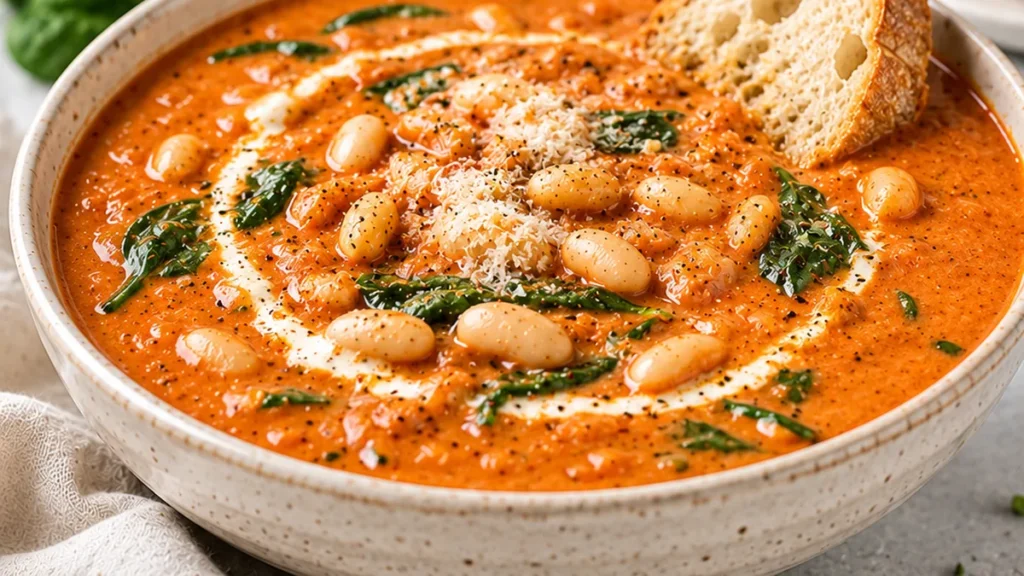
This creamy tomato bean soup is a heartwarming dish that brings together the best of simple ingredients for maximum flavor. Perfect for a quick weeknight dinner or a comforting lunch, this recipe takes minimal effort for maximum reward. With a velvety smooth texture and a rich tomato base, this tomato bean soup is designed to satisfy. It’s a fantastic way to enjoy a wholesome meal that’s both delicious and nourishing.
Key takeaways
- Gently sweat aromatics for a sweet base.
- Toast tomato paste to deepen its flavor.
- Simmer gently to meld flavors.
- Balance acidity with a touch of sweetness or acid.
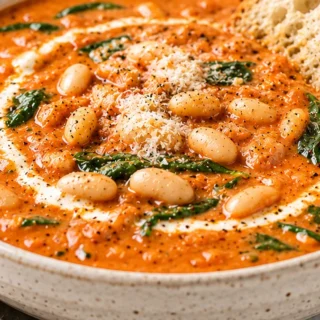
Creamy Tomato Bean Soup: Ultimate Comfort Food!
Ingredients
- 2 tbsp/ 30g butter (, unsalted)
- 1 onion (, finely chopped (brown, yellow, white))
- 2 garlic cloves (, finely chopped)
- 1 carrot (, large, peeled and finely chopped)
- 1 1/2 tsp Italian herb mix OR other dried herbs (oregano, thyme, parsley, basil, or mixed)
- 3/4 cup (170g) tomato paste (Note 1)
- 1/2 cup (125ml) dry white wine (, optional (can omit) )
- 4 cups (1 litre) stock/broth, chicken or veg (, low sodium)
- 3 x 420g/15oz cans cannellini or any white beans, drained & rinsed
- 1/2 cup (50g) parmesan (, grated)
Instructions
- Melt butter in a pot over medium high heat. Cook garlic, onion and carrot for 5 minutes until carrot is soft and sweet.
- About 3 minutes in, add the Italian herbs and cook with the onion (makes the herb flavour “bloom”).
- Turn heat up to high, add tomato paste. Cook for 2 minutes to remove the “raw” flavour.
- Add white wine, cook for 3 minutes until the harsh “winey” smell is gone and mostly evaporates so you’re just left with tomato paste again.
- Add 1/2 cup of beans (to thicken soup), stock, parmesan, salt and pepper. Stir, low heat, cover and simmer 3 minutes, stirring every now and then.
- Use a stick blender to puree until smooth (or transfer to blender).
- Add remaining beans, simmer 3 minutes. Stir in spinach until wilted, then stir in cream if using. Add more salt and pepper if needed (note: canned beans are already salted).
- Serve with crusty bread for dunking!
Notes
The technique that makes it
The foundation of a truly great tomato bean soup lies in building layers of flavor from the start. This begins with the soffritto: finely chopped onion, carrot, and garlic gently sautéed in butter. This process, known as sweating, slowly softens the vegetables and releases their natural sugars, creating a sweet, aromatic base without browning. Crucially, this low and slow cooking prevents the sharp, pungent notes of raw alliums from dominating the final soup. Next, toasting the tomato paste is a vital step. Stirring the paste into the softened vegetables and cooking it for a minute or two intensifies its flavor, deepening its umami and reducing its raw, acidic edge. This caramelization significantly enhances the soup’s richness. If using white wine, deglazing with it at this stage serves a dual purpose: it lifts any flavorful bits stuck to the bottom of the pot, incorporating them into the soup, and its acidity brightens the overall flavor profile. Finally, allowing the soup to simmer gently after adding the beans and broth melds all the ingredients together, letting the flavors deepen and harmonize. This slow infusion is key to achieving a well-rounded, comforting taste.
Troubleshooting
- Problem: Soup tastes too acidic or sharp.
Fix: This can happen if the tomato paste wasn’t sufficiently cooked or if the tomatoes themselves are particularly acidic. Stir in a pinch of sugar (about 1/2 teaspoon) or a tiny splash of balsamic vinegar to balance the acidity. Let it simmer for a few more minutes. - Problem: Soup is watery and lacks body.
Fix: Ensure your beans are well-drained and rinsed. For a thicker soup, you can mash a portion of the beans against the side of the pot with a spoon before adding the broth, or blend a cup of the soup (including some beans) and stir it back in. - Problem: Flavor is bland or one-dimensional.
Fix: This often means the initial flavor-building steps were rushed. Ensure the soffritto was cooked until tender and the tomato paste was toasted. You may need to add more herbs, a pinch of red pepper flakes for warmth, or a squeeze of lemon juice at the end to brighten the flavors. - Problem: Grains of chopped vegetables remain too distinct.
Fix: The vegetables were likely not chopped finely enough, or the simmering time was insufficient for them to break down. For a smoother texture, you can use an immersion blender to partially or fully purée the soup.
Substitutions
- Beans: While cannellini beans offer a creamy texture, other white beans like Great Northern or navy beans work well. For a different flavor profile, kidney beans or even chickpeas can be used, though they will alter the soup’s characteristic creaminess.
- Herbs: If you don’t have an Italian herb mix, a combination of dried oregano and thyme is a good substitute. Fresh herbs like basil or parsley can be added at the very end of cooking for a brighter, fresher flavor.
- Wine: The dry white wine adds a subtle complexity and acidity. If omitting, you can replace it with an equal amount of vegetable broth or a tablespoon of lemon juice added towards the end of cooking to provide a touch of brightness.
- Parmesan: For a dairy-free or vegan version, nutritional yeast can be used to impart a cheesy, umami flavor. Alternatively, a dollop of unsweetened cashew cream or a drizzle of tahini can add richness and a slightly nutty depth.
Pro tips
- For extra depth, deglaze the pan with white wine after cooking the tomato paste.
- Ensure the carrot and onion are finely chopped for a smoother soup texture.
- If you don’t have a stick blender, carefully transfer soup to a regular blender in batches.
Enjoy this versatile and comforting tomato bean soup. It’s a recipe you’ll return to time and again for its ease and deliciousness.
More from Vegetable & Bean Soups →
Frequently asked questions
Can I make Creamy Tomato Bean Soup ahead of time?
Yes, this soup is excellent for making ahead. The flavors meld and deepen overnight. Store it in an airtight container in the refrigerator for up to 3-4 days. Reheat gently on the stovetop over medium-low heat, adding a splash of broth or water if it has thickened too much.
What can I substitute for the canned tomatoes in this soup?
If you don’t have canned tomatoes, you can use fresh, ripe tomatoes. You’ll need about 2 pounds, peeled and chopped. Alternatively, fire-roasted diced tomatoes can add a lovely smoky depth. Ensure they are good quality for the best flavor in your soup.
How do I know when Creamy Tomato Bean Soup is done cooking?
The soup is done when the beans are tender and the flavors have melded. For canned beans, this is usually about 15-20 minutes after adding them. If using dried beans that were pre-cooked, you’re just looking for the soup to be heated through and slightly thickened. Taste and adjust seasonings.
What goes well with Creamy Tomato Bean Soup for serving?
This rich soup pairs wonderfully with crusty bread for dipping. Grilled cheese sandwiches are another classic accompaniment. For a lighter option, a simple green salad with a vinaigrette dressing offers a refreshing contrast. A sprinkle of fresh basil or parsley adds a nice finishing touch.