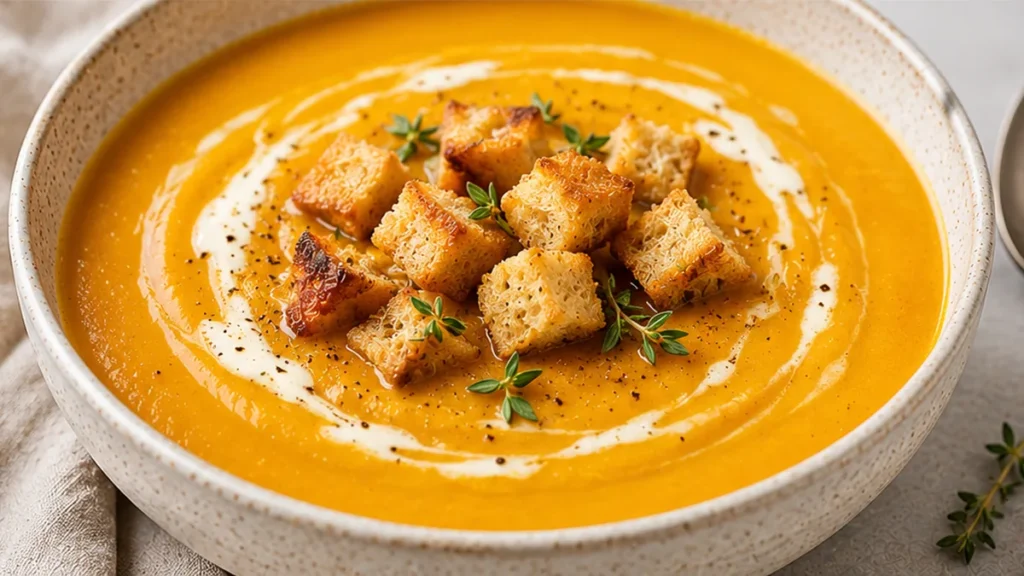
Butternut squash soup is a delightful and comforting dish, perfect for cooler weather or any time you crave a bowl of warmth. This butternut squash soup recipe offers a velvety texture and a perfect balance of sweet and savory flavors, making it a family favorite. It’s an excellent way to enjoy the nutritional benefits of squash in a truly delicious format. Preparing this butternut squash soup from scratch allows you to control the ingredients and achieve a superior taste that store-bought versions often lack. I remember the first time I roasted a butternut squash for soup; the aroma filled the kitchen and promised a wonderfully rich dish.
Key takeaways
- Develop deep flavor by sautéing aromatics and squash before adding liquid.
- Ensure squash is fully tender for a smooth, non-gritty texture.
- Adjust seasoning and acidity for balanced taste.
- Use vegetable broth and plant-based fats for vegan options.

Creamy Butternut Squash Soup: Comfort Bowl!
Ingredients
- 1 butternut squash
- 2 tablespoons butter
- 1 onion (diced)
- 4 cups chicken broth
- 1 small apple (peeled, cored and chopped)
- ½ teaspoon dried thyme leaves
- ½ teaspoon curry powder (optional)
- ¼ teaspoon dried sage leaves
- 1 cup heavy whipping cream
- salt and black pepper (to taste)
Instructions
- Preheat oven to 400°F. Cut squash into four large pieces. Place in an oven-safe dish and roast until the squash is soft (about 1 hour). Scoop the flesh of the squash and set aside.
- Melt butter in a medium pot over medium heat. Add onion and cook over medium heat until softened, about 5 minutes.
- Add the squash, broth, apple, and spices. Bring to a boil. Reduce heat and simmer uncovered for about 20 minutes or until apples are tender.
- Remove from heat (discard thyme stem if using fresh). Blend until smooth.
- Return to pot and bring back to a simmer, stir in heavy cream to taste, salt and pepper. Top with croutons if using.
Notes
– For a richer flavor, roast the squash until it’s deeply caramelized, not just tender. This intensifies the natural sweetness.
– Store leftover butternut squash soup in an airtight container in the refrigerator for up to 3-4 days. It also freezes well for up to 3 months; thaw overnight in the fridge and reheat gently on the stovetop. Nutrition information is an estimate, calculated automatically. Values vary with brands, substitutions and portion sizes.
The technique that makes it
The key to a truly exceptional butternut squash soup lies in developing depth of flavor through careful cooking of the aromatics and the squash itself. Simply boiling everything together results in a bland, watery soup. Instead, we begin by sautéing the diced onion in butter until it becomes translucent and slightly softened. This process, known as sweating, releases the onion’s natural sugars and mellows its pungent bite, laying a foundation of sweetness. Following this, the cubed butternut squash is added to the pot and allowed to cook for a few minutes, stirring occasionally. This brief sauté helps to caramelize the sugars in the squash, enhancing its inherent nutty and sweet characteristics. Adding the apple along with the squash further contributes to this caramelization process due to its natural sugars. The dried herbs, thyme and sage, are also toasted lightly with the vegetables. Toasting dried herbs awakens their volatile oils, intensifying their aroma and flavor profile, preventing them from tasting dusty or flat in the finished soup. The optional curry powder, if used, is also added at this stage to bloom its spices in the fat, releasing a more complex and aromatic flavor. This multi-step approach to building flavor before adding the liquid is what transforms a simple vegetable soup into a rich, creamy, and deeply satisfying dish.
Troubleshooting
- Soup is too thin: If your soup lacks the desired thickness, it’s likely due to insufficient reduction or too much liquid. To fix this, simmer the soup uncovered for an additional 10-15 minutes to allow excess moisture to evaporate. Alternatively, you can create a slurry by whisking 1-2 tablespoons of cornstarch or flour with an equal amount of cold water, then stirring it into the simmering soup until thickened.
- Soup is bland: A lack of flavor often stems from not developing the base aromatics properly or insufficient seasoning. Reheat the soup gently and add more salt and freshly ground black pepper. Consider adding a pinch more dried herbs or a touch more curry powder if you used it. A squeeze of lemon juice can also brighten muted flavors.
- Soup is gritty or fibrous: This usually happens if the squash wasn’t cooked until fully tender or if the blender didn’t process it smoothly. Ensure the squash is fork-tender before blending. If using an immersion blender, blend in batches or in a standard blender on high speed until completely smooth. You can also strain the soup through a fine-mesh sieve for an extra-silky texture.
- Soup is too sweet: While butternut squash and apple are naturally sweet, an imbalance can occur. To counteract excessive sweetness, add a splash of apple cider vinegar or a touch of lemon juice to provide a balancing acidity. A pinch of red pepper flakes can also add a subtle heat that cuts through the sweetness.
Substitutions
- Vegetable Broth: For a vegetarian or vegan version, substitute the chicken broth with an equal amount of good-quality vegetable broth. Ensure the vegetable broth is flavorful, as it will be the primary liquid base. For a vegan option, also omit the butter and heavy cream, or use plant-based alternatives like olive oil and full-fat coconut milk or cashew cream.
- Other Winter Squash: While butternut squash is ideal for its texture and sweetness, you can substitute it with other winter squashes like acorn squash or kabocha squash. Acorn squash may require slightly less cooking time and can be a bit stringier. Kabocha squash offers a rich, nutty flavor and a creamy texture similar to butternut. Adjust cooking times as needed.
- Dairy Cream: If heavy whipping cream is unavailable or you prefer a lighter soup, you can use half-and-half for a slightly less rich result. For a dairy-free alternative, full-fat coconut milk (the creamy part from the top of the can) or a homemade cashew cream provides excellent richness and a smooth texture without altering the flavor profile significantly.
- Fresh Herbs: If you only have fresh thyme and sage, use approximately three times the amount of dried herbs. Chop the fresh herbs finely and add them during the last 10-15 minutes of simmering to preserve their delicate flavor and color.
Pro tips
- To ensure your butternut squash soup is perfectly smooth, use an immersion blender directly in the pot, or carefully transfer it to a stand blender.
- For a richer flavor, roast the squash until it’s deeply caramelized, not just tender. This intensifies the natural sweetness.
- Store leftover butternut squash soup in an airtight container in the refrigerator for up to 3-4 days. It also freezes well for up to 3 months; thaw overnight in the fridge and reheat gently on the stovetop.
This butternut squash soup is a truly satisfying dish that brings warmth and flavor to any table. Enjoy this creamy delight and feel free to experiment with toppings like toasted seeds or a swirl of chili oil.
More from Creamy Soups & Chowders →
Frequently asked questions
Can I make this butternut squash soup ahead of time?
Yes, this butternut squash soup can be made up to 3 days in advance. Store it in an airtight container in the refrigerator. Reheat gently on the stovetop or in the microwave, adding a splash more broth or cream if it has become too thick during storage.
How do I store leftover butternut squash soup?
Leftover butternut squash soup should be cooled completely before being transferred to an airtight container. It can be stored in the refrigerator for up to 3-4 days. For longer storage, freeze the soup in freezer-safe containers or bags for up to 3 months.
What is the best way to blend the soup?
For the smoothest texture, use a high-powered blender. Blend the soup in batches, filling the blender no more than halfway, and hold the lid down firmly with a towel to prevent splattering. An immersion blender can also be used directly in the pot, ensuring all solids are submerged.
Can I use pre-cut butternut squash?
Yes, you can use pre-cut butternut squash, which can save preparation time. Ensure the pieces are roughly uniform in size for even cooking. The cooking time might vary slightly compared to fresh, whole squash, so check for tenderness before proceeding with blending.