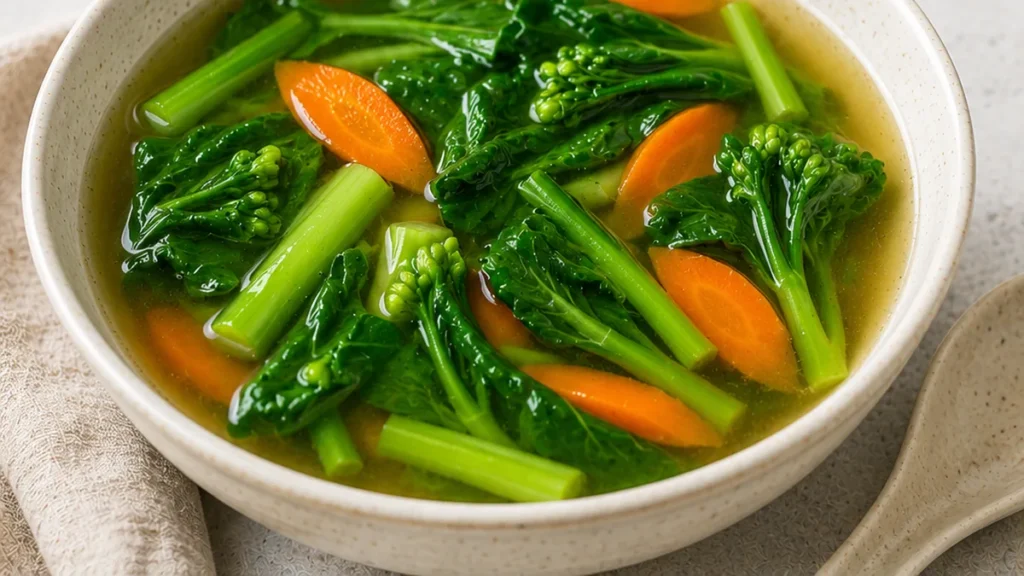
This quick Chinese Vegetable Soup is a true low-calorie miracle for busy days. Packed with fresh ingredients and bright, fresh flavor, it’s the perfect healthy meal that comes together in minutes. Forget complicated recipes; this vegetable soup focuses on speed and nutrition without sacrificing taste. Ideal for a light lunch, starter, or a comforting evening meal.
Key takeaways
- Infuse aromatics gently for a clean broth.
- Cook vegetables briefly to maintain crispness.
- Balance soy sauce, sugar, and cooking wine for depth.
- Add sesame oil at the end for fragrance.
Quick Chinese Veggie Soup
Ingredients
- 1 litre / 4 cups chicken stock/broth, low sodium
- 2 garlic cloves, peeled and halved
- 1.5 cm / 1/2″ ginger piece, cut into 5 thin slices
- 1 star anise, optional
- 1 1/2 tbsp light soy sauce
- 2 tsp sugar
- 1 1/2 tbsp chinese cooking wine
- 1/2 tsp sesame oil, toasted, optional
- 4-6 stems Chinese broccoli, stems and leaves sliced and separated
- 1 small carrot, peeled, cut in half lengthways then finely sliced on the diagonal
Instructions
- Place chicken broth, garlic, ginger slices, and star anise (if using) in a large saucepan. Bring to a simmer over high heat, then reduce to the lowest heat and simmer gently for 10 minutes to infuse flavors.
- Turn heat up to high and bring liquid to a rapid simmer. Add carrot slices and Chinese broccoli stems. Cook for 3 minutes.
- Add Chinese broccoli leaves, push into the simmer for 2 minutes until just wilted.
- Remove and discard the garlic and ginger slices.
- Stir in the light soy sauce, sugar, Chinese cooking wine, and toasted sesame oil (if using).
- Ladle the soup into two bowls. Serve immediately and enjoy this healthy, quick meal!
Notes
The technique that makes it
The foundation of this quick Chinese vegetable soup lies in building a flavourful broth and then cooking the vegetables to preserve their texture and distinct tastes. The process begins with infusing the chicken stock with aromatics. Gently simmering the garlic, ginger, and star anise (if using) allows their essential oils to meld into the liquid without becoming bitter or overpowering. This slow infusion is key; rapid boiling can mute delicate flavours and extract unwanted compounds from the aromatics. The soy sauce, sugar, and Chinese cooking wine are then added to create a balanced umami, sweet, and subtly alcoholic base. The sugar not only adds sweetness but also rounds out the saltiness of the soy sauce. The Chinese cooking wine, typically Shaoxing wine, adds a complex depth and aroma that is characteristic of many Chinese dishes. Finally, the vegetables are cooked briefly. The Chinese broccoli stems require slightly longer than the leaves, so separating them ensures both are tender-crisp rather than mushy. The thinly sliced carrot cooks quickly and adds a touch of sweetness and bright colour. The sesame oil, added at the very end, preserves its fragrant aroma, which can be diminished by prolonged heat.
Troubleshooting
- Problem: Broth tastes bland. Fix: Ensure you’ve used a good quality stock. You can also increase the soy sauce slightly or add a pinch more sugar to balance the flavours. A tiny splash more Chinese cooking wine can also add depth.
- Problem: Vegetables are too soft. Fix: The vegetables were likely overcooked. For future attempts, add the Chinese broccoli leaves and carrot slices in the last 1-2 minutes of simmering. Ensure the broth is at a gentle simmer, not a rolling boil, when adding them.
- Problem: Ginger or garlic flavour is too strong. Fix: Reduce the amount of ginger and garlic used, or ensure they are cut into larger pieces that are easier to remove before serving. For a milder flavour, you can lightly crush the garlic cloves instead of halving them.
- Problem: Soup lacks aroma. Fix: Ensure you are using toasted sesame oil if you have it, as it has a much more pronounced flavour. Add it right at the end of cooking, just before serving, to preserve its volatile aromatic compounds.
Substitutions
- Chicken stock/broth: For a vegetarian or vegan version, substitute with a good quality vegetable stock or mushroom broth. The flavour profile will be lighter but still delicious.
- Chinese broccoli: Bok choy, gai lan, or even spinach can be used. Bok choy and gai lan will offer a similar crisp texture, while spinach will wilt more quickly and have a softer mouthfeel.
- Chinese cooking wine: Dry sherry is the closest Western substitute, offering a similar depth and slight sweetness. A splash of sake or even a dry white wine can be used in a pinch, though the flavour will be slightly different.
- Soy sauce: Tamari can be used as a gluten-free alternative. For a less salty option, use a light soy sauce with reduced sodium.
Pro tips
- Use low-sodium chicken broth to control salt intake.
- For extra flavor, don’t skip the ginger slices and garlic in the broth infusion.
- Ensure vegetables are cut uniformly for even cooking.
- This soup is best enjoyed fresh, but leftovers can be stored in the fridge for up to 2 days.
Enjoy this simple yet delicious Chinese Vegetable Soup as a healthy and satisfying meal. Customize with your favorite vegetables!
More from Vegetable & Bean Soups →
Frequently asked questions
Can I make this soup ahead of time?
While the broth base can be made ahead and reheated, it’s best to add the fresh vegetables just before serving. This ensures they remain crisp and bright, preventing them from becoming overcooked and losing their texture and flavour.
What kind of Chinese cooking wine should I use?
Shaoxing wine is the traditional choice and offers the most authentic flavour. If unavailable, a dry sherry is a good substitute. Avoid sweet sherry or cooking wines with added salt, as they can significantly alter the taste of the soup.
How can I make this soup more substantial?
To make this a heartier meal, consider adding ingredients like silken tofu cubes, cooked noodles (such as thin egg noodles or vermicelli), or pre-cooked shredded chicken or pork. Add these towards the end of the cooking process to heat through.
Is the star anise essential?
Star anise adds a distinct warm, licorice-like note that is characteristic of many Chinese broths. While optional, it contributes a unique layer of complexity. If you omit it, the soup will still be flavourful, but it will lack that specific aromatic quality.