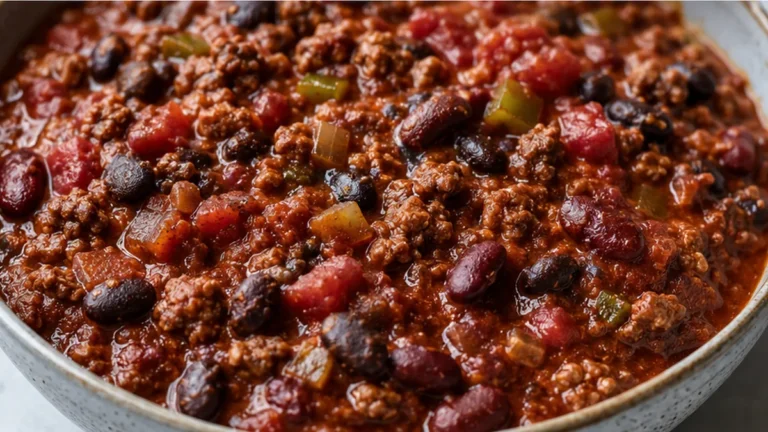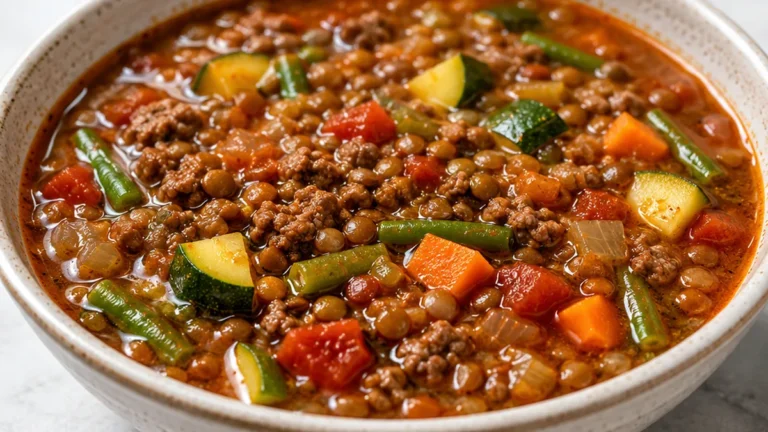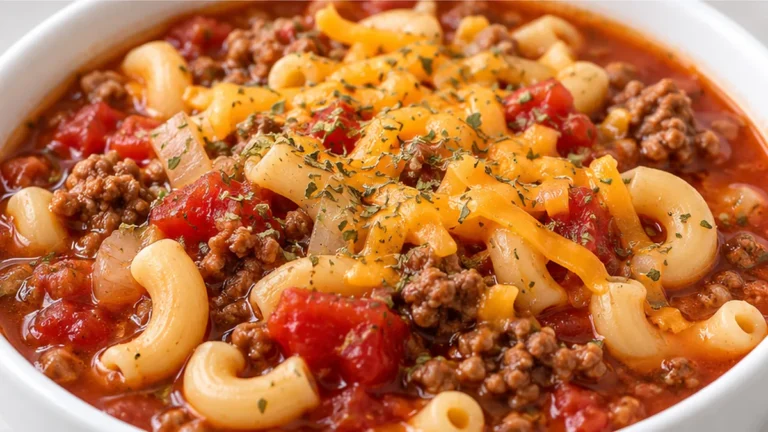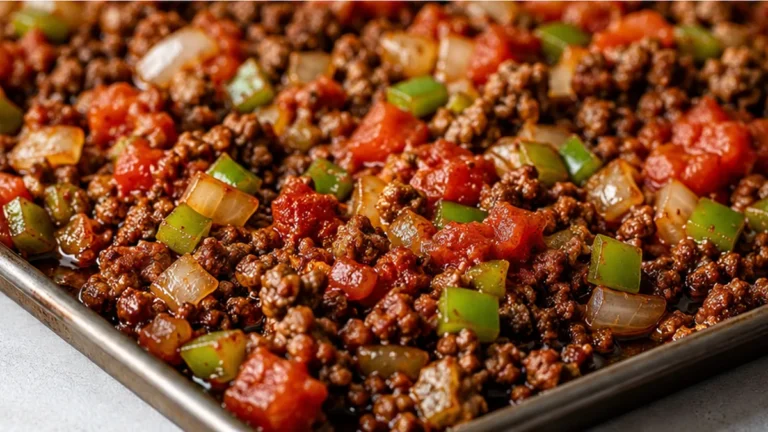
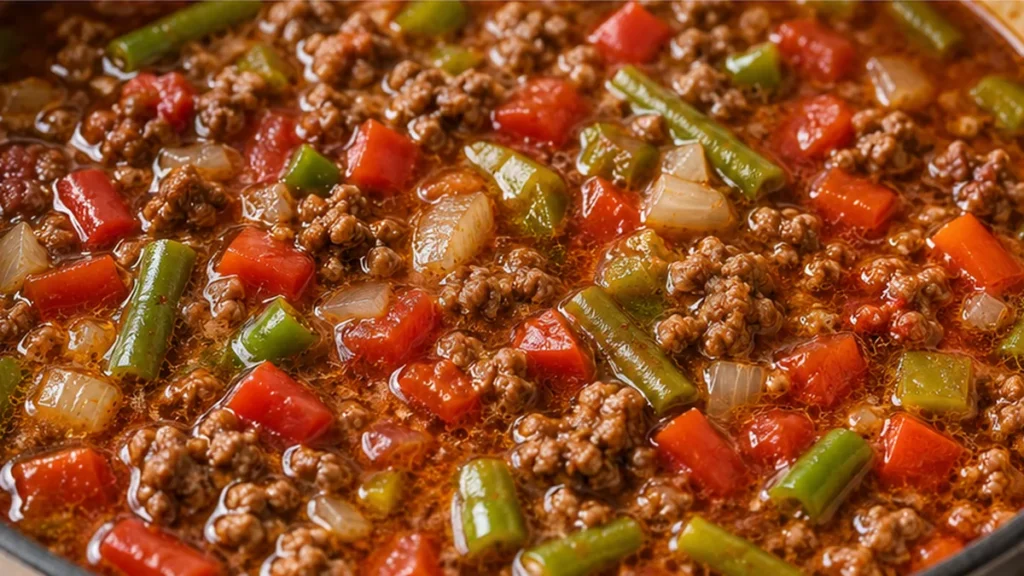
Hamburger soup is a hearty and comforting dish that brings together savory ground beef, tender vegetables, and a rich broth in one simple pot. This recipe focuses on speed and flavor, making it an ideal choice for busy weeknights when you crave a satisfying meal without the fuss. It’s a classic for a reason, offering a balanced blend of protein and nutrients that will please the whole family.
Key takeaways
- Sautéing the flavor base is crucial for depth in hamburger soup.
- Browning ground beef enhances the flavor through the Maillard reaction.
- Balancing vegetable proportions ensures optimal texture and taste.
- Simmering uncovered can help reduce excess liquid for a thicker consistency.

Craveable Hamburger Soup That’s SO Easy!
Ingredients
- 1 tbsp Olive oil
- 1/2 cup White onion ((chopped))
- 3 cloves Garlic ((minced))
- 1/2 cup Bell peppers ((chopped))
- 2 stalks Celery ((chopped))
- 1 lb Ground beef
- 1 15-oz can Diced tomatoes
- 1 cup Green beans ((trimmed, cut in half if too large))
- 1 tsp Sea salt
- 1/2 tsp Black pepper
Instructions
- Heat olive oil in a dutch oven over medium-high heat. Add chopped onion, minced garlic, chopped bell peppers, and celery. Saute for 5 minutes, until the onion is translucent and the bell peppers have softened.
- Add the ground beef and break it up with a spatula. Saute for 5 more minutes, until the beef is no longer pink.
- Stir in the diced tomatoes, green beans, sea salt, black pepper, and beef broth. Bring the mixture to a boil.
- Lower the heat to medium-low and simmer for 20-25 minutes, until the green beans are tender and flavors have melded.
Video
Notes
Understanding the Flavor Base for Hamburger Soup
The foundation of a delicious hamburger soup lies in the flavor base, which includes olive oil, onions, garlic, bell peppers, and celery. Sautéing these ingredients in olive oil at medium heat (around 350°F or 175°C) for 5-7 minutes allows the onions to become translucent and the garlic to release its aromatic compounds. This process enhances the overall flavor profile, creating a savory base that complements the ground beef.
Importance of Browning the Ground Beef
Ground beef should be browned properly to develop the Maillard reaction, which occurs at temperatures above 300°F (150°C). Cook the beef in a separate pan over medium-high heat for 7-10 minutes, breaking it up into small pieces. Proper browning adds depth and richness to the soup. Avoid overcrowding the pan; if necessary, cook in batches to ensure even browning.
Balancing Ingredients for Optimal Texture
Incorporating the right vegetables and their proportions is essential for achieving a balanced texture in hamburger soup. The combination of green beans, diced tomatoes, and the aromatic base creates a harmonious blend. Aim for a vegetable-to-meat ratio of about 1:1.5 for optimal texture, ensuring that no single ingredient overwhelms the dish. Cut vegetables uniformly to promote even cooking.
Common Issues and Solutions in Hamburger Soup Preparation
- Too Watery: If your soup turns out too watery, it may be due to excess liquid from the tomatoes or not simmering long enough. To fix this, simmer uncovered for an additional 10-15 minutes to allow some liquid to evaporate.
- Overly Greasy: If the soup is greasy, it could be due to using a higher-fat ground beef. To remedy this, drain excess fat after browning the beef before adding the other ingredients.
- Underseasoned: If the soup lacks flavor, it may need more seasoning. Add salt and pepper incrementally, tasting as you go, to find the right balance.
- Vegetables Too Soft: If vegetables become mushy, they may have been cooked for too long. To prevent this, add sturdier vegetables, like green beans, later in the cooking process.
Ingredient Swaps and Their Effects
- Ground Turkey: Substitute ground turkey for a leaner option. This will reduce fat content but may result in a lighter flavor.
- Vegetable Broth: Use vegetable broth instead of water for a richer flavor, enhancing the overall taste profile.
- Chopped Spinach: Add chopped spinach instead of green beans for a nutrient boost, but be aware that this may alter the soup’s texture and color.
- Sweet Potatoes: Replace celery with diced sweet potatoes for a sweeter flavor profile, which may change the soup’s overall taste.
How to Effectively Store Hamburger Soup for Maximum Freshness
Storing hamburger soup properly ensures that you can enjoy it later without compromising flavor or texture. Allow the soup to cool completely before transferring it to an airtight container. It can be refrigerated for up to 3-4 days. For longer storage, consider freezing it in portions. When freezing, use freezer-safe containers or bags, leaving some space for expansion. Thaw in the refrigerator overnight before reheating. Reheat on the stove over medium heat until warmed through, adding a splash of broth if the soup has thickened.
Adjusting Hamburger Soup for Different Serving Sizes
Scaling your hamburger soup recipe is straightforward, but it requires attention to ratios. For doubling the recipe, simply multiply each ingredient by two. However, for larger batches, consider the pot size; a larger pot allows for even cooking. Additionally, cooking time may increase slightly, especially if the pot is crowded. Monitor the soup closely to ensure even heating and flavor development. Remember, the key to a successful batch is maintaining the same ingredient ratios, especially the beef-to-vegetable ratio, which should ideally remain around 1:1.
Choosing the Right Equipment for Cooking Hamburger Soup
The equipment you use can significantly impact the outcome of your hamburger soup. A heavy-bottomed pot or Dutch oven is ideal for even heat distribution and preventing burning. If using an Instant Pot, sauté the vegetables and beef first, then switch to pressure cooking for a quick finish. Be mindful of the cooking time; pressure cooking can intensify flavors but may also alter the texture of some vegetables. Using a lid during simmering helps retain moisture and flavor, so choose a pot that fits snugly.
How Seasonal Ingredients Affect Hamburger Soup Flavor
Using seasonal ingredients can elevate your hamburger soup’s flavor profile. In summer, fresh tomatoes and bell peppers add brightness and sweetness, while fall vegetables like squash can provide earthiness. Adjust your seasoning based on ingredient quality; fresh produce may require less salt and seasoning. When using frozen vegetables, they can work well but may alter the texture slightly. Always taste and adjust the seasoning as needed, focusing on balancing the natural flavors of the ingredients.
How to Ensure Your Hamburger Soup is Perfectly Seasoned
Seasoning is crucial in hamburger soup as it brings out the flavors of the ingredients. Start by salting your ground beef while browning it; this helps to enhance its natural flavors. Use 1 teaspoon of sea salt for every pound of meat. Adding salt too late can result in uneven seasoning. Taste your soup before serving and adjust with additional salt or pepper as needed. Fresh herbs, like parsley or thyme, can be added at the end of cooking for a bright finish. Remember, the quality of your ingredients affects the final flavor, so use fresh vegetables and high-quality beef whenever possible.
How to Scale Your Hamburger Soup for Any Occasion
Scaling your hamburger soup recipe is straightforward. For each additional serving, increase the ground beef by 0.25 lb and adjust the vegetables accordingly. For example, if you are serving six instead of four, use 1.5 lb of ground beef and boost the onion, bell peppers, and celery by half a cup each. Keep the seasoning ratios consistent; for every additional pound of meat, add an extra teaspoon of salt and a half teaspoon of black pepper. This ensures that the flavor remains balanced, regardless of the batch size. If making a larger batch, consider using a larger pot to prevent overcrowding, which can affect cooking time and flavor development.
Understanding the Role of Cooking Time in Hamburger Soup Texture
The cooking time significantly impacts the texture of your hamburger soup. Ground beef should be cooked until browned, which typically takes about 5-7 minutes over medium heat. This browning process, known as the Maillard reaction, adds depth to the flavor. After adding vegetables and liquids, let the soup simmer for at least 20-30 minutes to allow the flavors to meld. If you prefer a thicker soup, simmer longer to reduce the liquid, but be careful not to overcook the vegetables, which can turn mushy. For a heartier texture, add potatoes or pasta, adjusting the cooking time accordingly to ensure they are tender but not overcooked.
How to Make Hamburger Soup Ahead of Time for Maximum Flavor
Making hamburger soup in advance allows the flavors to meld beautifully, enhancing the overall taste. To prepare it ahead of time, follow these steps: cook the ground beef with onions, garlic, and other vegetables until softened. Then, add the diced tomatoes and green beans, seasoning with salt and pepper. Allow the soup to cool before transferring it to an airtight container. It can be stored in the refrigerator for up to three days or frozen for up to three months. When reheating, add a splash of broth or water to maintain the desired consistency, as the soup may thicken during storage. This method not only saves time but also lets the flavors develop, making your hamburger soup even more craveable.
Scaling Hamburger Soup for Larger Gatherings
Scaling up hamburger soup is straightforward, but there are key considerations to ensure even cooking and flavor distribution. For every additional pound of ground beef, increase the vegetables proportionally, maintaining the same ratios for onions, garlic, bell peppers, and celery. If you’re doubling the recipe, consider using a large pot or Dutch oven to accommodate the increased volume. Cooking time may vary slightly; larger batches may require additional simmering to allow the flavors to meld. Always taste and adjust seasoning as needed, as larger quantities can dilute flavors. For a large gathering, serve the soup with crusty bread or a fresh salad to balance the hearty nature of the dish.
Pro tips
- For extra depth, add 1 tsp of Italian seasoning with the broth.
- Don’t skip sautéing the aromatics first; it builds a crucial flavor base.
- This soup is freezer-friendly! Let it cool completely, then store in airtight containers for up to 3 months.
Enjoy this comforting and easy hamburger soup as a complete meal or serve with crusty bread for dipping. Bon appétit!
Frequently asked questions
Can I use frozen vegetables in hamburger soup?
Yes, you can use frozen vegetables. However, be aware that they may release more water during cooking, which can make the soup slightly more watery. Adjust the simmering time to allow excess liquid to evaporate if needed.
How can I make hamburger soup spicier?
To add spice, consider incorporating crushed red pepper flakes, diced jalapeños, or a splash of hot sauce. Start with a small amount and adjust to your taste to avoid overwhelming the dish.
What can I serve with hamburger soup?
Hamburger soup pairs well with crusty bread, grilled cheese sandwiches, or a simple side salad. These options complement the hearty nature of the soup and enhance the overall meal experience.
Can I prepare hamburger soup in advance?
Yes, hamburger soup can be made in advance and stored in the refrigerator for up to three days. To reheat, simply warm it on the stove over medium heat, adding a little water or broth if it has thickened too much.
More from Beef Soups & Stews →