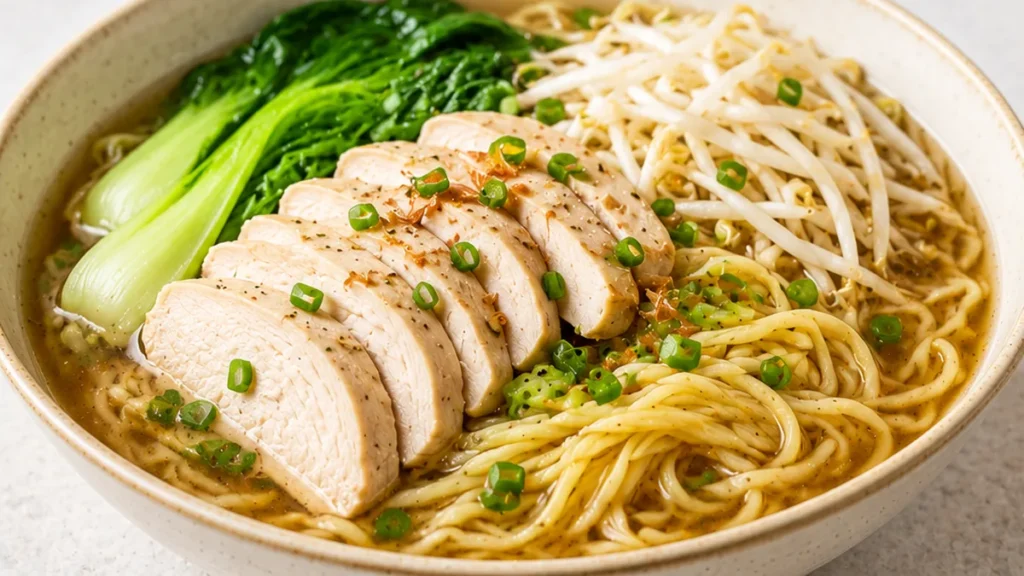
This chicken noodle soup recipe is designed for ultimate comfort and ease. Forget complicated steps; this reliable method yields tender poached chicken, perfectly cooked noodles, and a flavorful broth that will warm you from the inside out. It’s the ideal dish for a chilly evening or when you need a nourishing meal that tastes like home. The combination of savory broth, delicate chicken, crisp vegetables, and slurpable noodles makes this a family favorite.
Key takeaways
- Simmer chicken gently for tender results and flavorful broth.
- Add vegetables in stages to achieve perfect texture.
- Cook fresh noodles just before serving to prevent sogginess.
- Adjust seasoning and broth consistency to your preference.
Comforting Chicken Noodle Soup: Warm Your Soul!
Ingredients
- 1 chicken breast (up to 300g/10 oz)
- 3 bok choys (or 4 small ones)
- 1 cup bean sprouts
- 5 oz / 150 g fresh egg noodles
- 2 cups / 16 oz / 500 mls chicken stock
- 1 cup water
- 1 1/2 tbsp soy sauce
- 2 tsp sugar
- 1 1/2 tbsp chinese cooking wine (or sub with 2 tsp sherry or sake (rice wine))
- 2 tsp ginger (, minced)
Instructions
- Combine chicken stock, water, soy sauce, sugar, chinese cooking wine, and minced ginger in a medium saucepan. Bring to a boil, taste and adjust seasoning if necessary.
- Add the chicken breast to the simmering broth, bring back to a boil, then remove from heat. Cover and let the chicken poach for 20-25 minutes until cooked through.
- Once poached, remove the chicken from the soup. Let it cool slightly, then slice into 1/4″ (0.5cm) thick pieces.
- While the chicken poaches, cook the fresh egg noodles according to package directions (usually by soaking in boiling water for a few minutes). Drain well.
- Prepare the bok choy: separate the leaves from the stems. Cut the stems vertically into 1/3″ (1cm) wide sticks.
- Bring the broth back to a boil. Add the bok choy stems and boil for 30 seconds. Remove from heat, then add the bok choy leaves and bean sprouts to the hot broth to wilt slightly.
- To assemble, place a portion of cooked noodles in each serving bowl. Top with sliced poached chicken, bok choy stems, leaves, and bean sprouts. Ladle the hot soup over everything.
- Garnish with sliced scallions/shallots and crispy fried shallots, if desired.
Notes
The technique that makes it
The key to a truly comforting chicken noodle soup lies in building layers of flavor and ensuring the noodles are perfectly cooked. For this specific recipe, the initial step of gently simmering the chicken breast in the chicken stock and water is crucial. This not only cooks the chicken but also infuses the broth with its savory essence. Avoid boiling vigorously, as this can toughen the chicken and make the broth cloudy. Once the chicken is cooked, remove it and shred it. This allows the chicken to be evenly distributed and adds texture to each spoonful. The bok choy should be added towards the end of the cooking process. Its stems require slightly more time than the leaves. By adding them in stages or cutting them appropriately, you ensure they are tender-crisp, not mushy. The bean sprouts are added last, just before serving, to retain their fresh crunch and bright, fresh flavor. Overcooking them will diminish their texture and taste. Finally, the noodles. Fresh egg noodles cook very quickly, often in just 2-3 minutes. It’s essential to cook them separately or add them to the broth only moments before serving to prevent them from becoming soggy and absorbing too much liquid, which would dilute the soup’s flavor. The combination of a well-seasoned, clear broth, tender shredded chicken, crisp-tender vegetables, and perfectly cooked noodles creates the ultimate comforting experience.
Troubleshooting
- Problem: Broth is too salty.
Fix: Dilute the broth with more unsalted water or chicken stock. You can also add a peeled potato to the simmering broth for about 10-15 minutes; the potato will absorb excess salt. Remove the potato before serving. - Problem: Noodles are mushy.
Fix: This usually happens from overcooking or adding them too early. For best results, cook fresh noodles separately according to package directions and add them to individual bowls just before ladling the soup. If cooking in the pot, add them only 2-3 minutes before serving and ensure they are just tender. - Problem: Chicken is tough.
Fix: Ensure the chicken breast is not overcooked. Simmer it gently in the broth until just cooked through, then remove and shred. Boiling the chicken vigorously can make it tough. - Problem: Soup lacks depth of flavor.
Fix: Ensure you are using a good quality chicken stock. You can enhance the broth by simmering it with a piece of ginger and a bay leaf for a longer period before adding other ingredients. Adjust soy sauce and sugar to taste.
Substitutions
- Chicken: For a vegetarian option, substitute the chicken breast with firm or extra-firm tofu. Press the tofu to remove excess water, then cube and pan-fry or bake until golden before adding to the soup. The result will be a lighter, plant-based broth.
- Bok Choy: Napa cabbage or regular cabbage can be used as a substitute for bok choy. Cut them into bite-sized pieces. Napa cabbage will become tender more quickly, similar to bok choy leaves, while regular cabbage will require a bit longer simmering time.
- Fresh Egg Noodles: If fresh egg noodles are unavailable, dried egg noodles or even thin spaghetti can be used. Adjust cooking time according to the package instructions. Dried noodles will absorb more liquid, so you might need slightly more broth.
- Chinese Cooking Wine: Dry sherry or sake are excellent substitutes, offering a similar subtle sweetness and depth. If you prefer not to use alcohol, a splash of white grape juice with a tiny pinch of salt can mimic some of the flavor profile, though it will be less complex.
Pro tips
- For an even richer broth, use a good quality store-bought or homemade chicken stock.
- Ensure the chicken is fully submerged when poaching; this prevents it from drying out.
- Don’t overcook the bok choy leaves and bean sprouts; they should remain slightly crisp for texture contrast.
- Internal temperature for fully cooked chicken should be 165°F (74°C).
Enjoy this wonderfully simple yet deeply satisfying chicken noodle soup. It’s a recipe that proves comfort food can be both quick and incredibly delicious.
More from Chicken Soups →
Frequently asked questions
Can I use rotisserie chicken for chicken noodle soup?
Absolutely! Rotisserie chicken is a fantastic shortcut. Simply shred the meat and add it to your soup during the last 10-15 minutes of cooking to heat through. It adds a wonderful depth of flavor and saves you a step. Ensure it’s fully cooked before shredding.
How long does chicken noodle soup last in the fridge?
Properly stored chicken noodle soup will last for 3-4 days in the refrigerator. Make sure to cool it completely before covering and refrigerating. Reheat gently on the stovetop or in the microwave until heated through. Avoid overcooking the noodles upon reheating.
What kind of noodles are best for chicken noodle soup?
Egg noodles are classic for a reason, but feel free to experiment. Wide or medium egg noodles hold up well. You can also use elbow macaroni, ditalini, or even broken spaghetti. Cook them separately if you plan on storing leftovers to prevent them from becoming mushy.
How to make chicken noodle soup thicker?
To thicken your chicken noodle soup, you can create a slurry by whisking together 2 tablespoons of cornstarch with 4 tablespoons of cold water. Stir this mixture into the simmering soup and cook for a few minutes until it reaches your desired consistency. Alternatively, mash some of the cooked vegetables.