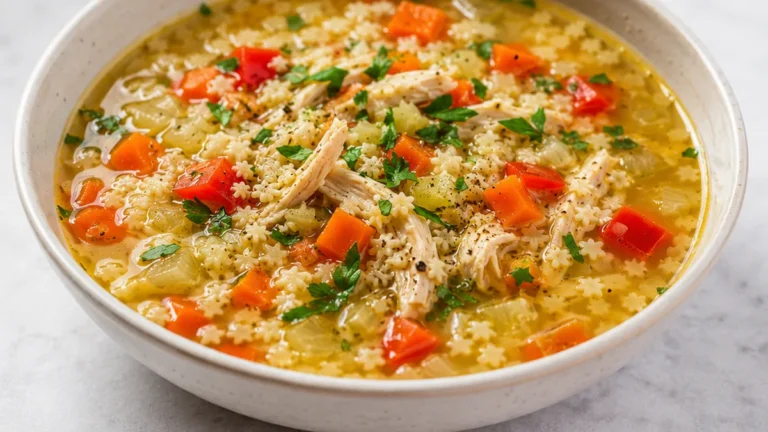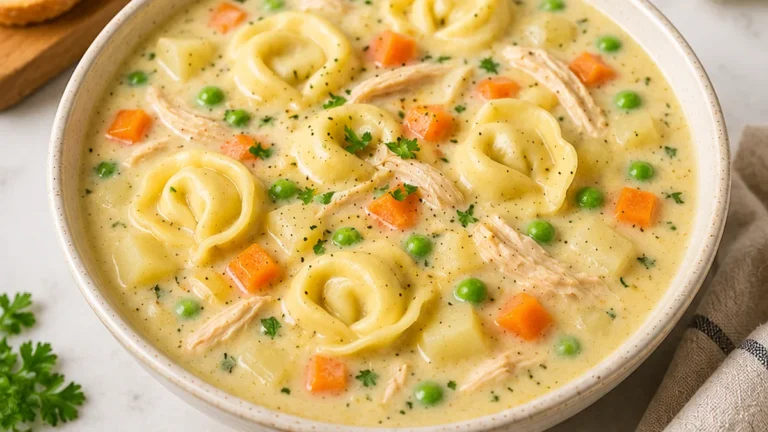
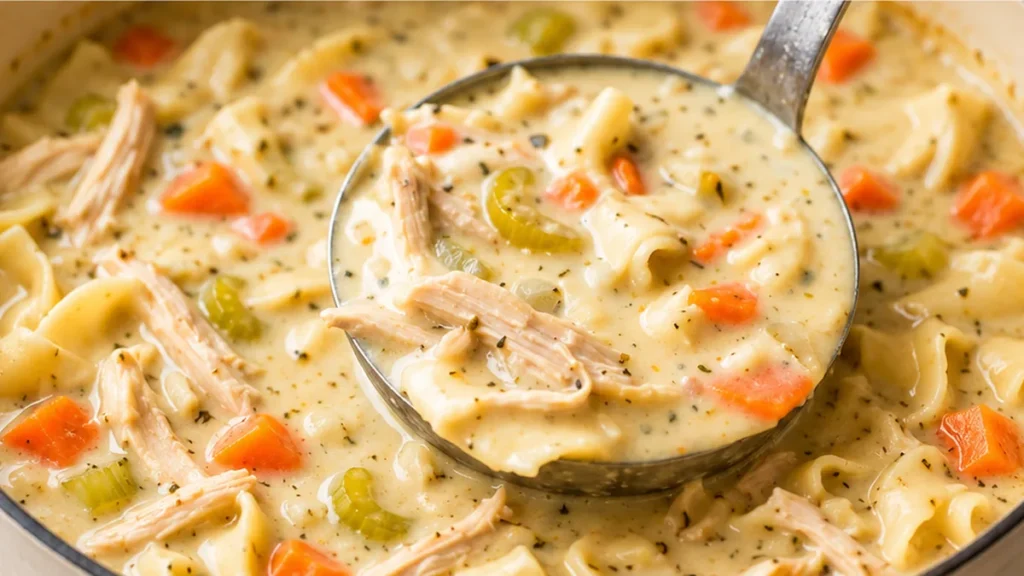
This creamy chicken noodle soup is a comforting dish that combines tender chicken, vegetables, and noodles. The rich broth is made from scratch for a satisfying meal.
Key takeaways
- Using a roux creates a creamy texture that enhances the soup.
- Homemade broth significantly improves flavor depth compared to store-bought.
- Adjusting seasoning at the end of cooking prevents an overly salty soup.
- Cooking noodles separately ensures they maintain their texture in the soup.
Creamy Chicken Noodle Soup
Ingredients
- 1 tablespoon (14g) unsalted butter
- 3/4 cup (100g) chopped yellow onion
- 1 cup (120g) sliced or diced carrots
- 1 cup (120g) sliced or diced celery
- 2 garlic cloves, minced
- 1/4 cup (31g) all-purpose flour
- 1/2 teaspoon salt
- 1/2 teaspoon fresh ground pepper
- 1 teaspoon dried thyme leaves
- 1/2 teaspoon dried oregano
Instructions
- Melt the butter in a large pot over medium heat.
- Add the onion, carrots, celery, and garlic. Cook for 5 minutes until softened.
- Stir in flour, salt, pepper, thyme, and oregano and cook for 2 minutes.
- Add the chicken broth and potato. Bring to a boil for 3 minutes.
- Reduce heat to medium-low, cover, and simmer for 25 minutes.
- Add the chicken, half-and-half/milk, and noodles. Cook for 10 minutes.
- Taste and adjust seasoning as desired. Serve warm.
Notes
Understanding the Creamy Base of Chicken Noodle Soup
The creamy texture of chicken noodle soup is achieved through a careful balance of fat and liquid. The unsalted butter serves as a fat source, which helps in creating a roux when combined with flour. This roux thickens the soup, allowing it to maintain a rich and velvety consistency. Typically, for every tablespoon of butter, an equal amount of flour is used to create a smooth mixture. Cooking the roux for at least 2-3 minutes over medium heat is essential to eliminate the raw flour taste, resulting in a flavorful base.
Common Pitfalls in Achieving Flavorful Broth
A common issue when making chicken noodle soup is a lack of depth in flavor. This can often be attributed to insufficient seasoning or the wrong type of broth. Using homemade chicken stock can significantly enhance the overall taste compared to store-bought versions, which may contain additives. Additionally, allowing the soup to simmer for at least 20-30 minutes enables the flavors to meld together. Adjusting salt and pepper at the end of cooking is crucial; adding them too early can lead to an overly salty soup.
Ingredient Alternatives and Their Effects
While the recipe calls for specific ingredients, several swaps can be made without compromising the dish’s integrity. For instance, using heavy cream instead of milk will result in a richer soup, but it may alter the calorie count significantly. If you prefer a lighter version, you can substitute half-and-half or whole milk. Additionally, fresh herbs can be replaced with dried ones; however, the potency of dried herbs is stronger, so use about one-third of the amount. For a gluten-free option, cornstarch can be used instead of flour to thicken the soup.
The Unique Role of Noodles in Texture and Flavor
The noodles in chicken noodle soup not only add substance but also play a crucial role in the overall texture of the dish. Egg noodles are traditionally used due to their ability to absorb flavors while remaining tender. Cooking the noodles separately and adding them just before serving can prevent them from becoming mushy in the broth. This technique also allows for better control over the doneness of the noodles. For a gluten-free alternative, consider using rice noodles, which will provide a different texture but still complement the soup’s flavors well.
How to Effectively Make Ahead and Store Chicken Noodle Soup
Preparing chicken noodle soup in advance can save time and ensure you have a comforting meal ready when needed. To make it ahead, cook the soup as directed but do not add the noodles until you are ready to serve. This prevents the noodles from becoming mushy during storage. Once cooked, allow the soup to cool completely before transferring it to an airtight container. It can be stored in the refrigerator for up to 3 days or frozen for up to 3 months. When reheating, add fresh noodles to maintain their texture, cooking them separately if desired.
Scaling the Recipe Without Compromising Flavor
When scaling chicken noodle soup, maintaining the balance of flavors is crucial. For every additional serving, increase the base ingredients proportionately, such as chicken, vegetables, and broth. However, be mindful of the seasoning; too much salt or herbs can overpower the dish. A good rule of thumb is to increase seasonings by 10-20% for larger batches, adjusting to taste as the soup simmers. This ensures that even a large pot retains the comforting flavor of the original recipe.
Understanding Equipment Variations for Cooking Chicken Noodle Soup
The equipment you use can significantly affect the outcome of your chicken noodle soup. A heavy-bottomed pot or Dutch oven is ideal for even heat distribution, preventing scorching. If using a slow cooker, you can achieve a rich flavor by browning the vegetables and chicken first on the stovetop before transferring them to the slow cooker. Instant pots can drastically reduce cooking time, but the flavors may not develop as fully as with traditional methods. Always follow the manufacturer’s instructions for timing adjustments.
Pairing and Serving Suggestions for Chicken Noodle Soup
Serving chicken noodle soup can be enhanced by thoughtful pairings. A simple green salad with a light vinaigrette complements the richness of the soup. For a heartier meal, consider crusty bread or homemade biscuits to soak up the broth. Additionally, garnishing with fresh herbs like parsley or dill can elevate the presentation and flavor. For a seasonal twist, serve with a side of roasted vegetables or a fruit salad, which can provide a refreshing contrast to the warm soup.
How to Achieve the Perfect Creaminess in Chicken Noodle Soup
The key to a truly creamy chicken noodle soup lies in the balance of fat and liquid. Using unsalted butter and incorporating flour creates a roux that thickens the soup while providing a rich, velvety texture. When adding broth, it’s crucial to do so gradually, allowing the mixture to simmer and thicken properly. Aim for a final ratio of approximately 1 tablespoon of flour for every cup of liquid, adjusting based on desired thickness. For an even creamier result, consider adding a splash of heavy cream or half-and-half at the end of cooking. This not only enhances the soup’s richness but also contributes to a luxurious mouthfeel.
Adjusting Flavor Profiles Based on Season and Ingredient Quality
The flavor of chicken noodle soup can greatly vary depending on the freshness and quality of the ingredients used. Seasonal vegetables like carrots and celery should be crisp and vibrant, as they contribute essential sweetness and depth to the broth. Additionally, using homemade stock can elevate the flavor significantly. If the soup tastes bland, consider adjusting with fresh herbs or a squeeze of lemon juice to brighten the dish. In contrast, during colder months, using heartier vegetables like parsnips or adding a touch of smoked paprika can create a warming, comforting profile. Always taste and adjust seasoning as you go to ensure a balanced flavor.
Understanding Noodle Choices and Their Impact on Texture
The type of noodles used in chicken noodle soup can influence both texture and cooking time. Egg noodles are a traditional choice, providing a soft and chewy texture that complements the soup. However, if using whole wheat or gluten-free noodles, be mindful of their cooking times, as they often require different treatment. Whole wheat noodles may absorb more liquid, potentially thickening the soup, while gluten-free options can become mushy if overcooked. For best results, add noodles towards the end of the cooking process and cook until just al dente, allowing them to finish cooking in the residual heat of the soup.
Understanding the Impact of Ingredient Quality on Chicken Noodle Soup
The quality of ingredients significantly influences the final taste and texture of chicken noodle soup. Fresh vegetables, such as carrots and celery, should be firm and vibrant, as they contribute essential flavors. For the chicken, using high-quality, free-range chicken can enhance the broth’s richness. Additionally, the freshness of herbs like thyme and oregano plays a crucial role. Dried herbs can lose potency over time, so using fresh herbs can elevate the soup’s aroma and flavor profile. When possible, opt for organic ingredients to avoid pesticides and enhance the soup’s health benefits.
Adjusting Cooking Techniques for Different Equipment
The type of cooking equipment used can alter the preparation of chicken noodle soup. For instance, a slow cooker allows for a more gradual infusion of flavors, which can enrich the broth, but may require longer cooking times. Conversely, using an Instant Pot can significantly reduce cooking time while still achieving a flavorful result. It’s essential to adjust the liquid ratios when switching equipment; for example, stovetop methods may require more liquid due to evaporation. Understanding how different pots and pans conduct heat can also affect cooking times and the final texture of the noodles.
Understanding the Make-Ahead and Storage Behavior of Chicken Noodle Soup
Chicken noodle soup is a quintessential comfort food, and its make-ahead potential is one of its greatest advantages. When prepared in advance, the flavors have time to meld, creating a richer and more harmonious taste. However, there are important considerations for storage. Once cooled, the soup should be transferred to an airtight container and refrigerated within two hours to prevent bacterial growth. It can be stored in the refrigerator for up to three days. For longer storage, freezing is an excellent option; however, it’s essential to note that the texture of the noodles may change upon thawing. To mitigate this, consider cooking the noodles separately and adding them to the reheated soup just before serving. This method preserves the ideal texture and prevents the noodles from becoming mushy.
When reheating, do so gently over low heat, adding a splash of broth or water if the soup appears too thick. This maintains the creamy consistency and enhances the flavor. If you notice the soup has thickened too much during storage, adding additional liquid while reheating can help restore its original texture. Keep in mind that the quality of ingredients used will also affect how well the soup retains its flavor and texture after storage.
Scaling Chicken Noodle Soup for Larger Gatherings
Scaling up chicken noodle soup can be a straightforward process, but it requires careful attention to ingredient ratios to maintain flavor and texture. A common guideline is to increase the quantities of key ingredients proportionately. For example, if doubling the recipe, you would use double the amount of chicken, vegetables, and broth, while also adjusting seasonings to taste. However, the cooking time may not necessarily double; larger batches may require additional time to reach the desired simmering point, but the actual cooking time may remain similar.
Another factor to consider is the size of your cooking equipment. A larger pot or slow cooker may be necessary to accommodate the increased volume. When using a slow cooker, it’s important to ensure that it is filled adequately to allow for proper cooking. Additionally, remember that the noodles can absorb a significant amount of liquid; therefore, it’s wise to reserve some broth to add at the end of cooking if the soup thickens too much. This approach ensures that the soup retains its creamy texture, even in larger quantities. Lastly, testing the flavor at various stages is crucial, as scaling up can sometimes dilute the seasoning, requiring adjustments to salt and herbs.
Pro tips
- Use good quality chicken broth for the best flavor base.
- Don’t skip cooking the flour with the vegetables; it creates a crucial roux for thickening.
- Taste and adjust seasonings frequently, especially after adding noodles and cream.
- For extra flavor, consider adding a bay leaf while simmering.
Enjoy this comforting bowl of creamy chicken noodle soup, a truly satisfying meal that’s perfect any time of year. Share your creations!
Frequently asked questions
What type of chicken is best for chicken noodle soup?
Using bone-in, skin-on chicken pieces, like thighs or breasts, is ideal for maximum flavor. The bones add richness to the broth, while the skin provides extra fat, contributing to the soup’s creaminess.
Can I make chicken noodle soup ahead of time?
Yes, chicken noodle soup can be made ahead. However, it’s best to add the noodles just before serving to prevent them from becoming mushy. Store the soup in an airtight container in the refrigerator for up to three days.
How do I prevent my noodles from getting mushy in the soup?
To prevent mushy noodles, cook them separately in salted water until al dente. Drain and rinse them under cold water before adding them to the soup just before serving.
Can I freeze chicken noodle soup?
Yes, you can freeze chicken noodle soup, but it’s advisable to freeze it without the noodles. The noodles can become mushy upon thawing. Store in freezer-safe containers for up to three months.
More from Chicken Soups →