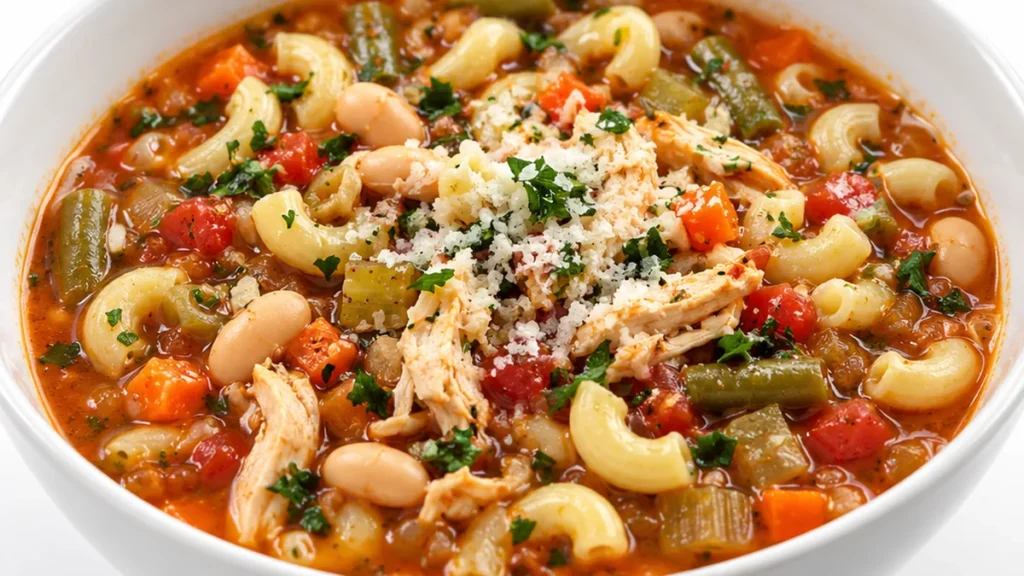
Chicken minestrone soup is a hearty dish packed with vegetables and tender chicken. This recipe is straightforward and perfect for a comforting meal.
Key takeaways
- Fresh ingredients are key for flavor and nutrition.
- Sautéing vegetables enhances sweetness and depth.
- Adjust cooking times to maintain texture and prevent mushiness.
- Ingredient swaps can diversify flavor and nutrition without sacrificing quality.
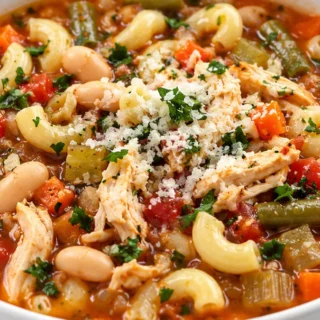
Chicken Minestrone Soup: Cozy & Flavorful!
Ingredients
Instructions
- Prepare the chicken so you have about 3 cups of cooked chicken to add to the soup.
- Heat the butter and olive oil over medium-high heat.
- Add the mirepoix mixture and cook until it is starting to soften and brown a bit, about 5 – 7 minutes.
- Add the seasonings, Italian herbs, garlic powder, harissa, red pepper flakes, salt and pepper and cook until fragrant, stirring often, for about 1 – 2 minutes.
- Stir in the frozen spinach and cook until it starts to soften, about 2 minutes more.
- Drain the petite diced tomatoes, green beans, carrots and white beans.
- Add all the drained vegetables and the beans, the can of crushed tomatoes, the chicken and the chicken broth to the soup pot.
- Stir until well combined and beginning to simmer. Simmer for at least 15 minutes to allow flavors to meld.
Understanding the Essential Ingredients for Chicken Minestrone Soup
The foundation of a flavorful chicken minestrone soup lies in the selection and quality of its ingredients. Each component plays a crucial role in building the soup’s flavor profile. For instance, using fresh vegetables such as carrots, celery, and zucchini not only adds color but also contributes essential nutrients and natural sweetness. The choice of chicken, whether using breasts or thighs, impacts the soup’s richness; thighs provide more flavor and moisture. Additionally, incorporating high-quality chicken broth enhances the overall taste, as it serves as the soup’s base. Aiming for a broth with a good balance of salt and seasoning is vital to avoid overpowering the delicate flavors of the vegetables.
The Importance of Cooking Techniques in Achieving Perfect Flavor
Cooking techniques significantly influence the final taste and texture of chicken minestrone soup. Sautéing the vegetables at the beginning allows their natural sugars to caramelize, resulting in a deeper flavor. Maintaining the right cooking temperature is essential; too high can scorch the ingredients, while too low may not extract enough flavor. For instance, simmering the soup gently allows the chicken to cook through without becoming tough, ideally at around 90-95°C (194-203°F). This method also ensures that the vegetables retain their texture and do not become mushy. Additionally, adding pasta towards the end of cooking prevents it from overcooking and becoming gummy, ensuring a pleasant bite.
Common Issues and How to Resolve Them
Even with the best intentions, issues can arise while preparing chicken minestrone soup. One common problem is when the soup turns out too salty. This often occurs if a concentrated broth is used or if additional salt is added during cooking. To fix this, consider adding more water or low-sodium broth to dilute the saltiness. Another issue is if the soup lacks depth of flavor. This can happen if the vegetables are not sautéed long enough. To remedy this, try sautéing them longer until they are golden brown before adding the broth. Lastly, if the soup is too thick, it can be adjusted by adding more broth or water to reach the desired consistency.
Ingredient Swaps and Their Impact on Flavor
Substituting ingredients in chicken minestrone soup can lead to different flavor profiles and textures. For example, swapping out traditional pasta for quinoa or farro can add a nutty flavor and increase the nutritional value. However, these grains may absorb more liquid, requiring adjustments in the broth quantity. Another swap could be using canned beans instead of dried ones, which saves time but may alter the texture slightly, making the soup creamier. Additionally, replacing chicken with turkey can provide a leaner option, but it may result in a less rich flavor, necessitating the addition of herbs or spices to compensate.
Unique Aspects of Chicken Minestrone Soup
What sets chicken minestrone soup apart from other soups is its versatility and the ability to incorporate seasonal vegetables. This adaptability allows cooks to use whatever is fresh and available, making it a sustainable choice. Unlike traditional minestrone, which may focus solely on vegetables and beans, the inclusion of chicken adds a protein component that enhances heartiness. Furthermore, the use of herbs such as basil or thyme not only elevates the flavor but also ties the dish to its Italian roots, making it a comforting and satisfying meal for any occasion.
Understanding the Impact of Ingredient Quality on Flavor
In chicken minestrone soup, the quality of ingredients plays a crucial role in the overall flavor profile. Fresh vegetables, such as carrots, celery, and tomatoes, should be vibrant and firm, as they contribute essential sweetness and depth. For instance, using heirloom tomatoes instead of standard varieties can elevate the soup’s taste due to their richer flavor. Similarly, the quality of chicken—preferably organic or free-range—can significantly enhance the broth’s richness. Fresh herbs like basil or parsley should be added at the end of cooking to preserve their aromatic qualities. As a rule of thumb, the fresher the ingredients, the more robust the flavor of the final dish.
Scaling the Recipe: Adjustments for Larger Batches
When scaling chicken minestrone soup for larger gatherings, it is essential to consider the cooking time and the size of your equipment. Doubling the recipe may not necessarily mean doubling the cooking time; larger quantities can actually take longer to reach the desired simmering point. It is advisable to use a larger pot to ensure even cooking. Additionally, the flavor may need adjustment—more broth, spices, or herbs may be necessary to maintain the balance. Always taste as you go, and don’t hesitate to modify the ingredient ratios to suit the larger batch.
Make-Ahead Strategies for Chicken Minestrone Soup
Chicken minestrone soup is an excellent candidate for make-ahead meals, as its flavors improve over time. For optimal results, prepare the soup a day in advance and store it in the refrigerator. This allows the flavors to meld beautifully. If you plan to freeze the soup, consider undercooking the pasta slightly, as it will continue to cook when reheated. Portion the soup into airtight containers, leaving some space for expansion. When reheating, add a splash of broth or water to restore the desired consistency, as the soup may thicken during storage.
Serving Suggestions and Pairings for Enhanced Enjoyment
To elevate the dining experience of chicken minestrone soup, consider serving it with freshly baked bread or a side salad. A crusty baguette or garlic bread complements the soup’s hearty nature and allows for dipping. For a refreshing contrast, a simple arugula salad dressed with lemon vinaigrette can balance the richness of the soup. Additionally, a sprinkle of Parmesan cheese on top before serving can add a savory depth. Pairing the soup with a light white wine, such as Pinot Grigio, can enhance the meal, making it a delightful culinary experience.
How to Optimize Flavor and Texture in Chicken Minestrone Soup
The secret to achieving a deeply satisfying chicken minestrone soup lies in the layering of flavors and the careful selection of cooking techniques. Begin by sautéing aromatics like onions, garlic, and carrots in olive oil until they are soft and fragrant, which typically takes about 5-7 minutes over medium heat. This process not only enhances the overall flavor profile but also initiates the Maillard reaction, contributing to a richer taste. Once the vegetables are tender, add your chicken pieces and brown them lightly, which can take an additional 5-8 minutes. This step ensures that the chicken develops a nice crust, sealing in moisture and flavor.
Another critical aspect is the timing of ingredient additions. For instance, adding hearty vegetables like potatoes or zucchini too early can lead to mushy textures. Instead, introduce them halfway through the cooking process to maintain their integrity. Additionally, incorporating fresh herbs such as basil or parsley towards the end of cooking maximizes their aromatic qualities, enhancing the soup’s freshness. Aim for a simmering temperature of around 90-95°C (194-203°F) to allow flavors to meld without overcooking the ingredients.
Understanding the Impact of Seasonal Ingredients on Chicken Minestrone Soup
The seasonality of ingredients plays a crucial role in the flavor and nutritional profile of chicken minestrone soup. Using fresh, in-season vegetables not only supports local agriculture but also ensures maximum flavor and texture. For instance, in the spring, consider adding peas and asparagus for a light, vibrant twist, while autumn may call for root vegetables like turnips and squash, offering a heartier, more robust flavor.
Moreover, the quality of chicken used can significantly affect the outcome of the soup. Opt for free-range or organic chicken, which tends to have a more pronounced flavor and better texture compared to conventional options. When using canned beans, choose low-sodium varieties to control salt levels while still providing the necessary creaminess and protein. Additionally, consider the impact of cooking time and temperature on vegetables; longer cooking times can diminish the freshness of delicate vegetables, while sturdier options can withstand longer cooking without losing their texture.
Pro tips
Pro tip: Best served immediately while hot!
Frequently asked questions
Can I use frozen vegetables in chicken minestrone soup?
Yes, frozen vegetables can be used in chicken minestrone soup. They are often picked at peak freshness and can save time in preparation. However, be mindful of the cooking time, as frozen vegetables may require less time to cook than fresh ones.
What type of pasta works best in chicken minestrone soup?
Small pasta shapes like ditalini or elbow macaroni are ideal for chicken minestrone soup as they hold up well in the broth. Avoid larger pasta shapes that may overpower the soup’s texture and flavor balance.
How can I make chicken minestrone soup vegetarian?
To make chicken minestrone soup vegetarian, simply omit the chicken and use vegetable broth instead of chicken broth. You can also add extra beans or lentils for protein and a heartier texture.
Can I make chicken minestrone soup in a slow cooker?
Absolutely! To make chicken minestrone soup in a slow cooker, combine all ingredients except for the pasta and cook on low for 6-8 hours. Add the pasta during the last 30 minutes of cooking for best results.
More from Chicken Soups →