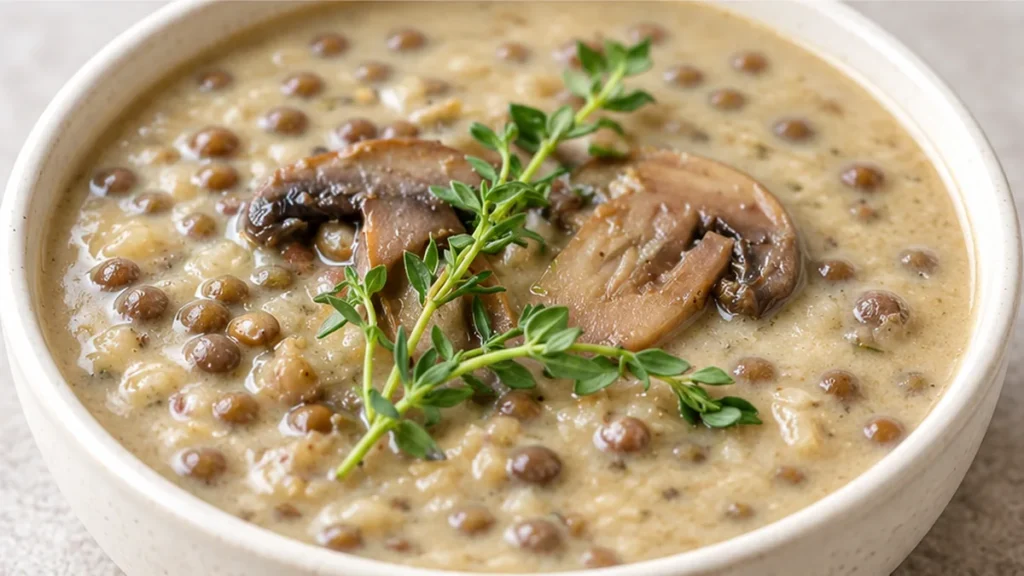
This creamy mushroom lentil soup is a hearty dish made with lentils and mushrooms. It’s simple to prepare and offers a rich flavor profile.
Key takeaways
- Mushrooms provide umami and depth; choose varieties like cremini for best results.
- Brown or green lentils work best for texture; rinse before cooking for even results.
- Blend part of the soup for creaminess without excess fat; consider cashew cream for a vegan option.
- Monitor cooking times to prevent lentils from becoming mushy; adjust seasoning for enhanced flavor.
Creamy Mushroom Lentil Soup
Ingredients
Instructions
- In a high-speed blender, combine raw cashews, 1/2 cup water, miso paste, and 2 large mushrooms cut into quarters. Blend until creamy. Set aside.
- Thinly slice the remaining mushrooms.
- Heat olive oil in a soup pot over medium heat. Sauté chopped onion and minced garlic for a few minutes until fragrant.
- Add sliced mushrooms and a pinch of salt. Cook, stirring, until mushrooms soften and release their liquid.
- Add 3 1/2 cups water, lentils, brown rice, vegetable bouillon cube, dried rosemary, dried thyme, and a pinch more salt. Bring to a simmer, then cover and cook for 30 minutes.
- Check rice and lentils for doneness; cook 5 more minutes if needed. Stir in the cashew cream and cook for another 5 minutes.
- Season with freshly ground pepper and additional salt to taste.
The Role of Mushrooms in Creamy Mushroom Lentil Soup
Mushrooms are a key ingredient in creamy mushroom lentil soup, providing umami flavor and a meaty texture that complements the lentils. Varieties such as cremini, shiitake, or button mushrooms can be used, each imparting a unique taste profile. Cooking mushrooms properly involves sautéing them until they release their moisture and brown slightly, enhancing their flavor. This process usually takes about 5-7 minutes over medium heat. The Maillard reaction occurs during this browning, creating complex flavors that elevate the soup.
Understanding Lentils: Types and Cooking Times
Lentils are the backbone of this soup, contributing protein and fiber. There are several types of lentils, including green, brown, red, and black, each with different cooking times and textures. For creamy mushroom lentil soup, brown or green lentils are ideal as they hold their shape well and provide a hearty texture. Cooking lentils typically takes 20-30 minutes, depending on the variety. It’s crucial to rinse lentils before cooking to remove any debris and ensure even cooking.
Achieving the Perfect Creaminess
The creaminess in this soup can be achieved through the use of dairy or plant-based alternatives. Heavy cream or coconut milk can be added towards the end of cooking to create a rich and velvety texture. If opting for a lighter version, blending a portion of the soup can also enhance creaminess without adding excess fat. For a plant-based option, consider using cashew cream, which can be made by blending soaked cashews with water until smooth. This method not only thickens the soup but also adds a nutty flavor.
Common Issues and Solutions
- Issue: Soup is too thick.
- Solution: Add more vegetable broth or water gradually until the desired consistency is reached.
- Issue: Lentils are mushy.
- Solution: Be mindful of cooking times; check lentils for doneness around the 20-minute mark to prevent overcooking.
- Issue: Lacking flavor.
- Solution: Enhance with additional seasoning, such as salt, pepper, or herbs like thyme and bay leaves, during cooking.
Ingredient Swaps and Their Impact
- Swap: Use vegetable stock instead of water for cooking lentils.
- Impact: This adds depth of flavor but may increase sodium levels.
- Swap: Replace heavy cream with Greek yogurt.
- Impact: This reduces calories and fat while adding protein, but may alter the soup’s richness.
- Swap: Substitute fresh herbs with dried herbs.
- Impact: Dried herbs are more concentrated, so use about one-third the amount; this can affect the freshness of flavor.
How to Adapt Creamy Mushroom Lentil Soup for Meal Prep
When preparing creamy mushroom lentil soup for meal prep, consider the soup’s texture and flavor development. Allow the soup to cool completely before refrigerating in airtight containers. This soup can last up to five days in the fridge or three months in the freezer. To reheat, add a splash of broth or water to restore creaminess, as lentils absorb liquid over time. For optimal flavor, consider reheating on the stove for even warmth and stirring frequently.
Scaling the Recipe for Different Serving Sizes
Scaling the creamy mushroom lentil soup recipe is straightforward. If you need to double the recipe, maintain the same ingredient ratios to ensure consistent flavor and texture. For smaller servings, reduce the ingredients proportionally. Keep in mind that cooking times may vary slightly with larger batches; use a larger pot to allow for even cooking. A larger batch may also take longer to reach the desired simmering point, so adjust your cooking time accordingly.
Understanding Equipment Differences and Their Impact on Cooking
The equipment used can significantly affect the outcome of creamy mushroom lentil soup. A heavy-bottomed pot distributes heat evenly, preventing scorching, while a non-stick pot can make for easier cleanup. If using an immersion blender, ensure it’s powerful enough to create a smooth texture. Alternatively, a traditional blender can be used, but allow the soup to cool slightly before blending to avoid splattering. Adjust cooking times based on the type of pot used; for instance, a pressure cooker can significantly reduce cooking time for lentils.
Pairing and Serving Suggestions for Creamy Mushroom Lentil Soup
To enhance the enjoyment of creamy mushroom lentil soup, consider pairing it with crusty bread or a fresh salad. A sprinkle of fresh herbs, such as parsley or thyme, can elevate the presentation and flavor. For added richness, a dollop of sour cream or a drizzle of olive oil can be served on top. This soup also pairs well with a glass of white wine, such as Sauvignon Blanc, which complements the earthiness of the mushrooms.
Understanding the Impact of Ingredient Quality on Flavor
The quality of the ingredients used in creamy mushroom lentil soup significantly influences its flavor profile. Fresh, high-quality mushrooms, such as cremini or shiitake, provide a rich umami taste that dried or lower-quality varieties cannot replicate. Additionally, using organic lentils can enhance the soup’s nutritional value and flavor complexity. When selecting vegetables, opt for seasonal produce, as they tend to be fresher and more flavorful. For instance, using locally sourced onions and garlic can elevate the base of the soup, creating a more aromatic and satisfying dish. The freshness of herbs, particularly thyme or parsley, also plays a crucial role; dried herbs may lack the vibrant flavor that fresh herbs contribute. Therefore, investing in high-quality ingredients not only enhances the taste but also the overall enjoyment of the soup.
Batch Scaling: Adjusting Cooking Times and Ratios
When scaling the creamy mushroom lentil soup recipe for larger or smaller batches, it is essential to adjust both ingredient ratios and cooking times accordingly. For instance, doubling the recipe requires not just doubling the ingredients but also careful consideration of cooking times. Larger volumes may require additional simmering time to ensure the lentils are fully cooked and the flavors meld together. Conversely, reducing the recipe may lead to quicker cooking, so monitoring the soup closely is crucial to avoid overcooking. When scaling, keep the liquid ratios consistent; for every cup of lentils, typically use about four cups of broth. This ensures that the soup maintains its intended texture and creaminess, regardless of the batch size.
Make-Ahead Strategies for Creamy Mushroom Lentil Soup
Preparing creamy mushroom lentil soup in advance can save time and enhance flavors. To make ahead, cook the soup as directed, allowing it to cool completely before storing it in airtight containers. The soup can be refrigerated for up to five days or frozen for up to three months. When reheating, add a splash of broth to restore the creamy texture, as the soup may thicken upon cooling. It’s also beneficial to undercook the lentils slightly if you plan to freeze the soup, as they will continue to cook during reheating. This strategy helps maintain the integrity of the lentils and prevents them from becoming mushy. Additionally, consider preparing the soup without the cream or dairy and adding it just before serving for a fresher taste.
How to Ensure Optimal Flavor Development in Creamy Mushroom Lentil Soup
Flavor development in creamy mushroom lentil soup hinges on the Maillard reaction, which occurs when proteins and sugars in the ingredients react under heat. To enhance this reaction, sauté the mushrooms until they are deeply browned, which can take 10-15 minutes over medium heat. This process not only intensifies the umami flavor but also adds complexity to the soup. Additionally, deglazing the pot with a splash of vegetable broth or white wine after browning the mushrooms can lift the fond, providing an extra layer of flavor. When simmering the lentils, ensure they are cooked until tender but not mushy, typically around 20-25 minutes for green or brown lentils. The balance of seasoning is crucial; consider incorporating herbs such as thyme or bay leaves during cooking for aromatic depth. Remember, the final seasoning should be adjusted at the end of cooking, as flavors can concentrate and change during the simmering process.
Understanding the Role of Cooking Equipment in Creamy Mushroom Lentil Soup Preparation
The type of cooking equipment used can significantly influence the outcome of creamy mushroom lentil soup. A heavy-bottomed pot or Dutch oven is ideal for even heat distribution, preventing hot spots that can lead to uneven cooking or burning. If using a slow cooker, note that the cooking time will increase, and flavors may develop differently due to the lower cooking temperatures. When using an immersion blender to achieve creaminess, ensure the soup is well blended but not over-pureed, as some texture from the lentils and mushrooms adds character to the dish. For those who prefer a traditional blender, allow the soup to cool slightly before blending in batches to avoid splattering. Always remember to taste and adjust the seasoning after blending, as the texture change can affect the perception of saltiness and flavor.
Pro tips
Pro tip: Best served immediately while hot!
Frequently asked questions
Can I use dried lentils instead of canned?
Yes, dried lentils are preferable as they provide better texture and flavor. Just ensure to rinse them and adjust cooking times accordingly, usually around 20-30 minutes.
What type of mushrooms should I use?
Any variety works, but cremini or shiitake mushrooms are recommended for their rich flavor. Button mushrooms are also a good choice if you prefer a milder taste.
How can I make this soup vegan?
To make the soup vegan, use vegetable broth and substitute heavy cream with coconut milk or cashew cream. Both options will maintain the creaminess without any dairy.
Can I freeze creamy mushroom lentil soup?
Yes, this soup freezes well. Allow it to cool completely before transferring to airtight containers. It can be stored in the freezer for up to three months; just reheat on the stove when ready to serve.
More from Vegetable & Bean Soups →