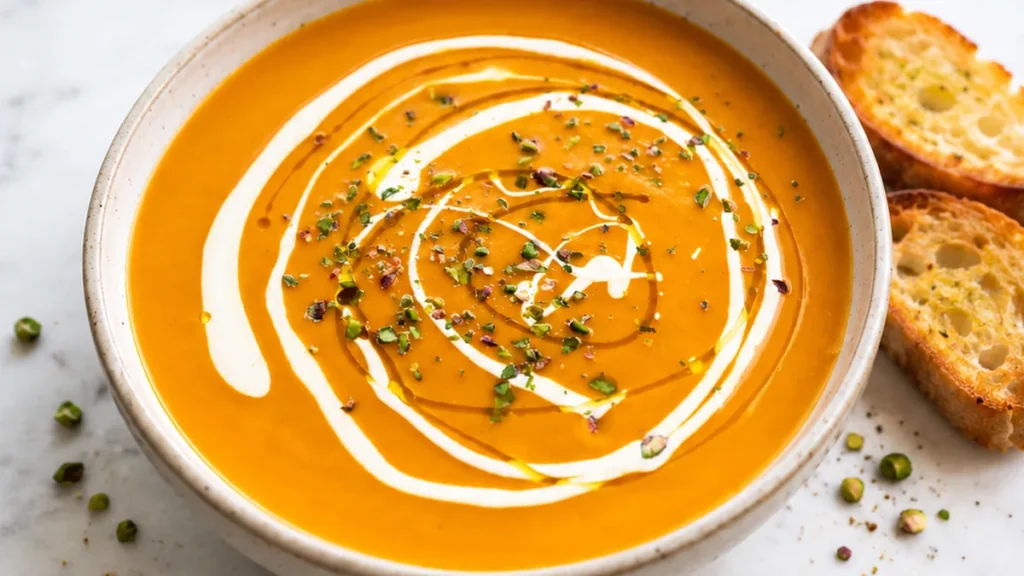
This roasted pumpkin pepper soup will warm your heart. It’s a simple recipe that combines the sweetness of pumpkin with the warmth of peppers.
Key takeaways
- Roasting enhances the sweetness and flavor complexity of the soup.
- Proper seasoning is crucial for a well-balanced taste.
- Substituting ingredients can change the flavor profile significantly.
- The creamy texture can be achieved without dairy, relying on the pumpkin’s natural starches.
Warm Your Heart with Roasted Pumpkin Pepper Soup!
Ingredients
Instructions
- Heat olive oil in a wide pan. Add garlic, onions, bell peppers and sauté for 1-2 minutes on high. Add pumpkins and sauté. Spread them out in an even layer and add tomatoes. Cover and cook for 10-14 minutes until the pumpkin and tomatoes are tender. If possible, pluck out the skin of tomatoes with tongs.
- Cook and add to the blender along with salt and ¾ cup water. Blend until smooth.
- Pour into a pot, add milk or cream. Bring to a quick boil and turn off the heat. Top with some cream, a dash of olive oil, and chopped pistachios.
Understanding the Flavor Profile of Roasted Pumpkin Pepper Soup
The combination of roasted pumpkin and peppers creates a unique flavor profile that is both sweet and savory. The Maillard reaction, which occurs during the roasting process, enhances the natural sugars in the pumpkin and peppers, resulting in a deeper, more complex flavor. Roasting at 200°C (400°F) for about 25-30 minutes allows the vegetables to caramelize, developing that essential sweetness. Pairing these ingredients with spices such as cumin or coriander can further elevate the dish, adding warmth and depth.
Common Pitfalls and How to Avoid Them
One common issue with pumpkin soup is a watery consistency. This often occurs if the pumpkin is not properly drained after roasting. To fix this, ensure you allow the roasted pumpkin to cool slightly before blending, which helps reduce excess moisture. Another problem can be an overly bland flavor; this can happen if the seasoning is added too late. Always taste and adjust the seasoning during cooking, ideally after blending the soup for a more accurate flavor assessment.
Failure: Watery Soup
Cause: Excess moisture from the pumpkin. To prevent this, roast the pumpkin until it’s tender and slightly caramelized, then let it cool before blending.
Failure: Bland Flavor
Cause: Insufficient seasoning. To enhance flavor, add salt, pepper, and spices during the cooking process, and taste frequently to adjust as needed.
Ingredient Swaps and Their Impact
Substituting ingredients can significantly alter the final outcome of your soup. For instance, if you don’t have fresh peppers on hand, using roasted red pepper from a jar can provide a similar sweetness, though it might be less vibrant. Additionally, swapping vegetable broth for chicken broth can add a richer flavor, but will change the dish’s vegetarian profile. Each swap carries its own trade-offs, so consider the desired flavor and dietary needs when making adjustments.
Swap: Fresh Peppers for Jarred
Impact: Jarred peppers may result in a less fresh taste, but provide convenience and maintain sweetness.
Swap: Vegetable Broth for Chicken Broth
Impact: Chicken broth adds depth but shifts the dish away from being vegetarian.
Unique Characteristics of Pumpkin Soup
Roasted pumpkin pepper soup is particularly notable for its creamy texture, which can be achieved without the use of dairy. The natural starches in the pumpkin contribute to a silky mouthfeel when blended properly. Unlike many other soups, this recipe relies on the sweetness of the vegetables and the spices to create a comforting dish that warms the heart, making it ideal for cool weather. Additionally, the bright orange color not only makes for an appealing presentation but also indicates a high beta-carotene content, which is beneficial for health.
Make-Ahead Strategies for Roasted Pumpkin Pepper Soup
Preparing roasted pumpkin pepper soup in advance can save time and enhance flavors. When making this soup ahead of time, consider roasting the pumpkin and peppers a day prior. Store them in an airtight container in the refrigerator. When ready to serve, simply blend the roasted vegetables with the broth and seasonings. This method allows the flavors to meld, creating a richer taste. Additionally, the soup can be fully cooked and stored in the fridge for up to three days or frozen for up to three months. When reheating, do so gently to maintain the soup’s creamy texture.
Scaling Your Recipe for Gatherings
When preparing roasted pumpkin pepper soup for a larger group, scaling the recipe is straightforward. For every additional serving, increase the quantity of pumpkin and peppers proportionally. A good rule of thumb is to plan for about 250-300 grams of pumpkin and 100-150 grams of peppers per person. Ensure you have a large enough pot to accommodate the increased volume without overflowing. Cooking times may vary slightly with larger batches; monitor the soup closely to ensure even cooking and blending. This scalability makes it an ideal choice for gatherings.
Choosing the Right Equipment for Optimal Results
The equipment you use can significantly impact the outcome of your roasted pumpkin pepper soup. A high-powered blender is essential for achieving a smooth consistency, especially after roasting the vegetables. If you have an immersion blender, it can be a convenient option for blending directly in the pot, reducing cleanup time. Additionally, using a heavy-bottomed pot can help distribute heat evenly, preventing the soup from scorching. If you opt for a slow cooker, you can roast the vegetables beforehand and then combine them with the broth for a hands-off cooking approach.
Serving Suggestions and Flavor Pairings
Serving roasted pumpkin pepper soup can be enhanced with thoughtful pairings. Consider garnishing with a swirl of cream or a sprinkle of roasted pumpkin seeds for added texture. Fresh herbs like cilantro or parsley can brighten the dish. For a complementary side, crusty bread or a light salad works well. Additionally, pairing the soup with a crisp white wine or a light beer can elevate the dining experience. Seasonal changes can also influence serving styles; in colder months, serve with hearty bread, while in warmer months, consider a lighter, chilled version of the soup.
Understanding the Impact of Ingredient Quality on Flavor
The quality of the ingredients used in roasted pumpkin pepper soup significantly influences the final flavor profile. Fresh, seasonal pumpkins contain higher sugar content and natural sweetness, which can enhance the soup’s overall taste. For peppers, using ripe, vibrant varieties such as red or yellow bell peppers will add depth and sweetness. In contrast, older or less ripe vegetables may result in a more muted flavor. To maximize flavor, choose organic produce when possible, as it often has a richer taste due to better growing conditions. Additionally, roasting the vegetables until they are caramelized can intensify their flavors, creating a more complex and satisfying soup.
Batch Scaling Without Compromising Flavor
When scaling the recipe for roasted pumpkin pepper soup, maintaining the balance of flavors is crucial. If doubling or tripling the recipe, ensure that the roasting times are adjusted accordingly. Larger batches may require longer roasting to achieve the same caramelization. It’s also essential to maintain the ratio of spices and seasonings; consider increasing them incrementally to taste. Additionally, when scaling, use a larger pot to allow for even cooking and blending. Overcrowding can lead to uneven heating and texture. Always taste and adjust seasonings at the end of the cooking process to ensure that the soup remains flavorful and balanced.
Optimal Storage Techniques for Maximum Freshness
Proper storage of roasted pumpkin pepper soup is key to preserving its freshness and flavor. After cooking, allow the soup to cool to room temperature before transferring it to airtight containers. It can be stored in the refrigerator for up to five days. For longer storage, consider freezing the soup in portion-sized containers or freezer bags, which can last for up to three months. To reheat, thaw overnight in the refrigerator and warm gently on the stove, adding a splash of water or broth to restore the desired consistency. Avoid reheating multiple times, as this can degrade the flavor and quality of the soup.
Understanding the Role of Roasting in Flavor Development
Roasting is a pivotal technique when preparing pumpkin pepper soup, as it significantly enhances the depth of flavor. The Maillard reaction, which occurs at temperatures above 140°C (284°F), is responsible for the browning of the pumpkin and peppers, creating complex flavor compounds. This reaction can take anywhere from 20 to 40 minutes, depending on the size of the vegetable pieces and the roasting temperature. By caramelizing the natural sugars in the vegetables, roasting adds a sweet, rich undertone that balances the soup’s overall taste. Additionally, the slight charring that occurs on the surface of the vegetables contributes to a smoky flavor profile, which is particularly desirable in a soup meant to warm the heart. For optimal results, ensure that the vegetables are spread out evenly on the baking sheet, allowing for proper air circulation and even cooking.
Batch Scaling: Maintaining Flavor Integrity
When scaling your recipe for roasted pumpkin pepper soup, it is crucial to maintain the balance of flavors and textures. A common mistake is to simply multiply the ingredient quantities without considering the cooking process. For instance, if you double the batch, you may need to adjust the roasting time or temperature to ensure even cooking. When preparing larger quantities, consider roasting the vegetables in batches rather than overcrowding the pan, which can lead to steaming instead of roasting. Additionally, be mindful of the soup’s seasoning; larger batches may require more nuanced adjustments to spices and salt to achieve the desired flavor profile. A good rule of thumb is to taste and adjust seasonings gradually as you scale up, rather than adding all at once. This approach helps preserve the soup’s heartwarming essence, ensuring it remains a comforting dish regardless of the quantity prepared.
Pro tips
Pro tip: Best served immediately while hot!
Frequently asked questions
Can I use canned pumpkin for this recipe?
Yes, canned pumpkin can be used as a convenient substitute. However, it may lack the roasted flavor that fresh pumpkin provides. To enhance the taste, consider adding a bit of smoked paprika or roasting spices.
How can I make the soup spicier?
To add heat, incorporate fresh chili peppers or a pinch of cayenne pepper during the cooking process. Adjust the amount based on your spice tolerance for the perfect kick.
What can I serve with this soup?
This soup pairs beautifully with crusty bread or a fresh salad. For added richness, consider topping it with a dollop of sour cream or a sprinkle of roasted seeds.
How should I store leftovers?
Leftover soup can be stored in an airtight container in the refrigerator for up to 3 days. For longer storage, freeze the soup in portions for up to 3 months, reheating as needed.
More from Vegetable & Bean Soups →