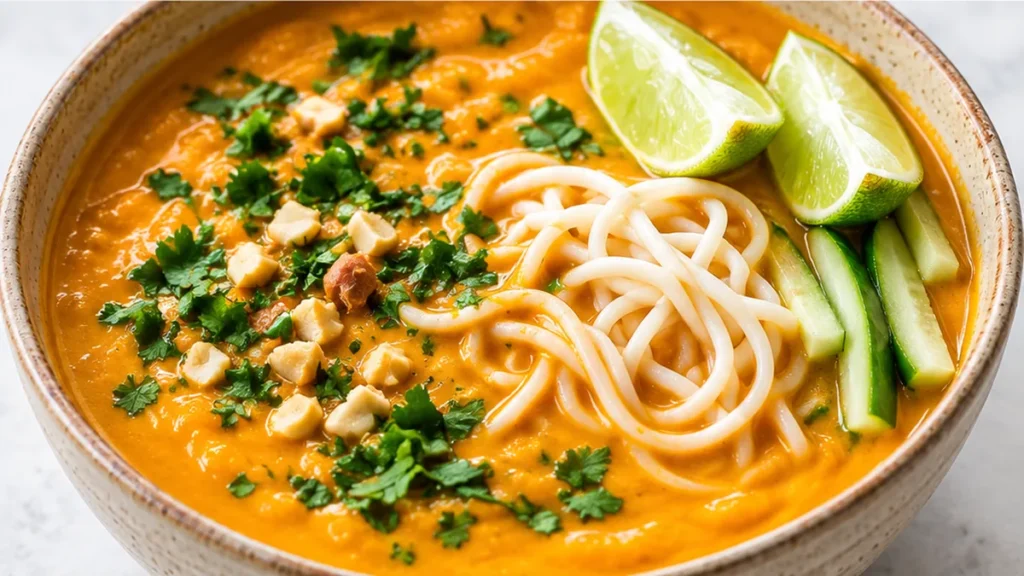
This creamy thai ginger carrot soup features fresh ginger and carrots. It’s a simple recipe that provides warmth and comfort on cold days.
Key takeaways
- Use fresh ginger for a brighter flavor.
- Simmer carrots until tender for a creamy texture.
- Adjust thickness by simmering longer or adding liquid.
- Garnish with fresh herbs for added freshness.

Creamy Thai Ginger Carrot Soup That Will Warm Your Soul!
Ingredients
Instructions
- **Traditional Pressure Cooker**: Heat oil and add the red thai curry paste, ginger, and onions for a few minutes. Add the carrots, water (or broth), and salt. Bring to high pressure and cook for three whistles. Turn off and let steam release naturally. Mix in peanut butter and blend.
- **Instant Pot**: Turn on saute mode and heat oil. Saute red thai curry paste, ginger, and onions for a few minutes. Add carrots, water (or broth), and salt. Seal lid and set high pressure for 12 minutes. Quick release, mix in peanut butter, and blend.
- **Stove Top**: Heat oil in a pot and add red thai curry paste, ginger, and onions for a few minutes. Add carrots, water (or broth), and salt. Bring to a boil and simmer until carrots are soft, approx 15-20 minutes. Mix in peanut butter and blend.
- **Serve**: Top with your favorite toppings like noodles, coriander, roasted peanuts, and lime juice. Enjoy hot!
Understanding the Creamy Texture of Carrot Soup
The creamy texture of Thai ginger carrot soup is achieved through a combination of cooking methods and ingredient choices. The key to a smooth soup lies in the proper cooking of the carrots, which should be tender enough to blend easily. Cooking carrots at a simmering temperature of around 85°C (185°F) allows them to soften without losing their vibrant color or nutritional value. Once cooked, blending the soup while it’s still warm helps create an emulsion that enhances its creaminess. Adding coconut milk at the end of cooking not only enriches the flavor but also contributes to the velvety texture.
Common Pitfalls and Their Solutions
One of the most common issues when making creamy soups is achieving the desired consistency. If your soup turns out too thin, it may be due to insufficient blending or the addition of too much liquid. To fix this, you can simmer the soup longer to reduce it, or add a thickening agent such as cornstarch mixed with a little water. Conversely, if the soup is too thick, you can thin it out with additional vegetable broth or water.
Another frequent problem is a lack of flavor depth. This can happen if the aromatics, such as ginger and garlic, are not sautéed long enough at the beginning. Ensure these ingredients are cooked until fragrant before adding the carrots and liquid. If your soup tastes flat, consider enhancing it with a splash of lime juice or a dash of soy sauce to brighten the flavors.
Ingredient Substitutions and Their Effects
While this recipe calls for specific ingredients, substitutions can be made based on availability or dietary preferences. For instance, if you don’t have coconut milk, you can use almond milk or heavy cream for a different flavor profile. However, using almond milk will result in a less creamy texture compared to coconut milk. If you prefer a spicier soup, adding a small amount of red chili flakes or fresh chili can elevate the heat and complexity of the dish.
For a more earthy flavor, consider replacing some of the carrots with sweet potatoes. This will alter the sweetness and texture slightly, but can add an interesting dimension to the soup. Additionally, using fresh ginger instead of ground ginger will provide a brighter flavor, though you may need to adjust the quantity since fresh ginger is more potent.
Unique Characteristics of Thai Ginger Carrot Soup
This creamy Thai ginger carrot soup stands out due to its unique combination of flavors and textures. The use of ginger not only adds warmth but also provides numerous health benefits, including anti-inflammatory properties. Unlike many other carrot soups that may rely solely on traditional seasonings, this recipe incorporates Thai elements such as coconut milk and lime, creating a distinctive profile that is both comforting and refreshing.
Furthermore, the incorporation of fresh herbs like cilantro or basil as a garnish not only enhances the presentation but also adds a burst of freshness that complements the creamy soup beautifully. This soup is not just a comfort food; it’s a vibrant dish that can be enjoyed year-round.
How to Properly Store and Reheat Creamy Thai Ginger Carrot Soup
Storing your creamy Thai ginger carrot soup correctly is essential to maintain its rich flavors and creamy texture. After cooking, allow the soup to cool to room temperature before transferring it to an airtight container. It can be stored in the refrigerator for up to 5 days. For longer storage, consider freezing it. When frozen, ensure the soup is in a freezer-safe container and can last up to 3 months. To reheat, thaw overnight in the fridge if frozen, then gently heat on the stove over low heat, stirring frequently to prevent separation of the cream. If the soup appears too thick after reheating, add a splash of vegetable broth or water to achieve your desired consistency.
Scaling the Recipe for Larger Gatherings
When preparing creamy Thai ginger carrot soup for larger gatherings, scaling the recipe can be straightforward, but there are considerations to keep in mind. Doubling or tripling the ingredients is often simple, but be aware of the cooking time. Larger batches may require additional time for the vegetables to soften and for the flavors to meld. Use a larger pot to accommodate the increased volume and ensure even cooking. Additionally, taste the soup as you scale the recipe; sometimes, spices and seasonings can be intensified in larger quantities, so adjust accordingly to maintain balanced flavors.
Choosing the Right Equipment for Optimal Results
The equipment you use can significantly affect the outcome of your creamy Thai ginger carrot soup. A high-quality blender is essential for achieving a smooth, creamy texture. Consider using a high-speed blender, which can create a velvety soup without the need for straining. If you prefer a chunkier texture, an immersion blender allows for more control. Additionally, using a heavy-bottomed pot for cooking ensures even heat distribution, preventing the soup from scorching. A food processor can be useful for quickly chopping the carrots and ginger, ensuring uniform cooking.
Pairing Suggestions to Enhance Your Soup Experience
Pairing your creamy Thai ginger carrot soup with complementary dishes can elevate your dining experience. Serve it alongside crusty bread or a fresh salad to balance the richness of the soup. For a complete meal, consider pairing it with grilled chicken or tofu marinated in Thai spices. Garnishing the soup with fresh herbs like cilantro or basil adds a burst of freshness that contrasts beautifully with the creamy texture. Additionally, a drizzle of coconut milk or a sprinkle of chili flakes can enhance the flavor profile, making each bowl unique and inviting.
Understanding the Impact of Ingredient Freshness on Flavor
The freshness of your ingredients plays a crucial role in the flavor profile of creamy Thai ginger carrot soup. Carrots, for instance, should be vibrant in color and firm to the touch, indicating they are fresh and full of moisture. Fresh ginger should have a pungent aroma and a smooth skin. Using older, shriveled carrots or dried-out ginger can lead to a bland soup lacking the intended zest and warmth.
When preparing this soup, consider sourcing organic or locally grown carrots and ginger when possible, as they tend to have superior flavor. The quality of coconut milk also matters; opt for full-fat versions for a richer, creamier texture. If you notice that the carrots are less sweet or the ginger is not as spicy, you may need to adjust the seasoning, perhaps adding a touch more salt or lime juice to enhance the overall taste.
Batch Scaling and Its Effects on Cooking Time and Texture
Scaling the recipe for creamy Thai ginger carrot soup can be a practical solution for larger gatherings, but it’s essential to understand how this affects cooking time and texture. When increasing the quantity, the cooking time may not scale linearly. For example, doubling the recipe may not require double the cooking time. Instead, monitor the soup closely; it may take a bit longer to reach the desired tenderness in the carrots and the right thickness in the soup.
Moreover, using a larger pot can help distribute heat more evenly, preventing hot spots that can lead to uneven cooking. If using a smaller pot, you may need to stir more frequently to avoid burning. Additionally, when scaling up, consider the blending process. A larger batch may require blending in multiple rounds to achieve that silky smooth texture characteristic of this soup.
How to Achieve the Perfect Creamy Consistency
The creaminess of your Thai ginger carrot soup is largely dependent on the emulsification process. When blending the soup, ensure that the carrots are cooked until tender, typically around 20-25 minutes, at a simmering temperature of approximately 85-90°C (185-194°F). This temperature allows the carrots to soften adequately without losing their vibrant color and flavor. When you blend the soup, use a high-speed blender for 1-2 minutes to achieve a smooth texture. If the soup is too thick, add a bit of vegetable broth or coconut milk gradually until the desired consistency is reached. Conversely, if it is too thin, return it to the heat and let it simmer uncovered for a few minutes to reduce and thicken.
Seasonal Ingredient Adaptations for Enhanced Flavor
Using seasonal ingredients can significantly enhance the flavor profile of your creamy Thai ginger carrot soup. During the fall and winter months, opt for root vegetables like parsnips or sweet potatoes alongside the carrots for added sweetness and depth. In the spring and summer, consider incorporating fresh herbs such as cilantro or basil, which can brighten the soup’s flavor. Additionally, the freshness of ginger plays a crucial role; when using fresh ginger, aim for a piece that is firm and has a smooth skin, as this indicates higher potency. The ginger should be grated finely to ensure an even distribution of flavor throughout the soup.
Pro tips
Pro tip: Best served immediately while hot!
Frequently asked questions
Can I make this soup ahead of time?
Yes, this soup can be made ahead of time and stored in the refrigerator for up to three days. Reheat gently on the stove, adding a little water or broth if it has thickened too much.
What can I use instead of coconut milk?
If you prefer a non-coconut option, almond milk or heavy cream can be used as substitutes. Keep in mind that almond milk will result in a lighter flavor and texture.
How can I make the soup spicier?
To add heat to your soup, incorporate red chili flakes or fresh chopped chili during the cooking process. Adjust the amount based on your heat preference.
Is it possible to freeze the soup?
Yes, this soup freezes well. Allow it to cool completely before transferring it to airtight containers. It can be frozen for up to three months. Thaw in the refrigerator before reheating.
More from Vegetable & Bean Soups →