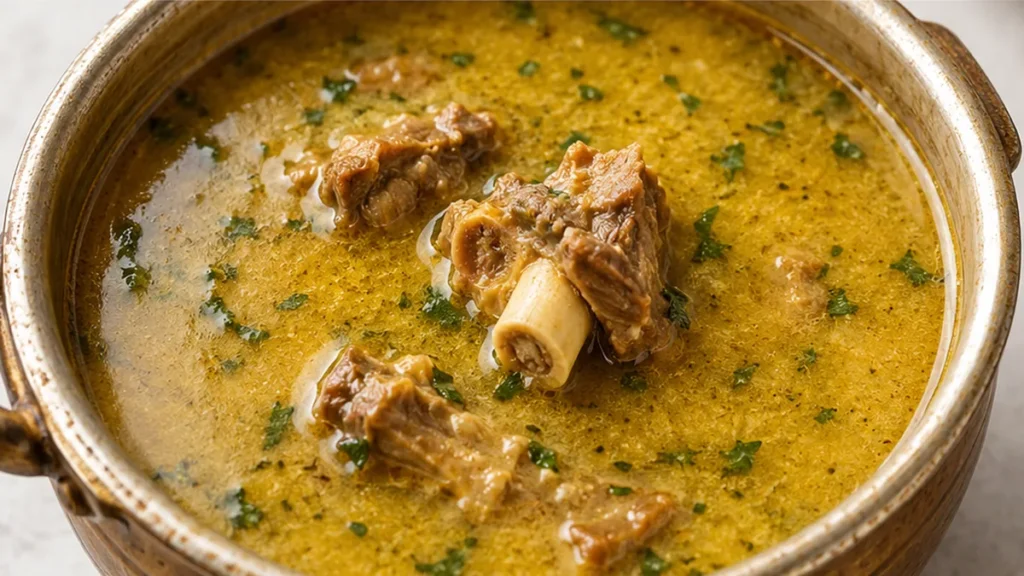
This irresistible hyderabadi mutton marag to is a hearty dish that combines tender mutton with rich spices. It’s perfect for a comforting meal any day.
Key takeaways
- Slow cooking is key to developing rich flavors.
- Using whole spices enhances the aroma and taste.
- Maintaining the right cooking temperature ensures tender meat.
- Common mistakes include using too much water and not browning the meat.
Irresistible Hyderabadi Mutton Marag to Warm Your Soul!
Ingredients
Instructions
- Heat ghee in a pressure cooker, add whole spices, and sauté on low heat for a minute. Then, add sliced onions and sauté for 3-4 minutes on medium heat until they turn light brown. Add green chilies, ginger garlic paste, and 2 tablespoons of water; sauté for 2 minutes.
- Add mutton and 1 teaspoon of salt; sauté for 5-6 minutes until the mutton is coated with aromatics and turns light golden.
- Add 2 tablespoons of coriander leaves, 1 ½ cup of water, and close the lid of the pressure cooker. After 1 whistle, lower the heat and cook for 20 minutes. Let the pressure release on its own. The mutton should be tender but still on the bones.
- Open the pressure cooker and cook on high heat. Add spice powders, remaining 1 ¼ teaspoon salt, almond and cashew paste, lemon juice, remaining 2 tablespoons of coriander leaves, mint leaves, and the remaining 2 ½ cups of water. Mix everything well, then simmer for 20 minutes before serving.
The Importance of Slow Cooking for Flavor Development
Slow cooking is essential for achieving the deep flavors characteristic of Irresistible Hyderabadi Mutton Marag. This method allows the spices and herbs to meld beautifully with the meat, resulting in a rich, aromatic broth. Cooking at low temperatures (around 90-100°C or 194-212°F) for several hours (typically 2-3 hours) ensures that the mutton becomes tender while absorbing all the flavors.
Understanding the Role of Spices in Marag
The spices used in this dish are crucial for its signature taste. The combination of cardamom, cloves, and bay leaves infuses the dish with warmth and complexity. For example, cardamom is known for its ability to enhance sweetness and balance the savory elements. Using whole spices rather than ground ones can provide a more robust flavor profile, as whole spices release oils and aromas gradually during cooking.
Why Cooking Temperature Matters
Maintaining the right cooking temperature is vital. If the heat is too high, the meat can become tough and dry, while too low can result in undercooked mutton. The ideal cooking temperature for mutton is around 70-80°C (158-176°F) after browning. This allows for proper collagen breakdown, making the meat tender and succulent.
Common Mistakes and How to Avoid Them
- Using too much water: This can dilute the flavors. Always start with a little liquid and add more as needed.
- Not browning the meat: Skipping this step can lead to a lack of depth in flavor. Browning the mutton creates the Maillard reaction, adding complexity.
- Overcooking the spices: Adding ground spices too early can lead to bitterness. Add them later in the cooking process for a fresher taste.
Ingredient Swaps and Their Effects
- Lamb instead of mutton: Lamb is more tender and may require less cooking time, resulting in a milder flavor.
- Vegetable broth instead of water: This adds additional flavor but may make the dish less rich than using meat broth.
- Coconut milk instead of yogurt: This will give a creamier texture and a sweet flavor, but it alters the traditional taste.
How to Make Irresistible Hyderabadi Mutton Marag Ahead of Time
Preparing Hyderabadi Mutton Marag in advance can enhance its flavors significantly. The spices and meat meld beautifully when allowed to sit, making the dish even more irresistible. To make ahead, follow the recipe until the marag is fully cooked, then allow it to cool completely. Store it in an airtight container in the refrigerator for up to three days. When ready to serve, reheat on low heat, adding a splash of water if necessary to maintain the desired consistency. For longer storage, you can freeze the marag for up to three months. Thaw it in the refrigerator overnight before reheating.
Adjusting Portions for Gatherings
Scaling the recipe for Hyderabadi Mutton Marag is straightforward but requires careful attention to ingredient ratios. When doubling the recipe, use double the spices, but be cautious with the cooking time, as larger quantities may require additional simmering to ensure the meat becomes tender. For example, if the original recipe calls for 1 kg of mutton, using 2 kg may necessitate an extra 30 minutes of cooking time. Always taste and adjust seasoning towards the end of cooking, as larger batches can sometimes dilute flavors.
Choosing the Right Equipment for Perfect Marag
The choice of cooking equipment can significantly impact the outcome of your Hyderabadi Mutton Marag. A heavy-bottomed pot or a Dutch oven is ideal for even heat distribution, preventing hot spots that can cause the meat to cook unevenly. If using a pressure cooker, reduce the cooking time considerably, as the pressure cooks the meat much faster. Regardless of the equipment, ensure that the pot is large enough to accommodate the meat and spices without overcrowding, which can lead to steaming rather than browning.
Seasonal Variations in Ingredients and Their Impact
The quality and type of ingredients can vary significantly with the seasons, impacting the final flavor of your Hyderabadi Mutton Marag. Fresh herbs, such as mint and coriander, are best used when in season, as they provide a vibrant flavor that dried herbs cannot replicate. Similarly, the quality of mutton can vary; seek out meat with good marbling for the best results. In winter, you might find richer, fattier cuts that can enhance the dish’s richness, while in summer, leaner cuts may be more prevalent, requiring careful cooking to avoid dryness.
How to Store Leftover Irresistible Hyderabadi Mutton Marag for Maximum Freshness
Proper storage is crucial for preserving the flavors and texture of your Hyderabadi Mutton Marag. Allow the dish to cool completely before transferring it to an airtight container. Store in the refrigerator for up to 3 days. For longer storage, consider freezing the marag. When freezing, portion it into smaller containers for easy thawing. It can last up to 3 months in the freezer. To reheat, thaw in the refrigerator overnight and warm gently on the stove, adding a splash of water if necessary to maintain its consistency.
Scaling Up Your Irresistible Hyderabadi Mutton Marag: Tips for Larger Gatherings
Scaling recipes can be tricky, especially with complex dishes like mutton marag. When increasing the quantity, maintain the same ratios of ingredients to ensure balanced flavors. For instance, if you’re doubling the recipe, use twice the amount of spices, meat, and liquid. However, remember that cooking times may vary; larger quantities may require more time to cook thoroughly. Monitor the dish closely to avoid overcooking or undercooking the meat. Using a larger pot can also help distribute heat evenly, preventing hot spots.
Choosing the Right Accompaniments to Elevate Your Marag Experience
The right accompaniments can enhance the enjoyment of your Hyderabadi Mutton Marag. Traditionally, it is served with naan or steamed basmati rice, which helps absorb the rich flavors of the dish. For a refreshing contrast, consider serving a side of cucumber raita or a tangy salad. These add a cooling effect that balances the spices in the marag. Additionally, garnishing with fresh coriander and a squeeze of lime can elevate the dish’s presentation and flavor profile, making it even more irresistible.
Why the choice of meat cuts influences the marag’s richness
The choice of meat cut significantly impacts the flavor and texture of Hyderabadi Mutton Marag. Cuts with more connective tissue, like the shoulder or shank, break down during slow cooking, releasing gelatin that enriches the broth. Aim for around 1.5 to 2 kg of meat for optimal results. If using lean cuts, such as leg, consider adding some bones to enhance the broth’s depth. Cooking at a low simmer (around 85-90°C or 185-194°F) for at least 2-3 hours allows for proper collagen breakdown and flavor development. This slow cooking process is essential; too high a temperature can cause the meat to toughen instead of becoming tender and succulent.
How to adjust spice levels for personal preference without losing authenticity
Adjusting the spice levels in Hyderabadi Mutton Marag can be tricky, as the balance of spices is crucial to the dish’s authentic flavor. If you prefer a milder dish, reduce the quantity of green chilies and black pepper, but maintain the presence of whole spices like cardamom and cinnamon for aromatic depth. Conversely, if you enjoy a spicier marag, consider increasing the quantity of green chilies or adding a pinch of red chili powder. However, be cautious; adding too much heat can overshadow the delicate balance of spices. A good rule of thumb is to start with half the recommended spice amount and adjust in small increments, tasting as you go. This approach ensures that you can customize the dish while still respecting its traditional roots.
Understanding the Best Cuts of Meat for Irresistible Hyderabadi Mutton Marag
The choice of meat cut significantly impacts the flavor and texture of your Hyderabadi Mutton Marag. Ideal cuts include shoulder or leg, which contain a good balance of meat and fat, resulting in a rich and succulent dish. These cuts benefit from slow cooking, allowing the connective tissues to break down, enhancing tenderness. For optimal results, aim for pieces around 1 to 1.5 inches thick, ensuring even cooking. The fat content in these cuts also contributes to the marag’s overall richness, creating a luxurious mouthfeel that distinguishes it from other mutton dishes.
How to Achieve the Perfect Consistency in Your Marag
Consistency in your Hyderabadi Mutton Marag is crucial for an authentic experience. The right balance of liquid and solid ingredients ensures a luscious, soup-like texture. Typically, a ratio of 1 part meat to 2 parts liquid (water or stock) works well. For a thicker consistency, allow the marag to simmer uncovered for the last 20-30 minutes of cooking to evaporate excess moisture. Conversely, if your marag turns out too thick, simply add a splash of water or stock during the simmering process. Additionally, the use of yogurt not only tenderizes the meat but also adds a creamy texture; however, be cautious with the amount, as too much can lead to a runny consistency. Adjusting these elements will help you master the perfect marag every time.
Pro tips
Pro tip: Best served immediately while hot!
Frequently asked questions
Can I use chicken instead of mutton for this recipe?
Yes, you can substitute chicken for mutton, but be mindful that chicken cooks faster. Adjust the cooking time to prevent it from becoming dry, typically around 30-40 minutes.
What type of mutton is best for Marag?
Leg or shoulder cuts of mutton are ideal for Marag due to their higher fat content, which renders down during cooking, keeping the meat tender and flavorful.
How can I thicken the Marag if it’s too watery?
If your Marag turns out too watery, you can simmer it uncovered for a while to reduce the liquid. Alternatively, you can mix a tablespoon of cornstarch with cold water and stir it in, cooking for a few more minutes.
Can I prepare this dish in advance?
Yes, Marag can be made in advance. In fact, the flavors often deepen after a day in the fridge. Reheat gently on the stove before serving.
More from Beef Soups & Stews →