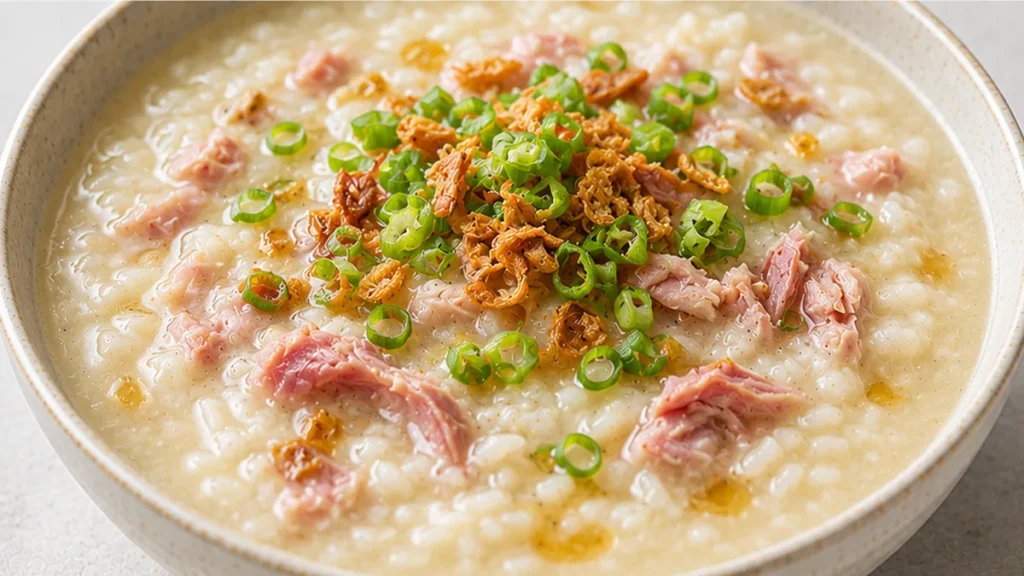
This ham congee recipe creates a deeply flavorful rice soup. Using a ham bone, this congee transforms simple ingredients into a comforting meal. It’s a staple in many cuisines.
Key takeaways
- Slow simmering of the ham bone is key to gelatin extraction for a rich texture.
- The correct rice-to-liquid ratio is essential for proper congee consistency.
- Adjust simmering time and liquid additions to achieve your desired thickness.
- Flavor can be enhanced with alternative broths or garnishes.
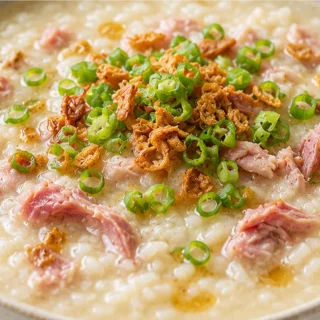
Ultimate Ham Bone Congee: Soul-Soothing Comfort Food!
Ingredients
- 1 kg (2 lb) ham bone / hock
- 1 1/4 cups long grain white rice
- 9 cups (2.25 L or 2.25 QT) water
- Salt & white pepper
- Finely sliced green onion
- Fried asian shallots / onions (optional)
- Sesame oil (optional)
Instructions
- Place ham bone, uncooked rice, and water in a large pot. Cover with lid.
- Cook until meat on ham is tender enough to shred (times vary by method: stovetop ~2-3 hours, slow cooker ~4-6 hours on low, pressure cooker ~45-60 minutes).
- Carefully remove ham bone from soup. Shred the tender meat, discarding fatty skin and sinew. Use scissors to chop meat into bite-sized pieces.
- Stir the rice well in the pot. Return the shredded ham meat back into the soup. Keep the bone aside for now.
- Continue cooking until the rice breaks down and the soup achieves a thick, porridge-like consistency.
- Remove the ham bone. Stir the congee vigorously. If too thick, add a little more water. If too thin, simmer uncovered to thicken. Adjust salt to taste and add a dash of white pepper.
- Serve hot, garnished generously with finely sliced green onions and crispy fried shallots. A drizzle of sesame oil adds extra flavor.
Notes
The technique that makes it
The cornerstone of an exceptional ham bone congee lies in the slow simmering of the ham bone. This process is crucial for extracting maximum flavor and gelatin from the bone and any residual meat. The collagen in the ham bone breaks down into gelatin during the long cooking period. This gelatin is what gives congee its characteristic rich, velvety texture and body. Without adequate simmering, the broth will be thin and lack depth. The rice itself undergoes a transformation; the long cooking time allows the starch granules to swell and burst, releasing amylose and amylopectin, which thicken the liquid and create the creamy consistency. The ratio of liquid to rice is also vital; too little water results in a dry, undercooked congee, while too much can lead to a watery, insipid dish. The initial boil to break down the rice, followed by a gentle simmer, ensures even cooking and prevents the rice from sticking to the bottom of the pot.
Troubleshooting
- Congee is too watery: Simmer uncovered for an additional 15-30 minutes, stirring occasionally, to allow excess liquid to evaporate.
- Congee is too thick: Stir in more hot water or broth, a quarter cup at a time, until the desired consistency is reached.
- Rice is not fully cooked/mushy: Ensure the congee was simmered gently for long enough. If still undercooked, add a little more hot water and continue simmering until tender. If it’s mushy, it may have been overcooked or the rice-to-liquid ratio was too high initially.
- Congee lacks flavor: The ham bone might not have been sufficiently simmered, or the bone itself was not very flavorful. Add a pinch of salt and white pepper to taste, or consider enhancing the broth with a dash of soy sauce or a small piece of dried shiitake mushroom during the simmering process.
Substitutions
- Ham bone/hock: A smoked pork shoulder or even a large piece of smoked ham can be used, though the flavor profile might be less intense. For a vegetarian option, use a rich vegetable broth and add a piece of kombu for umami.
- Long grain white rice: Jasmine rice or medium-grain rice can be substituted. These will yield a slightly different texture, with jasmine rice offering a more fragrant aroma. Avoid short-grain rice as it can become too gummy.
- Water: Chicken broth or a light pork broth can be used to enrich the flavor of the congee, but be mindful of added salt in commercial broths.
- Green onion/Fried shallots: Fresh chives, cilantro, or crispy fried garlic can be used as alternative garnishes for added flavor and texture.
Pro tips
- Save the ham bone after shredding meat and return it to the soup while simmering to continue infusing flavor.
- For a smoother congee, stir vigorously towards the end of cooking. Use scissors to finely chop the ham meat for easier eating.
- Internal temperature for safely cooked pork/ham is 160°F (71°C). Ensure meat is cooked through.
Enjoy this deeply satisfying Ham Bone Congee, a testament to simple ingredients yielding incredible flavor. It’s a dish that truly nourishes the soul.
More from Broths & Noodle Soups →
Frequently asked questions
How to make congee thicker?
To thicken congee, continue to simmer it uncovered, stirring occasionally, until the desired consistency is reached. You can also mash some of the cooked rice against the side of the pot to release starches. For a quicker fix, stir in a slurry of cornstarch and water, then simmer for a few minutes.
Can I make ham bone congee ahead of time?
Yes, ham bone congee can be made ahead. Cool completely and store in an airtight container in the refrigerator for up to 3 days. Reheat gently on the stovetop with a little extra broth or water, stirring to prevent sticking. The congee will thicken upon standing, so thinning is usually necessary.
What can I use instead of a ham bone?
If you don’t have a ham bone, you can substitute with other pork bones, a piece of pork shoulder, or even chicken bones for a different flavor profile. Cooked ham hocks also work well. Ensure the substitute adds enough savory depth to the congee base.
How do I know when congee is done?
Congee is done when the rice grains have broken down and the mixture has a creamy, porridge-like consistency. It should be thick but still pourable. Taste it to ensure the rice is fully cooked and tender, and the flavors have melded beautifully. This usually takes at least an hour of simmering.