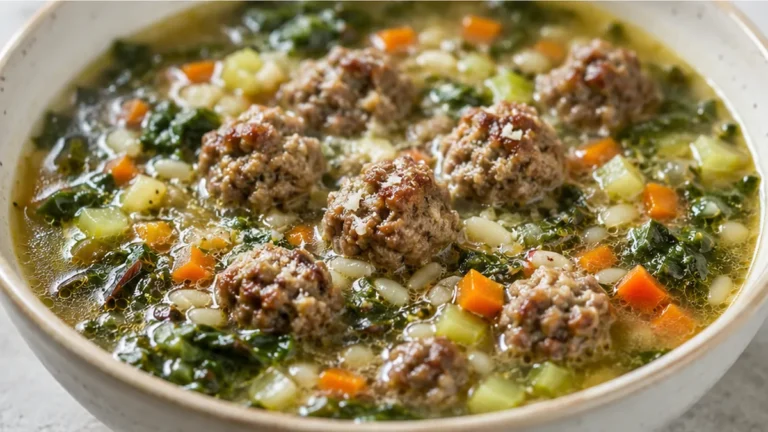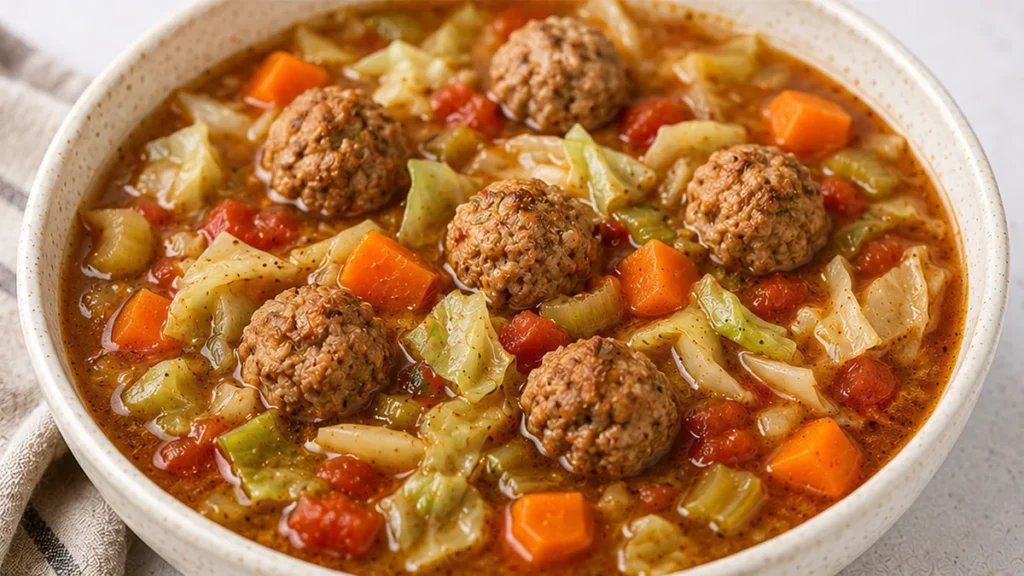
Cabbage meatball soup is a timeless classic, offering a comforting embrace in every spoonful. This recipe delivers a satisfying blend of savory meatballs, tender cabbage, and a rich, flavorful broth, making it an ideal choice for a wholesome family meal. Preparing this cabbage meatball soup is straightforward, perfect for weeknight dinners or a cozy weekend lunch. I remember the first time I perfected the balance of spices; it truly elevated the simple ingredients into something extraordinary. This soup is designed to be both delicious and easy to master, even for novice cooks.
Key takeaways
- Sautéing aromatics builds flavor.
- Properly making a roux is key to thickness.
- Simmering time ensures tender vegetables.
- Adjust seasoning and ingredients to your preference.
Cozy Cabbage Meatball Soup: Your New Go-To Comfort!
Ingredients
- 1 tablespoon olive oil
- 1 medium yellow onion (diced)
- 2 carrots (chopped)
- 2 ribs celery (chopped)
- 1 tablespoon all-purpose flour
- 1 teaspoon dried oregano
- 6 cups beef broth (or chicken broth)
- 4 cups chopped green cabbage (about ¼ medium head)
- 1 (10 ounce) can diced tomatoes with chilies (such as Rotel, with juices)
- ¼ teaspoon salt (more to taste)
Instructions
- Heat the olive oil in a large pot over medium heat. Add onion, carrot, and celery. Cook 4 to 5 minutes or until they start to soften. Stir in flour and oregano and cook for 1 minute more.
- Add the broth, cabbage, tomatoes, salt, and pepper. Stir in the frozen meatballs.
- Bring to a boil, reduce the heat to a simmer, and cook covered for 20 to 25 minutes or until the cabbage is tender. Uncover and simmer for 5 minutes more. Let it rest 5 minutes before serving.
Notes
The technique that makes it
The foundation of this hearty cabbage meatball soup lies in the careful sautéing of the aromatic vegetables and the proper incorporation of flour. Starting with olive oil over medium heat, you’ll soften the diced yellow onion, chopped carrots, and celery. This process, known as sweating, gently cooks the vegetables, releasing their natural sugars and developing a subtle sweetness and depth of flavor without browning. This is crucial for building a complex base for the soup. Once the vegetables are tender, typically after 8-10 minutes, you’ll sprinkle in the all-purpose flour. Stirring the flour into the softened vegetables and oil creates a roux. Cooking the roux for about a minute allows the raw flour taste to dissipate and toasts it slightly, which enhances its thickening power and adds another layer of nutty flavor. This step is essential for achieving a satisfyingly thick broth rather than a watery soup. Subsequently, gradually whisking in the beef broth ensures a smooth, lump-free consistency. The dried oregano is added at this stage to allow its flavor to bloom in the simmering liquid.
Troubleshooting
- Soup is too thin: If your soup lacks the desired thickness after simmering, you can create a slurry by whisking 1 tablespoon of cornstarch with 2 tablespoons of cold water. Stir this slurry into the simmering soup and cook for another 2-3 minutes until thickened.
- Vegetables are too crunchy: Ensure you’ve allowed sufficient simmering time after adding the cabbage and tomatoes. Cover the pot and let the soup simmer gently for at least 15-20 minutes, or until the cabbage is tender to your liking.
- Flavor is bland: The soup might need more seasoning. Taste and add additional salt and freshly ground black pepper. You can also boost the flavor by adding a pinch of red pepper flakes for a subtle heat or a splash of Worcestershire sauce for umami.
- Meatballs are falling apart: Ensure your meatballs are properly formed and chilled before adding them to the soup. If using pre-made meatballs, ensure they are cooked through. For homemade meatballs, consider adding a binder like breadcrumbs or an egg if they are consistently crumbling.
Substitutions
- Broth: Vegetable broth can be used instead of beef or chicken broth for a vegetarian or lighter option. The resulting flavor will be less rich but still delicious.
- Cabbage: Savoy cabbage or Napa cabbage can be substituted for green cabbage. These varieties tend to be more tender and may cook slightly faster.
- Diced Tomatoes with Chilies: Regular diced tomatoes can be used, but you’ll want to add a pinch of chili powder or a dash of hot sauce to replicate the slight heat.
- Herbs: Fresh oregano can be used in place of dried; use about 1 tablespoon of fresh, chopped oregano. Other complementary herbs like thyme or parsley can also be added for extra flavor complexity.
Pro tips
- For the best flavor, use good quality beef broth. If using chicken broth, ensure it’s a robust, savory variety.
- If you prefer a thicker soup, mash a portion of the cooked vegetables against the side of the pot before serving.
- To ensure the meatballs are cooked through and safe to eat, they should reach an internal temperature of 160°F (71°C) before serving.
- Store leftover soup in an airtight container in the refrigerator for up to 3-4 days. It freezes well for up to 3 months; thaw overnight and reheat gently on the stovetop.
This cabbage meatball soup recipe is a perfect example of how simple ingredients can come together to create a profoundly satisfying dish. Try making it your own by adding a touch of heat or a sprinkle of fresh herbs before serving. Enjoy!
More from Beef Soups & Stews →
Frequently asked questions
Can I make this soup ahead of time?
Yes, this soup can be made ahead. The flavors often meld and deepen overnight. Reheat gently on the stovetop, adding a little extra broth if it has thickened too much during storage.
What kind of meatballs work best?
Pre-cooked, small-sized meatballs are ideal for convenience and even cooking. You can also make your own from ground beef, pork, or a mixture, ensuring they are bite-sized and cooked through before adding to the soup.
How can I make this soup vegetarian?
Substitute beef or chicken broth with vegetable broth. Ensure your meatballs are either omitted or replaced with vegetarian meatballs. The rest of the ingredients are already vegetarian-friendly.
Can I freeze this soup?
This soup freezes reasonably well, though the cabbage may become slightly softer upon thawing. It’s best to freeze it without the meatballs if possible, adding them when reheating to maintain their texture.