
One decision separates an easy slow-cooker ham soup from a rough afternoon: what you do with the beans. Most crockpot ham recipes slow cooker cooks rely on (ham and bean, split pea, ham and potato) are dump-and-go. Dried kidney-type beans, including red kidney and cannellini beans, are the exception, and the fix is a stovetop pre-boil.
Yes, ham belongs in a slow cooker: not as a whole glazed roast, but as the backbone of a soup. Build on low-sodium or no-salt-added broth and hold the salt until the end, because a cured ham or ham bone leaches plenty of its own as it cooks. Most crockpot ham recipes slow cooker batches run 7 to 8 hours on low or 4 to 5 hours on high. Great Northern and navy beans can go into the slow cooker without presoaking, but dried red kidney and cannellini beans must be boiled first. Reheat leftover soup to 165 °F.
Slow Cooker Ham and Potato Soup, Start to Finish

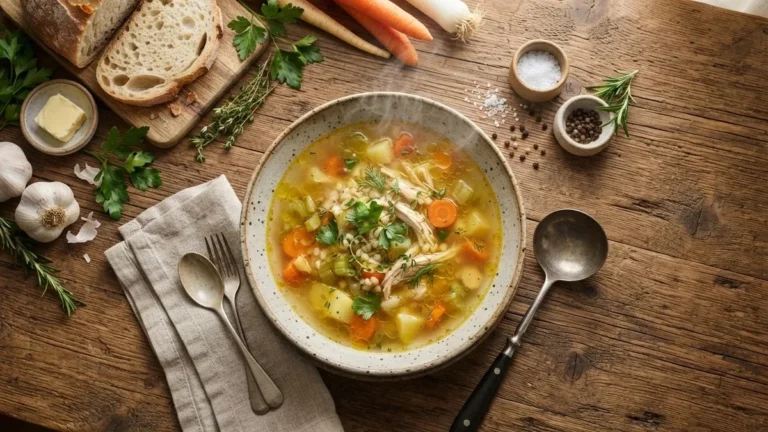
Hands-on work is the chopping; after that it runs unattended. This makes 6 bowls on 4 cups of low-sodium chicken broth, and the mashing step plus the late dairy give it a thick, creamy body. The method here follows the one published by Berly’s Kitchen.
- 3 pounds gold or yellow potatoes, peeled and cubed
- 1 pound ham, cubed
- 2 carrots, peeled and chopped
- 2 ribs celery, chopped
- 1 white onion, diced
- 1 teaspoon salt (to taste)
- 1 teaspoon garlic powder
- ¼ teaspoon black pepper
- 2 bay leaves
- 4 cups low-sodium chicken broth
- ½ cup all-purpose flour
- 1 cup heavy cream
- 1 cup shredded cheddar cheese
- ½ cup sour cream, room temperature
- Layer the cubed potatoes, ham, carrots, celery, and onion in a 6- or 7-quart slow cooker.
- Add the salt, garlic powder, pepper, bay leaves, and broth, then stir once.
- Cover and cook on low for 7 to 8 hours, until a fork slides easily through a potato cube.
- Ladle about 1 cup of the hot cooking liquid into a bowl and whisk the flour into it until no lumps remain.
- Fish out the bay leaves, then press a masher into the pot and mash part of the potatoes to thicken the broth without extra starch.
- Pour the flour slurry back in.
- Stir in the heavy cream, cheddar, and sour cream.
- Cover and cook on high for 30 more minutes, just until the soup tightens; stop there, since longer heat on the dairy can curdle it.
- Serve hot, with crusty bread for dunking.
How Long Crockpot Ham Recipes Slow Cooker Soups Take

Here are the cook windows compiled from the published slow-cooker recipes this guide draws on, lined up so you can match the setting to your bean and your schedule.
| Soup type | LOW | HIGH |
|---|---|---|
| Ham & bean | 8-10 hours | 4-5 hours |
| Ham bone & bean | 8 hours | 4 hours |
| Split pea | 7-8 hours | 5-6 hours |
| Ham & potato | 7-8 hours | 4-5 hours |
On either setting, judge doneness by the food, not the clock: a potato should give way to a fork and a bean should be tender all the way through. A bowl of ham and bean soup lands around 355 kcal (or 412 kcal with 670 mg of sodium for a ham-bone bean soup), while a crockpot split pea soup with ham runs about 332 mg of sodium per serving.
Dried Beans and the Red Kidney Bean Exception
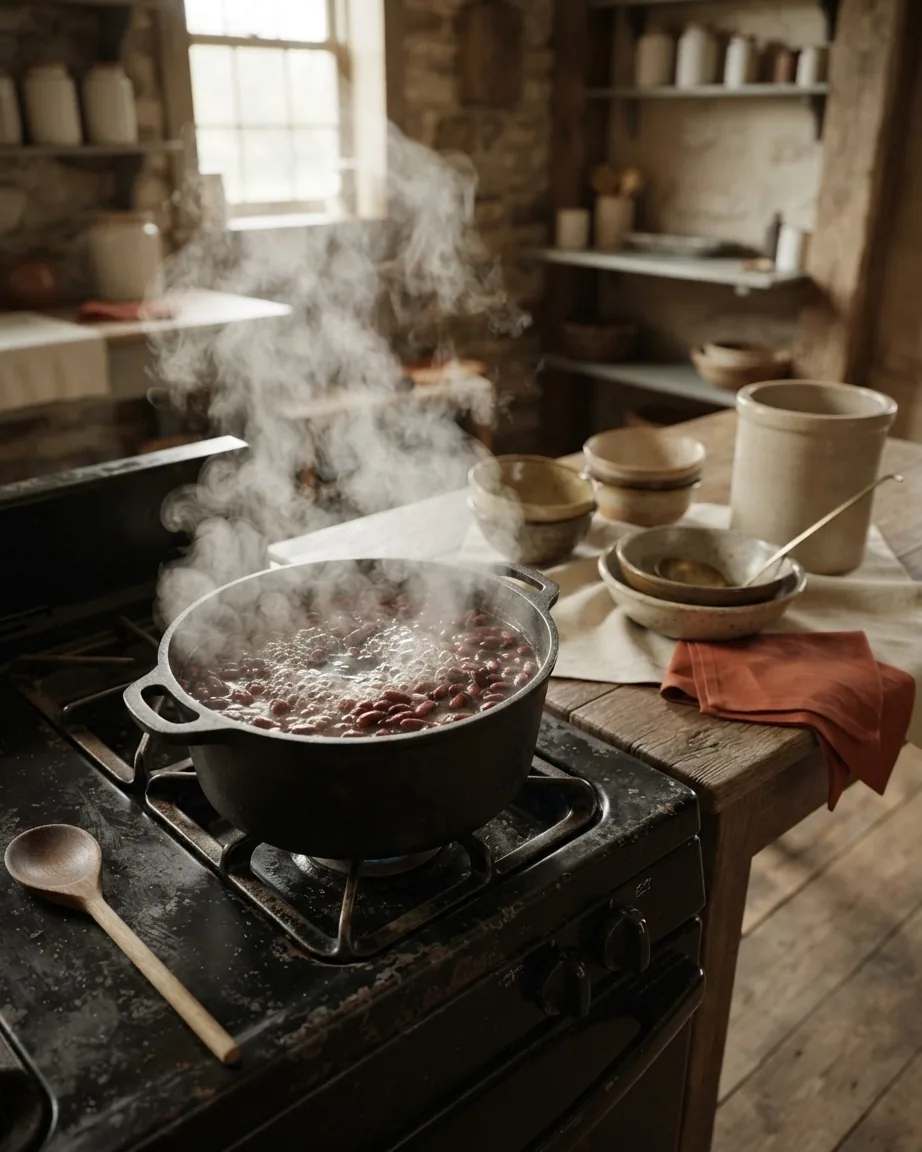
Most slow-cooker ham-and-bean soups skip the overnight soak, and for Great Northern, navy, or a 15-bean mix that is fine. Dried red kidney beans are the one bean you cannot handle that way. Raw, they carry high levels of a natural toxin: Kansas State University Research & Extension puts raw red kidney beans at 20,000 to 70,000 hau, and notes that as few as four or five undercooked beans can set off sharp vomiting.
The toxin breaks down only with a hard boil: 212 °F for 10 minutes on the stovetop before the beans ever reach the crock. A low cooker may never climb that high. As the extension service puts it, “Don’t use a slow cooker: It likely won’t get hot enough.” White or cannellini beans carry about a third of that toxin, so they are lower-risk, but the safe move is the same: boil any dried kidney-type bean first.
For every other bean, dried simply soaks up more ham flavor than canned, and a half-teaspoon of baking soda (a trick from Butter with a Side of Bread) speeds the softening. See also our ham and lentil soup method.
Salt, Ham Bones, and Which Cut to Use
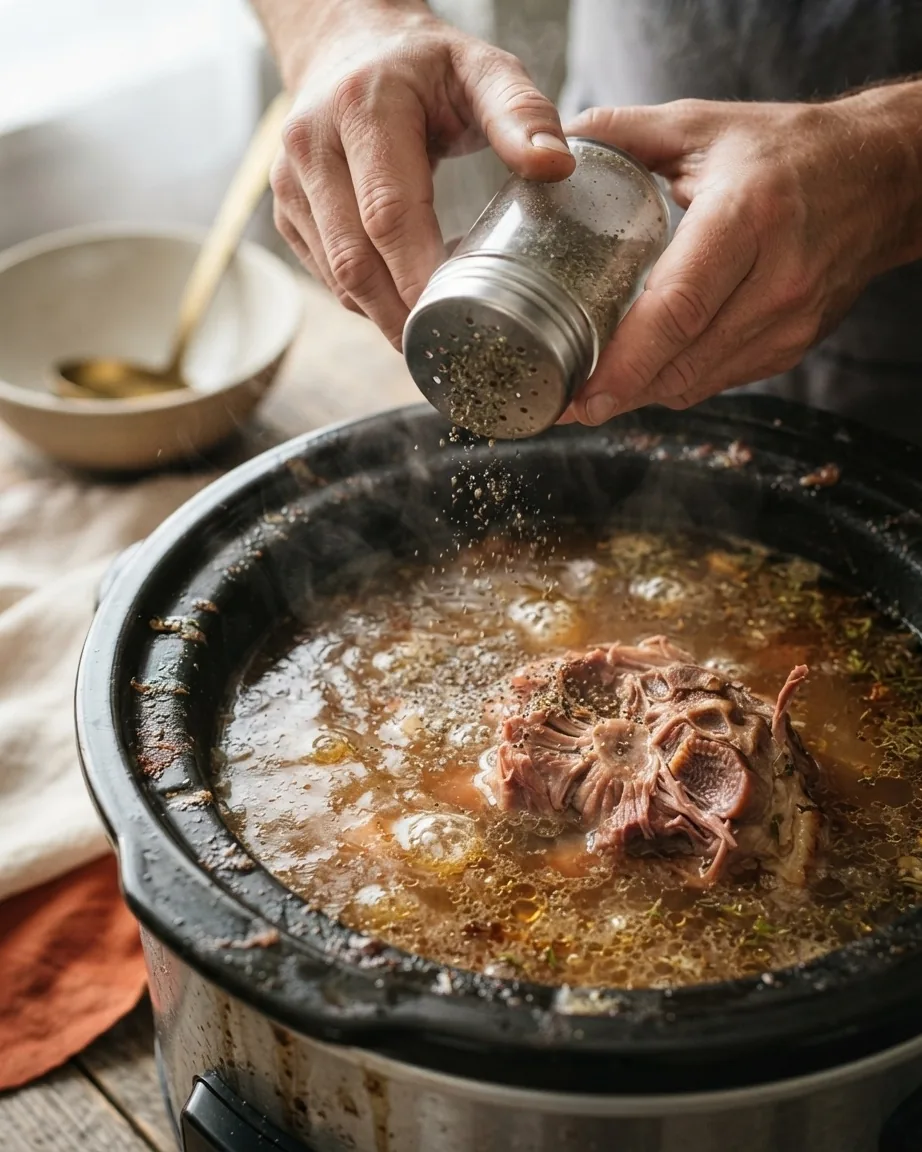
Cured ham and ham bones are already salted, and they keep releasing that salt into the broth for hours. Season at the start and you will likely overshoot. Build on low-sodium or no-salt-added broth, taste near the end, and only then reach for the shaker. For example, if a finished pot tastes aggressively salty, the cure is the cause, not your teaspoon: which is why the recipe above lists salt “to taste.” Our ham and bean soup leans on the same restraint.
The ham itself can take three forms:
- A meaty ham bone gives the deepest flavor; leave it in the crock until the soup is done, then strip the meat. J. Lohr’s crockpot split pea method keeps the bone in to the finish for that reason: see their split pea recipe.
- A ham hock works the same way and does not need soaking before it goes in.
- Diced leftover ham or a cubed ham steak is the fastest route and the easiest to portion.
When the Soup Is Too Thin, Too Thick, or Curdled
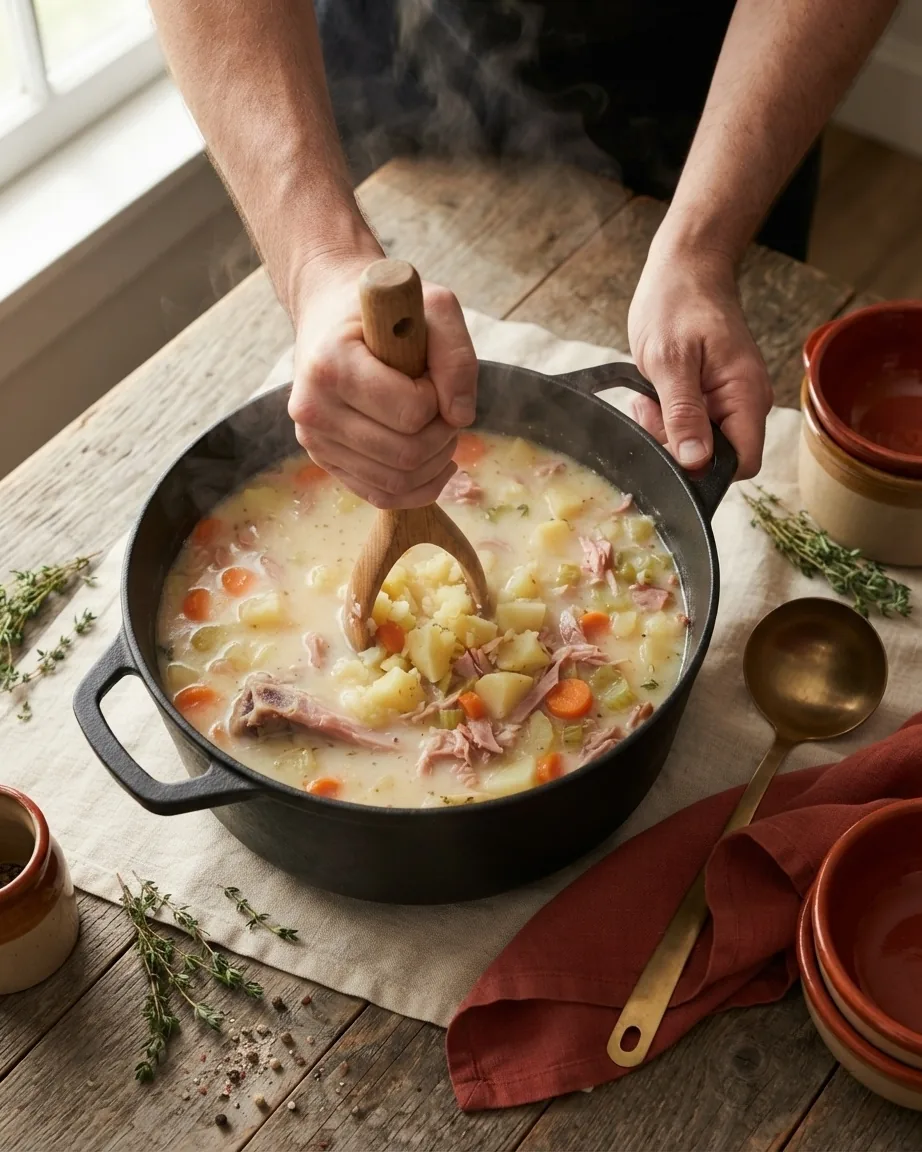
Split pea soup fools people: it looks thin in the crock and sets up as it cools, so hold off on over-reducing it. Real Food Whole Life calls for green split peas specifically and a short rest before serving: read the full slow cooker split pea soup. For potato or bean soups that need more body, skip the flour and mash a portion of the cooked vegetables right in the pot, then stir them back through, a thickening move Lemon Blossoms uses.
Dairy is where creamy ham soups fail. Stir heavy cream, sour cream, or cheese in only at the end and cook on high just 15 to 30 minutes. For example, if your soup turns grainy or breaks, it almost always means the dairy sat on high heat too long: add it later next time.
Safe Temperatures and Storing Leftovers
If you are starting from a raw or fresh ham rather than a cured, cooked one, it has to reach a safe minimum internal temperature of 145 °F, measured with a food thermometer, per the USDA. Most ham in these soups is already fully cooked, so you are seasoning the pot, not cooking the meat to safety. Cool leftovers quickly, keep them in an airtight container in the fridge for about 4 days, and reheat only what you plan to eat.