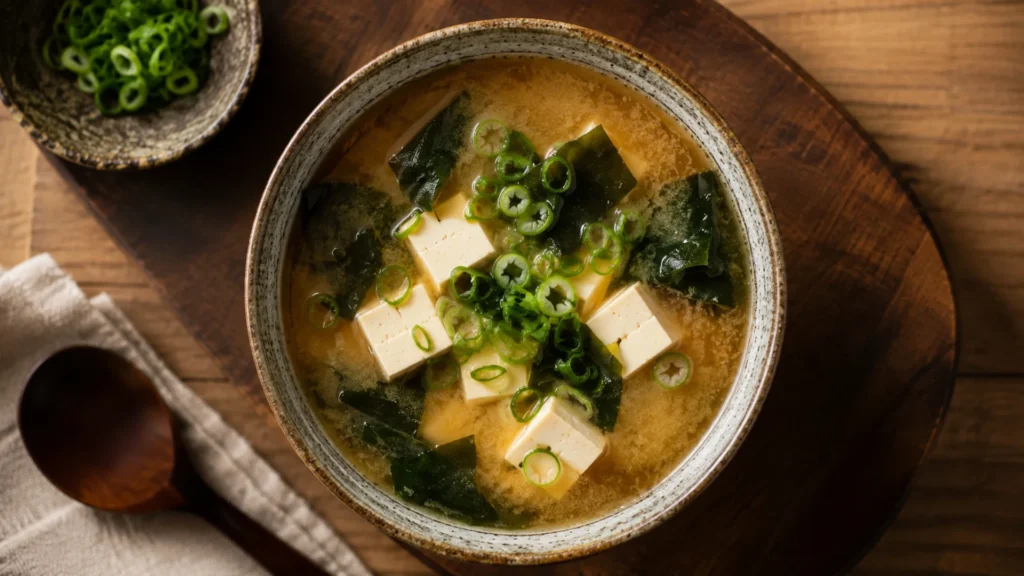
Learning how to make miso soup properly takes about fifteen minutes and comes down to two things: a good dashi and the discipline never to boil the miso once it goes in. Warm a pot of dashi, the savory Japanese stock that gives the soup its backbone, dissolve in a spoonful of miso paste off the heat, add tofu and a pinch of wakame seaweed, and you have the comforting, umami-rich bowl served in millions of Japanese homes every morning. It is one of the simplest soups in the world, and also one of the easiest to get subtly wrong, almost always by letting it boil and dulling the very flavor you made it for.
This guide covers the dashi options including a quick vegan version, which miso to choose, the exact method step by step, the one rule you must not break, the classic add-ins, and how to fix a bowl that comes out too salty or grainy. Get the base right and the rest is assembly.
The Two Ingredients That Matter
Strip miso soup back and it is really just dashi plus miso. Everything else, the tofu, the seaweed, the scallions, is a welcome garnish, but those two ingredients are the soup. Dashi provides the deep, savory umami foundation, and miso brings the salty, fermented, slightly sweet body and aroma. Get good versions of both and you cannot make a bad bowl. Skip the dashi and use only water, and you get salty miso water rather than miso soup, which is the most common shortcut and the biggest mistake.
Dashi: The Soul of Miso Soup
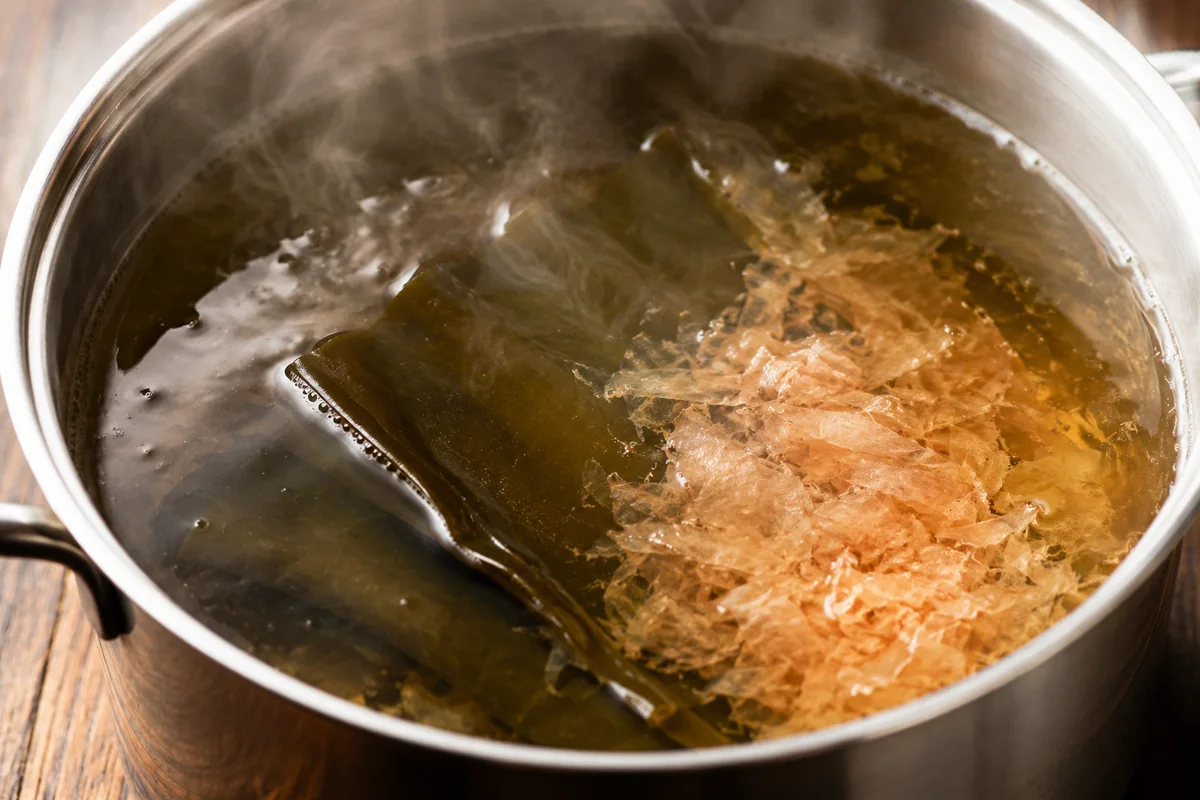
Dashi is the Japanese equivalent of a Western stock, and like a good homemade chicken stock, it is the part that quietly does the heavy lifting. The difference is speed: where a chicken stock simmers for hours, dashi comes together in minutes because it is steeped, not boiled for hours. There are a few versions worth knowing.
- Awase dashi is the classic, made from kombu (dried kelp) and katsuobushi (dried bonito flakes). It is the most common base for everyday miso soup.
- Kombu dashi uses only kombu, which makes it entirely plant-based and the easy route to a vegan miso soup.
- Kombu and shiitake dashi adds dried shiitake mushrooms to kombu for a deeper, vegan umami that stands in beautifully for the bonito.
- Instant dashi (dashi powder or granules) is the weeknight shortcut, stirred straight into hot water. It is genuinely useful and far better than plain water.
To make a simple dashi, steep a piece of kombu in water and heat it gently, removing the kombu just before the water boils to avoid bitterness, then add bonito flakes off the heat and strain after a minute or two. It really is that quick. For step-by-step detail on each dashi variation, the home-cooking resource Just One Cookbook is the gold standard.
Choosing Your Miso
Miso is a fermented soybean paste, and the type you choose sets the character of the soup. The three you will meet most often differ mainly in how long they were fermented, which controls their color and intensity.
| Miso | Flavor | Best for |
|---|---|---|
| White (shiro) | Mild, mellow, slightly sweet | Everyday soup, beginners, lighter bowls |
| Red (aka) | Bold, deep, intensely savory | Heartier, stronger-flavored soup |
| Mixed (awase) | Balanced, the best of both | An all-purpose default |
If you are buying one tub to start, white miso is the most forgiving and versatile. As a rule of thumb, use about one tablespoon of miso per cup of dashi, then adjust to taste, since brands vary in saltiness.
How to Make Miso Soup, Step by Step
- Heat your dashi in a pot until it is steaming and hot but not boiling.
- Add any ingredients that need a little cooking, like cubed tofu, and let them warm through gently.
- Rehydrate dried wakame in a small bowl of water for about thirty seconds, then drain and add it to the pot.
- Turn off the heat. Put the miso paste in a ladle or a fine-mesh strainer, lower it into the broth, and whisk it with chopsticks so it dissolves smoothly into the soup without clumps.
- Taste and adjust, then serve immediately, topped with sliced scallions.
Dissolving the miso through a small strainer or ladle is the trick that separates smooth miso soup from a grainy one. Dropping the paste straight into the pot leaves undissolved lumps, while pressing it through a mesh disperses it evenly in seconds.
The Golden Rule: Never Boil Miso
This is the one rule that matters more than any other. Once the miso is in, never let the soup come to a boil. Boiling drives off miso’s delicate aroma and flattens its complex, fermented flavor, leaving the soup tasting harsh and one-dimensional. Miso is also a living, fermented food full of beneficial cultures, and a hard boil kills those too. That is why the miso always goes in last, off the heat, after everything else is cooked. If you need to reheat leftover miso soup, warm it gently and stop well before it bubbles. Treat the miso as a finishing ingredient, not something to cook, and the soup keeps the fragrant, savory depth that makes it worth making.
Classic Add-ins
The traditional trio is soft tofu, wakame seaweed, and thinly sliced scallions, and for good reason: each adds texture without competing with the miso. Soft or silken tofu is the usual choice, cut into small cubes and added gently so it does not break apart; if you want to understand how to handle and cook tofu well, our guide to tofu covers the basics. Beyond the classics, thinly sliced mushrooms, baby spinach, sliced green onion, a handful of clams, or cubes of daikon and carrot all work. The key is restraint: miso soup is meant to be light and clean, so a few well-chosen additions beat a crowded bowl. Add quick-wilting greens at the very end so they keep their color.
Troubleshooting Miso Soup
- Too salty. You used too much miso for the amount of dashi, or a very salty red miso. Add more dashi or hot water to dilute, and start with less paste next time.
- Grainy or lumpy. The miso was not dissolved properly. Always whisk it through a strainer or ladle rather than dropping it into the pot.
- Flat or thin flavor. Almost always weak or absent dashi. Miso needs that umami base; plain water will never carry it. Use a real dashi, even an instant one.
- Miso settled at the bottom. Normal, since miso naturally separates as it sits. Give the soup a gentle stir right before serving.
Is Miso Soup Healthy?
Miso soup has a genuinely good nutritional profile for an everyday food. It is low in calories, the soy in miso and tofu provides plant protein, and miso is a fermented food that contains beneficial probiotic cultures, which is exactly why you avoid boiling them away. Seaweed adds minerals like iodine. The one thing to watch is sodium, since miso is salty by nature, so anyone managing blood pressure should keep portions modest and lean toward a lighter hand with the paste. Used as it traditionally is, a small bowl alongside a meal, miso soup is a warming, savory, low-calorie way to round out a plate, which is a large part of why it has been a daily staple in Japan for centuries.
Storing Miso Soup
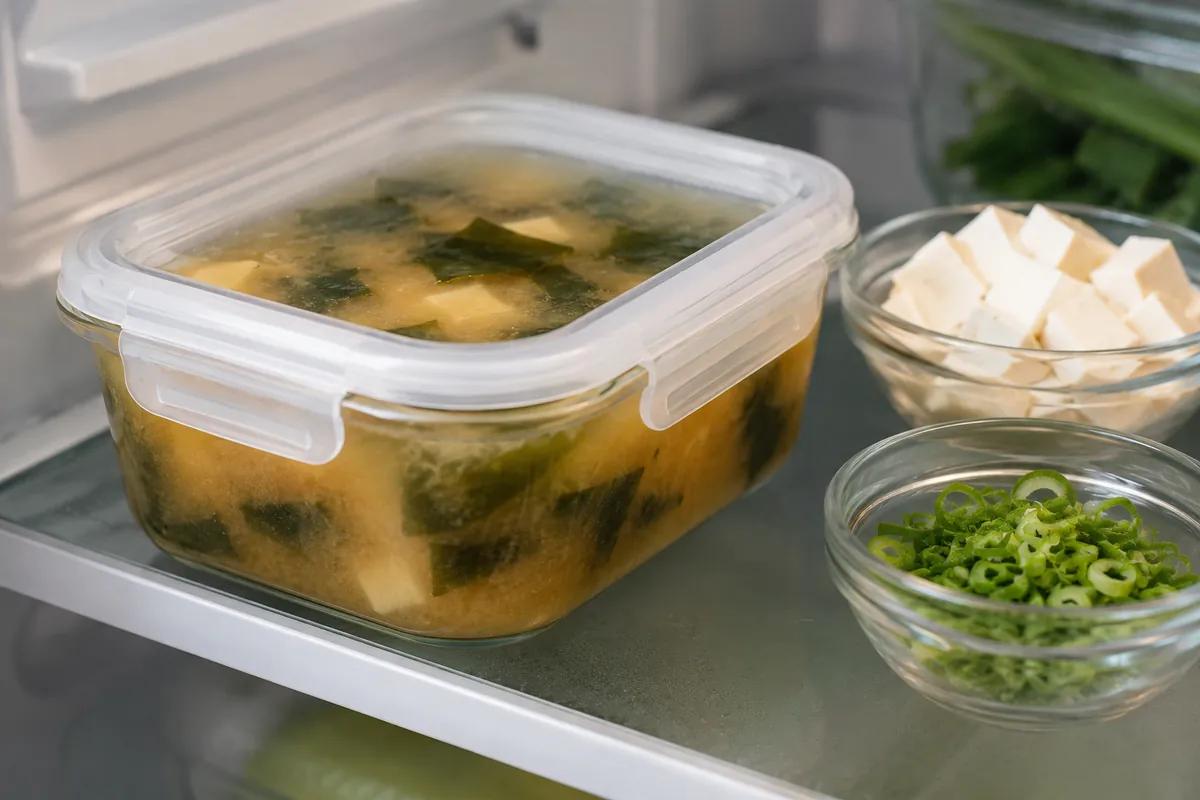
Miso soup is best made fresh and served right away, but leftovers keep in the fridge for two to three days. Store it without the tofu and greens if you can, since they degrade fastest, and reheat only gently, never to a boil, to protect the flavor and the live cultures. Miso paste itself keeps for months in the fridge, so the smartest approach is to make dashi ahead, refrigerate or freeze it, and stir in fresh miso by the bowlful whenever you want soup. That way every serving tastes freshly made in under five minutes.
Regional and Seasonal Variations
Miso soup is not a single fixed recipe but a daily canvas that changes with the region, the season, and what is in the kitchen. In colder northern parts of Japan, bolder red miso is more common, while milder white miso dominates in the west around Kyoto. Home cooks lean into whatever vegetables are at their best: tender greens and new onions in spring, eggplant and okra in summer, mushrooms and root vegetables in autumn, and hearty daikon and leafy greens in winter. The soup is endlessly adaptable precisely because the dashi-and-miso base is so neutral, so it welcomes almost any vegetable, protein, or starch you add.
This is also why miso soup is such a forgiving everyday dish rather than a special-occasion one. A few leftover vegetables, a handful of mushrooms, or a scoop of cooked rice or noodles can all go into the pot, turning a light starter into a more substantial meal. Once you are comfortable with the base method, treat the add-ins as an open invitation to use up what you have, the same flexible mindset that makes a pot of soup such a friendly thing to cook in the first place. If you have ever wondered what truly counts as soup, miso is a textbook example: a savory liquid base with ingredients steeped and simmered into it, the very definition explored in our look at what makes a soup a soup.
What to Serve With Miso Soup
In a traditional Japanese meal, miso soup is not the main event but a quiet supporting player, served in a small bowl alongside steamed rice and a few other dishes. That is the easiest way to build a meal around it: a bowl of rice, the miso soup, and a simple protein or vegetable side. It pairs naturally with grilled fish, a piece of teriyaki, or a rice bowl, and it makes a soothing partner to sushi or a bento-style spread. Because it is light and clean, it also works as a gentle starter before almost any meal, waking up the appetite without filling you up. If you keep dashi on hand, a bowl of miso soup is the fastest way to make a simple dinner feel complete and considered.
Miso soup is also a friendly fit for special diets. It is naturally low in calories and, made with a gluten-free miso and tamari-style seasonings, it slots easily into a rotation of gluten-free dinners, since the base of dashi, tofu, and seaweed contains no wheat. Always check your miso label, as some varieties include barley, but plenty of gluten-free options exist.
Make Your Dashi Ahead
The single best habit for miso soup lovers is to treat dashi as something you batch and store, exactly the way a good cook keeps stock on hand. A larger batch of dashi keeps in the fridge for a few days and freezes well for longer, so you can portion it into containers or an ice-cube tray and pull out exactly what you need. With dashi ready to go, a fresh bowl of miso soup is a five-minute affair: heat the dashi, warm your tofu and seaweed, and whisk in fresh miso off the heat. This is how the soup becomes a genuine everyday ritual rather than a project, and it is the same make-ahead logic that rewards anyone who keeps a freezer stocked with homemade bases.
A Few Pro Touches
Once the basic bowl feels easy, a handful of small refinements take it from good to genuinely memorable. Toast the bonito flakes or bloom the kombu a touch longer for a deeper dashi. Blend two misos, a mild white for body and a spoonful of red for backbone, to get a more rounded, complex flavor than either gives alone. Finish the bowl with a tiny drizzle of toasted sesame oil or a scattering of toasted sesame seeds for aroma, or a pinch of shichimi togarashi if you like a gentle heat. Warm your serving bowls first so the soup, which is never boiling hot to begin with, stays at the right temperature on the table. And taste the dashi before the miso ever goes in, because a base that already tastes savory and complete is the surest sign the finished soup will be excellent. None of these are necessary, but together they are the difference between a competent bowl and one that tastes like it came from a good Japanese kitchen, and they cost almost nothing in time or effort once the dashi is ready.
Frequently Asked Questions
What are the basic ingredients in miso soup?
At its core, miso soup is just dashi (Japanese stock) and miso paste. The traditional add-ins are soft tofu, rehydrated wakame seaweed, and sliced scallions, but those are optional. The dashi and miso are what make it miso soup; everything else is garnish.
Why should you never boil miso soup?
Boiling drives off miso’s delicate aroma, flattens its fermented flavor, and kills the beneficial live cultures it contains. Always add the miso last, off the heat, and reheat leftovers gently without letting them bubble.
What kind of miso is best for miso soup?
White (shiro) miso is the most mild, sweet, and beginner-friendly, and the best all-purpose choice. Red (aka) miso is bolder and deeper, while mixed (awase) miso balances the two. Start with white and use about one tablespoon per cup of dashi.
Can you make miso soup without dashi?
You can use plain water, but the result is thin and salty rather than savory, because dashi provides the essential umami base. If you do not have traditional dashi, use instant dashi powder, or a kombu and shiitake dashi for a vegan version. It makes all the difference.
How do you make vegan miso soup?
Use a plant-based dashi made from kombu, or kombu plus dried shiitake mushrooms, instead of bonito-based awase dashi. Pair it with tofu and wakame, and your miso soup is fully vegan while keeping all the savory depth.
How long does miso soup last in the fridge?
Miso soup keeps two to three days refrigerated. It is best stored without tofu and greens, which break down quickly, and reheated gently rather than boiled. For the freshest results, keep dashi on hand and stir in fresh miso one bowl at a time.
Bottom Line
Knowing how to make miso soup is really about respecting two ingredients and one rule. Build a proper dashi, whether classic bonito-and-kombu or a quick vegan kombu and shiitake, dissolve good miso into it through a strainer for a smooth finish, and add your tofu, wakame, and scallions with a light hand. Above all, never let it boil once the miso is in, so the soup keeps the fragrant, fermented depth that defines it. Make the dashi ahead and you can have a fresh, restorative bowl on the table in five minutes any day of the week. Master those few fundamentals and miso soup stops being a restaurant order and becomes one of the easiest, most comforting things you cook at home.