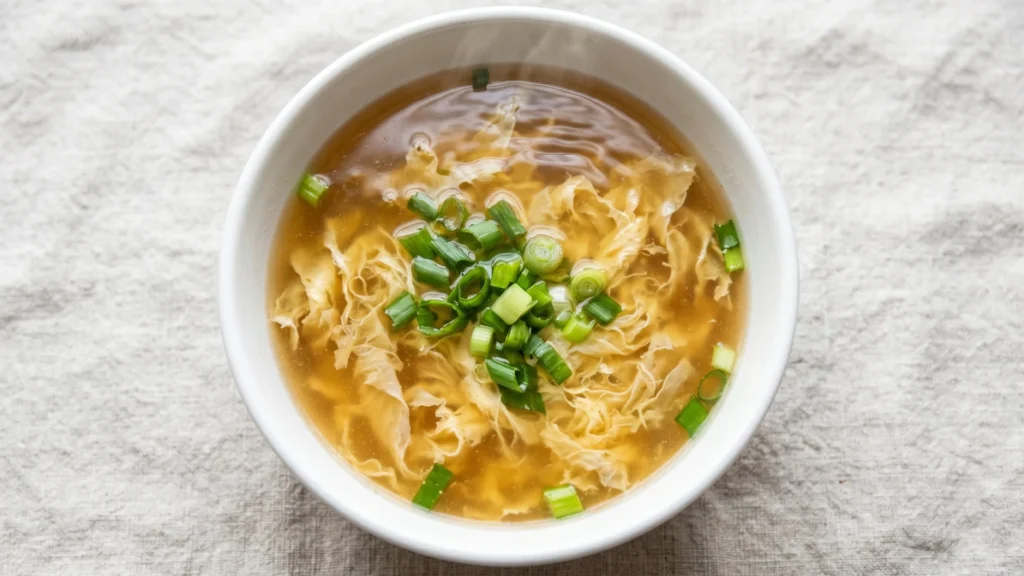
Nutrition egg drop soup numbers are better than most takeout, which is part of why this simple Chinese soup keeps showing up on light-meal and weight-loss lists. A standard one-cup serving runs about 65 to 90 calories with 2 to 3 grams of fat, a few grams of protein from the egg, and a small amount of carbohydrate from the cornstarch thickener. The one real catch is sodium: a restaurant bowl can carry 700 to 900 milligrams in a single cup, which is a big chunk of a day’s allowance for a soup that otherwise looks featherweight. The good news is that egg drop soup is one of the easiest dishes to rebuild at home into something genuinely nourishing, and small changes to the broth, the egg, and the add-ins move the whole profile in your favor.
This guide breaks down the full nutrition picture, compares restaurant and homemade versions side by side, looks at the protein and the sodium honestly, and shows exactly how to make a healthier bowl without losing the silky, comforting texture that makes the soup worth eating in the first place.
Egg Drop Soup Nutrition at a Glance
Egg drop soup is built from four humble things: chicken broth, beaten eggs, a cornstarch slurry, and seasonings like white pepper and scallions. That short ingredient list is why the calorie count stays low. Most of the bowl is broth, the egg adds a little protein and fat, and the cornstarch contributes a small amount of carbohydrate and the signature glossy body. Here is a typical breakdown for a one-cup serving, with the understanding that exact numbers swing with the recipe and how much egg goes in.
| Nutrient | Per 1 cup (approx.) |
|---|---|
| Calories | 65 to 90 |
| Protein | 3 to 5 g |
| Total fat | 2 to 3 g |
| Saturated fat | about 1 g |
| Carbohydrate | 3 to 5 g |
| Fiber | 0 to 1 g |
| Sodium | 700 to 900 mg (restaurant) |
Stack that against most takeout starters and it holds up well. The soup is naturally light, dairy-free, and low in carbohydrate, which is why it fits so many eating styles. Sodium is the only number that runs high, and happily that is the one you control most when you cook it yourself.
How Many Calories Are in Egg Drop Soup?
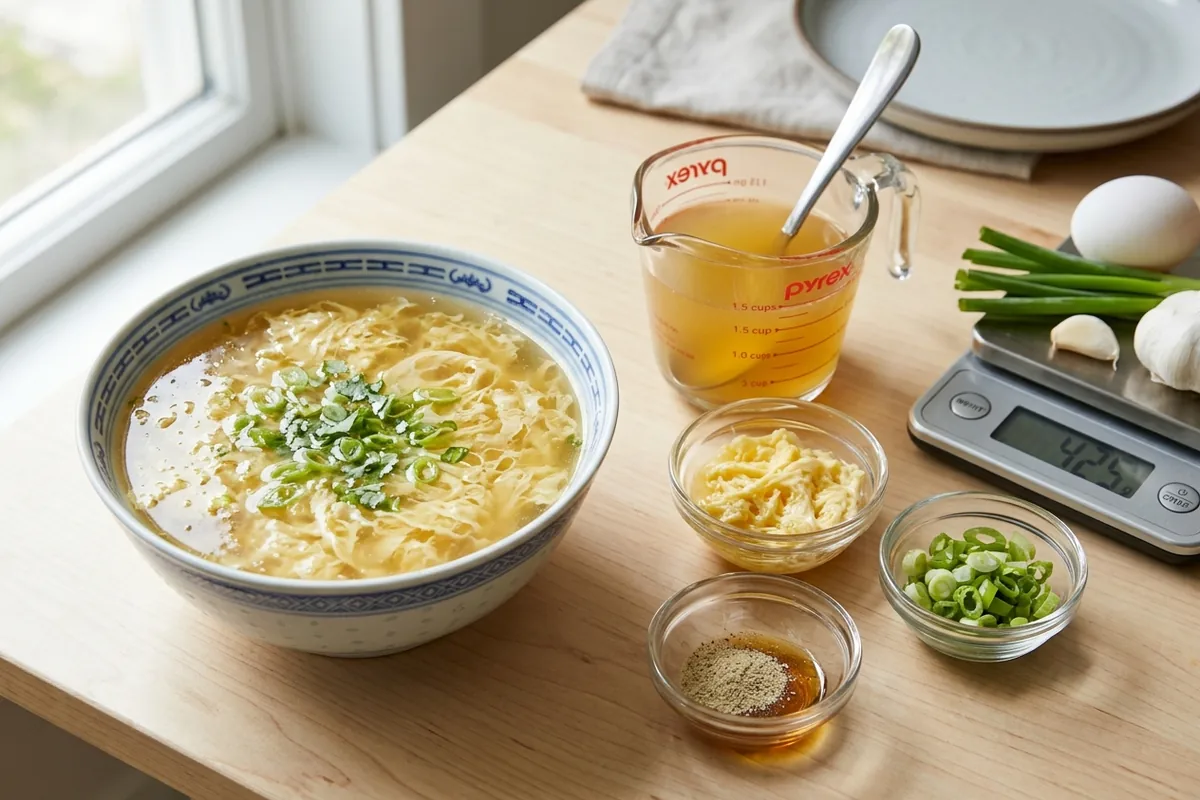
Most one-cup servings land between 65 and 90 calories, and even a generous homemade bowl with extra egg usually tops out around 110 to 120. That makes egg drop soup one of the lightest soups you can order or cook. The calories come almost entirely from the egg, since broth is nearly calorie-free and the cornstarch adds only a little. Add more egg and you raise both the calories and the protein together; lean on more broth and vegetables and you keep the bowl light.
Portion size is where restaurant numbers get slippery. A small takeout cup might genuinely be 65 calories, but a large bowl is two or three times that, and any version thickened with extra cornstarch or finished with oil climbs higher. When you cook it at home you control the egg-to-broth ratio precisely, which is the single biggest lever on the calorie count. If you are using soup as a light meal or an appetizer to take the edge off before a bigger plate, egg drop soup does the job for very little.
The Protein Question: Is It Enough?
Egg drop soup gives you real protein, but not a lot of it. A single large egg carries about 6 grams of protein, and most recipes use one to two eggs across several servings, so a typical cup lands around 3 to 5 grams. That is enough to make the soup more satisfying than a plain broth, but not enough to call it a high-protein meal on its own. As a starter or a light lunch alongside other food, it is fine. As your whole dinner, it will leave most people hungry within an hour.
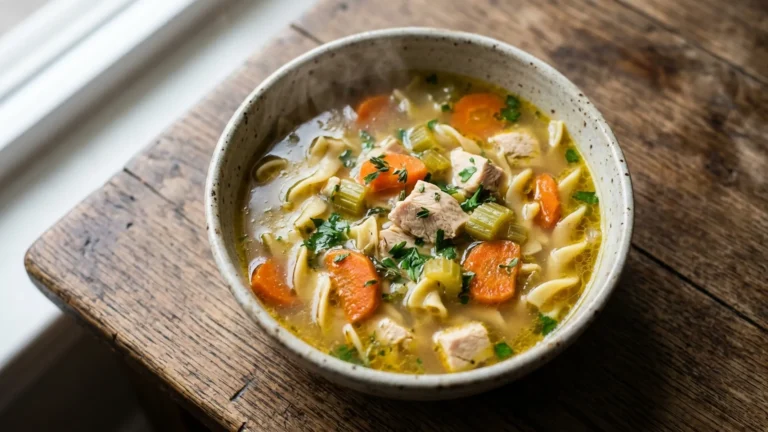
The fix is easy and does not change the character of the soup. Whisk in an extra egg or two, which is the most traditional move and the one that most improves both protein and texture. You can also stir in shredded cooked chicken, cubed silken tofu, or a handful of edamame near the end. Each of these pushes the protein toward the 15-to-20-gram range that makes a bowl feel like an actual meal. If you want a heartier, protein-forward soup from the start, a homemade chicken noodle soup built on real chicken delivers more staying power while keeping the same cozy, broth-based comfort.
The Sodium Problem and How to Fix It
Sodium is the one number worth watching with egg drop soup. A restaurant cup can carry 700 to 900 milligrams, and a large bowl easily clears 1,000. For reference, the general daily target most guidance points to is around 2,300 milligrams, so a single takeout soup can eat up a third to nearly half of that before you have touched the rest of your meal. The salt is not in the egg; it is in the broth and the soy sauce or bouillon used to season it. That is exactly why homemade wins here, because the broth is the only place the sodium lives and you control it completely.
| Move | Effect on sodium |
|---|---|
| Use low-sodium or homemade broth | Cuts the biggest source by half or more |
| Use low-sodium soy sauce | Trims a major secondary source |
| Season with white pepper, ginger, garlic | Adds flavor with zero sodium |
| Finish with scallions and a little sesame oil | Big flavor return for almost no salt |
Building the bowl on a homemade base is the cleanest way to take charge of the sodium, and it tastes better besides. A pot of low-sodium stock seasoned with aromatics gives you all the savory depth of the restaurant version without the salt load.
Vitamins, Minerals, and the Egg’s Hidden Value
The micronutrients in egg drop soup come mostly from the egg, and the egg pulls more weight than its small portion suggests. Eggs are a good source of choline, a nutrient that supports brain and liver function and that many people fall short on. They also bring small amounts of vitamin A, vitamin B12, vitamin D, selenium, and the eye-supporting antioxidants lutein and zeaxanthin, which concentrate in the yolk. The broth adds a little potassium, and any vegetables you stir in bring their own vitamins and fiber.
On its own, though, a plain bowl is thin on fiber and on most vitamins, which is the honest limit of the soup as written. Think of that less as a flaw and more as room to build, because egg drop soup takes well to almost anything you add. Fold in spinach, mushrooms, corn, peas, or shredded carrot and a one-note broth picks up real nutritional range, gaining fiber and a spread of vitamins for almost no extra calories.
Restaurant vs Homemade: A Real Comparison
The gap between takeout and homemade egg drop soup is almost entirely about sodium and portion control, not calories. Both are light. The difference is that at a restaurant you have no say over the broth, the salt, or how much cornstarch and oil go in, while at home every one of those is your call. Homemade also lets you push the protein and vegetables up so the bowl actually satisfies.
| Factor | Restaurant | Homemade |
|---|---|---|
| Calories per cup | 65 to 90 | 65 to 120, your choice |
| Sodium per cup | 700 to 900 mg | 200 to 400 mg achievable |
| Protein | Fixed, usually low | Add egg, chicken, or tofu |
| Vegetables | Few or none | As many as you like |
Does It Fit Keto, Low-Carb, and Weight Loss?

Egg drop soup slots into more eating plans than almost any other soup. For low-carb and keto eaters it is close to ideal as long as you watch the thickener, since the only meaningful carbohydrate comes from the cornstarch. Use less cornstarch, or swap in a pinch of xanthan gum, and you can get a nearly carb-free bowl that still has that silky body. The egg and any added fat from a touch of sesame oil fit a keto profile comfortably.
For weight loss, the soup is a strong tool because it delivers warmth, savory satisfaction, and a little protein for very few calories, which makes it a smart appetizer to blunt hunger before a meal or a light lunch on its own. The key is to add protein and vegetables so it actually holds you, rather than leaving you reaching for a snack an hour later. The cornstarch slurry is also where you control both the carbs and the texture, and getting the ratio right matters; our guide on how much cornstarch to thicken soup shows exactly how little you need for a clean, glossy finish without piling on starch.
How to Make a Healthier Bowl, Step by Step
Turning egg drop soup into a nourishing meal does not take a new recipe, just a few upgrades layered onto the classic method. Start with a low-sodium or homemade chicken broth as your base, then season it with ginger, garlic, white pepper, and a splash of low-sodium soy sauce instead of leaning on salt. Bring it to a gentle simmer and stir in a thin cornstarch slurry, using just enough to lightly thicken so the egg ribbons hang suspended rather than sinking.
For the egg, beat two eggs and pour them in a slow, thin stream while stirring the soup in one direction, which is what creates those delicate silk threads. Then build it into a meal: a few handfuls of spinach or chopped bok choy, sliced mushrooms, a little sweet corn, and some shredded cooked chicken or cubed tofu for protein. Finish off the heat with sliced scallions and a few drops of toasted sesame oil. What lands in the bowl has real protein and vegetables, still tastes like the soup you grew up ordering, and carries a fraction of the restaurant sodium. For more guidance on building flavor in broth-based soups generally, sources like Bon Appetit and America’s Test Kitchen are reliable.
Egg Drop Soup vs Other Chinese Restaurant Soups
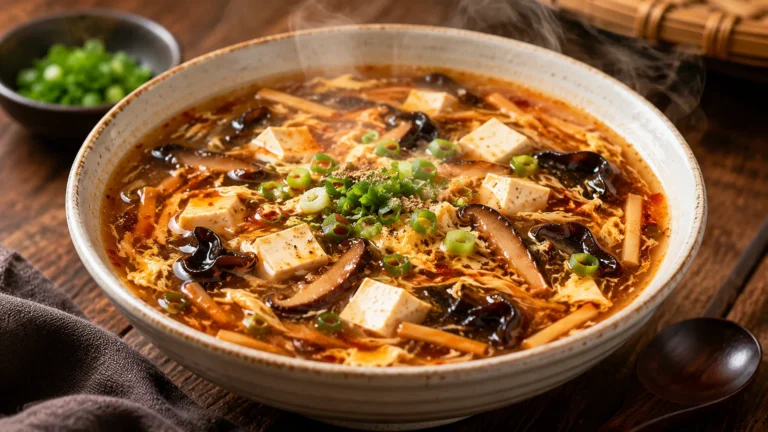
When you are weighing what to order, it helps to see where egg drop soup sits next to the other usual suspects. It is consistently one of the lightest options on the menu, which is its main nutritional selling point. Hot and sour soup is in a similar calorie range but usually carries more sodium and a touch more carbohydrate from extra cornstarch and added vegetables. Wonton soup looks light because the broth is thin, but the wontons are filled dumplings wrapped in dough, which pushes the calories and carbohydrate well above egg drop soup. Wonton broth can also be very salty.
| Soup | Calories per cup | Notes |
|---|---|---|
| Egg drop | 65 to 90 | Lowest carb, light, watch sodium |
| Hot and sour | 80 to 120 | More vegetables, often higher sodium |
| Wonton | 120 to 180 | Dumplings add carbs and calories |
If your only goal is the lightest, lowest-carb starter, egg drop soup usually wins. If you want a soup that doubles as more of a meal, the wontons in wonton soup give you a bit more to chew on, though at a calorie cost. Across all three, the sodium is the shared weak point, and all three improve dramatically when you make them at home with a controlled broth.
Texture, Mistakes, and the Cornstarch Balance
Nutrition and texture are linked in egg drop soup more than people realize, because the cornstarch that creates the signature glossy body is also the main source of the soup’s carbohydrate. Use too much and you get a thick, gluey bowl that also carries more starch than it needs; use too little and the egg ribbons sink to the bottom instead of floating in suspension. The sweet spot is a thin slurry that lightly thickens the broth just enough to hold the egg threads aloft, which keeps both the texture and the carb count where you want them.
The other make-or-break step is the egg itself. The delicate silk threads come from pouring beaten egg in a slow, thin stream into broth that is gently simmering and moving, not from dumping it in all at once. Stir the soup in one direction to set the broth in motion, then drizzle the egg in along the tines of a fork or through a spouted cup. Pour too fast or into still broth and you get dense clumps instead of wispy ribbons. None of this changes the nutrition much, but it is the difference between a bowl that looks and feels like the real thing and one that does not, and getting it right is what makes a healthier homemade version worth eating over and over.
Frequently Asked Questions
Is egg drop soup good for you?
Egg drop soup is low in calories and fat, dairy-free, and low in carbohydrate, and it provides protein and choline from the egg. The main drawback is high sodium in restaurant versions, often 700 to 900 milligrams per cup. Make it at home with low-sodium broth and added vegetables and it becomes a genuinely healthy, light meal.
How many calories are in a cup of egg drop soup?
A typical one-cup serving has about 65 to 90 calories, with most coming from the egg. A heartier homemade bowl with extra egg may reach 110 to 120 calories. Larger restaurant portions or versions thickened with extra cornstarch and oil run higher, so portion size is the main variable.
How much protein is in egg drop soup?
A standard cup has roughly 3 to 5 grams of protein from the egg, which makes it more filling than plain broth but not a high-protein meal by itself. Adding an extra egg, shredded chicken, or tofu can push a bowl to 15 to 20 grams, enough to count as a real meal.
Why is restaurant egg drop soup so high in sodium?
The sodium comes from the broth and from soy sauce or bouillon used to season it, not from the egg. Restaurants season generously and serve large portions, so a single bowl can carry 700 to 900 milligrams or more. Making it at home with low-sodium broth and aromatics cuts that by half or more.
Is egg drop soup keto-friendly?
Mostly, yes. The only real carbohydrate comes from the cornstarch thickener, so using less cornstarch or swapping in a pinch of xanthan gum gives you a nearly carb-free bowl with the same silky texture. The egg and a little sesame oil fit a keto profile well.
Can egg drop soup help with weight loss?
It can, because it delivers warm, savory satisfaction and a little protein for very few calories, which makes it a useful appetizer to curb hunger or a light lunch. To keep you full longer, add protein from extra egg, chicken, or tofu, plus vegetables for fiber, so it works as a meal rather than just a snack.
Bottom Line
The nutrition of egg drop soup is genuinely good. It is light, dairy-free, low in carbohydrate, and it carries real protein and choline from the egg. The only number to watch is sodium, and that is exactly the part you take charge of the moment you make it at home. Build the bowl on low-sodium or homemade broth, lean on aromatics instead of salt, whisk in an extra egg, and add vegetables and a protein. Do that and a featherweight starter becomes a meal that fills you up while keeping the delicate, silky texture that made you order it in the first place. Few soups give you this much room to make them better for so little effort.