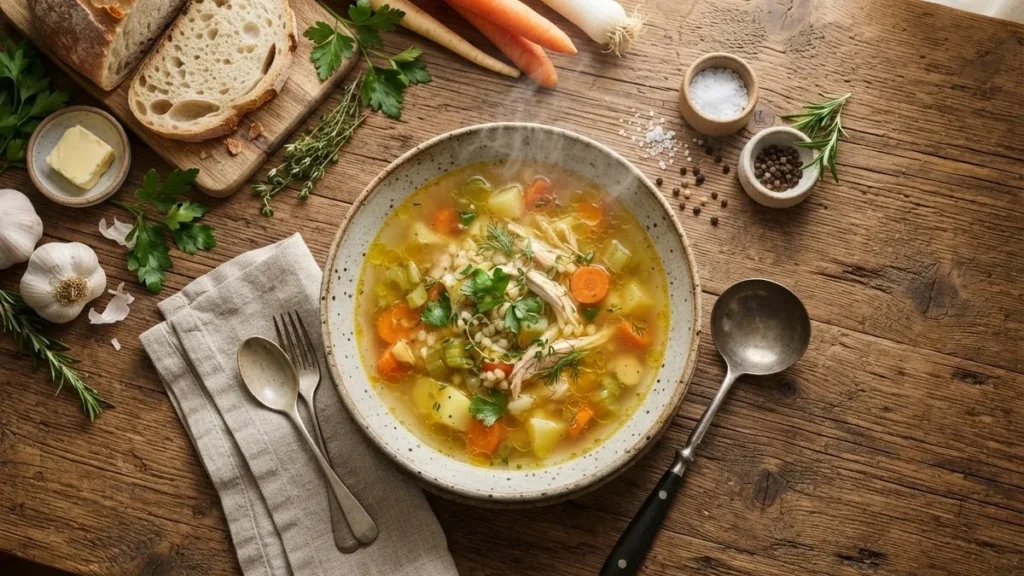
Here is the short version: how long can homemade soup last in fridge comes down to 3 to 4 days for most broth and vegetable soups, kept at or below 4 C (40 F), according to the USDA. Cream and dairy soups hold 2 to 3 days, and seafood soups only 1 to 2 days. The clock starts once the soup cools, so get it chilled within 2 hours of cooking.
The Short Answer, Measured by the Clock
Most homemade soups you simmer on a weeknight will keep 3 to 4 days in the refrigerator. That figure is the standard USDA leftover window, and StillTasty lists the same 3 to 4 days for cooked chicken, vegetable, and beef soups. It assumes the soup was cooled quickly and stored in a sealed container. If any of those steps slipped, treat the soup as older than the calendar suggests. Freshness is not just about days on the shelf. It is about how fast the soup got cold and how cold it has stayed since.
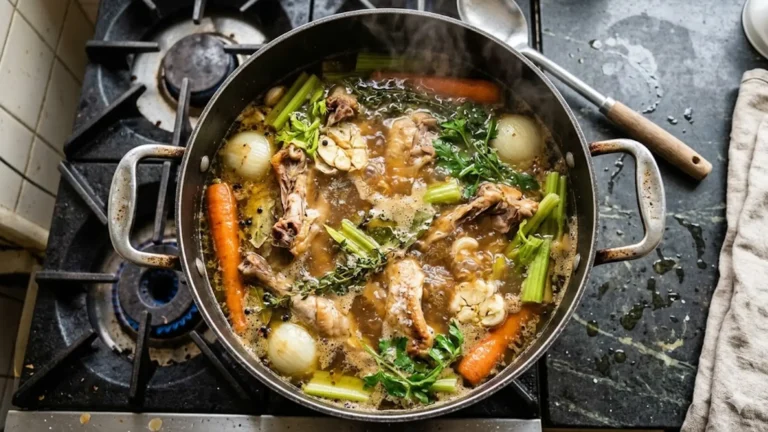
One detail trips people up: the clock does not start when you finish cooking. It starts when the soup drops out of the danger zone and into the cold fridge. A deep pot left to cool slowly on the counter can spend two or three hours warm before it ever reaches the shelf. Those warm hours count against you. So 3 to 4 days means 3 to 4 days of proper cold storage, not 3 to 4 days from the moment you ladled it into a bowl for dinner. If you are making stock ahead, the bone broth guide walks through cooling a big batch cleanly.
Why the Fridge Timer Really Matters
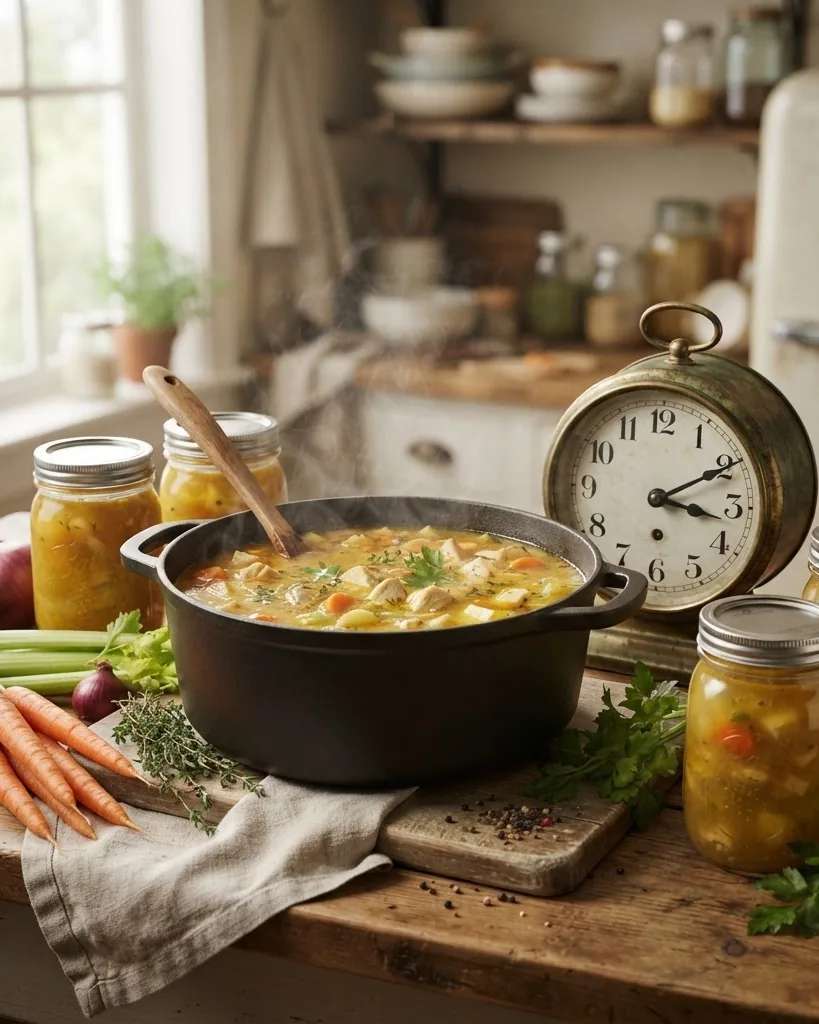
The reason soup has a hard limit at all is bacteria. The USDA calls 4 C to 60 C (40 F to 140 F) the danger zone, the temperature band where microbes multiply fastest. In that range, bacteria such as Salmonella, E. coli, Staphylococcus aureus, and Campylobacter can double in as little as 20 min. Soup is a perfect growth medium: moist, protein-rich, and often full of vegetables and starch. A pot that sits warm is a bacteria factory, even if it looks and smells fine.
This is why the sniff test alone will let you down. Many of the bacteria that cause foodborne illness produce no obvious smell, taste, or color at the levels that make you sick. You can have soup that seems perfect and still carries a load that a warm afternoon on the counter helped grow. That is the whole point of the time and temperature rules: they protect you from what you cannot see. Trust the clock and the thermometer far more than your nose. When the numbers say toss it, toss it, even if it looks like a fine bowl of lunch.
Cool It Fast: The 2-Hour Rule and the 1-Hour Hot-Day Rule
The single most important habit for soup safety is fast cooling. The FDA and USDA both say perishable food, including a fresh pot of soup, should be refrigerated within 2 hours of cooking. On a hot day, when the room is above 32 C (90 F), that window shrinks to 1 hour. A summer kitchen counts. If you simmered soup and then sat down to eat, keep an eye on the clock, because those minutes at the table are part of the two hours, not a free pause.
For a big pot, the USDA gives a two-stage cooling target. Bring the soup from 60 C down to 21 C (140 F to 70 F) within 2 hours, then from 21 C to 4 C (70 F to 40 F) within the next 4 hours, so the whole cross takes no more than 6 hours total. A deep stockpot will never hit that pace on its own. It holds heat like a battery, and the middle stays warm long after the surface cools. That slow center is exactly where bacteria thrive.
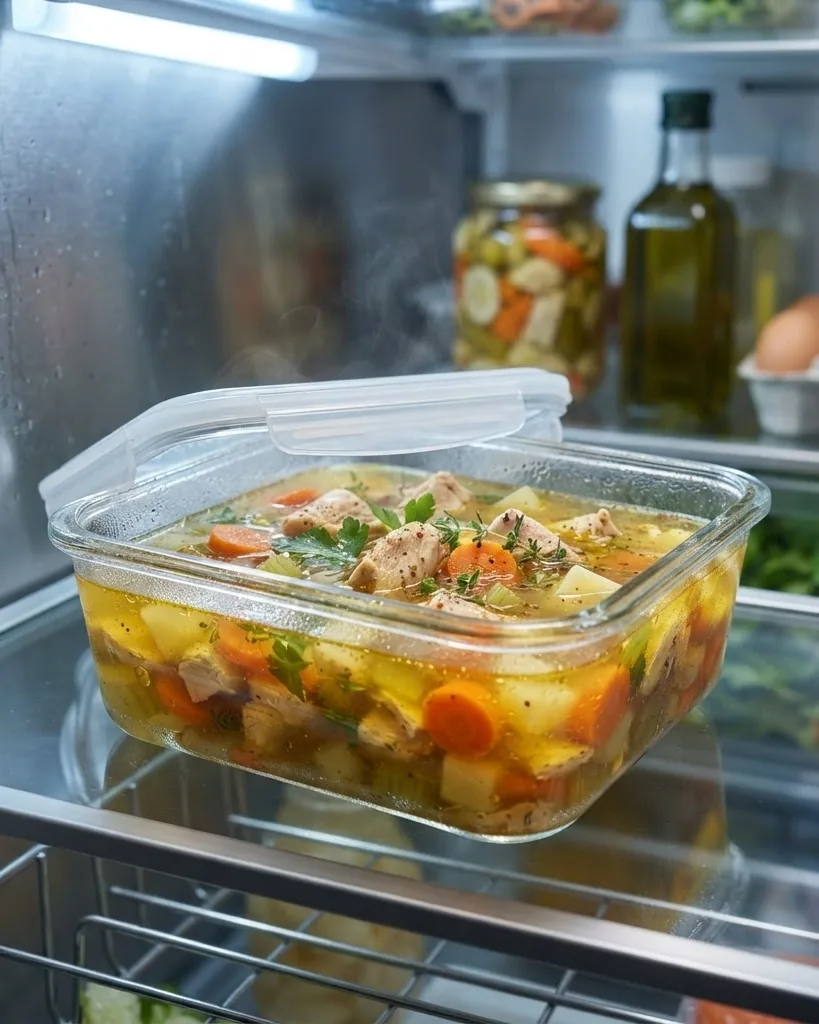
So never chill soup in the pot it cooked in. Use shallow containers instead, about 5 cm (2 inches) deep, which spread the soup thin so heat escapes fast. A few extra tricks help: set the containers in an ice-water bath in the sink, stir now and then to release heat, and leave the lids off or ajar until the soup is cold before sealing. For very large batches, dropping a clean frozen water bottle into the pot as an ice wand pulls the temperature down quickly. Once cold, cover and shelve.
- Divide big batches into shallow containers no more than 5 cm (2 inches) deep.
- Use an ice-water bath in the sink and stir to speed cooling.
- Refrigerate within 2 hours, or within 1 hour if the room is above 32 C (90 F).
- Leave lids ajar until cold so trapped steam does not slow the chill.
- Never leave a pot to cool on the counter overnight, no matter how tired you are.
Store It Right at or Below 4 C / 40 F
Cold storage only works if the fridge is actually cold. The FDA advises keeping the refrigerator at or below 4 C (40 F), and the freezer at -18 C (0 F). Many home fridges drift warmer than their dial claims, especially if they are packed full or the door gets opened often. The only way to know is a cheap appliance thermometer parked on a middle shelf. Keep one in the fridge and glance at it weekly. If it reads 6 or 7 C, the 3 to 4 day soup window is quietly shorter than you think.
Where you place the soup matters too. The door is the warmest spot, swinging in temperature every time you reach for milk, so it is the worst home for leftovers. Store soup toward the back of a middle or lower shelf, where the air stays coldest and steadiest. Keep it in an airtight container so it does not pick up other odors or dry out at the surface. Label the lid with the date you made it. A strip of tape and a marker ends the guessing game about whether Tuesday’s soup is still Tuesday’s soup.
Not All Soups Keep the Same: Broth vs Cream vs Seafood
The 3 to 4 day rule is a good default, but the ingredients change the math. Broth-based and vegetable soups are the sturdiest, holding the full 3 to 4 days. Cream, milk, and cheese soups spoil faster because dairy sours quickly, so a chowder or bisque is safest at 2 to 3 days. Seafood soups are the most perishable of all. Fish, shrimp, and clams break down fast, so a seafood soup is best eaten within 1 to 2 days. Bean, lentil, and clear broth soups follow the standard 3 to 4 days.
Here is a quick reference, with fridge days and freezer months side by side. The freezer figures are best-quality windows, not hard safety cutoffs, since food stays safe indefinitely at -18 C (0 F) but the flavor and texture fade.
| Soup type | Fridge (days) | Freezer (months) |
|---|---|---|
| Broth-based (chicken noodle, minestrone) | 3 to 4 days | 2 to 3 months |
| Vegetable | 3 to 4 days | 2 to 3 months |
| Bean, lentil, split pea | 3 to 4 days | 2 to 3 months |
| Stock or clear broth | 3 to 4 days | 4 to 6 months |
| Cream or cheese (chowder, bisque) | 2 to 3 days | 2 months (may separate) |
| Seafood (fish, shrimp, clam) | 1 to 2 days | 2 to 3 months |
| Potato-based | 3 to 4 days | Not ideal (turns mealy) |
Why the split? Dairy proteins curdle and go sour under refrigeration far sooner than water and bones do. Shellfish carry their own fast-acting enzymes and bacteria, which is why fishmongers preach same-day cooking. Starchy potato soups stay safe on the standard timeline but lose their smooth body, going grainy after a few days or a spell in the freezer. It pays to plan the week around this: seafood soup is a make-and-eat dish, while a big pot of vegetable minestrone earns its place as Monday’s batch cook.
Freezing for the Long Haul (2 to 3 Months)
When you know you cannot finish soup in time, freeze it rather than gamble on day five. Most home soups hold best quality for 2 to 3 months in the freezer, and StillTasty notes cooked soup can keep good quality for about 4 to 6 months. Past that, it is still safe if it stayed frozen, but the flavor dulls and ice crystals rough up the texture. Aim to work through the freezer stash within a season so nothing turns into a mystery brick at the back.
Freeze in the right shape and it thaws like new. Ladle cooled soup into flat freezer bags, press out the air, and lay them flat to freeze into thin slabs that stack and thaw fast. Leave 2 to 3 cm of headspace in any rigid container, because liquid expands as it freezes and a too-full jar will crack. Portion single servings if you often want just one bowl. Label every package with the contents and the date, because frozen tomato soup and frozen marinara look identical at 6 a.m.
Some soups freeze better than others. Broth, bean, and vegetable soups freeze beautifully. Cream and dairy soups tend to separate or turn grainy once thawed, so it often works better to freeze the base without the cream and stir in fresh dairy at reheating. Potato soups go mealy, and pasta or rice bloats into mush, so freeze those soups before adding the starch and cook it fresh at serving time. This turkey broth recipe freezes well in slabs after any holiday, and it comes back tasting freshly made.
Reheat to 74 C / 165 F, Once
Reheating is its own safety step, not just a warm-up. The USDA says leftovers, soups included, should reach an internal temperature of 74 C (165 F), and the easy home rule is to bring soup to a rolling boil. That heat is enough to knock back any bacteria that grew during storage. Use a food thermometer in the center of the pot if you want to be sure, because the edges heat faster than the middle. Aim to hit that temperature within 2 hours of pulling the soup from the fridge.
One habit protects you more than any other: reheat only the portion you plan to eat. Every trip through the danger zone, from cold to warm to cold again, gives bacteria another window to grow, and it wears down flavor too. So ladle out one bowl, heat that to a boil, and leave the rest of the batch cold in its container. If you reheat the whole pot and then chill it again, you are effectively restarting the clock on a soup that is already a few days old. That double dip is how safe leftovers quietly become risky ones.
How to Tell Homemade Soup Has Gone Bad
Even inside the safe window, trust your senses as a second check, and outside it, do not bother tasting at all. StillTasty’s advice is blunt and correct: if soup develops an off odor, flavor, or appearance, or if mold shows up, throw it out. A sour or fermented smell is the classic warning, especially with cream and vegetable soups. Fuzzy spots of white, green, or black mold mean the whole container goes in the bin, not just the surface, since mold roots run deeper than they look.
A few less obvious signs are worth knowing. A lid that has bulged or hisses when you open it is a red flag, because that gas comes from bacteria producing carbon dioxide inside a sealed container. A slimy or ropy texture, cloudiness in a once-clear broth, or a fizzy, prickly taste all point the same way. When any of these show up, do not taste to confirm. The old kitchen rule holds: when in doubt, throw it out. A pot of soup is cheaper than a night spent regretting it, and nobody regrets skipping the questionable bowl.
Below is a quick decision list to run through before reheating any leftover soup. If a soup fails on any single line, it does not get reheated.
- Has it been in the fridge longer than its type allows (3 to 4 days broth, 2 to 3 days cream, 1 to 2 days seafood)? If yes, discard.
- Does it smell sour, yeasty, or plain off? Discard.
- Any mold, fuzz, or surface film? Discard the whole container.
- Is the lid bulging or hissing, or the texture slimy? Discard.
- Did it ever sit out longer than 2 hours (or 1 hour on a hot day)? Discard.
Does the Container Change How Long Soup Lasts?
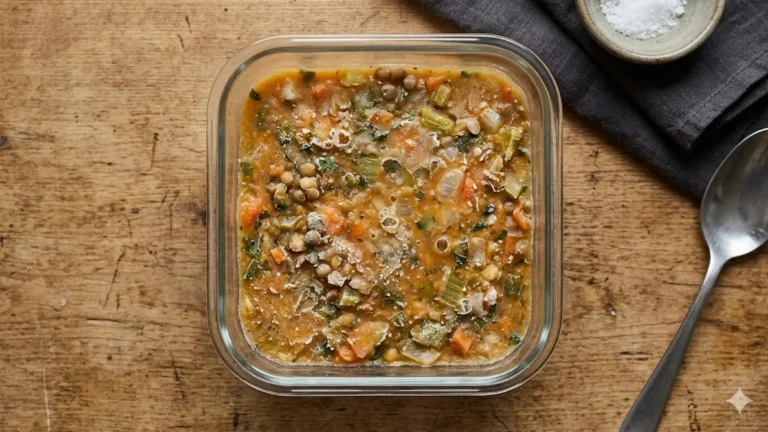
The container will not add days to the safe window, but it protects the quality you have. An airtight glass or hard plastic container keeps the soup from drying at the surface and blocks fridge odors from creeping in, so day-three soup still tastes like day-one soup. Glass has one edge worth naming: it does not stain or hold garlic and onion smells the way soft plastic does, and it goes straight from fridge to a gentle reheat. A shelf of matching lidded jars kept just for leftovers also makes the fridge easier to scan.
Fill matters as much as the material. A container packed to the brim traps a warm core that cools slowly, while a shallow layer chills fast and evenly. For soup you plan to freeze, leave 2 to 3 cm of headspace so the liquid can expand without cracking the jar or popping the lid. Wide, shallow tubs beat tall, narrow ones for both cooling and thawing. If a lid does not seal well, a sheet of plastic wrap pressed onto the soup surface before the lid slows the skin that forms on cream soups.
Batch Cooking and Meal-Prep Timing
Soup rewards planning, and the storage rules shape how a batch should be scheduled. A large pot cooked on Sunday works as a 3 to 4 day plan for broth-based soups, which lands the last bowl around Wednesday or Thursday. Anything meant for later in the week goes into the freezer the same day, not after it has already spent 3 days on the shelf. Freezing fresh locks in the 2 to 3 month window at full quality, while freezing tired leftovers only banks whatever life they had left.
Timing the add-ins keeps the batch tasting fresh across the week. Starches like pasta, rice, and potatoes swell and soften the longer they sit, so for meal prep, cook the soup base and stir the starch into each bowl at serving. The same trick saves cream soups: hold the dairy out of the batch, keep the base 3 to 4 days or frozen, and swirl in fresh cream when you reheat to 74 C (165 F). A little sequencing turns one afternoon of cooking into a week of bowls that never taste like sad leftovers.
Putting It All Together in a Real Kitchen
None of this needs to be fussy. My routine is simple: cook the soup, cool it fast in shallow containers, get it to the back of a 4 C (40 F) fridge within 2 hours, and label the lid. Broth soups get 3 to 4 days, cream soups 2 to 3 days, seafood 1 to 2 days, and anything that will not be finished goes flat into a freezer bag for 2 to 3 months. At reheating time, bring one bowl to a rolling boil at 74 C (165 F) and leave the rest cold.
The rules from the USDA, FDA, and StillTasty are not there to make you nervous. They are a small set of numbers that let you cook big, store smart, and eat leftovers with confidence. Once the habits stick, you stop counting on memory and start trusting the system: fast cooling, cold storage, honest dates, and a hot reheat. Do that, and a Sunday pot of soup will feed you well into the week without a second thought.
FAQ
Can I eat homemade soup after 5 days in the fridge?
It is not worth the risk. The USDA window for most homemade soup is 3 to 4 days, and cream or seafood soups are even shorter. By day five, bacteria may have grown to unsafe levels even if the soup looks and smells fine, since many pathogens leave no trace you can detect. If you want soup to last longer, freeze it within the first day or two instead, where it keeps good quality for 2 to 3 months.
Does reheating old soup make it safe to eat?
No. Bringing soup to a boil at 74 C (165 F) kills many active bacteria, but some produce heat-stable toxins that reheating cannot destroy. If soup has passed its safe fridge window or shows any spoilage signs, reheating will not rescue it. Reheating is meant to make safely stored soup hot and kill normal storage bacteria, not to salvage soup that sat too long or has gone off. When the timeline or your senses say no, discard it.
How long can soup sit out before it goes in the fridge?
Two hours at most, and only 1 hour if the room is above 32 C (90 F), per the FDA and USDA. That window covers the danger zone of 4 C to 60 C (40 F to 140 F), where bacteria double in about 20 min. Do not wait for soup to reach room temperature before refrigerating. Cool it quickly in shallow containers and get it cold. Modern fridges handle warm food fine, so there is no reason to leave a pot cooling on the counter.
Is it safe to refreeze soup after thawing?
You can refreeze soup that was thawed in the refrigerator and still cold, though the texture may soften a little. Do not refreeze soup that thawed on the counter or sat warm for hours, because it may have spent too long in the danger zone. To avoid the question entirely, freeze soup in single-serving portions so you only thaw what you will eat. That way you never face a large batch of thawed soup and the choice to gamble on refreezing it.