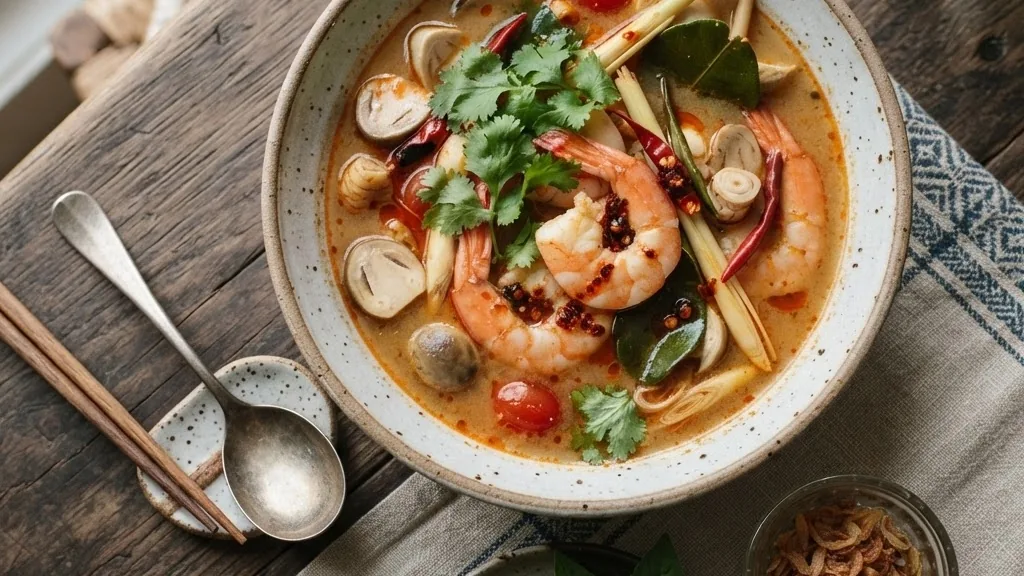
What is in tom yum soup? At its heart, tom yum is a Thai hot-and-sour soup built on three fragrant herbs, a hit of lime, salty fish sauce, and fresh chilies. The famous version, tom yum goong, adds shrimp. That sharp, citrusy, spicy broth is one of the most recognized soups in the world, and once you know the parts, you can spot a good bowl in seconds.
I have cooked a lot of soup in my time, and tom yum still teaches me something every batch. The balance of sour, salty, and spicy is the whole point, and it lives or dies on a handful of ingredients. Let me walk you through every one, what each does, the two main styles you will meet, and the honest nutrition numbers so you know what you are eating.
The short answer
Tom yum means, roughly, “boiled and mixed with a sour-spicy seasoning.” The dish is a clear or lightly creamy broth seasoned to hit four notes at once: sour from lime, salty and savory from fish sauce, spicy from chilies, and deeply aromatic from herbs. Everything else, from the mushrooms to the shrimp, rides on top of that base.
If you remember nothing else, remember the trio that makes tom yum smell like tom yum: lemongrass, galangal, and kaffir lime leaves. Miss those and you have a generic sour soup. Nail them and the kitchen fills with that unmistakable scent.
Every ingredient, grouped by role
The fastest way to understand tom yum is to sort the ingredients by the job they do. Here is the full cast.
| Role | Ingredient | What it brings |
|---|---|---|
| Aromatic | Lemongrass | Bright, citrusy backbone |
| Aromatic | Galangal | Sharp, peppery, pine-like |
| Aromatic | Kaffir lime leaves | Floral citrus perfume |
| Sour | Fresh lime juice | The signature tang, added off heat |
| Salty / umami | Fish sauce (nam pla) | Salt and deep savory depth |
| Spicy | Thai bird chilies | Clean, direct heat |
| Spicy / rich | Nam prik pao (chili paste) | Smoky, sweet, roasted depth |
| Body | Shrimp or chicken stock | The savory liquid base |
| Texture | Mushrooms (straw or oyster) | Bite and earthiness |
| Texture | Tomato, shallot | Sweetness and softness |
| Protein | Shrimp, chicken, fish, or seafood | The main filling |
| Garnish | Cilantro | Fresh, green finish |
Not every bowl has every item. Street vendors and home cooks tweak the mix. But this is the template, and almost any tom yum you order will be a version of it.
The three holy herbs
These three are the soul of the soup. They are infused into the broth for flavor, then usually left in the bowl as you eat. They are not chopped fine or eaten whole.
Lemongrass is the lead. It looks like a woody, pale-green stalk. You bruise it with the back of a knife and cut it into long pieces so it releases its bright, lemony oil. Fresh is best. Dried lemongrass is a weak stand-in.
Galangal looks like a knobby, paler ginger, but do not treat them as the same. Galangal is sharper and more peppery, almost piney. According to long Thai kitchen practice, swapping in regular ginger changes the soup into something else. Use galangal if you can find it.
Kaffir lime leaves, now often called makrut lime leaves, are glossy double leaves that smell intensely of lime peel. You tear them slightly and drop them in. They give that floral citrus top note no other ingredient can fake.
The overlooked detail with all three is timing. Simmer them gently to infuse, but do not boil them hard for an hour. Push them too long and the broth turns dull and slightly bitter. I give them about 10 to 15 minutes, taste, and pull the pot back.
Nam prik pao: the secret ingredient
If your homemade tom yum never tastes like the restaurant version, this is usually why. Nam prik pao is a Thai roasted chili paste made from dried chilies, shallots, garlic, and palm sugar cooked down in oil. It adds smoky depth, a touch of sweetness, and a rusty color.
A spoonful stirred into the broth is what gives many tom yum bowls their richer, slightly oily, deeply savory edge. You can buy it in a jar at most Asian groceries. In the creamy style, it does double duty by helping color and round out the milk.
Clear vs creamy: nam sai and nam khon
There are two main styles, and knowing the difference helps you order and cook with intent.
Tom yum nam sai is the clear version. It is the original: just the herb-infused stock, lime, fish sauce, chili, and chili paste. It is light, bright, and nearly fat-free. This is the bowl I reach for when I want all that sharp flavor without anything heavy.
Tom yum nam khon is the creamy, cloudy version. Cooks stir in evaporated milk or coconut milk plus extra nam prik pao. The result is opaque, richer, and rounder, with the sour and spicy notes softened. It is delicious, but it carries more calories and fat.
One more name to clear up. Tom kha is a separate soup, built heavily on coconut milk and galangal, milder and less sour than tom yum. People mix them up, but a true tom yum leads with sour and spicy, while tom kha leads with creamy and mellow.
Tom yum goong and other proteins
The protein is how tom yum gets its full name. Goong means shrimp, so tom yum goong is the shrimp version, and it is the most famous worldwide. The shrimp shells even go into the stock to deepen it.
You will also find tom yum gai with chicken, versions with white fish, and mixed seafood bowls with squid and mussels. The broth and seasonings stay the same. Only the main filling changes. Whatever you use, add it late. Shrimp needs only about 3 to 4 minutes, and overcooked shrimp turns rubbery fast.
What you should not eat in the bowl
Here is the beginner trap I see most often. The lemongrass, galangal, and kaffir lime leaves are flavor agents, not food. They are tough, woody, and fibrous. You push them aside as you eat, the same way you would a bay leaf.
The first time a friend tried my tom yum, they bravely chewed a chunk of lemongrass and made a face I still laugh about. So learn from that. Enjoy the broth, the shrimp, the mushrooms, and the tomato, and leave the big aromatic pieces in the bowl.
Substitutions for a US kitchen
Some of these herbs can be hard to find. Fresh is always better, but here is what actually works when you are stuck.
| If you cannot find | Best move |
|---|---|
| Fresh lemongrass | Frozen whole stalks; lemongrass paste in a pinch |
| Galangal | Frozen galangal; only use ginger if truly desperate, and less of it |
| Kaffir lime leaves | Frozen leaves; a little extra lime zest as a weak backup |
| Nam prik pao | Jarred Thai roasted chili paste; do not skip if you can help it |
| Thai bird chilies | Serrano or red pepper flakes, adjusted to taste |
| Fish sauce | Soy sauce plus a pinch of salt for a vegetarian bowl |
For an Asian-style soup that leans on similar aromatics, you might also like my shrimp coconut curry, and you can find more brothy bowls in the broth and noodle soups collection.
Is tom yum soup healthy?
It can be one of the lighter soups you eat, with one big caveat: sodium. Let me give you the real numbers.
| Version (per 1 cup / 240 ml) | Calories |
|---|---|
| Clear (nam sai) | About 90 to 150 kcal |
| Creamy (nam khon) | Often 350+ kcal |
The clear version is naturally low in calories and fat because it is mostly herb-infused stock. The creamy version adds coconut or evaporated milk, which can pile on 200 to 400 extra calories per serving.
Sodium is the number to watch. A serving of tom yum can run from about 600 to 1,200 mg of sodium, mostly from fish sauce. The FDA sets the Daily Value for sodium at 2,300 mg, so a single bowl can use up roughly a quarter to half of your day’s allowance. The CDC notes that most Americans already eat more sodium than recommended, so if you are watching it, make tom yum at home and go easy on the fish sauce. You can confirm the nutrition basics for broth-based soups through USDA FoodData Central and the FDA guidance on sodium in your diet.
What I learned making it the wrong way first
When I first tried to recreate a tom yum I loved at a Thai spot near me, I got it wrong three times before it clicked. I learned more from those flops than from any recipe, so let me save you the trouble.
The first time, I noticed my broth smelled amazing but tasted thin and one-note. In my experience that almost always means the chili paste is missing. I had skipped the nam prik pao because I did not have a jar, and the soup never got that rounded, smoky depth. The fix was a single trip to an Asian grocery, and the difference was night and day.
The second batch, I made the mistake of squeezing the lime in early and letting the pot boil for another ten minutes. What I did not expect was how flat and faintly bitter the lime turned. Fresh lime juice is delicate. I have found that adding it at the very end, with the heat off, is the single biggest thing that separates a bright tom yum from a dull one.
The third time, I overcooked the shrimp while I fussed with seasoning. They went rubbery and small. Now I treat the shrimp like the last guest to arrive: in at the very end, three to four minutes, and the heat goes off the moment they curl and turn pink. Those three lessons, paste for depth, lime off the heat, and shrimp last, are the whole game for me now.
How tom yum is served and what to eat with it
In Thailand, tom yum usually arrives as part of a shared meal, not a solo starter the way soup often shows up in the West. It sits in the middle of the table next to rice and other dishes, and everyone spoons a little into their own bowl over plain jasmine rice.
That rice is not a side thought. The soup is intensely flavored, sour and salty and hot all at once, and steamed jasmine rice is the calm partner that makes it sustainable to eat a whole bowl. I always cook a pot of rice before I even start the soup. A handful of fresh cilantro and an extra wedge of lime on the side let each person tune their own bowl. Some like it sharper, some milder, and tom yum is forgiving that way.
How to build a quick bowl at home
You do not need a Thai grandmother to make a respectable tom yum. Here is the simple order of operations I follow.
- Bring stock to a gentle simmer. Add bruised lemongrass, sliced galangal, and torn kaffir lime leaves. Infuse 10 to 15 minutes.
- Stir in a spoonful of nam prik pao and a few smashed Thai chilies.
- Add mushrooms and tomato. Simmer 2 to 3 minutes until just tender.
- Add shrimp or chicken and cook 3 to 4 minutes, until the shrimp just turns pink.
- Turn off the heat. Now add fish sauce and fresh lime juice. Taste and balance.
- Finish with cilantro. Serve with jasmine rice.
That last step matters more than any other. Add the lime and fish sauce off the heat. Boiling lime juice makes it taste flat and slightly bitter, and you lose the fresh sour punch that defines the soup.
FAQ
What are the main ingredients in tom yum soup?
The core is lemongrass, galangal, kaffir lime leaves, fish sauce, lime juice, and Thai chilies in a shrimp or chicken stock, usually with mushrooms and shrimp. Many cooks add nam prik pao, a roasted chili paste, for extra depth.
Is tom yum soup spicy?
Usually, yes. The heat comes from fresh Thai chilies and chili paste, and you can dial it up or down. The flavor is meant to be hot and sour at the same time, not just spicy.
What is the difference between tom yum and tom kha?
Tom yum leads with sour and spicy and is often clear. Tom kha is built on coconut milk and galangal, so it is creamy, mild, and far less sour. They share herbs but taste quite different.
Is tom yum soup gluten-free?
It often is, since the base is stock, herbs, lime, and chilies. The risk is fish sauce or chili paste that contains gluten, so check labels if you are sensitive.
Can you make tom yum vegetarian?
Yes. Use a vegetable or mushroom stock, swap fish sauce for soy sauce with a pinch of salt, and load up on mushrooms and tofu. You keep the same herbs and sour-spicy balance.
Why does my homemade tom yum taste flat?
Two common reasons: you skipped the nam prik pao, or you boiled the lime juice. Add the chili paste for depth, and stir in lime and fish sauce off the heat at the very end.
What mushrooms go in tom yum soup?
Straw mushrooms are the traditional choice, and you will often see them in canned form at Asian groceries. Oyster mushrooms are a great fresh alternative. In a pinch, sliced white button or cremini mushrooms work fine. They add bite and soak up the sour-spicy broth.
Is tom yum the same as hot and sour soup?
Not quite. Tom yum is Thai and gets its sour note from fresh lime and its aroma from lemongrass, galangal, and kaffir lime. The Chinese hot and sour soup you may know uses vinegar and white pepper and has a thicker, often egg-streaked broth. They share the hot-and-sour idea but taste very different.
The bottom line
So, what is in tom yum soup? A clear or lightly creamy broth seasoned to be sour, salty, and spicy all at once, carried by three aromatic herbs: lemongrass, galangal, and kaffir lime leaves. Add fish sauce, lime, chilies, mushrooms, and shrimp, and you have the classic tom yum goong. Choose the clear nam sai for a light bowl or the creamy nam khon for something richer, watch the sodium, and remember to leave those woody herbs in the bowl. Get the balance right and you will understand why this soup has fans all over the world.