A bowl of pho feels virtuous. It is mostly broth, it is full of fresh herbs, and it warms you without sitting heavy. So is it actually good for you? The honest answer is yes, mostly, with one big caveat. A typical bowl of pho delivers a solid hit of protein, a moderate amount of calories, and a generous load of carbohydrates from the rice noodles, all of which can fit a balanced diet. The catch is sodium. Restaurant pho can carry a startling amount of salt in its broth, enough to be the single number worth watching. Understanding where the calories, protein, and salt come from lets you enjoy pho often and make it healthier whenever you want.
This guide breaks down the real nutrition of pho noodle soup, compares the common versions, and shows you exactly which choices move the numbers. Note that the figures here are general ranges drawn from typical preparations and nutrient databases; an individual bowl varies with portion size, the cut of meat, and how the broth was made.
The quick answer: a typical bowl of pho

A standard restaurant bowl of pho generally lands somewhere around 350 to 500 calories, though large bowls can climb well past that. Of that, you are looking at roughly 25 to 35 grams of protein, 45 to 60 grams of carbohydrates from the rice noodles, and a relatively modest amount of fat, usually under 15 grams unless it is a fatty beef cut. The element that dominates the nutrition label is sodium, which in a restaurant bowl commonly runs from 1,000 to over 2,000 milligrams. Pho is built on a long-simmered, heavily seasoned broth, and that broth is where most of the salt lives.
Pho nutrition by type, side by side
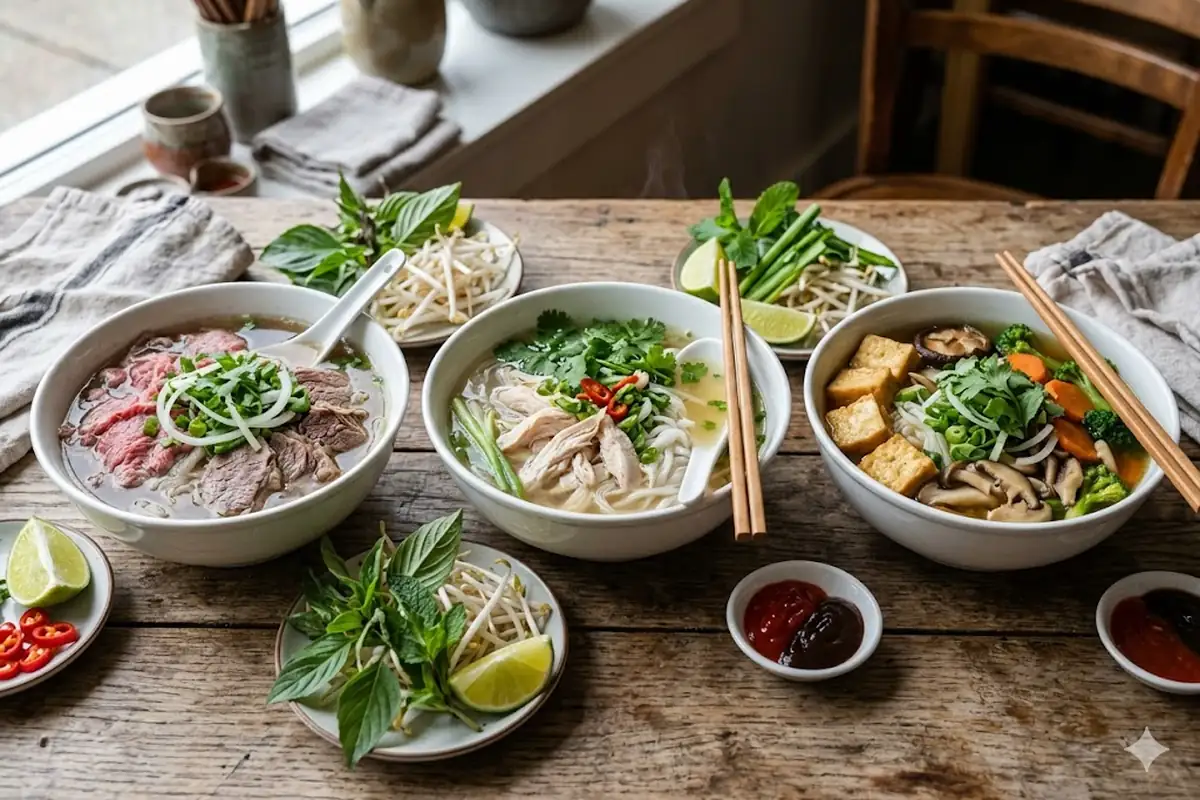
The numbers shift depending on whether you order chicken, beef, or a vegetarian bowl, and how big the serving is. Here is a side-by-side look at typical ranges.
| Pho type | Calories | Protein | Carbs | Fat | Sodium |
|---|---|---|---|---|---|
| Chicken (pho ga) | 350-450 | 25-30 g | 45-55 g | 3-8 g | 1,000-1,500 mg |
| Beef (pho bo) | 400-550 | 25-33 g | 45-55 g | 8-15 g | 1,200-1,800 mg |
| Vegetarian (pho chay) | 300-400 | 10-15 g | 50-60 g | 3-7 g | 900-1,400 mg |
| Large restaurant bowl | 700-1,200 | 30-40 g | 80-110 g | 15-25 g | up to 2,400 mg |
These are estimates for a standard serving, roughly a regular-size restaurant bowl or a generous home portion. A jumbo or large restaurant bowl, common in the United States, can hold two to three times the noodles and broth, which is why the calorie and sodium figures climb so dramatically for the large bowl.
Where the calories actually come from
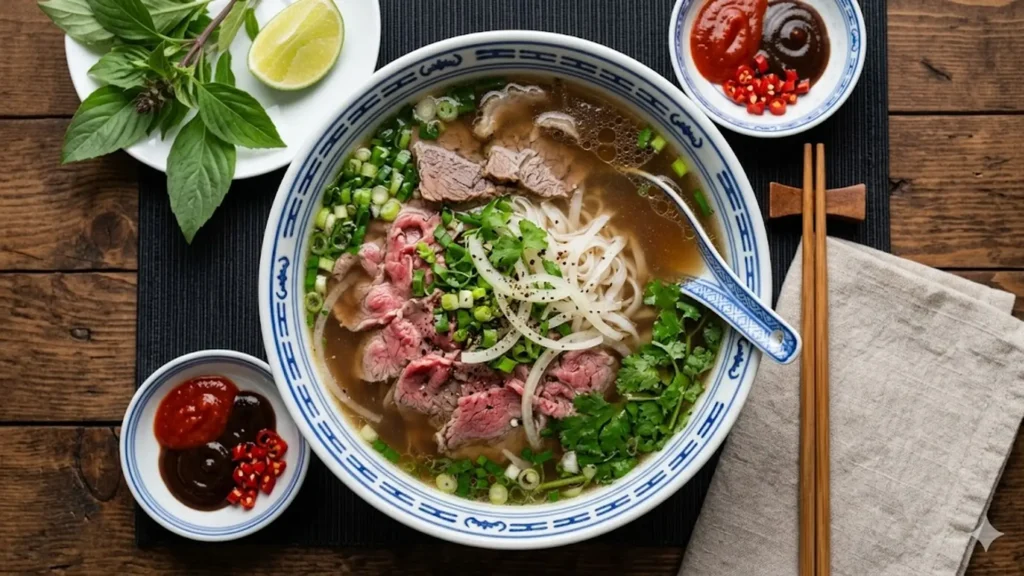
It helps to see how a bowl of pho is built nutritionally, because that tells you which levers to pull. The broth itself is low in calories; it is mostly water, simmered with bones, aromatics, and spices. The rice noodles are the biggest single source of calories and nearly all of the carbohydrates, since they are essentially refined rice starch. These flat noodles are a form of rice noodle and provide quick-burning energy but little fiber. The protein, and most of the fat, comes from whatever meat or protein you add, which is why beef pho with fattier cuts sits higher in both calories and fat than a lean chicken bowl.
The fresh garnishes, the bean sprouts, basil, cilantro, lime, and chili, add almost no calories but plenty of flavor, vitamins, and a little fiber. That is part of what makes pho feel light: a large share of the bowl’s volume is broth and herbs, not dense calories.
This breakdown also explains why pho responds so well to small tweaks. Because the calories cluster in just two places, the noodles and the meat, you can move the numbers meaningfully by adjusting either one. Cutting the noodle portion in half and replacing it with extra vegetables drops a chunk of the carbohydrates and calories while keeping the bowl just as filling. Swapping a fatty brisket for lean chicken breast or tofu trims the fat. Neither change touches the broth or the herbs, so the soul of the dish stays intact. Few meals are this easy to customize to a goal, whether that goal is more protein, fewer carbohydrates, or simply a lighter bowl.
The protein picture
Pho is a genuinely good source of protein, which is one of its real nutritional strengths. A bowl with beef or chicken typically delivers 25 to 33 grams, comparable to a small chicken breast, which helps with satiety and makes the meal more filling than the calorie count alone suggests. If you want even more protein without many extra calories, ask for extra meat or add a soft-boiled egg. A vegetarian pho, built on tofu and vegetables, lands lower, usually 10 to 15 grams, so if you eat it meatless it is worth adding tofu, edamame, or extra beans to keep the protein up. For ideas on building plant-forward meals that still hit a solid protein target, the grain-and-vegetable approach behind good vegan bowls translates well to a meatless pho.
The sodium problem, and how to manage it
Sodium is the one number that gives pho its only real nutritional knock. A single restaurant bowl can deliver most or all of a day’s recommended sodium in one sitting. The American Heart Association recommends an ideal limit of no more than 1,500 milligrams of sodium per day for most adults, with 2,300 milligrams as the upper general guideline, and you can read their full guidance on how much sodium to eat per day. A large bowl of restaurant pho can approach or exceed that upper limit by itself.
That does not mean you have to give up pho. It means a few simple habits keep it in check. You do not have to drink every drop of broth; leaving some behind cuts the sodium meaningfully. Going easy on the added hoisin and soy sauce at the table, both of which are very salty, helps too. And the most effective move of all is making pho at home, where you control the salt entirely. A homemade broth can be every bit as fragrant with a fraction of the sodium. If you want a lower-salt starting point, our recipe for a fragrant chicken pho lets you dial the seasoning to your own taste.
Is pho healthy? An honest verdict
On balance, pho is one of the healthier restaurant meals you can choose. It is high in protein, moderate in calories, low in saturated fat when you pick a lean protein, and loaded with fresh herbs and vegetables that contribute vitamins and antioxidants. The warm, hydrating broth is gentle on the stomach and genuinely comforting, which is part of why it is a go-to when people feel under the weather. Its weaknesses are real but manageable: it is high in sodium, relatively low in fiber, and the refined rice noodles spike blood sugar faster than a whole grain would.
For most people eating a varied diet, those weaknesses are easy to offset. Add extra vegetables and herbs for fiber, choose a lean protein, watch the broth and condiments for sodium, and balance the rest of your day’s meals accordingly. Eaten that way, pho is a nourishing, satisfying meal rather than a guilty pleasure.
It is also worth keeping pho in perspective against the alternatives. Compared with many other comfort-food and takeout options, a bowl of pho is genuinely on the lighter, more nutritious end. It typically carries less saturated fat than a creamy soup or a fast-food meal, more protein than a plate of plain noodles or fried rice, and far more fresh vegetables and herbs than most convenience foods. The broth keeps you hydrated and full on relatively few calories. So while the sodium deserves attention, the bigger picture is favorable: when you are choosing what to eat out or cook on a cold night, pho is one of the smarter, more wholesome bowls you can land on, and a few small adjustments make it better still.
The micronutrients people overlook
Calories and macros get all the attention, but a bowl of pho quietly contributes a range of micronutrients that rarely make the headline. The long-simmered bone broth at the heart of beef or chicken pho extracts minerals and gelatin from the bones, contributing small amounts of calcium, magnesium, and the collagen-derived amino acids that have made bone broth popular. The aromatic spices that define pho, star anise, cinnamon, cloves, ginger, and coriander, are rich in plant compounds with antioxidant and anti-inflammatory properties, which is part of pho’s traditional reputation as a restorative meal.
The garnishes matter more than their tiny calorie count suggests. Fresh herbs like Thai basil and cilantro, along with bean sprouts and a squeeze of lime, add vitamin C, vitamin K, folate, and a dose of fiber. Ginger and chili bring warming compounds that aid digestion and circulation. None of these turn pho into a multivitamin, but together they explain why a bowl of pho leaves you feeling nourished rather than merely full. The lesson is simple: the more herbs and vegetables you pile on, the more of this quiet nutrition you capture.
Home pho versus restaurant pho
The single biggest factor in pho’s nutrition is where it comes from. Restaurant pho is built for bold flavor and large portions, which means more salt, bigger noodle servings, and sometimes fattier cuts of meat. A jumbo bowl at a pho house can carry double or triple the calories and sodium of a sensible home portion. That is not a reason to avoid it, but it is a reason to be intentional: share a large bowl, ask for a smaller size, or simply leave some noodles and broth behind.
Cooking pho at home flips every one of those variables in your favor. You decide how much salt and fish sauce go into the broth, you control the noodle portion, and you choose lean meat and pile on the vegetables. A homemade bowl can deliver the same fragrant, satisfying experience with markedly less sodium and a better balance of protein to carbohydrate. The trade-off is time, since a proper pho broth simmers for hours, but you can make a big batch of broth and freeze it in portions for fast weeknight bowls. For anyone watching their sodium or calories closely, learning to make pho at home is the most powerful single change available.
How to make your pho healthier
Whether you are ordering out or cooking at home, small adjustments meaningfully improve the nutrition of a bowl of pho. Here are the most effective ones.
- Load up on vegetables and herbs. Pile on bean sprouts, Thai basil, cilantro, and any greens offered. They add fiber, micronutrients, and volume for almost no calories.
- Choose lean protein. Chicken breast, lean steak, or tofu keep the fat and calories down compared with fatty brisket or meatballs.
- Mind the broth and condiments. Leave some broth behind and go light on hoisin and soy to cut sodium. A squeeze of lime adds brightness without salt.
- Adjust the noodles. Ask for less noodle, or swap part of it for extra vegetables, to lower the carbohydrate load. Some home cooks use spiralized vegetables for part of the bowl.
- Make it at home. A homemade broth lets you control the salt entirely and is the single biggest improvement you can make.
Pho, gluten, and other dietary questions
One quiet advantage of pho is that the noodles are made from rice, not wheat, so the bowl itself is naturally free of gluten-containing grains. The thing to watch is the broth and the condiments. Some commercial broths and many bottled hoisin sauces contain wheat, so anyone strictly avoiding gluten should confirm the broth is safe and skip the hoisin unless it is labeled gluten-free. Made carefully, pho slots easily into a roster of gluten-free dinners, but the caution about hidden wheat in sauces is the same one that applies to any rice-noodle dish. For a fuller walkthrough of keeping a brothy bowl safe, our guide to building a truly safe gluten free soup covers the same pitfalls.
If you track calories or macros closely, the table above gives you reliable working ranges, but the most accurate figures come from weighing your own ingredients. For verified nutrient data on specific cuts of meat, noodles, and vegetables, the USDA FoodData Central database is the gold-standard reference, and it is worth a look if you want to dial in a homemade bowl precisely.
Pho also adapts to most eating patterns with a little planning. If you are watching carbohydrates, ask for less noodle and load up on protein and vegetables, which keeps the bowl satisfying while trimming the starch. If you are building muscle or simply want a higher-protein meal, extra meat or a soft-boiled egg pushes the protein well past 35 grams without much extra fat. For a lighter lunch, a smaller bowl with plenty of broth and herbs runs well under 400 calories. Because the components are so clearly separated, broth, noodles, protein, and garnish, pho is one of the easiest restaurant or homemade meals to bend toward whatever your particular goal happens to be, which is a big part of why it remains a favorite for people who care about what they eat.
The bottom line on pho nutrition
Pho earns its reputation as a comforting, relatively healthy meal. A typical bowl gives you 350 to 500 calories, a generous 25 to 33 grams of protein, and a moderate amount of fat, wrapped in a warm broth full of fresh herbs. Its one genuine drawback is sodium, which in a large restaurant bowl can rival a full day’s recommended intake. Manage that by leaving some broth behind, going easy on salty condiments, and, best of all, making pho at home where you control the salt. Pile on the vegetables, pick a lean protein, and pho becomes exactly what it looks like: a nourishing, satisfying bowl you can enjoy without a second thought.
Frequently Asked Questions
How many calories are in a bowl of pho?
A standard bowl of pho typically contains 350 to 500 calories, depending on the protein and portion size. Chicken pho tends toward the lower end, around 350 to 450, while beef pho with fattier cuts runs higher. Large restaurant bowls, which hold two to three times the noodles and broth, can reach 700 to 1,200 calories on their own.
Is pho high in protein?
Yes. A bowl of beef or chicken pho usually delivers 25 to 33 grams of protein, comparable to a small chicken breast, which makes it filling and satisfying. Vegetarian pho is lower, around 10 to 15 grams, so adding tofu, edamame, or extra beans helps keep the protein up if you eat it meatless.
Why is pho so high in sodium?
The sodium comes almost entirely from the broth, which is simmered for hours with salt, fish sauce, and other seasonings, plus any soy sauce or hoisin you add at the table. A restaurant bowl can carry 1,000 to over 2,000 milligrams of sodium. You can cut it significantly by leaving some broth behind, going light on condiments, or making pho at home where you control the salt.
Is pho gluten-free?
The rice noodles in pho are naturally gluten-free, but the bowl is not automatically safe. Some commercial broths and many bottled hoisin sauces contain wheat. Anyone strictly avoiding gluten should confirm the broth is gluten-free and skip the hoisin unless it is specifically labeled safe. Made carefully with a verified broth, pho is an easy gluten-free meal.