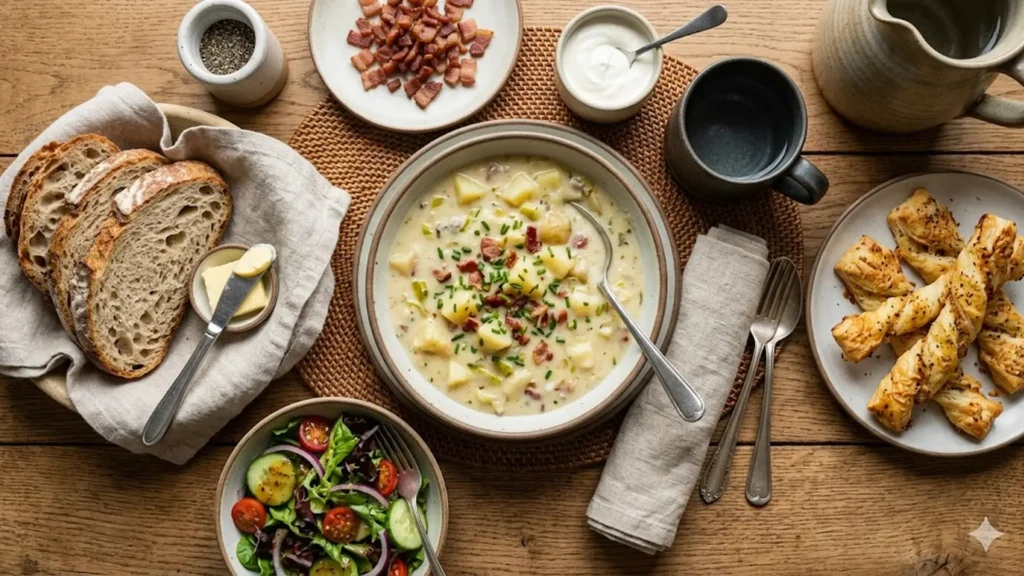
Potato soup is the definition of cozy, but it has a weakness. It is rich, creamy, starchy, and almost entirely one texture, which means a bowl on its own can feel heavy and a little monotonous halfway through. The right side dish fixes that. It adds the crunch, the brightness, or the contrast the soup is missing, and turns a simple bowl into a meal you actually want to sit down to. The trick is not just picking something tasty. It is picking something that balances what potato soup already has too much of.
Below I have organized the best pairings by what they bring to the table, with the reasoning behind each one, because understanding why a side works lets you improvise with whatever is in your kitchen. Whether you are serving a creamy loaded potato soup, a brothy version, or a broccoli-potato blend, the same principles of contrast apply.
The one rule that makes pairing easy
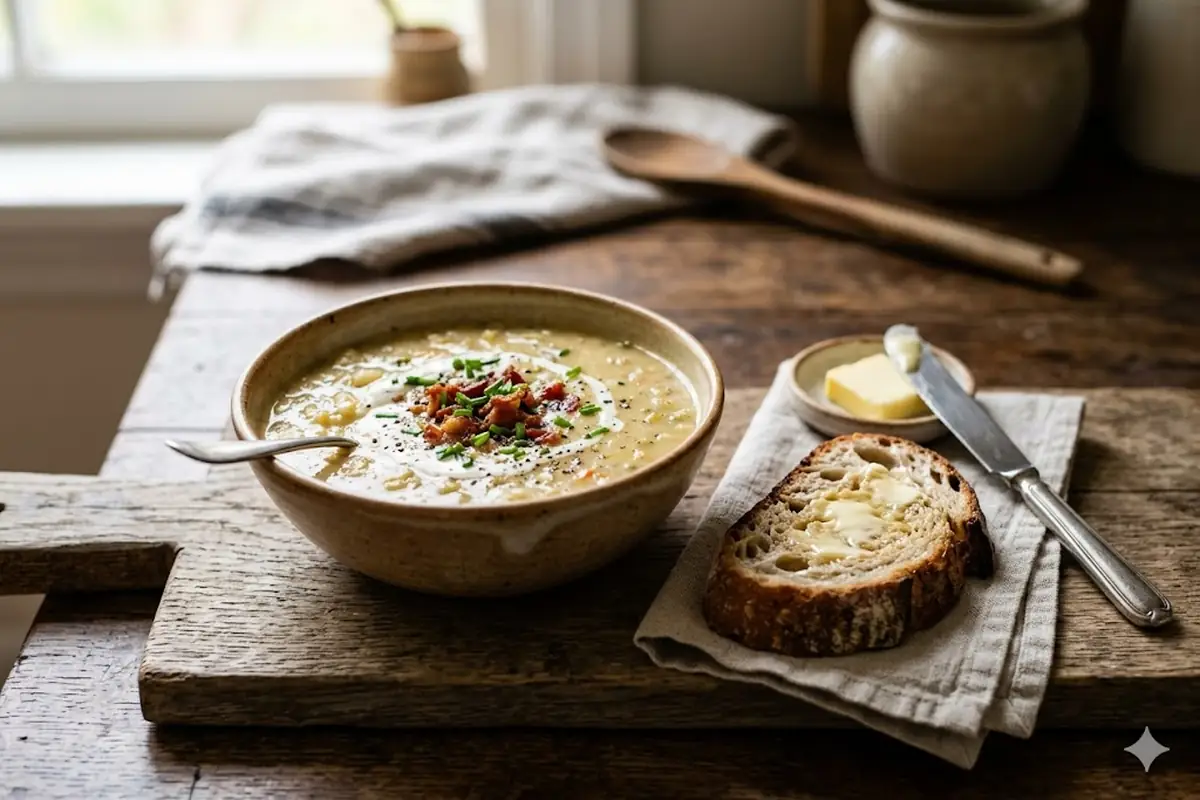
Potato soup is heavy on three things: starch, fat, and a single smooth texture. A great side dish counters at least one of them. That is the whole logic. You want crunch against the creaminess, acid against the richness, or a fresh, light element against the heaviness. Get one of those contrasts and the pairing works. Stack two starchy, rich foods together and the meal feels leaden. Keep that single idea in mind and you will never put a boring plate next to your soup again. The principle holds across the whole world of soup cookery, where a thoughtful accompaniment has always been part of the meal.
Here is a quick map of the main pairing categories and why each one earns its spot beside the bowl.
| Side | What it adds | Why it works |
|---|---|---|
| Crusty bread / garlic bread | Crunch and chew | Contrast to the creamy, smooth soup |
| Green salad with acid dressing | Brightness, freshness | Cuts the richness and resets the palate |
| Grilled cheese | Salt and crisp edges | Familiar comfort pairing, dunkable |
| Roasted vegetables | Caramelized depth | Adds texture the soup lacks |
| Crisp white wine or lager | Acidity, effervescence | Lightens each rich, starchy spoonful |
Breads and dippers: the obvious, done right
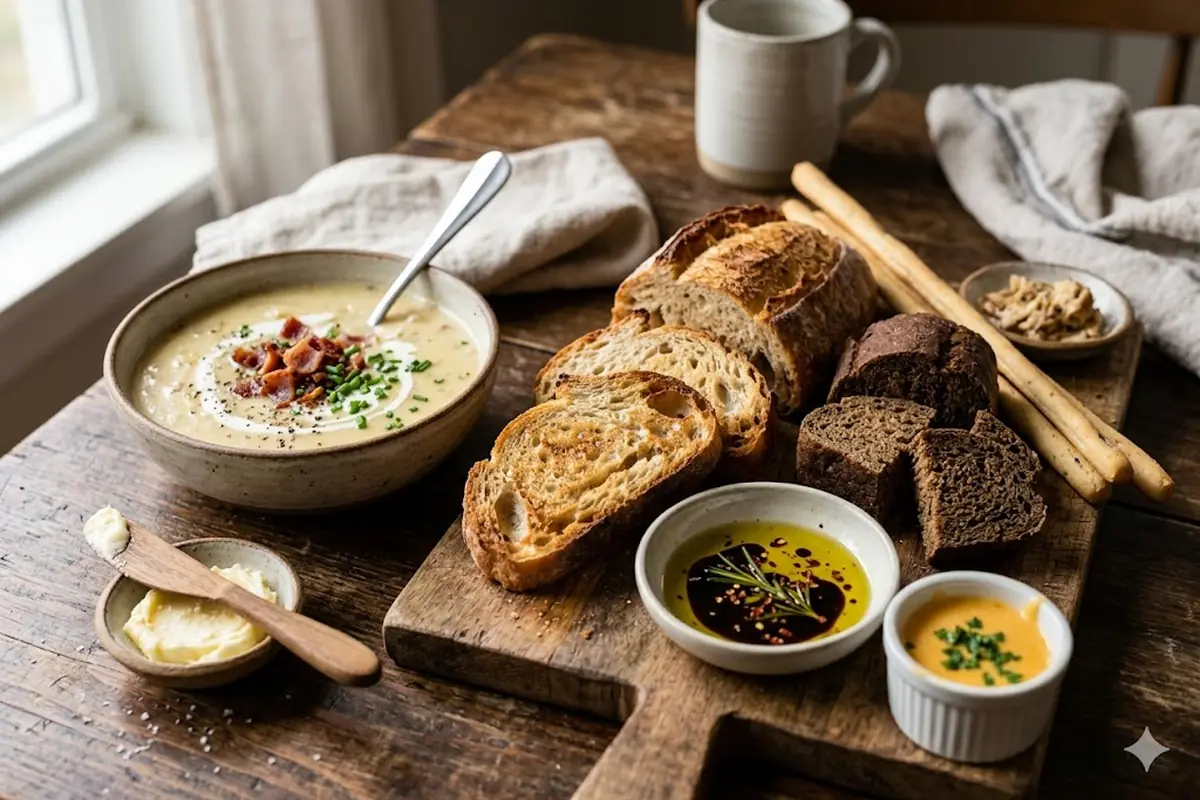
Bread is the default partner to soup for a reason: it adds chew and crunch, and it is built for dunking. But not all bread serves potato soup equally. A crusty baguette or a sturdy sourdough gives you a crisp exterior and a chewy crumb that holds up against the creamy soup instead of dissolving into it. Garlic bread brings butter and aromatics that play beautifully with the potatoes. A warm, soft dinner roll is comforting but adds little contrast, so treat it as a vehicle rather than a highlight.
For something more interesting, lean into texture. A crackly grilled cheese, cut into soldiers for dipping, gives you salt, crisp edges, and a molten center that makes the meal feel indulgent in the best way. Cornbread, with its slightly sweet, crumbly bite, is a classic with thicker, more rustic potato soups. The browning on toasted bread is no accident either; it comes from the Maillard reaction, the same flavor-building chemistry that makes a seared crust so savory.
Salads and greens: the brightness the soup needs
If you serve only one side with potato soup, make it a salad. Nothing resets the palate against all that richness like something fresh and acidic. The key is the dressing: a vinaigrette with real acidity, a squeeze of lemon, or a tangy mustard element cuts straight through the cream. A simple arugula salad with lemon and shaved parmesan is peppery and bright. A crisp romaine or kale salad with a sharp dressing gives you crunch and freshness in one move.
Avoid creamy dressings here, since a ranch or a heavy Caesar just doubles down on the richness you are trying to balance. Think light, green, and tart. Even a quick slaw of shredded cabbage and carrot with a vinegar dressing does the job, adding crunch and acidity at the same time.
Proteins and heartier additions
Potato soup is filling but light on protein, so if you want it to anchor a real dinner, add something with more substance. A few options work especially well. Crisp bacon, crumbled on top or served alongside, is the classic, adding salt, smoke, and crunch. A simple roasted chicken thigh or some shredded rotisserie chicken turns the soup into a complete plate. Ham, whether in a sandwich or diced into the soup itself, is a natural partner to potatoes.
Sandwiches deserve their own mention because soup and sandwich is a pairing for a reason. A ham and cheese, a turkey club, or a simple grilled cheese turns a bowl of soup into a satisfying, balanced lunch. Keep the sandwich on the lighter, crunchier side so it contrasts with the soup rather than competing with it.
Vegetables: contrast through caramelization
Roasted vegetables are an underused partner for potato soup, and they solve the texture problem directly. Where the soup is smooth and soft, roasted vegetables are caramelized, slightly crisp at the edges, and full of concentrated flavor from the browning. Broccoli, Brussels sprouts, carrots, or a tray of mixed vegetables roasted until their edges char add exactly the textural and flavor contrast a creamy bowl lacks. A quick batch of crisp air fryer vegetables is the fastest way to get that caramelized crunch on the table while the soup finishes. Their natural sweetness and crisp edges are the perfect foil for the soft, savory soup.
Raw vegetables work too, in a lighter way. A plate of crunchy crudite, or a simple tomato and cucumber salad, brings freshness and water-crisp texture that wakes up the palate between spoonfuls.
The reason roasting works so well is worth understanding, because it lets you apply the idea broadly. When vegetables roast at high heat, their surface moisture evaporates and their natural sugars concentrate and caramelize, producing sweet, browned edges and a tender interior. That combination of sweetness, crisp texture, and concentrated flavor is precisely what a smooth, mild potato soup is missing. Almost any sturdy vegetable benefits from the treatment: cauliflower florets turn nutty and golden, carrots go candy-sweet, green beans crisp at the tips, and a medley of whatever is in the crisper drawer becomes a colorful, flavor-packed side with almost no effort. Toss them with a little oil, salt, and perhaps a sprinkle of smoked paprika or garlic powder, spread them in a single layer so they brown rather than steam, and let the heat do the work.
Matching the side to the style of potato soup
Not all potato soup is the same, and the best side shifts a little depending on which version is in the pot. A loaded baked potato soup, thick with cheese, bacon, and sour cream, is already rich and indulgent, so it pairs best with something sharp and fresh to keep the meal from feeling overwhelming. A bright green salad or a tangy slaw is your friend here. A brothier, lighter potato soup, on the other hand, can handle a heartier side without tipping into too-much territory, so a substantial sandwich or a tray of roasted vegetables fits well.
A pureed, velvety potato soup with no chunks craves textural contrast above all else, which means crunch is the priority: croutons, crackers, crusty bread, or a crisp salad. A chunky, rustic potato soup with visible vegetables already has some texture, so you have more freedom to choose a side based on flavor rather than crunch. And a potato-leek or broccoli-potato blend, with its built-in vegetable note, pairs naturally with bread and a simple protein. Reading the soup before you choose the side is the mark of a cook who thinks about the whole plate.
Seasonality matters too. In the depth of winter, lean into warm, hearty sides like garlic bread and roasted root vegetables that make the meal feel like a hug. In early autumn or spring, when the soup is more of a comfort than a necessity, a lighter touch works better: a crisp salad, a handful of crudite, or a simple grilled cheese. Letting the season guide the supporting cast keeps the meal feeling appropriate rather than heavy-handed.
Easy sides you can make while the soup simmers
One of the practical joys of potato soup is that it mostly takes care of itself once it is simmering, which leaves your hands and your oven free to build a side. That window is exactly long enough to throw together something that improves the whole meal without adding stress. A tray of vegetables tossed in oil and roasted needs nothing but time in the oven. A green salad takes five minutes to assemble. Garlic bread can toast while you ladle the soup, and a grilled cheese comes together in the time it takes the bowls to cool enough to eat.
If you are cooking for guests, think about what can be prepped ahead. A salad can be washed and dried in advance, with the dressing added at the last minute so the greens stay crisp. Bread can be sliced and ready to toast. Toppings can be set out in small bowls so everyone serves themselves. The goal is a table that looks generous and considered without you spending the whole evening in the kitchen. Because the soup is forgiving and holds well on low heat, you have all the time you need to make the sides shine.
Drinks: rounding out the table
A beverage pairing is the finishing touch most people skip. The same contrast rule applies: you want acidity or effervescence to lighten each rich, starchy spoonful. A crisp, dry white wine like a Sauvignon Blanc or an unoaked Chardonnay cuts the cream nicely. A light lager or a crisp pilsner does the same with its carbonation and bitterness. If you are keeping it non-alcoholic, sparkling water with lemon, or a tart, unsweetened iced tea, refreshes the palate just as well. The goal is always the same: something light and bright to balance the weight of the bowl.
Building a full menu around potato soup
If you are serving potato soup as the centerpiece of a meal, think in terms of balance across the whole plate. Pair the soup with one crunchy element, such as bread or roasted vegetables, and one fresh, acidic element, such as a green salad. That combination covers every gap the soup leaves. Add a protein if you need the meal to be more substantial, and a bright drink to tie it together. For a casual gathering, a spread of small sides lets people build their own balance: a basket of crusty bread, a big green salad, a bowl of crisp gluten-free snacks and sides for anyone avoiding wheat, and the soup at the center with a tray of toppings.
Toppings, in fact, are a side dish in their own right. A spread of crisp bacon, sliced green onions, shredded sharp cheese, a swirl of sour cream, and crunchy croutons or fried shallots lets each person add their own contrast directly to the bowl. The crunch and salt of good toppings is often all a simple potato soup needs to feel complete. If you are still dialing in the soup itself, our recipe for a creamy broccoli potato soup gives you a sturdy, flavorful base worth building a menu around.
For a gathering, a build-your-own potato soup bar is one of the easiest crowd-pleasers there is. Set the pot on a warmer, line up small bowls of every topping you can think of, add a basket of bread and a big salad, and let guests assemble exactly the bowl they want. It turns a humble soup into an interactive meal, accommodates picky eaters and dietary needs without extra cooking, and means you can do almost all the work ahead of time. Few centerpiece dishes are this forgiving or this generous, which is part of why potato soup has earned its place as cold-weather comfort food.
What to skip
A few pairings work against potato soup, and they are worth naming. Another creamy, heavy dish, such as macaroni and cheese or a rich pasta, piles richness on richness and makes the meal feel like too much of one thing. A second starchy, beige food, like plain mashed potatoes or a heavy potato gratin, is redundant. Very delicate or watery sides, such as a plain steamed vegetable with no seasoning, get lost next to the assertive soup. Aim for contrast, not echo, and the plate stays interesting from the first bite to the last. The same balance logic applies to nearly any creamy bowl, which is why the pairing ideas in our guide to what to serve with chicken noodle soup translate so easily.
The bottom line on pairing potato soup
Potato soup is rich, smooth, and starchy, so the best sides give it what it does not have: crunch, acidity, and freshness. A crusty bread or a tray of caramelized roasted vegetables adds the texture the soup lacks. A bright, acidic green salad cuts the richness and resets your palate. A protein makes it a full meal, and a crisp drink ties everything together. Build your plate around contrast rather than piling on more of the same, and a simple bowl of potato soup becomes a meal worth lingering over. Keep that single principle in mind, and you will always know exactly what to put next to the pot.
Frequently Asked Questions
What is the best bread to serve with potato soup?
A crusty, sturdy bread works best because it holds up to dunking without dissolving. A baguette, sourdough, or garlic bread gives you a crisp exterior and chewy crumb that contrasts with the creamy soup. Grilled cheese cut into strips is another excellent choice, adding salt and crisp edges. Soft dinner rolls are fine but add less contrast, so treat them as a vehicle rather than the highlight.
What salad goes with potato soup?
A salad with an acidic, vinegar-based or lemon dressing is ideal because it cuts through the soup’s richness. Arugula with lemon and parmesan, a crisp romaine, or a kale salad with a sharp dressing all work beautifully. Avoid creamy dressings like ranch or heavy Caesar, since they only add to the richness you are trying to balance.
How do I turn potato soup into a full dinner?
Add a protein and a contrasting side. Crisp bacon, shredded chicken, or a ham sandwich gives the meal more substance, while a green salad or roasted vegetables add the brightness and crunch the soup lacks. A simple formula is soup plus one crunchy side plus one fresh, acidic side, which covers every textural gap and makes the meal feel complete.
What drink pairs well with potato soup?
Choose something with acidity or carbonation to lighten the rich, starchy soup. A crisp dry white wine such as Sauvignon Blanc, a light lager, or a crisp pilsner all work well. For a non-alcoholic option, sparkling water with lemon or an unsweetened iced tea refreshes the palate between spoonfuls. The goal is always to balance the weight of the bowl with something bright.