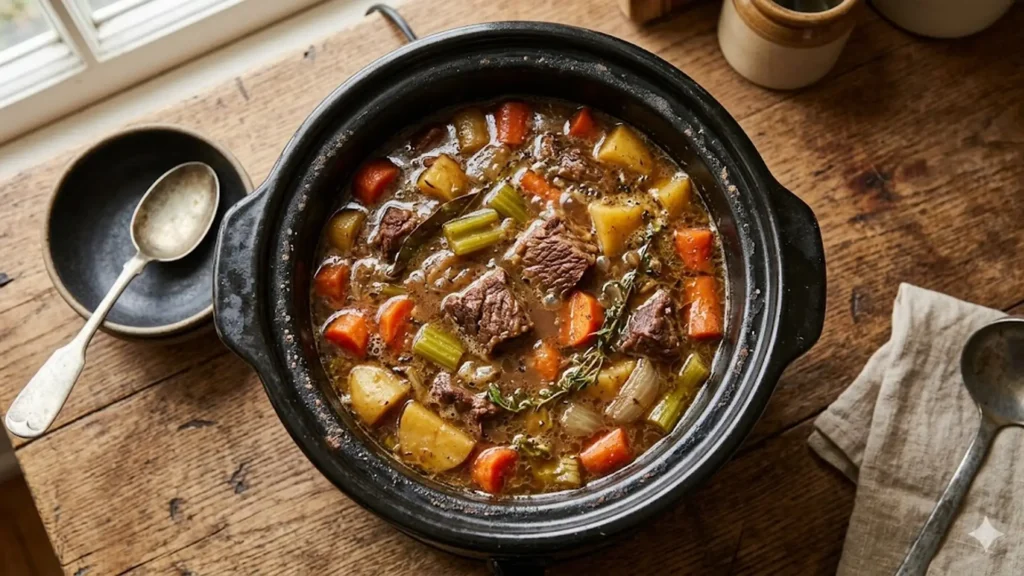
How to make beef stew in crock pot the right way comes down to a few choices that most recipes gloss over: sear the beef before it goes in, use a fatty cut like chuck, cut the vegetables big, keep the liquid modest, and cook it long and low so the meat turns fork-tender. Do that and you get a deep, rich stew with thick gravy and meat that falls apart, all from a pot you fill in the morning and forget until dinner. The crock pot does the slow, patient work that makes tough beef tender, but it cannot brown meat or boil off excess water, so a couple of stovetop steps at the start make all the difference between a watery, pale stew and a restaurant-deep one. This guide gives you the full method, the exact cook times for low and high, how to thicken the gravy properly, the right vegetables and when to add them, and how to fix a stew that turns out thin or bland. By the end you will have a reliable cold-weather dinner you can make on autopilot.
This is the kind of meal a slow cooker was made for, and once you have the method down you will never need a recipe card. Here it is, in US measurements.
The Method at a Glance
Toss about 2 pounds of cubed chuck in flour, sear it hard in a skillet, and pile it into the crock pot. Soften an onion in the same pan, stir in tomato paste, deglaze with a splash of wine or broth, and scrape that into the pot. Add big chunks of carrot and potato, about 3 cups of beef broth, Worcestershire, herbs, and a couple of bay leaves. Cook on low for 8 to 10 hours, stir in any quick vegetables and a cornstarch slurry near the end if you want it thicker, and serve. Everything below explains why each step matters.
Step 1: Pick the Right Beef and Sear It
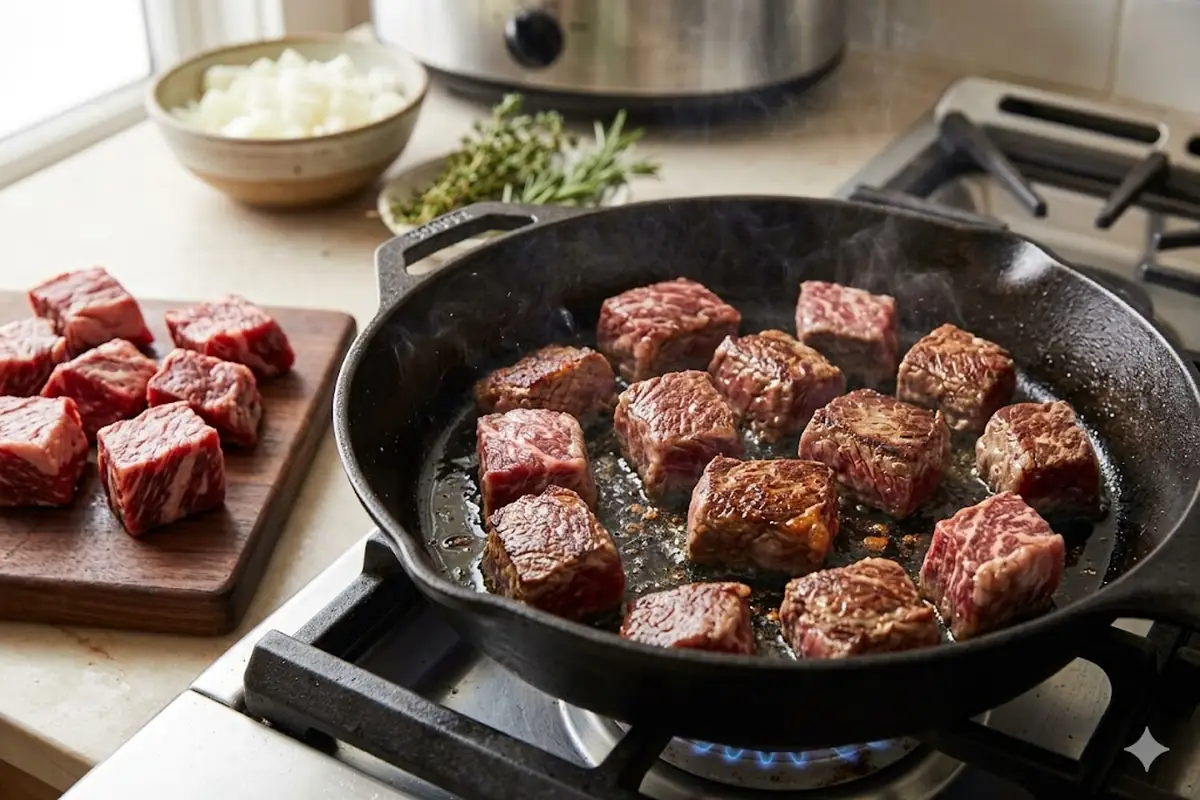
Chuck roast is the cut for crock pot beef stew, full stop. It is well-marbled and loaded with connective tissue, and the long, low cook is exactly what breaks that tissue down into tender, gelatin-rich meat. The toughness that makes chuck cheap is the same toughness that makes it perfect here. Avoid lean cuts labeled extra-lean or sirloin, which dry out and stay stringy over a long cook. Pre-cut stew meat works if it looks well-marbled, but buying a whole chuck roast and cubing it yourself usually gives better, more uniform pieces. For the deeper comparison of how different cuts behave, our guide on pot roast vs beef stew is worth a read.
Why searing is not optional
Here is the step most people skip because it adds a pan to wash, and it is the single biggest upgrade you can make. Pat the cubes dry, toss them in a couple of tablespoons of flour seasoned with salt and pepper, and sear them in batches in a hot skillet with oil until deeply browned on all sides. The crock pot cooks with gentle, moist heat, so it can never brown the meat itself. Browning builds the savory, roasted flavor that gives stew its depth, and the flour coating both helps the crust form and thickens the gravy later. Do not crowd the pan, or the meat steams instead of searing. Five extra minutes here is the difference between a flat stew and a rich one. The test kitchen at America’s Test Kitchen makes the same case: a hard sear in an uncrowded pan is the foundation of a deeply flavored braise.
Step 2: Build a Base in the Same Pan
Do not wash that skillet yet. Lower the heat, add a diced onion, and cook it in the browned drippings until soft. Stir in a tablespoon or two of tomato paste and let it darken for a couple of minutes, which adds umami and color. Then deglaze: pour in half a cup of red wine or beef broth and scrape up every browned bit stuck to the pan. That fond is concentrated flavor, and pouring it into the crock pot carries all of it into your stew. This deglazing step, borrowed straight from classic French braising, is what makes a slow cooker stew taste like it was made on the stove all day. Food publications like Bon Appetit lean on the same deglazing move to capture the fond at the base of their braises.
Step 3: Load the Crock Pot
Now everything goes in. Add the seared beef, the onion-and-deglazing mixture, big chunks of carrot and potato, beef broth, a splash of Worcestershire sauce, a couple of bay leaves, and a teaspoon of thyme. Two points matter here.
Cut the vegetables big
Cut potatoes and carrots into large, two-inch chunks. Over an 8 to 10 hour cook, small pieces dissolve into the gravy and disappear, while big chunks hold their shape and stay distinct. Yukon Gold potatoes are the best choice because they hold together better than russets, which can turn grainy and fall apart over a long cook. This is the opposite of what you do for a quick soup, where smaller pieces cook faster, so it catches a lot of people out.
Go easy on the liquid
A crock pot does not let liquid evaporate the way a stovetop pot does, and the vegetables and meat release their own juices as they cook. That means you need less broth than you think, usually around 3 cups for a 2-pound batch, just enough to come most of the way up the ingredients rather than fully covering them. Add too much and you end up with beef soup instead of stew. If anything, start on the low side; you can always loosen a thick stew with extra broth at the end, but you cannot easily fix a watery one.
Step 4: Cook Low and Slow
Cover and cook. The single best result comes from low and long.
| Setting | Time | Result |
|---|---|---|
| Low | 8 to 10 hours | Best: meltingly tender beef, deep flavor |
| High | 4 to 5 hours | Good in a pinch, slightly less tender |
Low and slow gives the connective tissue in the chuck the most time to melt, which is what makes the meat fall-apart tender. High works when you are short on time, but the texture is never quite as good. Resist the urge to lift the lid to peek, since each time you do you lose heat and add roughly 20 minutes to the cook. Trust the pot. The same patient, hours-long simmer is what gives any great slow-cooked dish its body, the way a Cajun gumbo deepens over a long, gentle cook.
Step 5: Thicken the Gravy
A proper beef stew has a thick, glossy gravy, not a thin broth. You have already given it a head start with the flour-coated beef, but here are the ways to take it further, all done in the last 30 minutes.
- Cornstarch slurry. The fastest fix. Whisk 2 tablespoons of cornstarch into 1/4 cup of cold water, stir it into the stew, and cook on high for the last 20 to 30 minutes until it thickens. Always mix with cold water first, or you get lumps.
- Flour slurry or beurre manie. Mash equal parts soft butter and flour into a paste and stir it in, or whisk flour into a little cold water. Cook until the floury taste disappears.
- Mash some potato. Press a few of the cooked potato chunks against the side and stir them back in for a natural thickener with no extra ingredient.
- Reduce on the stove. If your crock pot has a saute function or you do not mind transferring, simmer it uncovered for a few minutes to concentrate.
For the full rundown of every method and which suits which dish, see our guide on how to thicken soup and stew. The cornstarch slurry is the go-to for a quick, glossy finish.
When to add the quick vegetables
Frozen peas, corn, or other delicate vegetables should go in only for the last 15 to 30 minutes, just long enough to heat through. Add them at the start and they turn gray and mushy over the long cook. Frozen peas in particular stay bright and sweet when stirred in right at the end.
Flavor Boosters and Variations
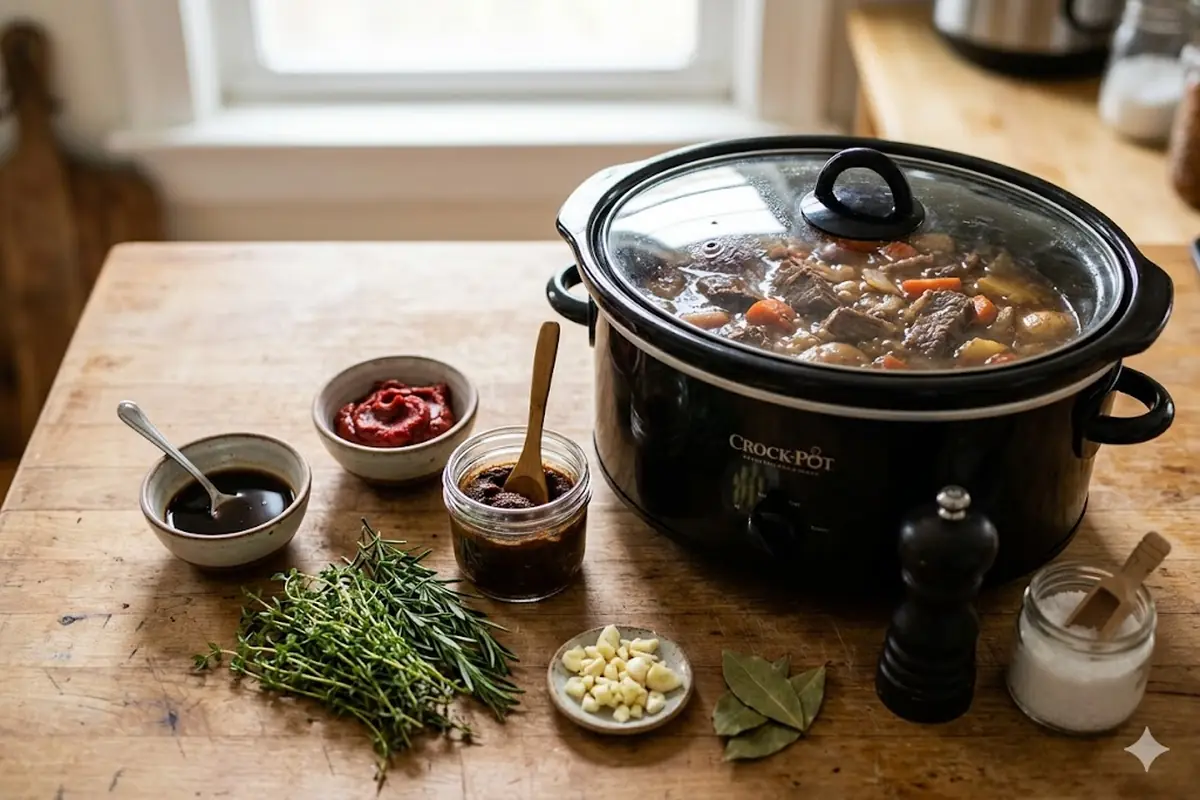
The basic stew is hard to beat, but a few additions turn it into something a little different. For depth, a Parmesan rind dropped in at the start melts into the gravy and adds savory richness, while a tablespoon of soy sauce or fish sauce deepens the meatiness without tasting like itself. A finishing trick borrowed from French kitchens is to stir a couple of tablespoons of cold butter into the stew right before serving, which gives the gravy a glossy, velvety sheen. For variations, a handful of seared mushrooms stirred in toward the end brings an earthy note that suits beef beautifully, and a cup of red wine in place of some of the broth makes a richer, more grown-up stew. You can lean Italian by adding diced tomatoes and Italian seasoning, or take it toward a hearty Irish style with a splash of stout and extra root vegetables like parsnip and turnip. Pearl onions, added whole, are a classic touch that holds its shape and looks lovely in the finished pot. None of these are required, but each one is an easy way to make the same reliable base feel new.
What to Serve With Crock Pot Beef Stew
Beef stew is a complete meal on its own, but the right side turns it into a feast. The classic pairing is something to soak up the gravy: crusty bread and butter, a pile of buttery mashed potatoes, or warm dinner rolls all do the job. Egg noodles or rice make a good base if you prefer the stew spooned over a starch rather than alongside it. For something lighter to balance the richness, a simple green salad with a sharp vinaigrette cuts through the heaviness, and roasted Brussels sprouts or green beans add a fresh, crisp contrast. A glass of the same red wine you cooked with rounds out the meal. Because the stew already carries plenty of vegetables and protein, you do not need much, just one good vehicle for that thick gravy and maybe something green on the side. It is the kind of meal that makes a cold evening feel like an event without any extra effort on your part.
How to Fix Common Crock Pot Stew Problems
- Stew is watery. You used too much liquid or skipped thickening. Stir in a cornstarch slurry and cook on high for 30 minutes, or mash some of the potatoes into the gravy.
- Stew tastes bland. Slow cookers dull flavors over a long cook, so taste and add salt at the end, plus a splash of Worcestershire, soy sauce, or a little vinegar to brighten it. Searing the beef and browning the tomato paste prevent most blandness in the first place.
- Beef is tough or chewy. It needs more time, not less. Chuck becomes tender only after the connective tissue melts, so give it another hour on low. Lean cuts will stay tough no matter what, which is why chuck is the right choice.
- Vegetables disappeared into the gravy. They were cut too small. Use big two-inch chunks and Yukon Gold potatoes next time.
- Gravy is too thick. Loosen it with a splash of warm broth and adjust the salt.
Make-Ahead, Storage, and Freezing
Crock pot beef stew is ideal for making ahead, and like most stews it tastes even better the next day once the flavors have settled. It keeps for four to five days in the fridge in a sealed container. It also freezes well for up to three months; the only weak spot is the potatoes, which can turn slightly grainy after freezing, so either accept that or leave them slightly undercooked if you plan to freeze the batch. To get a head start, you can sear the beef and chop the vegetables the night before, store them in the fridge, and dump everything into the crock pot in the morning. Reheat gently on the stove and loosen with a little broth if the gravy has thickened in the cold. A hearty bowl over mashed potatoes or with crusty bread fits right into a rotation of cozy gluten-free dinners when you use a cornstarch slurry to thicken instead of flour.
Frequently Asked Questions
Do I have to brown the beef before putting it in the crock pot?
You do not have to, but you should. The crock pot cooks with gentle, moist heat and cannot brown meat, so searing the beef in a hot skillet first builds the deep, roasted flavor that gives stew its richness. Skipping it leaves the stew pale and flat. Tossing the beef in flour before searing also helps thicken the gravy later, so the extra few minutes pay off twice.
How long does beef stew take in a crock pot?
For the best result, cook it on low for 8 to 10 hours, which gives the connective tissue in the chuck time to melt into tender meat. If you are short on time, high for 4 to 5 hours works but the meat is slightly less tender. Avoid lifting the lid, since each peek lets out heat and adds about 20 minutes to the cook.
What is the best cut of beef for crock pot stew?
Chuck roast cut into cubes is the best choice because it is well-marbled and full of connective tissue that breaks down into tender, gelatin-rich meat over a long, slow cook. Its toughness is exactly what makes it ideal here. Avoid lean cuts like sirloin or anything labeled extra-lean, which dry out and stay stringy in a stew.
Why is my crock pot beef stew watery?
Crock pots do not let liquid evaporate, and the meat and vegetables release their own juices, so it is easy to add too much broth. Use only about 3 cups for a 2-pound batch, just enough to come partway up the ingredients. To fix a watery stew, stir in a cornstarch slurry and cook on high for 30 minutes, or mash some of the cooked potatoes into the gravy.
How do I thicken beef stew in a crock pot?
The easiest way is a cornstarch slurry: whisk 2 tablespoons of cornstarch into 1/4 cup of cold water, stir it in, and cook on high for the last 20 to 30 minutes. You can also coat the beef in flour before searing, mash some cooked potatoes into the gravy, or stir in a butter-and-flour paste. Always mix starch with cold liquid first to avoid lumps.
Can I put raw beef and vegetables straight into the crock pot?
You can, and it will cook safely, but the stew will taste noticeably flatter and the gravy thinner. Searing the beef and softening the onion first builds far more flavor and gives the gravy body. If you are truly pressed for time, at least brown the beef, since that step matters most. Cutting vegetables into large chunks also helps them survive the long cook.
Bottom Line
Making beef stew in a crock pot is mostly about giving the machine the right start and then leaving it alone. Sear a well-marbled chuck for flavor, build a quick base with onion and tomato paste, deglaze the pan into the pot, cut your vegetables big, and keep the liquid modest so you end up with stew rather than soup. Cook it low and slow for 8 to 10 hours, thicken the gravy with a cornstarch slurry near the end, and finish with salt and a splash of something savory to brighten it. Do that and you will pull the lid off a deep, glossy, fall-apart-tender stew that tastes like it took all day, because in a sense it did, just without you standing over it.