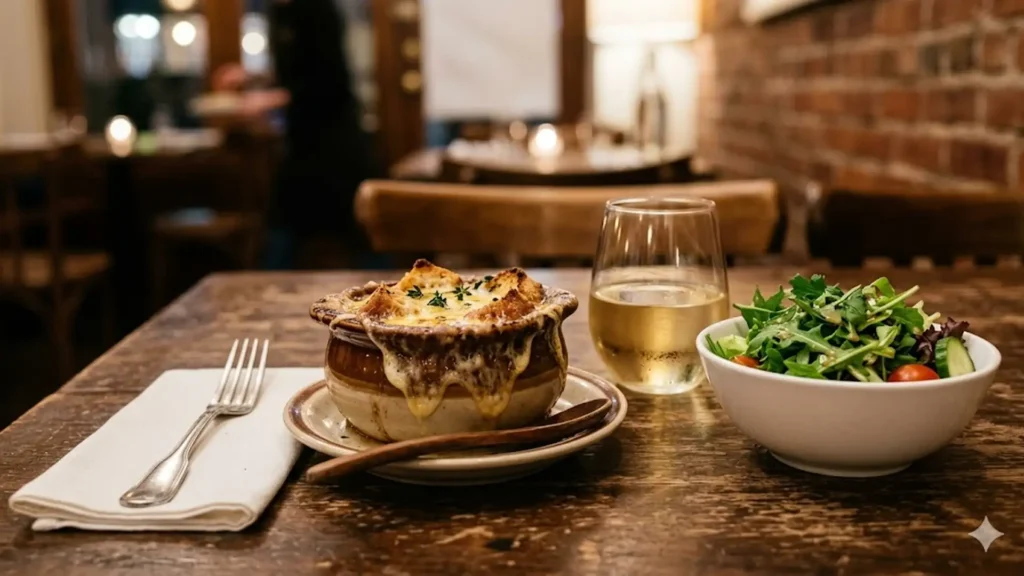
I have made enough French onion soup over the years to know that the question I get most often is not how to caramelize the onions or which cheese melts best. It is this: once the bowl is bubbling under its blanket of toasted bread and Gruyere, what do you actually put next to it? A bowl of French onion soup is rich, deeply savory, and quietly heavy. It carries a lot of salt, a lot of fat from the cheese, and a slow, sweet depth from onions cooked down for the better part of an hour. Serve it alone and it can feel like too much of one note. Serve it with the right companion and it becomes the centerpiece of a meal that feels balanced and complete.
This guide is about that decision. I am going to walk you through what to have with French onion soup whether you are treating it as a starter, building a cozy dinner around it, or feeding a table of guests. I will explain not just the dishes but the reasoning behind them, because once you understand why a crisp salad or a glass of dry white works against that caramelized broth, you can build your own pairings with confidence. Everything here comes from cooking this soup in my own kitchen, tasting it next to dozens of sides, and noticing what actually made each spoonful better.
Start by understanding the soup you are pairing
Before you choose anything to set beside it, it helps to be honest about what French onion soup is on the plate. It is, traditionally, a starter. The classic version that took shape in the Les Halles market district of Paris in the mid-nineteenth century was a restorative opener, not a main course. You can read the full background of the dish on its Wikipedia entry, which notes it is generally classified as an entree, meaning a first course. That single fact shapes most of the pairing decisions in this guide.
Flavor-wise, the soup hits three strong notes at once. There is sweetness from onions cooked low and slow until they turn mahogany. There is a savory, almost meaty depth from the beef stock that usually forms the base. And there is salt and fat from the cheese, most often Gruyere, a Swiss cheese prized for the way it melts into a stretchy, nutty crown. If you want to understand why Gruyere is the default choice, its profile as a melting cheese says it all: creamy and nutty when young, more assertive and earthy as it ages. That richness is exactly why French onion soup begs for a companion that brings contrast rather than more of the same.
So the whole strategy comes down to one idea. You are looking for something that does the opposite of what the soup already does well. The soup is rich, so you want something fresh. The soup is salty and soft, so you want something bright and with a little crunch. The soup is one deep brown color, so you want something green or vivid on the plate. Keep that in mind and the choices almost make themselves.
The five roles a good pairing can play
When I plan a meal around this soup, I think in terms of roles rather than specific recipes. Each role solves a different problem the soup creates. You do not need all five at one meal. Pick one or two depending on how big you want the spread to be.
| Pairing role | What it does for the soup | Best picks |
|---|---|---|
| Crisp acidic salad | Cuts the rich, salty broth and resets the palate | Frisee with mustard vinaigrette, arugula and lemon, endive |
| Light protein main | Turns the soup into a starter without competing | Roast chicken, seared pork chop, herb-roasted salmon |
| Extra bread or carb | Soaks up broth and stretches the meal | Crusty baguette, gruyere toast, simple buttered noodles |
| A cooked green vegetable | Adds freshness and color against the brown soup | Sauteed spinach, roasted Brussels sprouts, green beans |
| Wine or drink | Echoes the caramelized onion and melted cheese | Dry white (Pinot Gris), light red (Beaujolais), dry cider |
Notice that almost every role is about contrast or about stretching the meal. The acidic salad and the cooked green fight the richness. The light protein gives the meal substance without crowding the soup off the table. The extra bread leans into one of the soup’s best features, that broth you want to keep mopping up. And the drink ties the flavors together. If you only do one thing, make it the salad. A sharp, vinegary salad does more for a bowl of French onion soup than any other single addition.
Salads and fresh sides: the most important pairing
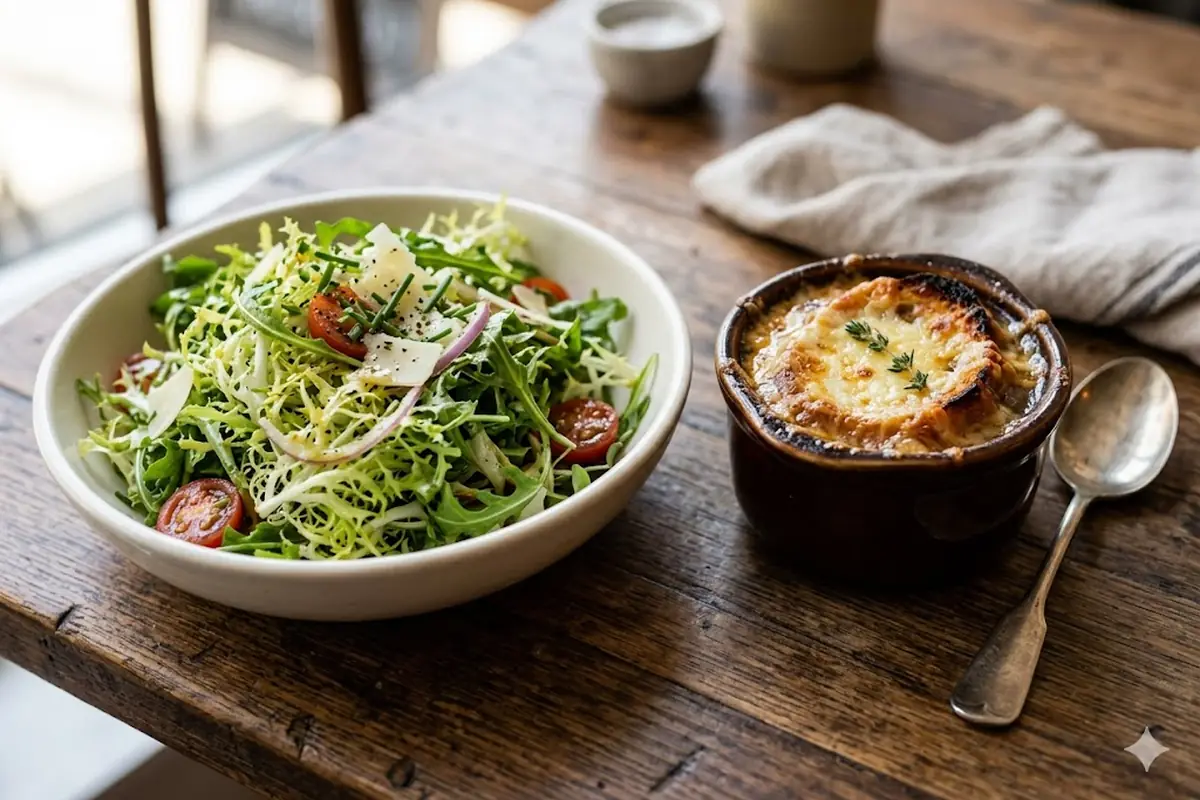
If you take one thing from this guide, let it be this: a crisp, acidic salad is the single best partner for French onion soup. The reason is simple chemistry of taste. The soup floods your palate with salt, fat, and sweetness, and after a few spoonfuls those flavors start to feel flat because nothing is resetting them. Acid does the resetting. A vinaigrette built on lemon, sherry vinegar, or red wine vinegar slices through the cheese and broth and makes the next spoonful taste as good as the first.
The most traditional choice is a frisee salad with a mustard vinaigrette, sometimes dressed up into a salade Lyonnaise with a poached egg and a few lardons. The slight bitterness of frisee or curly endive is not a flaw here, it is the point. Bitter greens stand up to the sweet onion and keep the meal from tipping into one-dimensional comfort. If you cannot find frisee, arugula tossed with lemon and good olive oil does the same job, as does a handful of radicchio or escarole. A simple spinach salad with a sharp dressing works too, especially for a weeknight.
For cooked vegetable sides, I lean on greens that bring their own slight bitterness or earthiness. Sauteed spinach with garlic, roasted Brussels sprouts with a squeeze of lemon, or green beans blanched and tossed in butter all add color and freshness against the brown soup. Roasted asparagus is lovely in spring. The trick is to keep these vegetables on the lighter, brighter side rather than coating them in another rich sauce. The plate already has enough richness in the bowl.
Bread beyond the crouton
French onion soup already comes with bread baked right into it, that slice of toasted baguette under the cheese. So why add more? Because the broth is the best part and a single crouton never feels like enough. Putting extra crusty bread on the table, a torn baguette or a few slices of sourdough, gives everyone something to drag through the bowl once the cheese is gone. It is the most natural extension of the dish there is.
If you want to push the bread a little further, a small wedge of Gruyere toast on the side, basically the soup’s cheese topping served on its own, is a crowd favorite. So is a simple grilled cheese cut into soldiers for dipping, which leans into the cheese-and-broth pleasure that makes the soup so satisfying in the first place. For a heartier table, a pull-apart cheese bread or a warm baguette with herbed butter rounds things out. Just remember that bread is filling, so if you are also serving a protein main, keep the bread modest.
Turning the soup into a starter for a bigger meal
Because French onion soup is so rich, it shines as the opening act of a meal rather than the headliner. When I serve it this way, I keep the soup portion smaller, a half-size crock rather than a brimming bowl, so it warms everyone up without filling them. Then the main course can be something with real substance.
The classic move is to follow the soup with a French bistro main. A seared steak, a pork chop, or beef braised in red wine all echo the savory, slightly sweet character of the soup without copying it. If you want something lighter, roast chicken or a simply roasted pork tenderloin works beautifully, and so does herb-roasted salmon for a leaner table. The key is to avoid mains that are themselves heavy with cheese or cream, because the soup has already claimed that territory. A clean-tasting roast, a piece of fish, or a steak with nothing more than salt and pepper gives the meal somewhere fresh to go.
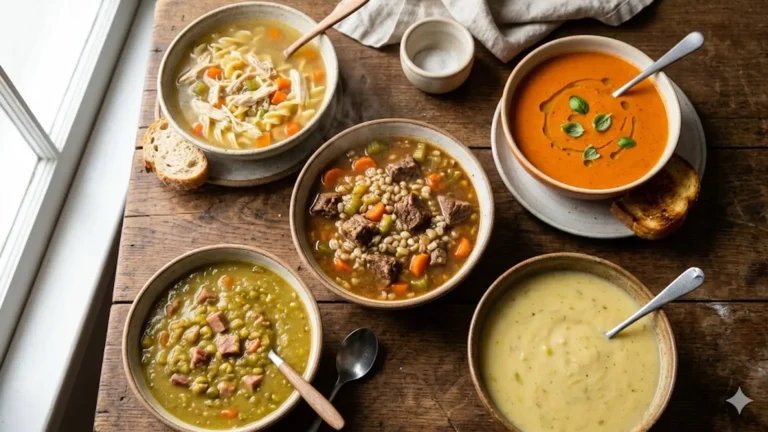
One thing I always avoid: serving French onion soup before another onion-heavy or deeply caramelized dish. If your main is a French onion something or a heavily glazed roast, the meal starts to feel repetitive. Let the soup own the caramelized-onion lane and point the main course in a different direction. If you are leaning toward a comforting main, a clean roast pairs nicely, and you can borrow plating ideas from a good chicken soup spread where the soup leads and a simple protein follows.
Building a complete menu, course by course

Once you decide whether the soup is a starter or the star, the rest of the menu falls into place. Below are four menus I actually cook, scaled to different moods and amounts of effort. Use them as templates and swap pieces in and out based on what you have.
| Menu style | Starter / soup serving | Main | Side | Finish |
|---|---|---|---|---|
| Light weeknight dinner | Small crock, half portion | Roast chicken thigh | Arugula salad | Fresh fruit |
| Bistro date night | Full gratineed bowl | Seared steak or pork chop | Frisee salad | Dark chocolate dessert |
| Cozy vegetarian | Full bowl with extra cheese | Mushroom tart or savory galette | Roasted Brussels sprouts | Apple crisp |
| Soup-forward supper | Two bowls per person | None (soup is the star) | Big green salad + baguette | Cookies |
The soup-forward supper is worth a special mention because it is how I eat this soup most often at home. When French onion soup is the main event, you serve a generous portion, two ladles or a deep bowl per person, and you let the supporting cast stay simple: a big green salad, plenty of warm baguette, and maybe a small sweet to finish. There is no shame in making the soup the whole point. It is filling, it is satisfying, and a hearty beef stew is one of the few other one-bowl meals that can carry a dinner the same way.
What to drink with French onion soup
Wine is where a lot of pairing guides go quiet, which is a shame because the drink matters as much as any side. The soup’s combination of sweet onion, savory broth, and salty cheese opens the door to both white and red wine, as long as you keep it on the dry, food-friendly side.
For white, a dry Pinot Gris or an unoaked Chardonnay has enough body to stand up to the cheese while staying crisp enough to refresh. An Alsatian white is a natural match given the soup’s French roots. For red, you want something medium-bodied and not too tannic, because heavy tannins clash with the salt. A Pinot Noir or a young, fruity Beaujolais is ideal, and a Cotes du Rhone works if you like a little more structure. If you would rather skip wine, a dry hard cider is a wonderful choice, its apple acidity doing the same palate-cleansing work as a vinaigrette. Sparkling water with lemon does the trick for anyone not drinking.
The principle behind all of this is the same one that governs the food: contrast and acidity. You want the drink to cut through the richness, not pile on. That is why a big, oaky, high-alcohol red is usually a poor match, while a bright, lighter pour makes every spoonful sing.
Dessert and how to finish
A meal built on French onion soup wants a finish that is sweet but not heavy, because the savory richness has already done a lot of work. Fresh fruit, a fruit-forward tart, or an apple crisp are all gentle landings. If you want something more indulgent, dark chocolate is a surprisingly good match: the bitterness and slight salt of a good dark chocolate dessert play off the soup’s savory depth rather than fighting it. A plate of simple cookies alongside coffee is my low-effort default. For a bake-ahead sweet that travels well from oven to table, a batch of chocolate chip cookies ends the meal without any fuss.
Adapting for vegetarian, lighter, and make-ahead tables
Most pairing guides assume a steakhouse table, but plenty of people serving French onion soup want a meatless or lighter spread. The good news is that the soup pairs just as happily with vegetable-forward companions. For a vegetarian dinner, follow the soup with a mushroom tart, a savory galette, or a baked stuffed portobello, all of which bring an earthy, satisfying quality that matches the broth. Roasted vegetables and a grain salad make an easy meatless plate. Do note that the classic soup is usually built on beef stock, so a truly vegetarian version needs a rich vegetable or mushroom stock as its base.
If you are watching how heavy the meal feels, lean hard on the salad-and-greens side of this guide and keep portions of bread and cheese in check. A half portion of soup, a generous bitter-green salad, and a piece of grilled chicken or fish is a genuinely light dinner that still feels like a treat. And for entertaining, remember that many of these companions are make-ahead friendly. Salads can be prepped and dressed at the last minute, roasted vegetables hold well in a low oven, and a pasta side like a simple buttered noodle or a quick weeknight easy pasta can be ready in the time it takes the soup to come up to a bubble. Coordinate by starting the soup first, since it reheats beautifully, then timing the quicker sides to finish just before you serve.
A few mistakes to avoid
After serving this soup more times than I can count, the same missteps keep coming up. The first is doubling down on richness. It is tempting to pair a creamy, cheesy soup with a creamy, cheesy main, but two heavy dishes in a row dull the palate fast. Let at least one element on the table be bright and sharp. The second is forgetting acid entirely. A meal of French onion soup and plain bread, with nothing acidic anywhere, feels flat by the second course. The third is over-serving the soup itself. A full gratineed bowl is filling on its own, so if you want guests to enjoy a main course afterward, size the soup down. Get those three things right and almost any sensible side will work.
Frequently asked questions
Is French onion soup a meal or a starter?
Traditionally it is a starter, served as the opening course before a main. That said, a full gratineed bowl with extra bread and a green salad is filling enough to be a complete light meal on its own. Decide which role it is playing before you plan the rest of the table: as a starter, keep the portion small and follow it with a substantial main; as a meal, serve a generous bowl and keep the sides simple and fresh.
What main course goes best with French onion soup?
The best mains are savory but not heavy with cheese or cream, since the soup already covers that. A seared steak, a pork chop, roast chicken, or herb-roasted salmon all pair well. For a vegetarian table, a mushroom tart or savory galette gives the same earthy satisfaction. Avoid mains that repeat the soup’s caramelized-onion or cheesy character, which makes the meal feel one-note.
What salad should I serve with French onion soup?
Choose a crisp salad with an acidic dressing, because the acid cuts the rich, salty soup and resets your palate between spoonfuls. Frisee with a mustard vinaigrette is the classic choice, but arugula with lemon, an endive salad, or a sharp spinach salad all work. A little bitterness in the greens is a bonus, since it balances the sweet caramelized onion.
What wine pairs with French onion soup?
Stick to dry, medium-bodied wines that refresh rather than overwhelm. A dry Pinot Gris or unoaked Chardonnay works for white, while a Pinot Noir or a light Beaujolais is ideal for red. Avoid big, tannic, oaky reds, which clash with the salt. A dry hard cider is an excellent non-wine option, its acidity doing the same palate-cleansing work as a good vinaigrette.