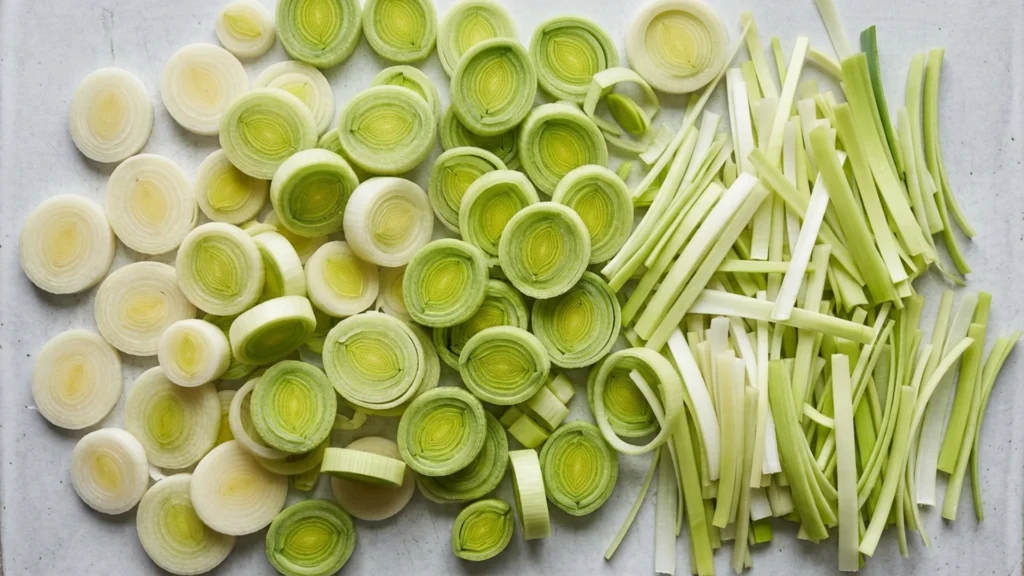
How to cut leeks for soup depends on the soup you are making, but the method is always the same three moves: trim the root and the toughest dark green tops, slice the leek so its hidden grit is exposed, and wash the cut pieces in a bowl of water before they go anywhere near the pot. Leeks grow with soil packed between their tightly wrapped layers, so a leek that looks spotless on the outside can be full of grit on the inside, and the only reliable way to clean it is to cut it first and rinse the pieces. Get the cut right for your soup, whether that is delicate half-moons for a brothy pot or rough chunks for something you plan to blend, and you set up the whole dish for a clean, sweet, oniony backbone instead of a sandy one.
This guide walks through which parts of the leek to use, the exact cuts for different kinds of soup, the reliable way to wash out the dirt, what to do with the green tops, and the mistakes that leave grit in the bowl.
Which Part of the Leek to Use
A leek has three zones, and knowing them tells you where to cut. At the bottom is the white root end, firm and mild and the most prized part for cooking. Above that the stalk fades from white into pale, light green, which is still tender and sweet and perfectly good in soup. At the top the leaves turn dark green, and those leaves are tough and fibrous, too chewy to enjoy in most soups even after a long simmer. So the working rule is simple: use the white and light green, and trim off the dark green tops and the hairy root.
Soup, though, gives you a little more latitude than a quick saute. Because soup cooks long and wet, you can keep an extra inch or two of the paler dark green right where it meets the light green, and it will soften enough to eat while adding a deeper, more savory note. For a pureed soup that gets blended smooth, you can be even more generous, since the blender erases any toughness. Save the truly dark, leathery tops for stock rather than the pot itself, which is covered further down.
The Two Basic Cuts: Half-Moons and Coins
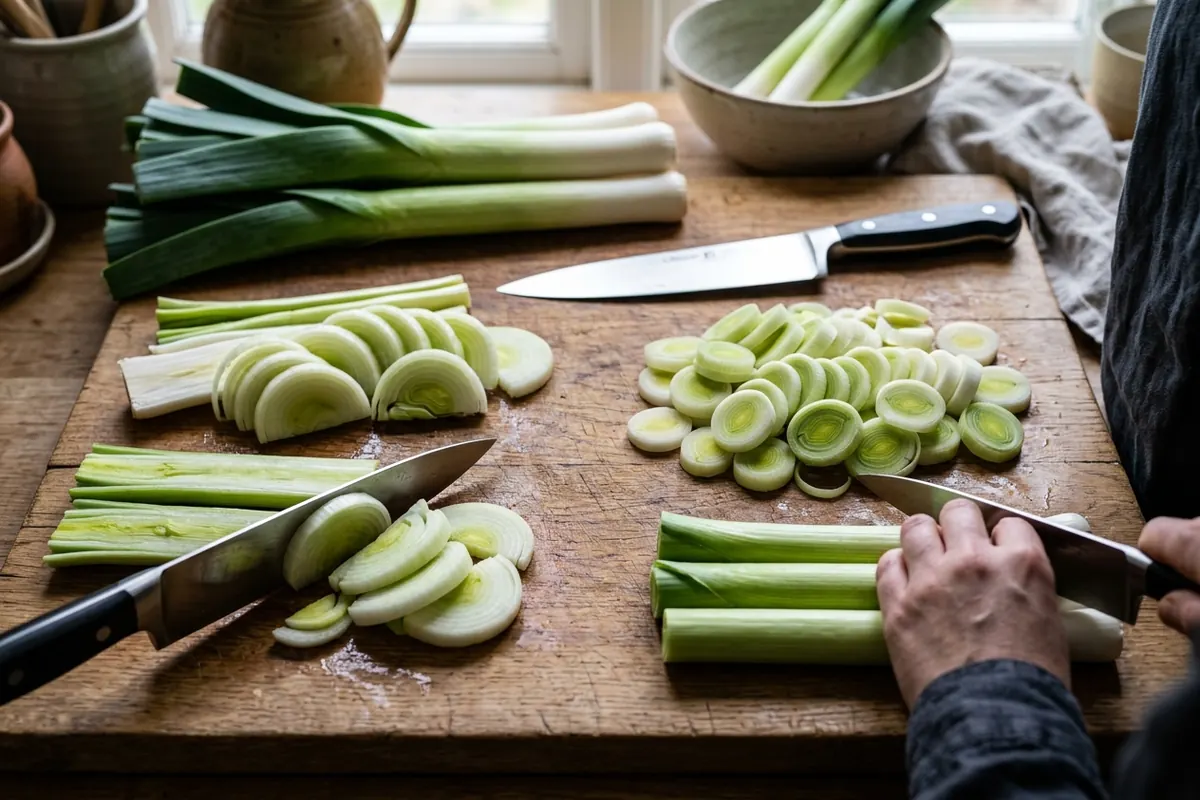
Almost every soup calls for one of two cuts, and both start the same way. Trim the root and the dark tops, then decide based on how you want the leek to show up in the finished bowl.
For half-moons, slice the leek in half lengthwise from top to bottom, lay each half cut-side down so it sits flat and stable, then slice across into thin half-circles. This is the everyday soup cut. The lengthwise split also opens the layers, which is exactly what makes the leek easy to clean. For coins, or full rounds, skip the lengthwise cut and simply slice the whole leek crosswise into thin rings. Coins look tidy and uniform, but because the layers stay closed, they trap grit and are harder to rinse clean, so most soup cooks prefer half-moons. Whichever you choose, aim for thin slices, around an eighth to a quarter inch, so the leek softens quickly and melts into the base.
| Cut | How | Best for |
|---|---|---|
| Half-moons | Halve lengthwise, then slice across | Most soups; easiest to clean |
| Coins (rounds) | Slice the whole leek crosswise | Clear broths where looks matter |
| Rough chunks | Halve and cut into 1 inch lengths | Pureed and blended soups |
Matching the Cut to the Soup
The right cut changes with what the soup is supposed to be. For a brothy soup where you want to see and feel the leek, like a leek and potato soup served chunky or a light vegetable soup, thin half-moons are the way to go. They soften into tender little ribbons that stay distinct in the bowl. For a clear, refined broth where presentation counts, neat coins look the part, as long as you take extra care cleaning them.
For a pureed soup that you blend smooth, the cut barely matters for looks, so you can save time by chopping the leek into rough one-inch chunks. They will cook down soft and then disappear into the blender. The one thing that always matters is consistency: keep the pieces roughly the same size so they cook at the same rate, since a mix of thick and thin slices leaves you with some pieces mushy and others still firm. A leek base built this way makes a beautiful foundation for everything from a classic potato soup to a hearty slow cooker minestrone where the leek melts in alongside the beans and vegetables.
How to Clean Leeks the Right Way
This is the step that separates a good leek soup from a gritty one, and it is the step a surprising number of recipes gloss over. Because soil works its way deep between the layers as the leek grows, you cannot just rinse a whole leek under the tap and call it clean. The water never reaches the grit trapped inside. The fix is to cut first, then wash, because cutting opens the layers and lets the water get in.
Once your leeks are sliced, drop the pieces into a large bowl of cold water and swish them around vigorously with your hands. The grit is heavier than the leek, so it sinks to the bottom of the bowl while the clean leek floats. Let everything sit for a minute, then lift the leeks out of the water with your hands or a slotted spoon, leaving the sandy water behind. This is the part people get wrong: do not pour the whole bowl through a colander, because that just dumps the settled grit right back over the leeks. Lift them out instead. For farm-fresh or especially muddy leeks, change the water and repeat once or twice until the bowl stays clear. Then drain the clean pieces and pat them dry if you plan to saute them.
Do Not Waste the Green Tops
The dark green tops are too tough to eat in most soups, but throwing them away is a missed opportunity, because they are full of leek flavor. Save them for stock. Tucked into a pot of simmering broth, the green tops give up a clean, oniony sweetness that deepens the whole base, and you simply strain them out at the end along with the other aromatics. A handful of leek tops, an onion skin or two, and some carrot and celery trim make a vegetable stock that turns ordinary soup into something with real depth.
This is the kind of habit that quietly makes your cooking better, building flavor from parts you would otherwise toss. A homemade base is always worth it, and a batch of good homemade chicken stock with leek tops simmered in carries a richness that no carton can match. Freeze the tops in a bag if you are not making stock right away, and pull from it whenever you have enough to fill a pot.
How Much Leek for a Pot of Soup
Leeks cook down a lot, so it takes more than you might expect to flavor a pot. As a rough guide, one large leek yields about a cup to a cup and a half of sliced white and light green, which is enough to form the aromatic base of a soup for four. For a soup where the leek is the star, like a leek and potato, plan on two to four leeks so the flavor carries. For a soup where the leek is a supporting aromatic alongside onion and garlic, one leek is plenty.
Keep in mind that leeks lose a fair amount to trimming, since the root and the dark tops come off. A bunch of leeks that looks like a lot in the bag shrinks once you have cut away the parts you are not using, so buy a little more than you think you need. When in doubt, more leek rarely hurts a soup, because their flavor is mild and sweet rather than sharp the way a raw onion can be.
Sweating Leeks to Build Flavor
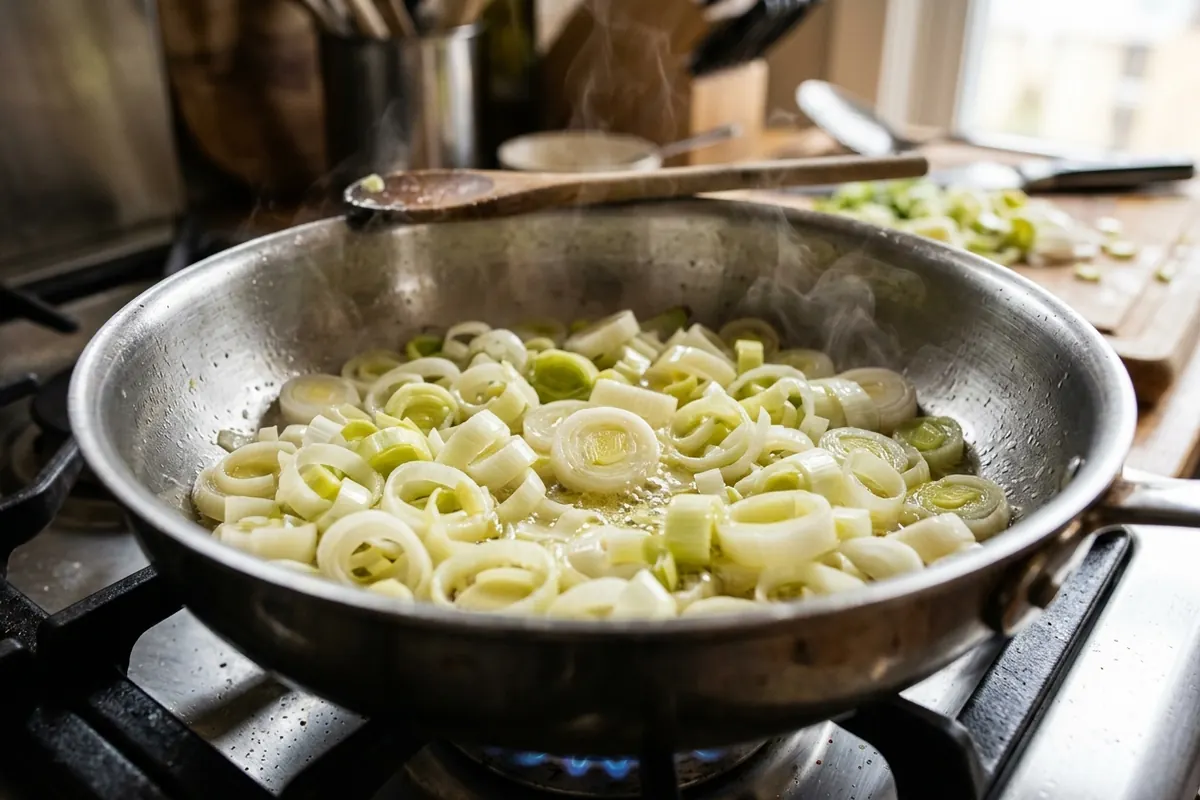
How you cook the cut leeks matters as much as how you cut them. The classic move is to sweat them, which means cooking the sliced leeks gently in butter or oil over low heat until they go soft and translucent but never brown. This coaxes out their natural sweetness and builds the mellow, savory foundation that the best leek soups are built on. Rushing this over high heat browns the leeks and turns the flavor harsh, so keep the heat low and give it time, usually eight to ten minutes with a pinch of salt to help them release their moisture.
Make sure the leeks are well drained and patted dry before they hit the hot fat, since wet leeks will steam and spit instead of softening cleanly. A lid on the pan helps them sweat in their own moisture without taking on color. Once they are soft and smell sweet, you have the base; add your stock, potatoes, or other vegetables and the soup builds from there. For more on the gentle technique of softening aromatics without browning, the test kitchen guides at America’s Test Kitchen and Bon Appetit are good references.
Leeks vs Onions and Scallions in Soup
It helps to know why a recipe calls for leeks rather than a plain onion, because the cut and the handling follow from the flavor. Leeks are part of the same family as onions and garlic, but their flavor is milder, sweeter, and more delicate, without the sharp bite a raw onion brings. That softness is exactly why they shine in soup, where they melt into a gentle, savory base rather than dominating it. Where an onion announces itself, a leek works quietly underneath everything else.
Scallions, sometimes called green onions, are a different tool again. They are sharper and best used raw or barely cooked, scattered over a finished bowl for a fresh, oniony lift, rather than cooked down as a base the way leeks are. So when a soup recipe lists leeks, swapping in a regular onion changes the character toward something bolder, and swapping in scallions does not give you the soft, sweet foundation the dish is built on. If you must substitute, a mild yellow onion plus a little less of it comes closest, but the true leek flavor is worth seeking out for soups where it carries the dish.
Prepping Leeks Ahead and Storing Them
Cutting and cleaning leeks takes a few minutes, so it is worth doing ahead when you can. Once you have sliced and washed your leeks, pat them dry and store them in an airtight container with a paper towel to absorb extra moisture, where they keep in the fridge for up to about three or four days. Dry leeks store better than damp ones, since trapped water speeds spoilage and turns them slimy, so the drying step is worth the extra minute.
You can also freeze cleaned, sliced leeks for longer storage, spreading them on a tray to freeze first so they do not clump, then bagging them. Frozen leeks go straight into a hot pot without thawing and work perfectly in any cooked soup, though they lose the crispness that matters only for raw use. Whole, untrimmed leeks last longest of all, keeping a week or more in the crisper drawer, so if you are not cooking right away, hold off on cutting until soup day. Prepping a big batch of leek base on the weekend means a pot of soup comes together fast on a busy weeknight.
Common Mistakes That Leave Grit in the Bowl
- Rinsing the leek whole. Water cannot reach the grit trapped between closed layers. Always cut first, then wash the pieces.
- Pouring the bowl through a colander. This dumps the settled sand back onto the leeks. Lift them out of the water instead and leave the grit behind.
- Using only the white part out of habit. The light green is tender and sweet too, so trimming it off wastes good leek. Save just the dark, leathery tops for stock.
- Cutting pieces unevenly. A mix of thick and thin slices cooks unevenly, leaving some mushy and some firm. Keep the cut consistent.
- Browning when you mean to sweat. High heat turns the sweet flavor harsh. Cook low and slow until soft and translucent, not colored.
Frequently Asked Questions
What part of the leek do you use for soup?
Use the white and light green parts, which are tender and sweet. Trim off the hairy root and the tough, dark green tops. For long-cooked or pureed soups you can keep an extra inch or two of the paler green, and save the truly dark tops for making stock rather than discarding them.
How do you cut leeks for soup?
Trim the root and dark tops, then slice the leek in half lengthwise and lay each half flat. Cut across into thin half-moons, about an eighth to a quarter inch thick, so they soften quickly. The lengthwise split also opens the layers so you can wash out the hidden grit before cooking.
Why are my leeks gritty even after rinsing?
Because dirt hides deep between the layers, rinsing a whole leek under the tap does not reach it. You have to cut the leek first, then swish the pieces in a bowl of cold water and lift them out, leaving the sand at the bottom. Pouring through a colander just returns the grit.
Can you use the green part of leeks in soup?
The pale light green near the white is tender and good to use. The dark green tops are too tough to enjoy in most soups, but they are full of flavor, so simmer them in stock and strain them out. For a blended soup, a little extra green can go in since the blender smooths out any toughness.
How do I clean leeks without losing the grit again?
Slice the leeks, drop them into a bowl of cold water, and swish so the heavy grit sinks. Lift the leek pieces out by hand or with a slotted spoon rather than pouring everything through a colander, which would tip the settled sand back over them. Repeat with fresh water if needed.
How many leeks do I need for a pot of soup?
One large leek yields about a cup to a cup and a half sliced, enough as the aromatic base for a soup serving four. For a leek-forward soup like potato leek, use two to four leeks. Remember they shrink a lot after trimming and cooking, so buy a bit more than you think you need.
Bottom Line
Cutting leeks for soup is mostly about two things: choosing the cut that fits the pot and cleaning out the grit that hides between the layers. Use the white and light green, slice into thin half-moons for most soups or rough chunks for a blended one, and always cut before you wash so the water can reach the dirt. Lift the pieces out of the bowl rather than pouring them through a colander, save the dark tops for stock, and sweat the cut leeks gently in butter to build that sweet, savory base. Do that and the leek does its quiet, essential job, giving the soup a clean and mellow backbone without a single grain of sand.