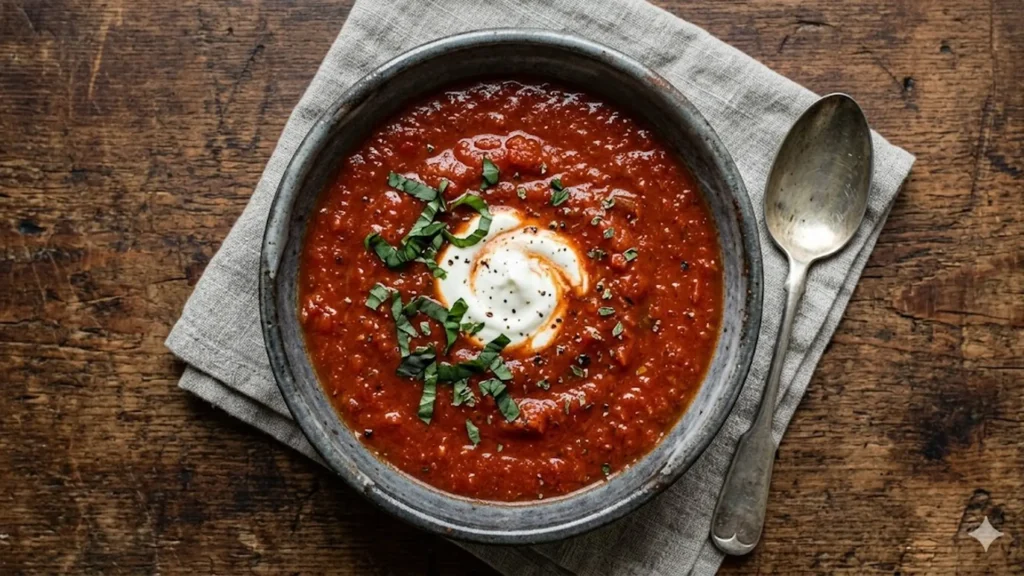
Homemade tomato soup is one of the easiest, most rewarding pots you can put on the stove, and it beats anything from a can once you know a few small tricks. At its heart it is just good tomatoes, an onion, a little garlic, and a quiet simmer, blended smooth and finished with a splash of cream. The whole thing takes about 45 minutes, most of it hands-off. The difference between a flat, sour bowl and a deep, balanced one comes down to building flavor before you add the tomatoes, taming the acidity correctly, and blending it to the texture you actually want. This guide gives you a reliable base recipe, the exact ratios for using canned or fresh tomatoes, the fixes for soup that is too thin, too thick, or too tart, and the make-ahead notes so you can have a bowl whenever the craving hits. By the end you will be able to make tomato soup without measuring much at all.
I make a version of this almost weekly through the cold months, so consider this the soup I would walk you through standing next to you at the stove, in plain US measurements.
The Simple Base Recipe
Start here, then adjust to taste. This makes about six cups, enough for four generous bowls.
- 2 tablespoons butter or olive oil
- 1 medium onion, diced
- 3 cloves garlic, minced
- 2 tablespoons tomato paste
- One 28-ounce can of whole or crushed tomatoes (San Marzano if you can find them)
- 2 cups chicken or vegetable stock
- 1 teaspoon sugar, plus more to taste
- Salt and black pepper
- 1/2 cup heavy cream (optional)
- A handful of fresh basil, if you have it
Melt the butter over medium heat and cook the onion until soft and translucent, about five minutes. Add the garlic and cook one minute, then stir in the tomato paste and let it darken for two to three minutes. This step is the one most people skip, and it is the one that matters most: cooking the paste deepens its flavor and takes away the tinny taste. Add the canned tomatoes, stock, sugar, and a good pinch of salt, bring to a boil, then simmer for 30 minutes. Blend smooth, stir in the cream and basil, and adjust the seasoning. That is the entire recipe.
Why you cook the tomato paste first
Browning the tomato paste is a small move with a big payoff. The paste caramelizes against the hot pan, building a savory, almost roasted depth that you cannot get any other way in under an hour. If your tomato soup has ever tasted thin or sharp, this is usually the missing step. Give it two or three full minutes, stirring, until it turns a shade darker and smells sweet rather than raw. The test kitchen at America’s Test Kitchen uses the same paste-browning trick across its tomato recipes for exactly this reason.
Canned or Fresh Tomatoes: Which to Use
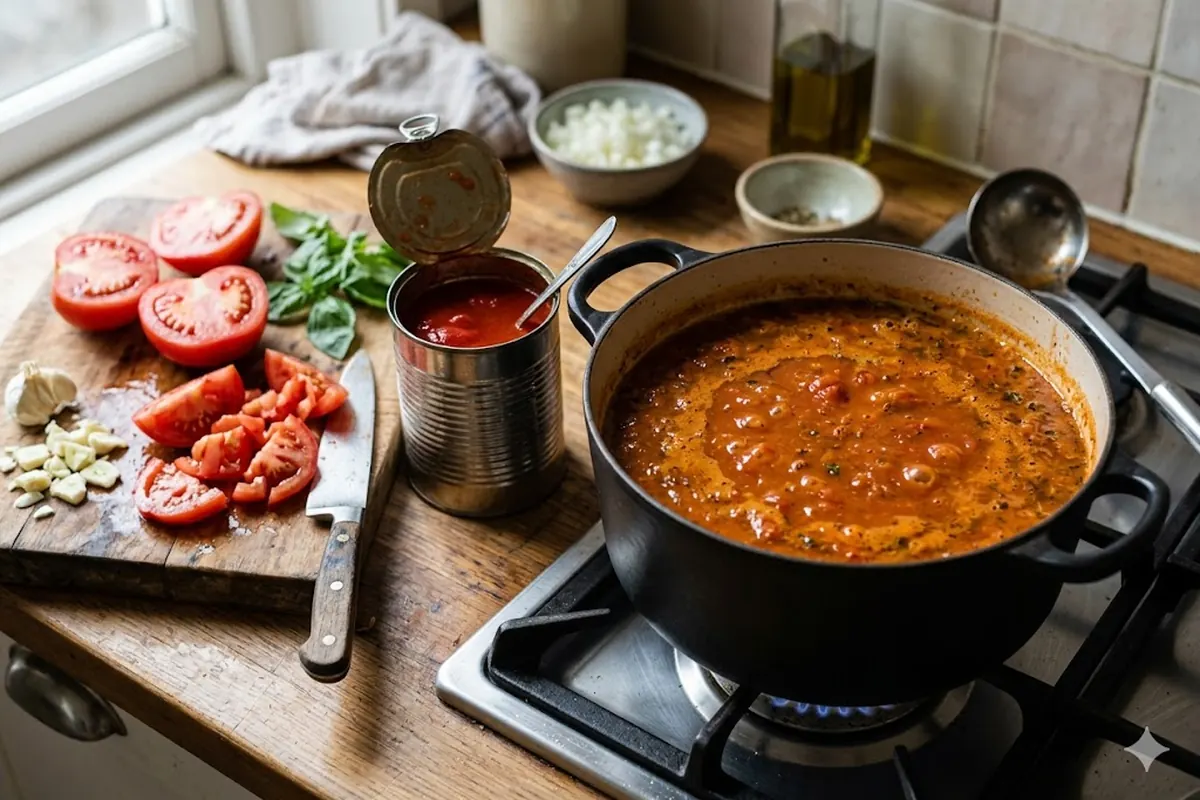
This is the question everyone asks, and the answer is probably the opposite of what you expect. For most of the year, good canned tomatoes make a better soup than the fresh tomatoes at the grocery store. Canned tomatoes are picked and packed at peak ripeness, so they are sweet and deeply red, while out-of-season supermarket tomatoes are usually pale, watery, and bland. Unless you have just-picked, in-season tomatoes from a garden or farm stand, reach for a can.
When tomatoes are actually in season, late summer into early fall, fresh is wonderful and worth the extra effort. Here is how the quantities line up so you can switch between them without guessing.
| If the recipe calls for | Use this much fresh | Roughly equals |
|---|---|---|
| 28 oz can of tomatoes | about 2 lb fresh | 4 large or 6 medium tomatoes |
| 1 lb fresh tomatoes | – | 2 large, 3 medium, or 4 Roma |
| A big batch (6 cups soup) | 3 lb fresh | a generous roasting-pan full |
The roasting method for fresh tomatoes
Fresh tomatoes have more water and less concentrated flavor than canned, so the best move is to roast them first. Halve about three pounds of ripe tomatoes, toss with a quartered onion, a few garlic cloves, olive oil, and salt, and roast at 450 F for 25 to 30 minutes until soft and a little charred at the edges. That char is flavor. Then scrape everything, juices included, into your pot with the stock and blend. Roasting drives off excess water and concentrates the sugars, which is exactly what supermarket tomatoes need. You can skip peeling if you have a decent blender, since it will break the skins down smooth.
Getting the Texture Right: Creamy, Brothy, or Chunky
Texture is a choice, not a default, and tomato soup is forgiving in this respect. For a classic smooth, creamy soup, blend the whole pot until silky and finish with cream. For a lighter, brothier bowl, blend only part of it or skip the cream entirely and lean on the stock. For a rustic, chunky soup, pulse it just a few times or leave it unblended and let the tomatoes break down on their own.
Blending safely
An immersion blender right in the pot is the easiest tool, with the least cleanup. If you use a regular countertop blender, never fill it more than halfway with hot soup, hold the lid down with a folded towel, and start on low, or the steam will blow the lid off and make a mess. Blend in batches if you need to. The reward for blending well is that velvety, restaurant-smooth texture that makes tomato soup feel special.
How thick should it be?
Tomato soup should coat the back of a spoon without being gluey. If yours comes out too thin, simmer it uncovered for another ten minutes to reduce, or blend in a tablespoon of tomato paste. If it is too thick, loosen it with a splash more stock. Because the tomatoes themselves provide the body, blending is usually all the thickening you need, with no flour or cornstarch required. If you do want it sturdier, our guide on building soups with aromatics covers how vegetables like leeks add natural body alongside the tomatoes.
Taming Acidity: Sugar, Salt, Baking Soda, and Cream
The number one complaint about homemade tomato soup is that it tastes sour or sharp. Tomatoes are naturally acidic, and that acidity is part of their charm, but it needs balancing. You have four tools, and they do different jobs.
- Sugar is the classic fix. A teaspoon or two rounds off the sharp edge and lets the tomato sweetness come forward. Add it a little at a time and taste.
- Salt is underrated here. A soup that tastes too sour is sometimes just underseasoned, and a proper pinch of salt makes the whole thing taste fuller and less harsh.
- Baking soda is the secret weapon for genuinely acidic tomatoes. A tiny pinch, no more than 1/8 teaspoon for a batch, neutralizes acid directly through a quick chemical reaction. It will foam, so stir it in off the heat and add it sparingly, since too much tastes soapy.
- Cream or butter coats the palate and softens acidity by adding richness. This is why a creamy tomato soup never tastes as sharp as a brothy one.
Use these in combination and taste as you go. Most of the time a teaspoon of sugar plus the right amount of salt is all it takes, with cream as the finishing touch. Cooking sites like Bon Appetit often lean on a little baking soda for the deepest, least acidic tomato soups, and it genuinely works when your tomatoes are tart.
Make It Dairy-Free or Vegan
Tomato soup is easy to make without dairy, and you barely lose anything. Swap the butter for olive oil and use vegetable stock instead of chicken. For the creamy finish, full-fat coconut milk gives the richest result, while a splash of oat milk or a spoonful of cashew cream works beautifully and keeps the flavor neutral. Coconut milk leans slightly sweet and pairs especially well with a little chili or curry spice if you want to take the soup in that direction. Either way, blend it in at the end over low heat, the same as you would with cream.
What to Serve With Tomato Soup
Tomato soup and grilled cheese is a pairing for good reason: the rich, crisp sandwich is the perfect partner for the bright, smooth soup, and dunking is half the joy. Beyond grilled cheese, try it with crusty bread and butter, a sharp cheese toast, herbed croutons, or a swirl of pesto and a few torn basil leaves on top. A drizzle of good olive oil and a crack of black pepper finishes a bowl nicely. For a heartier meal, serve a smaller cup of tomato soup alongside a bigger dish, the way you might pair it with something like a Cajun gumbo on a night when you want two kinds of warmth on the table.
Flavor Variations Worth Trying
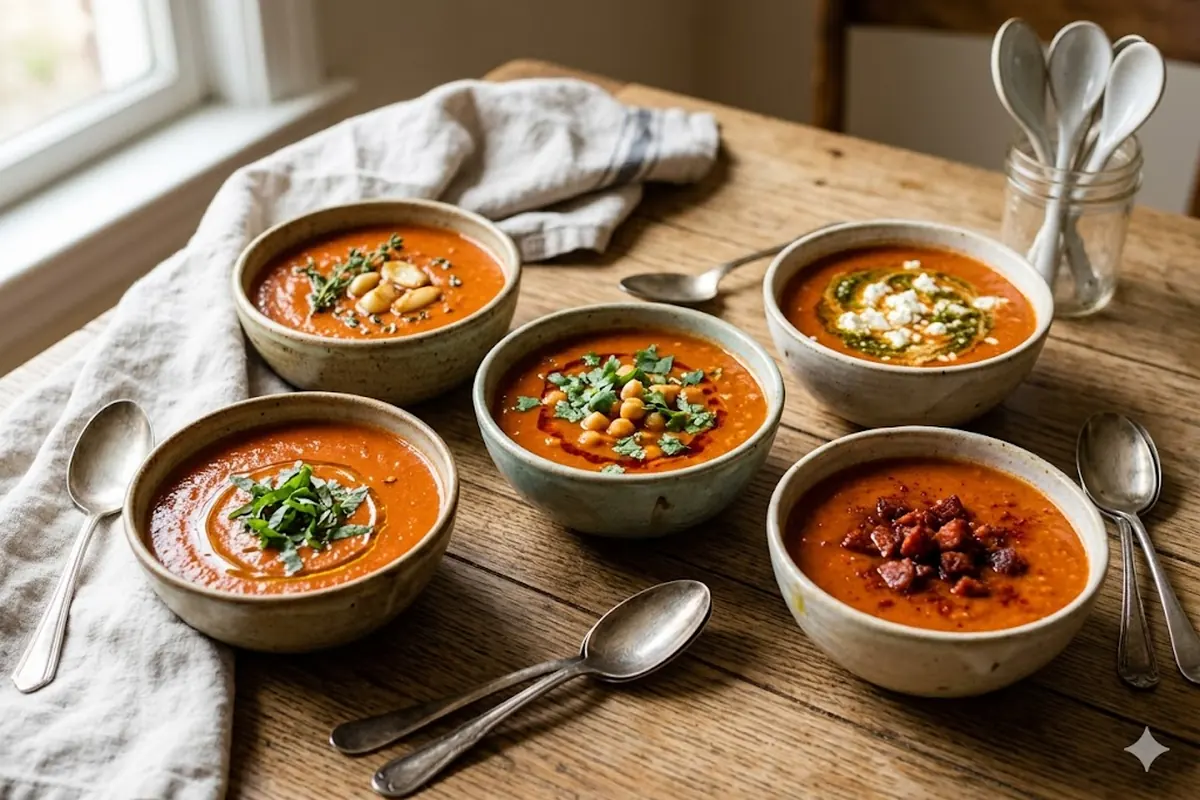
Once you have the base down, tomato soup is a blank canvas. A few small additions turn the same pot into something new without any extra work.
Roasted red pepper
Add a jar of roasted red peppers (or roast a couple of fresh ones) and blend them in with the tomatoes. They bring a mellow sweetness and a deeper color, and they pair naturally with the existing flavors. This version is especially good with a swirl of cream and a dusting of smoked paprika.
Tomato basil, the classic
Stir in a big handful of fresh basil at the end and blend it in for a fragrant, summery soup, or leave the leaves whole as a garnish. A little extra garlic and a spoon of pesto on top push it further. This is the version most people picture when they think of a good tomato soup, and it costs almost nothing to make.
Spiced and creamy
Bloom a teaspoon of curry powder or a pinch of red chili flakes with the onion, then finish the soup with coconut milk instead of cream. The result is a warming, gently spiced bowl that still reads as tomato soup but with more going on. A squeeze of lime at the end brightens it up.
Tomato and white bean
For a heartier, more filling soup, stir a can of drained white beans into the finished pot, or blend half of them in for extra body. The beans add protein and a creamy texture without any dairy, turning a starter into a full lunch.
Building the Flavor Base
The single biggest reason homemade tomato soup tastes better than canned is the flavor base you build before the tomatoes ever go in. Restaurants call it the foundation, and it takes only a few minutes. Sweating the onion slowly until it is soft and sweet, rather than rushing it over high heat, draws out its natural sugars and gives the soup a rounded, savory backbone. The garlic goes in only after the onion is soft, because garlic burns quickly and turns bitter if it hits the pan too early. Then comes the tomato paste, browned until it darkens. Each of these steps adds a layer, and they stack: soft sweet onion, mellow garlic, and deep caramelized paste, all before a single tomato joins the pot. If you want to add even more depth, a small diced carrot sweated alongside the onion brings natural sweetness that cuts acidity without any sugar at all, and a rib of celery rounds out the savory side. This little base is the difference between a soup that tastes like warmed tomatoes and one that tastes like it took all afternoon.
Make-Ahead, Storage, and Freezing
Tomato soup is a meal-prep dream because it keeps and freezes so well. In the fridge it lasts about five days in a sealed container, and the flavor often deepens overnight as everything melds. For longer storage, it freezes for up to three months. The one tip worth knowing: if you plan to freeze it, hold back the cream and add it fresh when you reheat, because dairy can separate or turn grainy after freezing and thawing. Freeze the soup as a smooth tomato base, then stir in cream on the stove when you warm it through. Portion it into single-serving containers or freezer bags laid flat, and you can pull out exactly one bowl at a time. Reheat gently over medium-low heat, stirring, and loosen with a little stock if it has thickened in the cold.
Common Mistakes to Avoid
- Skipping the tomato paste step. Browning the paste is what gives the soup depth. Do not rush it.
- Using bland out-of-season fresh tomatoes. If they are not ripe and red, use a good can instead.
- Boiling after adding cream. A hard boil can curdle dairy, especially with acidic tomatoes. Add cream at the end and keep the heat gentle.
- Underseasoning. A flat tomato soup almost always wants more salt before it wants more of anything else.
- Over-thickening. The tomatoes give plenty of body. Reach for stock to thin, not flour to thicken.
Frequently Asked Questions
How do I make homemade tomato soup taste less acidic?
Start with a teaspoon of sugar and a good pinch of salt, then taste. If the tomatoes are still sharp, stir in a tiny pinch of baking soda, no more than 1/8 teaspoon per batch, off the heat, which neutralizes the acid directly. A splash of cream or a knob of butter also softens acidity by adding richness. Adjust gradually so you do not overshoot.
Are canned or fresh tomatoes better for tomato soup?
For most of the year, good canned tomatoes make a better soup because they are picked and packed at peak ripeness, while out-of-season supermarket tomatoes are watery and bland. Use fresh only when tomatoes are truly in season, and roast them first to concentrate the flavor. San Marzano canned tomatoes are a reliable choice year-round.
How do I thicken tomato soup without flour?
Blending the soup smooth is usually all the thickening you need, since the tomatoes provide natural body. If you want it thicker, simmer it uncovered for ten minutes to reduce, or blend in a tablespoon of tomato paste. A spoonful of cooked rice or a small potato simmered in and blended will also add body without any flour or cornstarch.
Can I make tomato soup dairy-free?
Yes, and it works well. Use olive oil instead of butter and vegetable stock instead of chicken. For the creamy finish, stir in full-fat coconut milk for the richest result, or oat milk or cashew cream for a more neutral flavor. Add it at the end over low heat. Coconut milk pairs especially nicely if you add a little chili or curry spice.
How long does homemade tomato soup last?
It keeps about five days in a sealed container in the fridge, and the flavor often improves after a day as everything melds. It also freezes for up to three months. If freezing, leave out the cream and add it fresh when you reheat, since dairy can separate after thawing. Reheat gently and loosen with a splash of stock if it has thickened.
What makes homemade tomato soup taste better than canned?
The biggest factors are browning the tomato paste for depth, sauteing onion and garlic as a flavor base, balancing the acidity with sugar and salt, and finishing with cream or good olive oil. Fresh basil and quality tomatoes also lift it. These small steps, done in about 45 minutes, give a homemade pot a roasted, balanced flavor that canned soup cannot match.
Bottom Line
Homemade tomato soup rewards a handful of simple habits more than any fancy ingredient. Cook the tomato paste until it darkens, sweat your onion and garlic first, use good canned tomatoes outside of summer, and balance the acidity with a little sugar, the right amount of salt, and a touch of cream. Blend it to the texture you love, whether that is silky smooth or pleasantly rustic, and finish with basil and good olive oil. Make a big batch, because it keeps for days and freezes for months, and you will always have a warm, bright bowl on hand. Pour it next to a grilled cheese on a cold afternoon and you will understand why this simple soup never goes out of style.