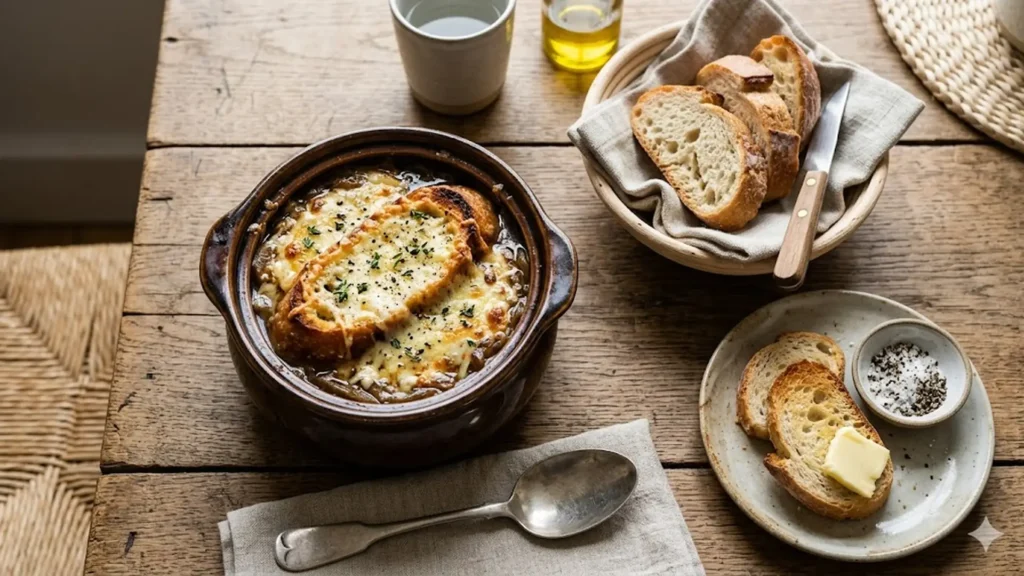
What to eat with french onion soup depends on one question: is the soup your starter or your main event? If it is the star, pair it with something bright and crisp like a sharp green salad or a crusty baguette to cut the richness. If it is the opener, follow it with a clean, lighter main like roasted chicken, salmon, or a small steak so the meal does not turn into one heavy note all the way through.
That single distinction is the thing most pairing lists skip. They hand you forty random sides and let you sort it out. I want to give you a framework instead, because once you understand what french onion soup actually tastes like, you can pair anything against it with confidence. Let me break down why the soup behaves the way it does, then walk through what works on each side of that starter-or-main fork.
First, understand what you are balancing
French onion soup hits four big notes at once, and every good pairing answers at least one of them. There is sweetness from the deeply caramelized onions, which cook down for the better part of an hour until their sugars brown. There is salt from the beef broth. There is fat and stretch from the melted gruyere cap. And there is deep savory umami from the long-simmered stock.
Add those up and you get a bowl that is rich, salty, and intense. So the job of whatever you serve alongside it is simple: provide contrast. You want acid, bitterness, or crunch to cut through that richness and reset your palate between spoonfuls. A peppery arugula salad with a lemon dressing does this better than almost anything, because the bitter green and the bright acid stand directly opposite the soup’s sweet, fatty depth. Hold that idea, contrast the richness, and every choice below makes sense.
The decision tree: starter, main, or light lunch
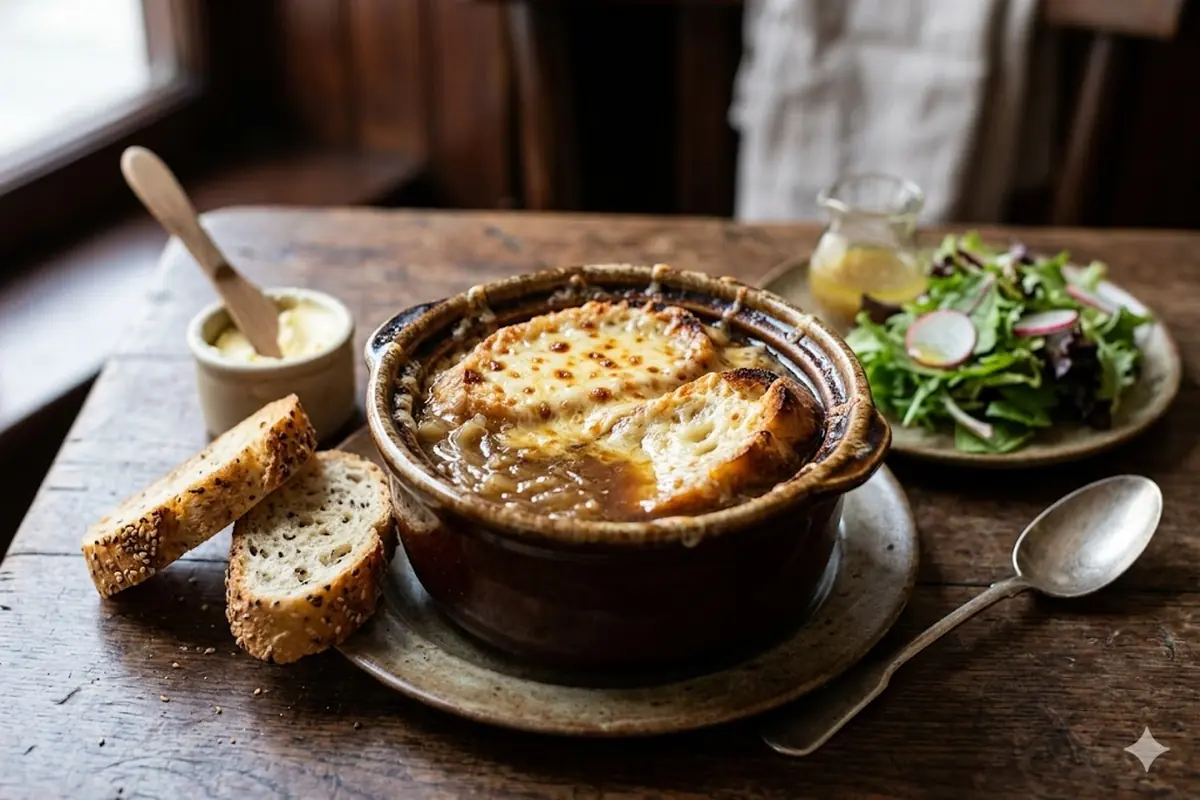
Before you pick a single dish, decide what role the soup is playing. This is the fork everything hinges on.
- Soup as the main event: you want sides that complete it without competing. A crisp salad, good crusty bread, and maybe a few roasted vegetables. Keep it light because the soup is already filling.
- Soup as a starter: the main course comes next, so the soup just needs a small companion at the same time, usually bread or a tiny salad. Save the substance for the main.
- Soup as a light lunch: pair it with a sandwich, most classically a grilled cheese or a croque monsieur, so the two together make a satisfying midday meal.
Get this right and you avoid the most common mistake, which is serving a heavy bowl of french onion soup before an equally heavy main and leaving everyone uncomfortably stuffed. Match the weight of the meal to the role of the soup.
It helps to think in terms of a total richness budget for the meal. French onion soup spends a big chunk of that budget on its own, between the cheese, the broth, and the bread. So whatever joins it has to fit in the room that is left. If the soup is the main, the sides are small and bright. If the soup is the starter, the main is the substance but stays lean. You are not adding flavors so much as balancing a scale, and the soup already sits heavy on one side.
Best sides when the soup is the star
When french onion soup is the centerpiece, lean into contrast and freshness. A green salad is the classic partner for a reason. Arugula or frisee tossed with a sharp vinaigrette brings the bitterness and acid that the rich soup is begging for. Add a few shavings of parmesan and you echo the cheese without piling on. A handful of toasted walnuts or a few thin apple slices in that salad pushes the contrast even further, adding crunch and a touch of sweetness that plays against the savory soup. Dress it lightly, since a heavy creamy dressing would defeat the whole purpose of putting a bright salad next to a rich bowl.
Bread is non-negotiable in my house. A crusty baguette or a slice of sourdough is built for dragging through the last of the broth and the cheese stuck to the side of the crock. If you want to go a step further, a cheesy pull-apart bread with garlic plays right into the soup’s wheelhouse. Roasted Brussels sprouts also shine here, since their caramelized, slightly bitter edges mirror the onions while the bitterness cuts the fat. For more ways to build a satisfying bowl-plus-sides meal, my guide on gluten free soup covers how to round out a soup into a full plate, which matters even more if anyone at the table avoids gluten in the bread.
Best mains when the soup is a starter
If you are serving french onion soup as a first course in a bistro-style meal, the main that follows should feel lighter than the soup, not heavier. The soup already delivered the deep, beefy, cheesy hit. Now you want something cleaner to carry the plate.
Roasted salmon is my go-to. It is rich enough to feel like a real main but bright and clean next to the soup, especially with a squeeze of lemon. A simple roast chicken with a mustard or shallot pan sauce works the same way, since the mustard’s tang lightens the lingering beefiness. If you want red meat, a small steak or steak frites makes the bistro classic, but keep the portion modest because nobody needs a full sixteen-ounce ribeye after a loaded bowl of soup. Scallops or a piece of white fish are the lightest options and almost never feel like too much, especially with a brown butter or lemon finish that adds flavor without weight.
The principle stays constant. After the soup’s sweet, salty, fatty intensity, the main should offer either acid, lean protein, or a fresh herb-and-citrus brightness to keep the meal moving. Avoid a second heavy, cheesy, or cream-sauced dish, or the whole meal collapses into one rich blur.
One more practical note on timing. French onion soup needs a final blast under the broiler to melt and brown the cheese, which means you are at the oven right before serving. If your main also needs last-minute attention, you will be juggling two hot tasks at once. I plan around this by choosing a main that can hold, like a roast that rests happily for ten minutes, or salmon that I can pull and keep warm. That way the soup gets my full attention at the finish line, and nothing arrives cold. Thinking through the order of operations is half of pulling off a multi-course meal without stress.
Light lunch: the sandwich pairing
For a casual lunch, the sandwich is the move, and the logic is the same one that makes tomato soup and grilled cheese a forever couple. A grilled cheese with gruyere or a sharp cheddar mirrors the melty cap on the soup while giving you something to chew. A croque monsieur, the French ham-and-cheese with bechamel, is the dressed-up version and tastes like it was invented to sit next to this bowl.
If you want contrast instead of an echo, a sandwich with peppery greens and a swipe of horseradish or mustard cuts the richness rather than doubling it, and a few pickles on the side push the acid even harder. Either approach works. Just decide whether you want the sandwich to harmonize with the cheese or to push against the soup’s fat, and build accordingly.
A bistro menu I built, and the portion I got wrong
The first time I plated french onion soup as a starter for a dinner party, I followed it with a full braised short rib over mashed potatoes. On paper it sounded like a cozy winter feast. In practice, my guests were waving the white flag halfway through the main. Two deeply rich, beefy, fatty courses back to back was simply too much. Nobody had room for the dessert I had spent an hour on.
The next time I served that same soup, I followed it with roasted salmon, lemon, and a pile of green beans, and I cut the main portion down by about a third from what I would normally serve. The meal flowed. People finished, leaned back happy, and still had room for a small dessert. That is the lesson I keep coming back to. French onion soup is filling, so when it is a starter, shrink the main and brighten it. The soup has already done the heavy lifting.
Vegetable sides that earn their place
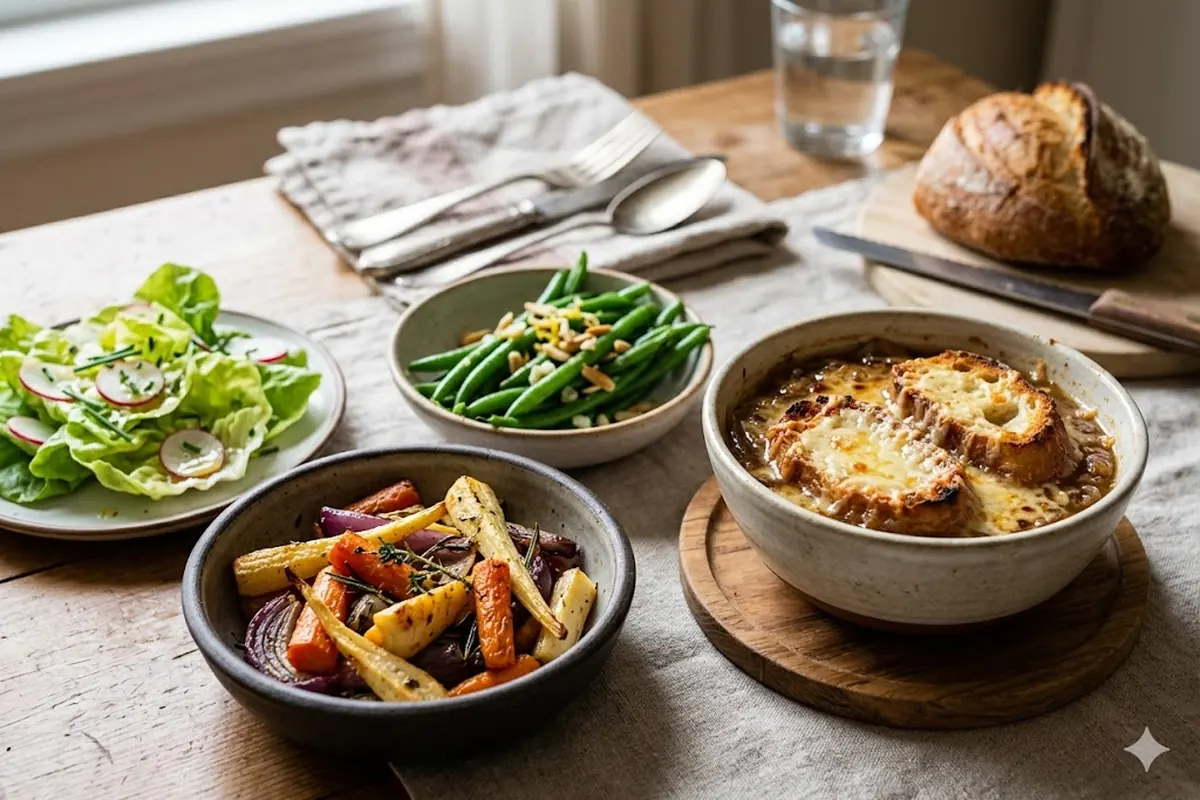
Not every side needs to be bread or salad. The right vegetable can bridge the soup and the rest of the plate. Roasted Brussels sprouts are my favorite here because their browned, slightly bitter edges echo the caramelized onions while the bitterness cuts the cheese-heavy fat. Roast them hot, around 425 degrees F for 20 to 25 minutes, until the leaves crisp and char at the tips.
Roasted asparagus with a squeeze of lemon brings green freshness and acid in one move. A simple plate of garlicky sauteed green beans does the same job. What you want to avoid are starchy, creamy vegetable sides like scalloped potatoes or a heavy gratin, which double down on the richness instead of balancing it. Save those for a meal that does not already have a cheese-capped bowl of soup leading the way. The whole point of a vegetable side here is to lighten and brighten, not to add another blanket of dairy.
Cheese, charcuterie, and grazing boards
If you are serving french onion soup at a relaxed gathering rather than a sit-down dinner, a grazing board makes a smart companion. The trick is to balance, not repeat. The soup already brings melted gruyere, so on the board I lean toward contrast: a few briny olives, some cornichons, a tart apple or pear, and a sharp aged cheese rather than another mild melting one.
The acidity of pickles and the crispness of fresh fruit do exactly what a salad does, slicing through the soup’s fat between bites. A little cured meat like prosciutto adds salt and chew without competing with the beefy broth. Keep portions small and let the soup stay the centerpiece. A board like this lets people nibble while the crocks come out of the broiler, which solves the timing problem of getting bubbling, cheese-topped soup to the table all at once.
What to drink with it
Wine matters here too, and the same balance logic applies. A medium to full-bodied red stands up to the soup’s intensity without getting steamrolled. A dry French red like a Cotes du Rhone or a Burgundy echoes the dish’s roots and has enough acidity to cut the fat. If you prefer white, a crisp, dry one like a Chablis brings acid to slice through the cheese. For the science of matching wine weight to food weight, Bon Appetit keeps a solid wine pairing library worth a read.
Not drinking wine? Sparkling water with lemon does the acid-and-bubbles job nicely, resetting the palate the same way an acidic wine would. The goal is always the same, a counterweight to the richness in the bowl.
For a non-alcoholic option with more character, a dry cider or a kombucha brings real acidity and a little funk that stands up to the soup. Even a strong, unsweetened iced tea works at lunch, since the tannins do some of the same palate-cleansing that wine does. Skip anything sweet and sugary, which fights the savory broth instead of balancing it. The drink is just one more tool for contrast, so reach for tart and dry over sweet and heavy every time. Serve it cold, too, since a chilled glass against the hot soup adds one more layer of welcome contrast at the table.
Make it a full soup spread
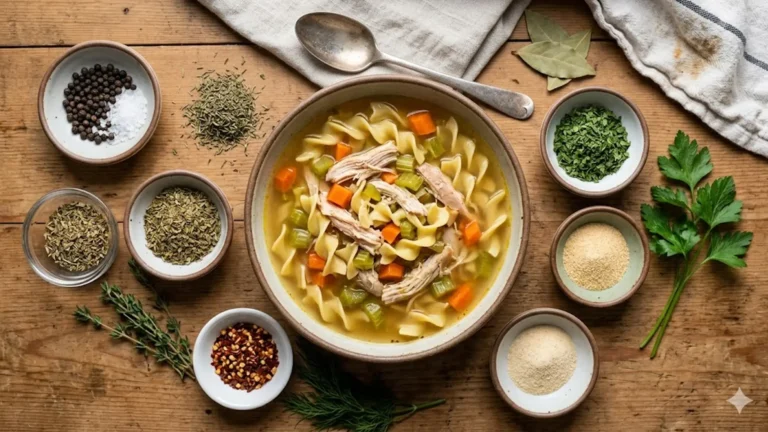
If you love the idea of a soup-centered meal, french onion is a great anchor for a small spread. Set out a couple of soups, plenty of bread, and a sharp salad, and let people graze. America’s Test Kitchen has a thorough breakdown of soup-and-bread pairings if you want to plan a bigger table. The same caramelized-onion technique that powers this soup also deepens countless other dishes, and my notes on what spices go in chicken noodle soup get into building that kind of savory depth from the ground up. For a heartier carb to anchor a casual soup night, a tray of chicken pasta from Pastapeak feeds a crowd alongside the bowls.
Frequently asked questions
What is the best main course to serve with french onion soup?
If the soup is your starter, the best mains are lighter ones that contrast its richness: roasted salmon, a simple roast chicken with mustard sauce, or a modest steak. Avoid a second heavy, cheesy, or cream-based dish. The soup already delivers a big, beefy, fatty hit, so the main should feel cleaner and brighter.
What salad goes with french onion soup?
A peppery green salad is the classic pairing. Arugula or frisee with a sharp lemon or red wine vinaigrette brings the acid and bitterness that cut through the soup’s sweet, fatty richness. A few shavings of parmesan echo the cheese cap. The bright, crisp contrast resets your palate between spoonfuls.
Can french onion soup be a main course?
Yes, easily. It is filling thanks to the bread and melted cheese. Serve a larger bowl with a crusty baguette and a crisp green salad and you have a complete, satisfying meal. If you want a little more substance, add roasted vegetables or a small sandwich on the side.
What bread is best with french onion soup?
A sturdy, crusty bread like a baguette or sourdough is ideal, both for the cheese-topped crouton in the soup and for dragging through the broth. The crust holds up to the liquid without turning to mush. Toast it lightly first for extra structure and a bit of crunch.
What wine pairs with french onion soup?
A medium to full-bodied dry red works best, such as a Cotes du Rhone or a Burgundy, since it has the body to match the soup and the acidity to cut the fat. If you prefer white, choose a crisp, dry Chablis. Both bring the acid that balances the rich, cheesy broth.
Is french onion soup enough for a meal on its own?
It can be, especially a generous bowl with extra bread and cheese, since it carries real protein and fat from the broth and gruyere. That said, most people find it more satisfying with a simple side salad or a small sandwich. Pairing it adds contrast and rounds out the plate.
What should I avoid serving with french onion soup?
Avoid stacking it with another rich, heavy, cheesy, or cream-sauced dish, which makes the meal feel like one overwhelming note. Also skip anything with loud competing flavors that fight the soup’s savory depth. Lean toward acid, freshness, and crunch to balance the richness instead.