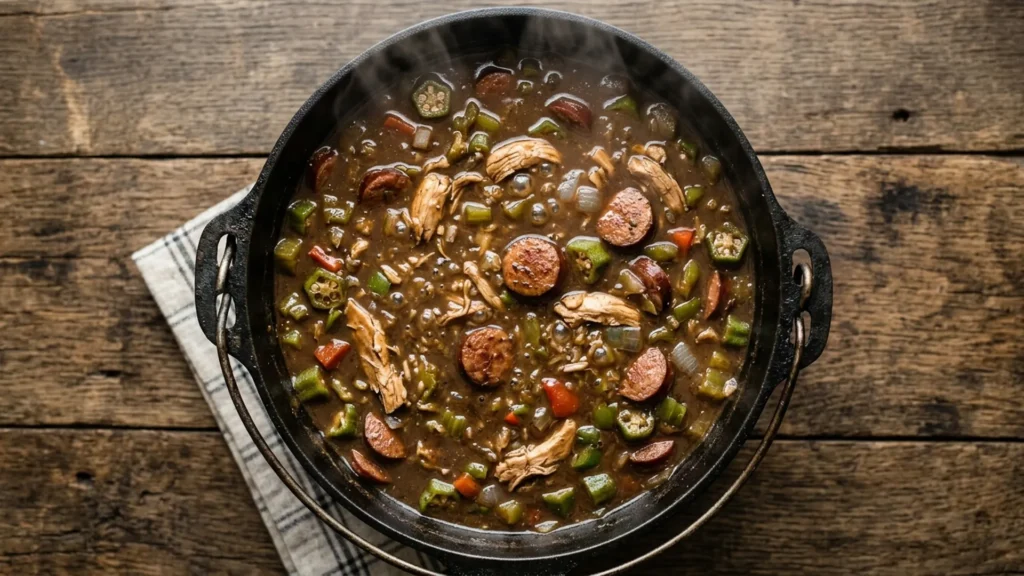
Cajun cooking gumbo is built on one make-or-break step: a dark roux cooked slowly until it turns the color of melted chocolate, because that roux is where nearly all of the dish’s deep, toasty flavor comes from. Get the roux right and almost everything after it falls into place. Cajun gumbo starts with that dark roux, layers in the holy trinity of onion, bell pepper, and celery, builds with smoky andouille sausage and chicken or seafood, and finishes thick and rich over a scoop of long-grain rice. Unlike its Creole cousin, true Cajun gumbo skips the tomatoes and leans on the roux for both color and body. It is a patient dish, not a complicated one, and the patience pays off in a bowl with the kind of savory, layered depth you cannot rush or fake.
This guide walks through the roux step by step, the trinity that follows it, how Cajun and Creole gumbo differ, the three classic thickeners and how to use them, the proteins and their timing, and the mistakes that sink a pot. Master the roux and you have mastered gumbo.
The Roux: The Heart of the Whole Pot
Everything in Cajun gumbo rests on the roux, a simple cooked mixture of equal parts flour and fat that you stir over heat until it browns. The science is straightforward but the patience is not. As the flour toasts in the fat it goes from white to blond to peanut butter to a deep reddish brown, and with each shade it loses a little thickening power but gains an enormous amount of nutty, roasted flavor. For Cajun gumbo you want it dark, somewhere between milk and dark chocolate, which is what gives the finished dish its signature color and its smoky, almost coffee-like depth.
Making it takes time and total attention. Combine the flour and oil in a heavy pot, set the heat to medium-low, and stir almost constantly, scraping the bottom so nothing sticks and scorches. Depending on your heat, a proper dark roux takes anywhere from thirty to forty-five minutes, and you cannot walk away, because the line between a deep, perfect roux and a burnt one is a matter of seconds. If you see black specks, the roux has burned and turned bitter, and there is no saving it; throw it out and start over, because even a little burnt roux ruins the whole pot. A burnt roux is the single most common gumbo failure, so keep the heat moderate and the spoon moving.
| Roux color | Flavor | Best use |
|---|---|---|
| Blond | Mild, most thickening | Cream sauces, light gravies |
| Peanut butter | Nutty, medium body | Lighter gumbo, etouffee |
| Chocolate (dark) | Deep, toasty, less thickening | Classic Cajun gumbo |
The Holy Trinity
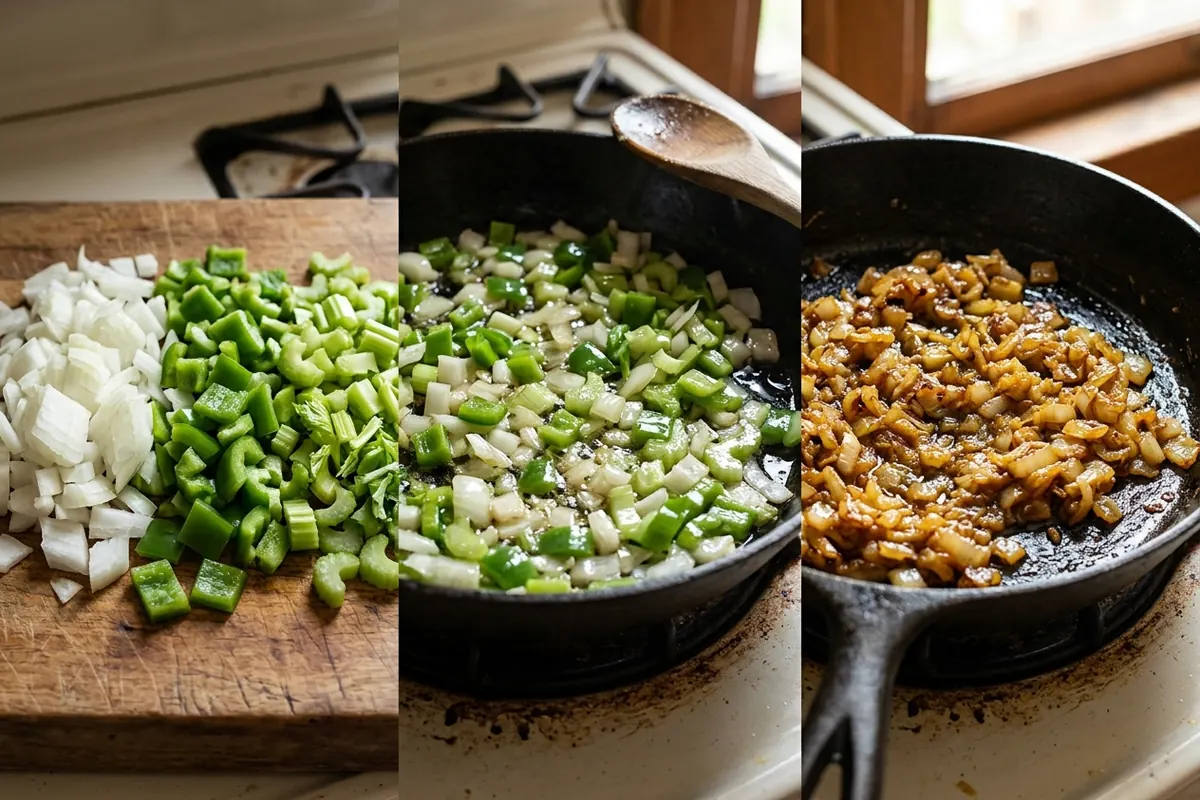
The moment the roux hits the color you want, the trinity goes in, and this serves a second purpose beyond flavor: the cold vegetables stop the roux from cooking further, which is your safety brake against burning. The holy trinity is the Cajun and Creole base of onion, bell pepper, and celery, usually in roughly a two-to-one-to-one ratio favoring onion. Where French cooking uses a mirepoix of onion, carrot, and celery, Louisiana swaps the carrot for green bell pepper, and that swap is a big part of what makes the flavor taste like the Gulf Coast.
Stir the trinity into the hot roux and cook it until the vegetables soften and turn glossy, usually about eight to ten minutes, then add minced garlic for another minute. The roux coats the vegetables and the vegetables sweeten as they soften, and together they form the savory foundation that the stock and proteins build on. Do not rush this; soft, well-cooked trinity melts into the gumbo, while underdone vegetables leave a raw, sharp edge in the finished bowl.
Cajun vs Creole Gumbo: The Real Difference
People use the words Cajun and Creole loosely, but for gumbo there is a clear dividing line, and it is tomatoes. Creole gumbo, born in the city kitchens of New Orleans, often includes tomatoes and tends toward a lighter, sometimes seafood-forward style with a more cosmopolitan ingredient list reflecting the city’s many influences. Cajun gumbo, from the rural bayou country of Acadiana, uses no tomatoes at all and leans hard on a very dark roux for its color and its rib-sticking depth. The result is a darker, smokier, more rustic bowl.
Neither is more correct; they are two traditions from two places. But if a recipe calls itself Cajun and includes tomatoes, it has wandered toward Creole. The classic country combination is chicken and andouille sausage, a hearty, smoky pairing that defines Cajun gumbo for most people, while seafood gumbo, heavy with shrimp, crab, and oysters, shows up in both traditions depending on what is close at hand. The throughline is always the dark roux, the trinity, and rice.
The Three Thickeners: Roux, Okra, and File
Gumbo has three traditional thickeners, and understanding them is the key to a pot with the right consistency. The first is the roux itself, which thickens as it cooks into the liquid, though a very dark roux thickens less than a pale one because the browning breaks down some of the flour’s starch. That is why dark-roux gumbos are often helped along by a second thickener.
The second is okra, the pod vegetable that gives gumbo its name, derived from a West African word for okra. Sliced okra releases a natural mucilage as it cooks that thickens the broth and adds a subtle vegetal flavor, and it goes in earlier so it has time to soften and work. The third is file powder, made from ground dried sassafras leaves, which adds an earthy, faintly root-beer-like note and thickens the liquid as it dissolves. File has one firm rule: add it off the heat, after the gumbo is done, or stir it into individual bowls, because boiling file makes the gumbo turn stringy and ropey. Many cooks use okra or file, not both, and the choice is a matter of regional taste.
Layering the Proteins and the Timing
Gumbo is about layering, and the proteins go in at different times so each one finishes perfectly. Start by browning your chicken, ideally bone-in thighs for flavor, then set it aside; that browning builds another layer of savory depth, much the way searing meat does for a slow-simmered minestrone. Brown the sliced andouille too, rendering its smoky fat into the pot. Both can go back in early to simmer and give up their flavor to the broth over the long cook.
Seafood is different and goes in last. Shrimp, crab, and oysters need only a few minutes, so add them in the final ten to fifteen minutes of cooking, just until the shrimp turn pink and curl. Add them too early and they turn rubbery and overcooked. The general rule is simple: tough, slow ingredients early, delicate, quick ingredients late. This staggered timing is what gives a good gumbo its range of textures, with tender chicken, snappy sausage, and just-cooked seafood all in the same bowl.
Stock, Simmering, and Seasoning
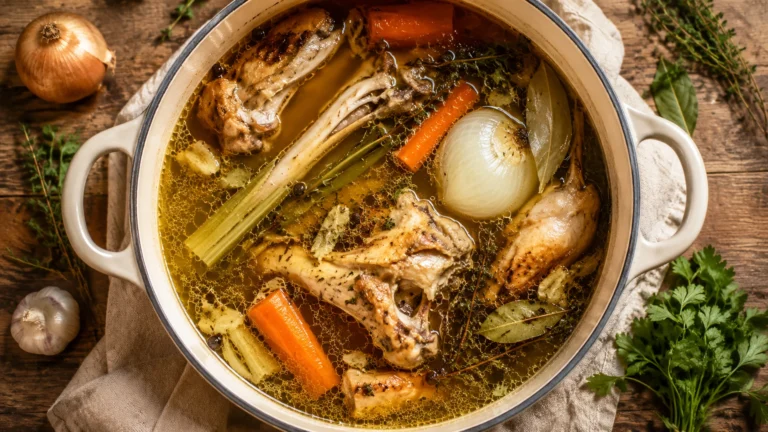
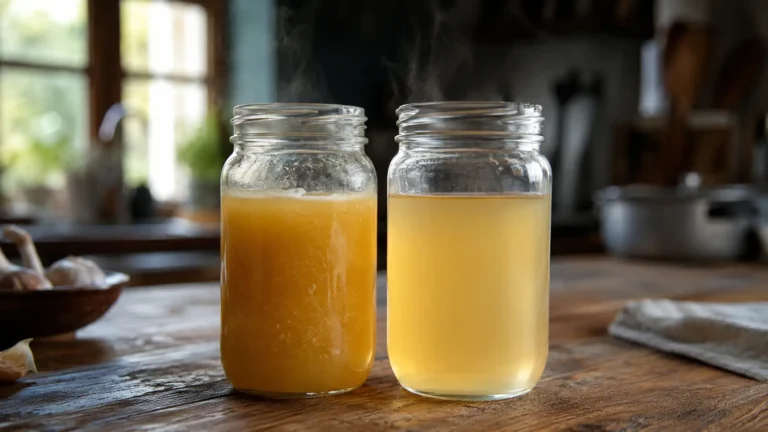
Once the trinity is soft and the roux is incorporated, you build the body of the gumbo by slowly stirring in warm stock, a little at a time at first so the roux loosens smoothly without lumping. Chicken or seafood stock both work, and a homemade base makes a real difference here; a batch of good homemade chicken stock gives the gumbo a depth that water and bouillon cannot reach. Bring it to a simmer, then drop the heat and let it cook gently, partly covered, for at least an hour so the flavors marry and the broth thickens.
Seasoning is layered too. A Cajun seasoning blend, bay leaves, thyme, and a hit of cayenne or hot sauce go in during the simmer, and you taste and adjust at the end. Skim off the orange fat that rises to the surface for a cleaner finish, or leave some for richness, as you prefer. Gumbo should be assertively seasoned, since it is served over plain rice that mellows it, so do not be timid with the salt and spice once everything has come together. For more on building deeply savory braised and simmered dishes, the test kitchens at America’s Test Kitchen and the editors at Bon Appetit are reliable.
Choosing the Fat and the Pot for Your Roux
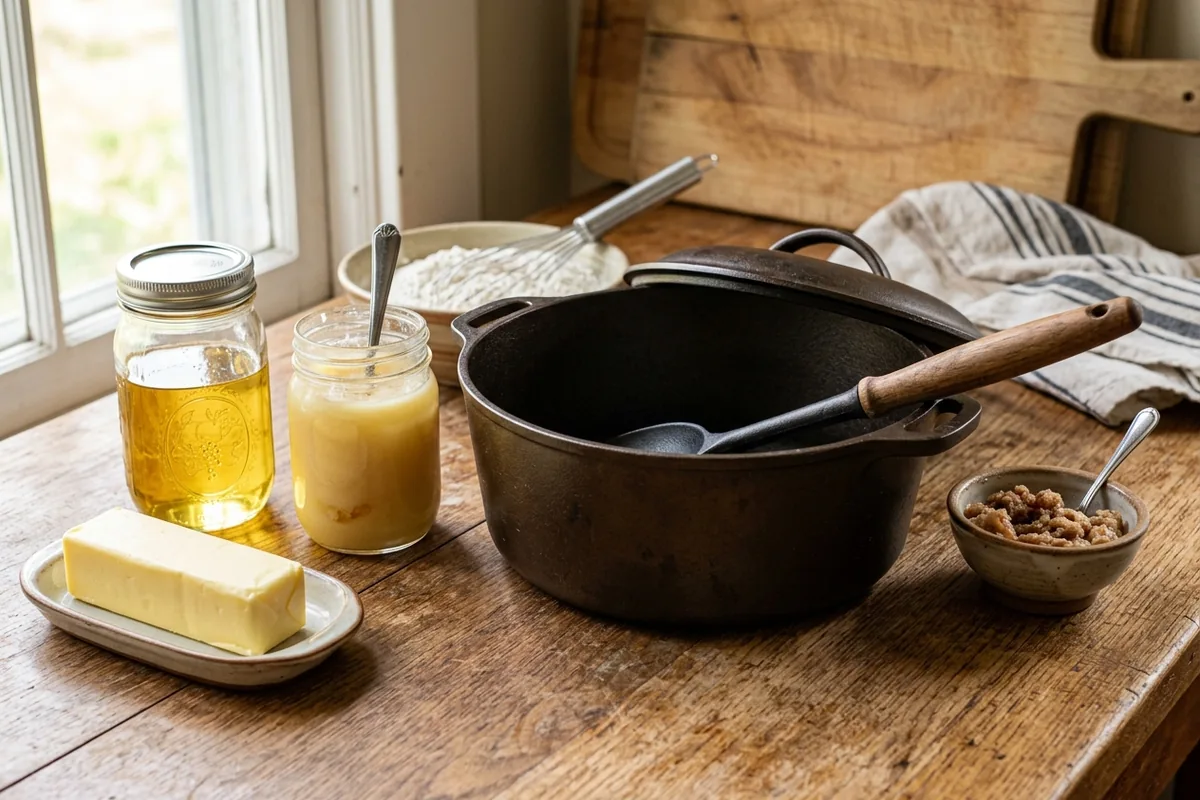
What you cook the roux in matters more than people expect. For the fat, a neutral oil with a high smoke point is the traditional and safest choice for a dark roux, because you are holding it over heat for a long time and butter would burn long before the flour reaches chocolate. Vegetable oil, canola, or even lard or bacon drippings all work well, and the rendered fat from browning your andouille is a flavorful option if you have it. Save butter for lighter, blond roux where the cook is short.
The pot is just as important. Use a heavy-bottomed pot or a cast-iron Dutch oven, because thin pans develop hot spots that scorch the roux unevenly while you are stirring. The heavy base spreads the heat steadily, giving you a wider margin between perfectly dark and burnt. A long-handled wooden spoon or a flat-edged spatula that can reach into the corners of the pot helps you scrape every part of the bottom, which is exactly where a roux sticks and burns. Have your trinity chopped and ready before you start the roux, because once it hits the right color you need to add the vegetables immediately to stop the cooking, and there is no time to start chopping then.
Types of Gumbo to Know
Gumbo is a family of dishes, not a single recipe, and knowing the main types helps you cook the one you want. Chicken and andouille gumbo is the classic Cajun country version, hearty and smoky, and the best starting point for a first-timer. Seafood gumbo loads the pot with shrimp, crab, and oysters, often over a slightly lighter roux, and shows up along the coast where the catch is fresh. Gumbo z’herbes is a green gumbo built on many kinds of greens, traditionally eaten during Lent.
There is also the question of okra versus file as the defining thickener, which sometimes gives a gumbo its name and character. Within each type, families guard their own versions, and almost everyone in Louisiana will tell you their grandmother’s is the right one. The common thread across all of them is the technique in this guide: a careful roux, the trinity, a long simmer, bold seasoning, and rice. Learn that framework and you can cook any gumbo you come across, adjusting the proteins and thickener to taste.
Common Gumbo Mistakes
- Burning the roux. The top failure. Black specks mean it is bitter and ruined, so toss it and start fresh. Keep the heat moderate and stir constantly.
- Rushing the roux. A dark roux cannot be hurried over high heat without scorching. Give it thirty to forty-five minutes of patient stirring.
- Boiling the file. File added to boiling gumbo turns stringy and ropey. Stir it in off the heat or at the table.
- Overcooking the seafood. Shrimp and crab need only minutes. Add them in the last ten to fifteen minutes, not at the start.
- Adding tomatoes to a Cajun gumbo. Tomatoes push it toward Creole. Cajun gumbo gets its color and depth from the dark roux alone.
- Under-seasoning. Gumbo is served over plain rice, so it needs to be boldly seasoned to taste right in the bowl.
Serving and the Day-After Rule
Gumbo is served in a bowl over a scoop of cooked long-grain white rice, usually mounded in the center so the gumbo pools around it, with sliced scallions and a few shakes of hot sauce on top. File powder and extra hot sauce at the table let everyone adjust their own bowl. On the side, crusty French bread or buttermilk cornbread is perfect for soaking up the broth, and potato salad alongside is a beloved Louisiana tradition that surprises newcomers.
The most important serving tip is also the easiest: make it a day ahead. Gumbo is one of those dishes that genuinely improves overnight in the fridge, as the flavors settle, marry, and deepen, and the texture thickens into something richer. Cool it, refrigerate it, and reheat it gently the next day, adding the delicate seafood only when you reheat if you can, so it does not overcook on the second go. A big pot also freezes well for up to three months, making gumbo a smart dish to cook once and enjoy several times over.
Frequently Asked Questions
What makes gumbo Cajun instead of Creole?
The clearest difference is tomatoes. Cajun gumbo, from rural Acadiana, uses no tomatoes and relies on a very dark roux for color and deep flavor. Creole gumbo, from New Orleans, often includes tomatoes and tends to be lighter and more seafood-forward. Both share the trinity, a roux, and rice.
How dark should the roux be for gumbo?
For classic Cajun gumbo, cook the roux to a deep reddish brown, the color of milk to dark chocolate. That dark stage gives the dish its signature color and smoky, toasty depth, though it thickens a little less than a pale roux, which is why okra or file often helps thicken the pot.
What is the holy trinity in Cajun cooking?
The holy trinity is the Louisiana base of onion, bell pepper, and celery, usually with about twice as much onion as the others. It replaces the carrot in a French mirepoix with green bell pepper, and that swap is a defining part of what gives Cajun and Creole dishes their distinctive flavor.
What is the difference between okra and file as thickeners?
Okra is a pod vegetable that releases a natural thickening mucilage as it cooks and goes in earlier so it can soften. File is ground sassafras leaves with an earthy flavor, added off the heat at the end or at the table. Boiling file makes gumbo stringy, so never add it to a boiling pot.
Why did my roux turn out bitter?
A bitter roux is a burnt roux, usually from too-high heat or not stirring enough. Once you see black specks, the roux is scorched and will ruin the whole pot, so there is no fix but to discard it and start over. Keep the heat at medium-low and stir almost constantly.
Can you make gumbo ahead of time?
Yes, and you should. Gumbo tastes noticeably better the next day, after the flavors have settled and deepened overnight in the fridge. Make the base ahead, then reheat gently and add delicate seafood only at reheating so it does not overcook. Gumbo also freezes well for up to three months.
Bottom Line
Cajun cooking gumbo rewards patience more than skill. Build a dark, chocolate-colored roux without burning it, stir in the holy trinity to soften, leave out the tomatoes that would make it Creole, and thicken with the roux plus okra or file as you like. Brown the chicken and andouille for depth, simmer everything in a good stock, and add delicate seafood only at the end. Season it boldly, serve it over rice, and if you can, make it the day before so the flavors deepen overnight. Do that and you get the dark, smoky, soul-warming bowl that makes gumbo the centerpiece of the Louisiana table.