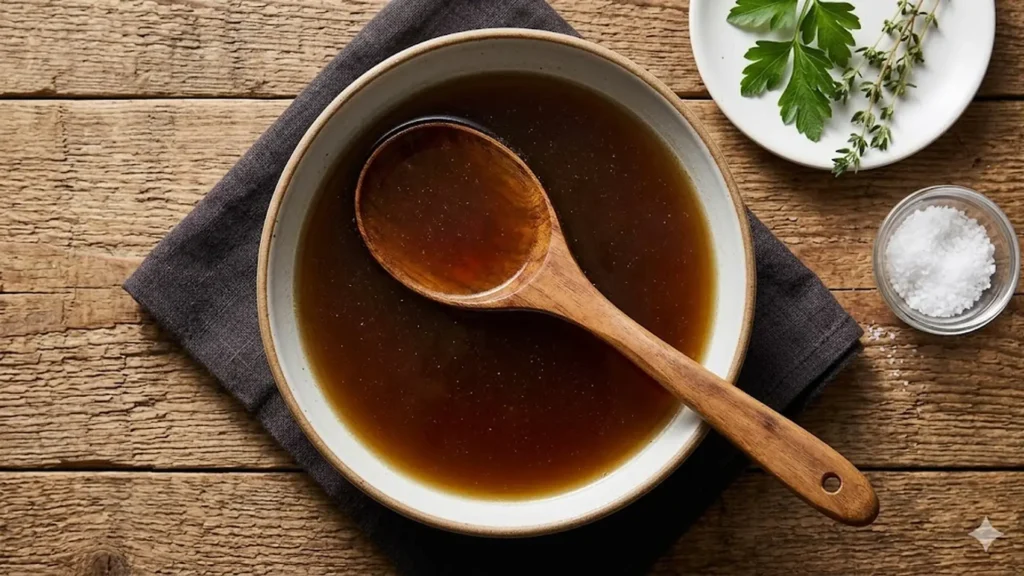
Is beef broth good for you? Yes, for most people it is a genuinely nourishing thing to drink or cook with, but the honest answer is more nuanced than the marketing suggests. A cup of beef broth is low in calories, gives you a useful hit of protein, and delivers small amounts of minerals along with the glycine and collagen that come out of long-simmered bones. It hydrates you, it is gentle on the stomach, and it makes almost any soup or stew taste better. What it is not is a miracle cure for your joints, your skin, or your gut, and if you buy it from a can it can carry far more sodium than you might expect. This guide walks through what beef broth actually does for your body, where the popular claims hold up and where they fall apart, and how to get the most out of it in your own kitchen.
I cook with broth every day, so I have a soft spot for the stuff. But I also think you deserve the real picture rather than the hype, so let us go through it carefully and with US measurements throughout.
Beef Broth vs Beef Bone Broth: They Are Not the Same Thing
Before we talk about health, it is worth clearing up a confusion that runs through almost every article on this subject. The words “broth,” “stock,” and “bone broth” get used interchangeably, but they are not identical, and the differences matter for nutrition.
Plain beef broth is traditionally made by simmering meat (and often some bones) in water for a relatively short time, an hour or two, until the liquid is savory. Beef stock leans more on bones and connective tissue and simmers longer, which is why it sets to a jelly when cold. Bone broth is essentially stock taken to an extreme: bones and joints simmered for 12 to 24 hours, often with a splash of vinegar to help draw minerals out. The longer and bonier the cook, the more gelatin, collagen, and minerals end up in the pot. So when someone asks whether beef broth is good for you, the honest reply is that a long-simmered bone broth is more nutrient-dense than a quick meat broth, and a homemade batch is usually richer than the carton from the store. If you want the full breakdown of these terms, our guide to chicken stock vs broth lays out the same distinctions in detail, and they apply to beef just as well.
What Is Actually in a Cup of Beef Broth?
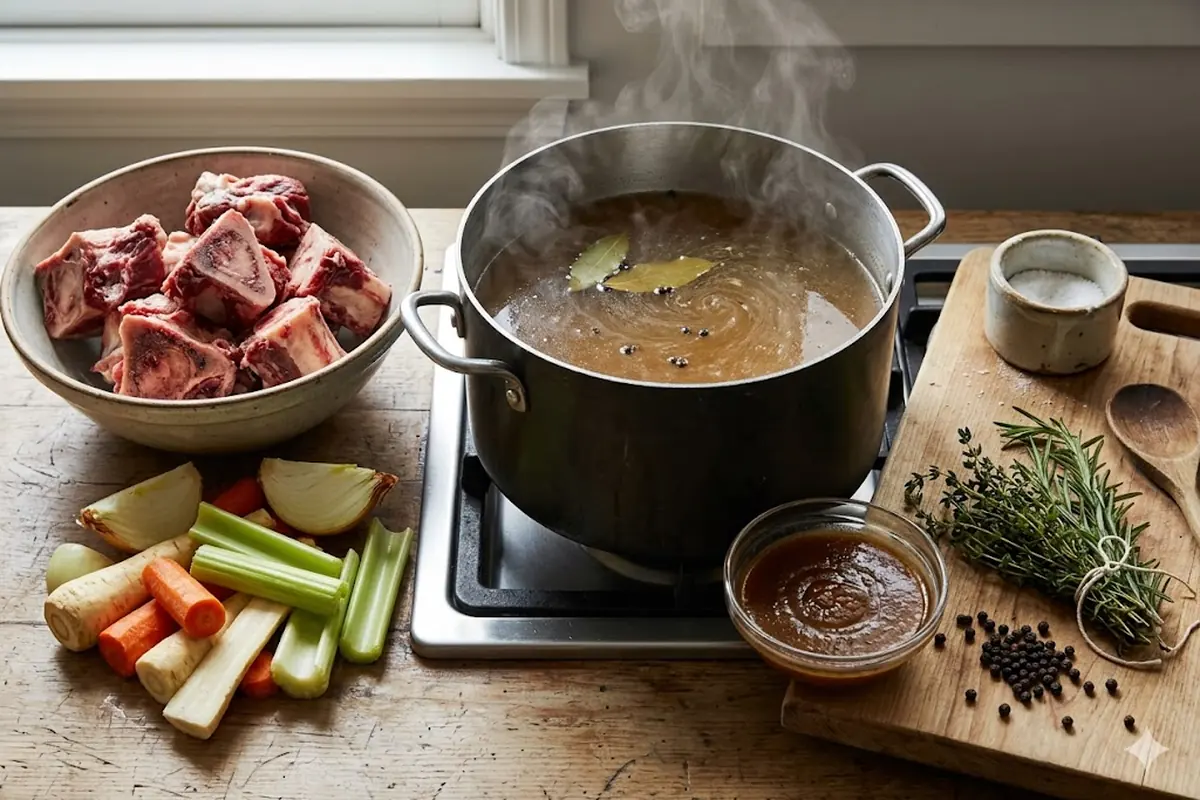
Let us start with the numbers, because they ground the whole conversation. Beef broth is mostly water, which is the first reason it is good for you: it hydrates. Beyond that, the content depends heavily on whether it is a thin commercial broth or a rich homemade bone broth.
| Per 1 cup (about 240 ml) | Typical commercial broth | Rich homemade bone broth |
|---|---|---|
| Calories | 15 to 40 | 40 to 70 |
| Protein | 2 to 5 g | 8 to 10 g |
| Fat | 0 to 1 g | 1 to 3 g |
| Carbohydrate | 0 to 1 g | 0 g |
| Sodium | 500 to 900 mg | 50 to 200 mg (you control it) |
The protein in beef broth comes mostly from collagen that has broken down into gelatin, which is why a good homemade batch wobbles like jelly in the fridge. That gelatin is rich in two amino acids that get a lot of attention: glycine and proline. The broth also carries small amounts of minerals leached from the bones, including calcium, magnesium, potassium, and phosphorus, though the quantities are modest, not the megadose some labels imply.
The protein is real and useful
Eight to ten grams of protein in a near-zero-carb, low-calorie cup is a genuinely good ratio if you are trying to stay full without eating much, which is why broth is a staple of light meals and fasting-style days. It is worth being clear that broth protein is not “complete” the way a steak is, since gelatin is low in a few essential amino acids, so broth should complement the protein in your diet rather than replace whole foods. As a savory, filling, low-calorie sip, though, it is hard to beat.
The Real Health Benefits, Ranked by How Strong the Evidence Is
Here is where I want to be straight with you. Beef broth has real benefits, but they sit on very different levels of scientific support. I have grouped them from most solid to most speculative.
Strong: hydration, satiety, and easy digestion
These are not controversial. Broth is mostly water with electrolytes, so it hydrates and replaces some of the sodium and potassium you lose through sweat or illness. The warm, savory liquid is filling for very few calories, which helps with appetite control. And because the protein is already broken down into amino acids and gelatin, broth is one of the easiest things for a struggling stomach to handle, which is exactly why it is the classic food to sip when you are recovering from a stomach bug or surgery.
Moderate: gut comfort and inflammation
Glycine, abundant in beef broth, is involved in maintaining the mucosal lining of the digestive tract, and some research suggests the amino acids in broth may help calm inflammation. Registered dietitians who study broth, including those quoted by health systems like Northwell, tend to frame this honestly: broth can support gut comfort and may play a small role in managing inflammation as part of a balanced diet, but it is not a treatment for any disease. If broth sits well with you and you enjoy it, that gentle support is a reasonable bonus.
Weak and overstated: joints, skin, and “collagen loading”
This is the claim to be skeptical of. The popular logic is that because beef broth contains collagen, drinking it rebuilds the collagen in your joints and skin. Your body does not work that way. When you drink collagen, you digest it into individual amino acids, and your body decides what to build from them, with no guarantee any of it heads to your knees. As the team at WebMD notes, there is little evidence that eating collagen-rich foods meaningfully boosts your own collagen production. There is some early research on concentrated collagen supplements and joint comfort, but a bowl of broth is not the same as a measured supplement dose, and the studies are far from settled. Enjoy broth for what it reliably does and treat the skin-and-joint promises as a maybe, not a given.
The Downsides You Should Know About
A balanced answer has to cover the catches, because they are real and most cheerful broth articles skip them.
Sodium is the big one
This is the single most important caveat with store-bought beef broth. A regular carton can pack 500 to 900 mg of sodium per cup, and if you reduce that broth down into a rich soup, the salt concentrates further. For anyone watching blood pressure, that adds up fast. The fixes are simple: buy low-sodium or unsalted broth and season your own pot, or make broth at home where you control every grain of salt. Dietitians often suggest keeping broth to around one cup a day if you have blood-pressure concerns and lean on the low-sodium versions.
Purines, gout, and kidney concerns
Broth made from bones and meat contains purines, compounds that the body converts to uric acid. For most people that is a non-issue, but if you have gout or are prone to it, a purine-rich broth can aggravate flares. People with certain kidney conditions are sometimes advised to watch their intake of the minerals and protein that broth provides. If either applies to you, it is worth a quick word with your doctor rather than relying on a recipe blog, mine included.
Source quality and heavy metals
Because bones store minerals, they can also store contaminants. A few studies have found measurable lead in some bone broths, with the amount tied to the quality of the animal and its environment. This is one more reason to favor broth made from grass-fed, well-raised beef when you can, and not to treat bone broth as something to drink by the quart every single day. Variety, as usual, is the safest policy.
Homemade vs Store-Bought: Which Is Better for You?
Homemade beef broth wins on almost every health metric, and it is not close. You control the sodium completely, you get more gelatin and collagen from a long simmer with real bones, you avoid the additives and “natural flavors” some commercial broths lean on, and it simply tastes better. The trade-off is time, since a proper bone broth wants 12 hours or more of gentle simmering.
Store-bought broth is not bad for you, especially the low-sodium and organic versions, and it is a perfectly sensible shortcut on a busy weeknight. The smart move is to read the label: look for a short ingredient list, choose the low-sodium option, and be wary of products where salt and flavor enhancers do most of the work. Cooking publications such as America’s Test Kitchen regularly taste-test commercial broths and consistently find big quality gaps between brands, so it pays to know which carton you are buying.
A simple homemade approach
Roast a couple of pounds of beef bones (knuckle and marrow bones are ideal) at 425 F until browned, then simmer them in water with an onion, a carrot, a couple of celery ribs, a bay leaf, and a tablespoon of vinegar for 12 to 24 hours. Skim the foam, strain, chill, and lift off the fat cap. You will end up with a deeply savory broth that sets to jelly, which is the visual proof you pulled real gelatin out of those bones. The same patient, low-and-slow method is what gives a great beef stew its body, and a homemade broth makes any stew built on it noticeably richer.
How to Actually Use Beef Broth for the Benefits

The good news is that you do not have to choke down plain broth to get the upside. The easiest way to make beef broth a regular part of your diet is to cook with it.
- Sip it warm. A mug of seasoned broth in the afternoon is hydrating, filling, and calming, especially in cold weather.
- Build soups and stews on it. Using broth instead of water as the base of a soup deepens the flavor and folds the protein and minerals into a full meal.
- Cook grains in it. Simmer rice, quinoa, or farro in broth instead of water for a savory boost with no extra effort.
- Deglaze and braise. Use a splash to lift the browned bits from a pan, or as the braising liquid for tougher cuts that turn tender over a long, slow cook.
- Use it in sauces and gravies. A good broth is the backbone of a pan gravy or a quick reduction sauce.
Because broth is so versatile, you barely notice you are getting its benefits, which is the point. It works its way into your cooking quietly and makes the food taste like more, not less.
A note on portions and timing
You do not need to drink a quart a day to benefit. One cup, used as a sip or folded into a meal, is plenty for most people, and it spreads the sodium and minerals across a sensible amount. If you are using broth as part of a recovery diet after illness, small frequent sips tend to sit better than a big bowl at once, because the warm liquid is soothing and the protein is gentle. And if you batch-cook, broth freezes beautifully: pour it into measured containers or ice-cube trays so you can drop a portion into a pan whenever a recipe calls for it. Frozen broth keeps its flavor and nutrition for months, which makes a single long simmer pay off across dozens of meals.
Beef Broth in a Balanced Diet
It helps to put beef broth in perspective rather than treating it as a standalone health product. Think of it as a useful building block, not a supplement. The protein, minerals, and glycine it provides are genuine, but the amounts are modest compared with a full plate of food, so broth works best as a complement to a varied diet rich in vegetables, whole grains, and other protein sources. Used that way, it earns its place: it makes vegetables more appealing in a soup, it stretches a small amount of meat across a hearty pot, and it turns plain grains into something savory. The people who get the most out of broth are not the ones chasing a single super-ingredient, but the ones who cook with it constantly and let its small, steady contributions add up over time. That is the slow-cooking philosophy in a nutshell, and broth is its quiet workhorse.
Who Should Be Cautious With Beef Broth?
For the average healthy adult, beef broth is a safe, nourishing food with no real concerns beyond watching the sodium. A few groups should pay closer attention. People managing high blood pressure should stick to low-sodium or homemade broth and keep portions moderate. Those with gout should be mindful of the purine content. Anyone with kidney disease should follow their doctor’s guidance on protein and minerals. And if you have a beef allergy, the answer is obvious. None of this makes broth dangerous; it just means it is not a one-size-fits-all health drink, and a little common sense goes a long way.
Frequently Asked Questions
Is it healthy to drink beef broth every day?
For most healthy people, a cup of beef broth a day is a fine and nourishing habit, especially if it is low in sodium or homemade. The main thing to watch is salt, so if you have high blood pressure, choose a low-sodium broth and keep the portion to around one cup. People with gout or kidney concerns should check with their doctor first.
Is beef broth good for losing weight?
Beef broth can help with weight management because it is very low in calories yet filling and high in protein for its size, which curbs appetite. It is not a magic fat-burner, but a warm cup can take the edge off hunger between meals, and using it as a soup base makes a satisfying low-calorie meal. Watch the sodium if you are sipping it often.
Does beef broth really help your gut and joints?
Beef broth contains glycine, which supports the lining of the digestive tract, so it may help with gut comfort, and it is gentle and easy to digest. The joint and skin benefits are weaker. Drinking collagen does not directly rebuild your own collagen, since your body breaks it into amino acids first, so treat those claims as unproven rather than guaranteed.
Is store-bought beef broth as good for you as homemade?
Homemade beef broth is generally better because you control the sodium, get more gelatin and minerals from a long simmer, and avoid additives. Store-bought broth is still a reasonable choice, especially the low-sodium and organic versions. Read the label, pick a short ingredient list, and avoid products where salt and flavor enhancers do most of the work.
What is the difference between beef broth and beef bone broth?
Beef broth is usually simmered from meat and some bones for an hour or two, while bone broth simmers bones and joints for 12 to 24 hours, often with a splash of vinegar. The longer cook pulls out more gelatin, collagen, and minerals, so bone broth is more nutrient-dense and sets to a jelly when chilled. Both are good for you; bone broth is simply richer.
How much sodium is in beef broth?
A regular cup of commercial beef broth often contains 500 to 900 mg of sodium, which is a meaningful chunk of a daily limit, especially once it is reduced down into a soup. Low-sodium versions cut that substantially, and homemade broth lets you control salt entirely. If you are watching blood pressure, the low-sodium or homemade route is the smart choice.
Bottom Line
So, is beef broth good for you? For most people, yes, and pleasantly so. It hydrates, it delivers useful protein for very few calories, it is easy to digest, and it carries a modest dose of minerals and gut-friendly glycine. The honest caveats are that the joint-and-skin collagen claims are overstated, store-bought broth can be heavy on sodium, and a few groups should be cautious. Lean toward low-sodium or homemade broth made from well-raised bones, enjoy it as part of a varied diet rather than as a cure-all, and let it do what it does best: making your soups, stews, and everyday cooking taste richer while quietly doing your body a little good.