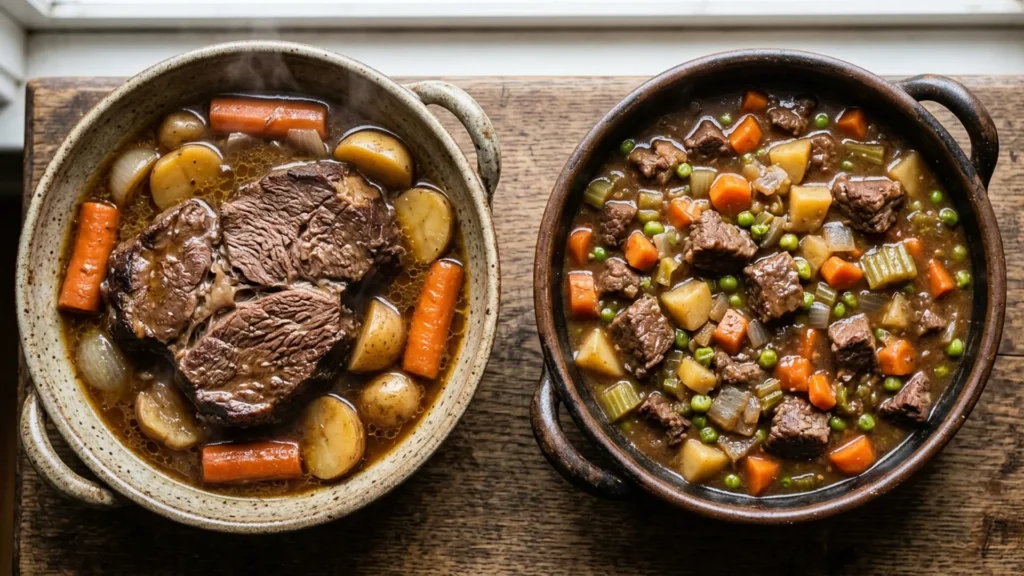
Pot roast vs beef stew comes down to one decision made before you ever turn on the heat: do you keep the beef whole or cut it into cubes. That single choice sets off a chain of differences in liquid, cooking time, texture, and how the dish lands on the table. A pot roast is one big piece of meat braised in just enough liquid to keep it moist, then sliced and served with a spooned-over gravy. A beef stew is the same kind of tough, collagen-rich beef cut into bites and simmered in plenty of broth until meat and vegetables turn into a thick, all-in-one bowl. They start from nearly identical ingredients and the same humble cut of chuck, yet they end up as two different meals, and knowing which one a night calls for saves you from a watery roast or a stew that never came together.
This guide breaks down the cut to buy, the exact difference in liquid, how cube size changes everything, timing and temperature for each, the texture you should expect, and how to turn one dish into the other. By the end you will know not just how they differ but which to reach for and why.
The Core Difference in One Sentence
Pot roast is a whole piece of beef braised in a little liquid and sliced to serve; beef stew is cubed beef simmered in a lot of liquid and served in the broth. Everything else follows from that. The whole roast keeps its juices locked inside and gives you sliceable meat plus a concentrated gravy on the side. The cubed stew exposes far more surface area to the liquid, so the beef gives up its flavor into the broth and the broth becomes the dish rather than a sauce alongside it. People often treat these as interchangeable because the ingredient lists overlap so heavily, but the liquid ratio and the cut size are what actually separate them.
| Feature | Pot Roast | Beef Stew |
|---|---|---|
| Meat form | One whole roast, sliced to serve | Cut into 1.5 to 2 inch cubes |
| Liquid level | Comes about a third up the meat | Meat fully submerged in broth |
| Final liquid | Reduced to a gravy on the side | Thick broth that is the dish |
| Served | On a plate, fork and knife | In a bowl, with a spoon |
| Vegetable timing | Added in the last hour | Cooked through with the meat |
Same Cut of Beef: Why Both Want Chuck
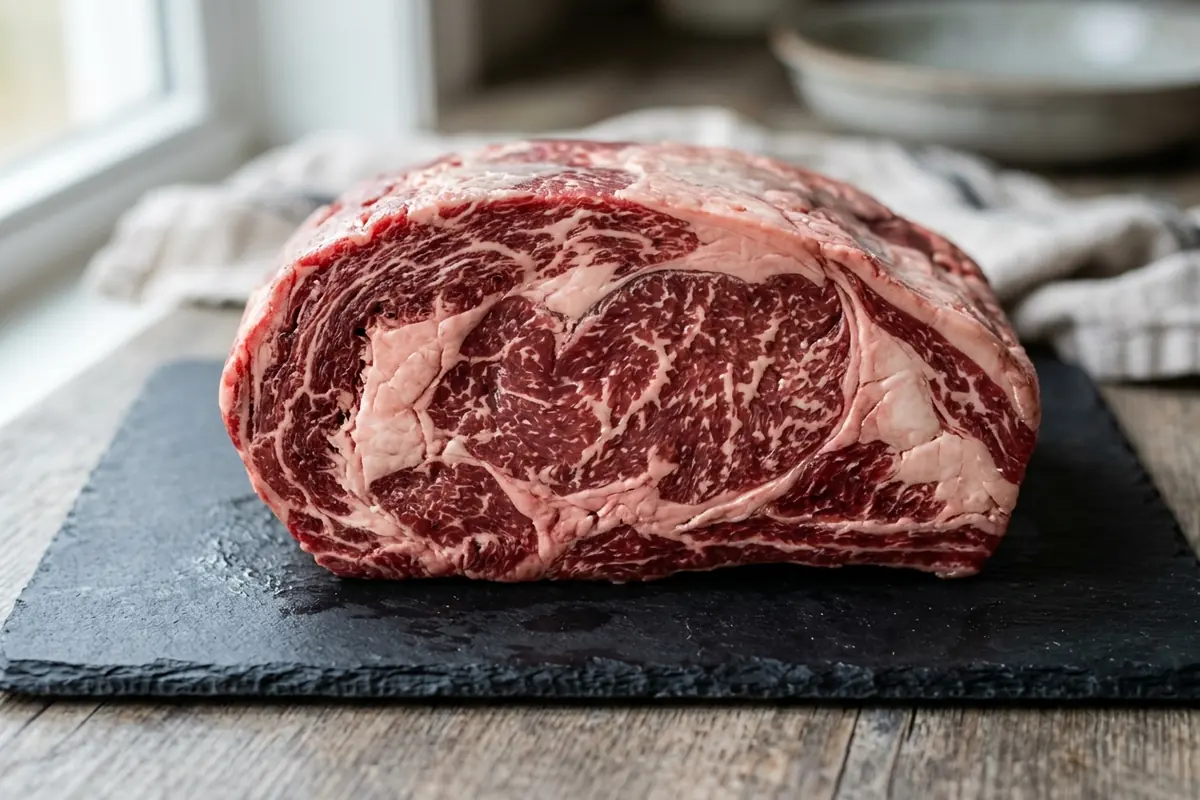
Here is the part that surprises people: pot roast and beef stew want the exact same beef. Both are built on chuck, the well-worked shoulder of the cow, because chuck is packed with the connective tissue and marbling that a long, moist cook needs. That collagen slowly melts into gelatin over hours of gentle heat, which is what turns a cheap, tough cut into something tender and rich. A lean cut like sirloin or eye of round has almost no collagen, so it dries out and turns stringy no matter which dish you make.
For pot roast you buy chuck as a single roast, usually a chuck roast or a blade roast, and leave it whole. For stew you can buy the same chuck roast and cut it yourself into big cubes, which is almost always better than the pre-cut “stew meat” at the store. That packaged stew meat is often a mix of trimmings from different muscles that cook at different rates, so some pieces go tender while others stay chewy. Buy one roast, and you control the dish either way. Brisket and short ribs also braise beautifully and can stand in for chuck in both, though chuck is the everyday workhorse.
Liquid: The Difference That Defines Each Dish
If you remember only one thing, make it this. Pot roast is braised, which means it cooks partly submerged in liquid that comes about one-third of the way up the meat. The exposed top stays above the liquid and the covered pot traps steam, basting the roast as it cooks. The goal is a tender roast plus a small amount of intense cooking liquid you later turn into gravy. Add too much liquid and you have accidentally made a boiled roast with thin, watery juices.
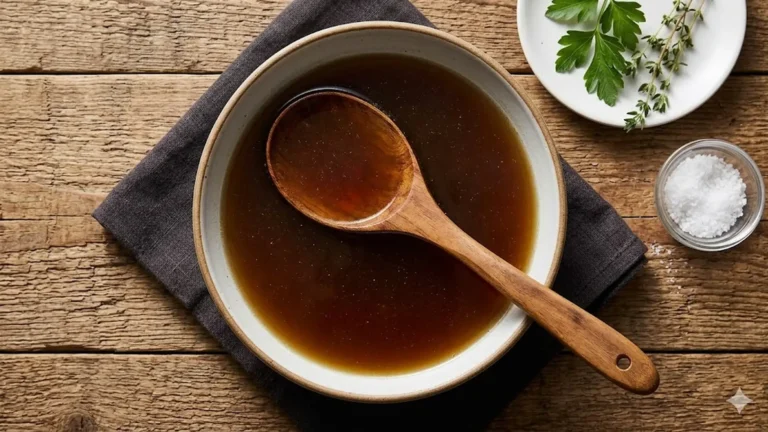
Beef stew goes the other way on purpose. The cubed beef and the vegetables are fully covered in broth so everything simmers in the liquid and the liquid becomes the meal. Because the beef is exposed on all sides, it sheds flavor into the broth, and stew recipes lean into that by adding tomato paste, Worcestershire, and a good stock to build a deep, savory base. The broth is then thickened so it clings to a spoon rather than running off it. A homemade base makes a real difference here, and a batch of good savory broth built from scratch gives a stew a backbone that water and bouillon cannot match.
Cut Size Changes the Whole Cook
Cube size is not a small detail; it reshapes the entire dish. A whole pot roast has very little surface area relative to its mass, so it cooks slowly from the outside in, holds its juices, and stays as one sliceable piece. Cut that same roast into cubes and you multiply the surface area many times over. Now every piece is exposed to the broth, releases its juices and gelatin, and cooks far faster than the whole roast would.
That is why stew cubes should be generous, a good inch and a half to two inches across. Cut them too small and they dry out and shred before they have time to soak up the broth, leaving you with stringy threads instead of tender bites. For pot roast, leaving the meat whole is the entire point, since slicing it after the cook is what gives you those satisfying slabs. If you ever want a hybrid, cut the roast into a few large chunks rather than small cubes, and you land somewhere between the two.
Timing and Temperature for Each
Both dishes braise low and slow, but the whole roast takes longer because heat has to travel all the way to its center, while cubes are cooked through much sooner. Here is a working reference for an oven or stovetop braise.
| Dish | Oven temp | Time | Done when |
|---|---|---|---|
| Pot roast (3 to 4 lb) | 300 to 325 F | 3 to 4 hours | A fork twists easily in the center |
| Beef stew (2 inch cubes) | 300 to 325 F | 2 to 3 hours | Cubes are tender, broth has body |
In a slow cooker, figure a pot roast at 8 to 9 hours on low and a stew at 7 to 8 hours on low. The temperature window matters more than the clock: you want a bare, lazy simmer, never a hard boil. A rolling boil seizes the muscle fibers, squeezes out moisture, and gives you tough meat, which is the opposite of what the long cook is for. Keep the heat gentle and let time do the work.
Texture and the Science of Tenderness
The reason both dishes need hours, not minutes, is collagen. Tough cuts are full of it, and collagen does not soften until it has been held above roughly 160 F for a long stretch, at which point it slowly converts to gelatin. That gelatin is what makes braised beef feel silky and rich and what gives stew broth its glossy, lip-coating body. Rush the cook and the collagen stays firm, so the meat is both tough and dry at the same time, a frustrating combination people often misread as overcooking when it is actually undercooking.
Pot roast and stew arrive at slightly different textures because of their shape. A pot roast holds together as sliceable, fork-tender meat with a clear grain you can see. Stew cubes, smaller and fully bathed in liquid, tend toward a softer, more spoonable tenderness that pulls apart at the lightest pressure. Both are correct; they are just two expressions of the same collagen breakdown. The fix for tough meat in either case is almost always the same: give it more time, not less.
Gravy vs Broth: Finishing the Liquid
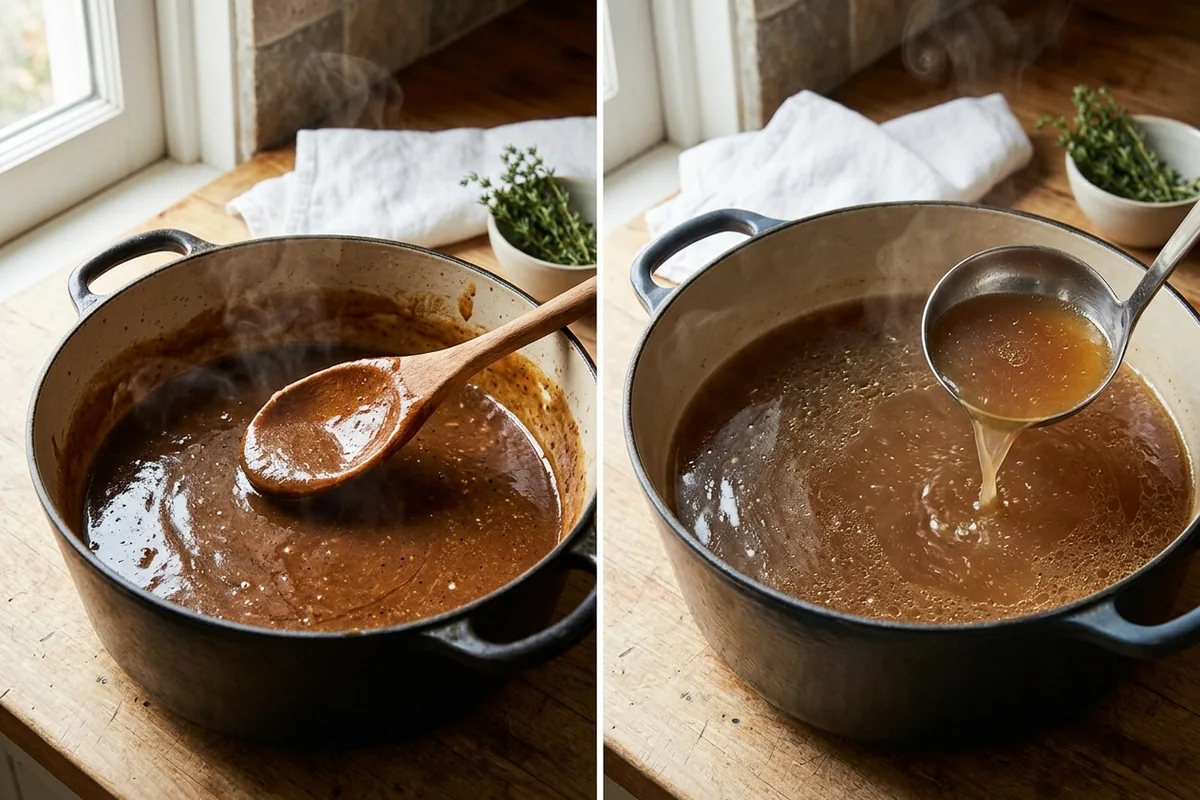
The liquid is where the two dishes truly part ways, so finishing it deserves its own step. With a pot roast, you have a small amount of concentrated, beefy cooking liquid at the end. Skim the fat, then either reduce it on the stove until it thickens or whisk in a quick slurry, and you have a glossy gravy to spoon over the sliced meat. Strain it for a smooth, restaurant-style sauce or leave the soft vegetables in for a rustic one.
With a stew, the liquid is the meal, so you thicken the whole pot rather than a separate sauce. The cleanest method is a cornstarch slurry stirred in near the end, and getting the amount right is the difference between soupy and luscious. Our guide on how much cornstarch to thicken soup gives exact ratios so you do not overshoot into gluey territory. You can also dredge the stew cubes in flour before browning, which thickens the broth slowly as it cooks, or mash a few of the cooked potatoes and stir them back in for a natural, gluten-free thickener. Whichever you choose, add it toward the end and give it time to set.
When to Make Pot Roast vs Beef Stew
Choosing between them is really about how you want to eat and how much hands-on attention you have. Pot roast is the Sunday-dinner, centerpiece dish: a single impressive cut you slice at the table and serve with mashed potatoes and gravy. It looks like an occasion, and the active work is minimal since you mostly leave the roast alone. The trade-off is that you commit to one big piece, so it is less flexible for stretching to feed an unexpected crowd.
Beef stew is the weeknight, feed-everyone, clean-out-the-vegetable-drawer dish. Because it is cut into bites and swimming in broth, it stretches easily, freezes well, and reheats better than almost anything, often tasting better the next day. It is the friendlier choice when you want leftovers, when you are cooking for a crowd, or when you want one bowl that covers meat, vegetables, and a rich broth all at once. If you love this kind of cozy, long-simmered cooking, it pairs naturally with other slow builds like a hands-off slow cooker minestrone on a meatless night.
Common Mistakes With Both Dishes
- Using a lean cut. Sirloin or round has no collagen to melt, so it turns dry and stringy. Use chuck, brisket, or short ribs for either dish.
- Skipping the sear. Browning the meat first builds the deep, roasted flavor neither braising nor simmering can create. Pat the beef dry, sear it hard, then deglaze the pan and add those browned bits.
- Too much liquid in a pot roast. Fill the pot only a third up the roast. More liquid boils the meat and gives you weak, watery gravy.
- Cubes too small in stew. Tiny pieces shred and dry out. Keep them an inch and a half to two inches.
- Boiling instead of simmering. A hard boil toughens beef. Hold a bare simmer and the collagen converts gently into gelatin.
- Pulling it too early. Tough, dry meat usually needs more time, not less, so the connective tissue can finish breaking down.
Turning One Into the Other
The two dishes are close enough that you can convert between them without a new recipe. To turn a pot roast into a stew, cut the seared roast into two-inch cubes, add enough broth to cover, fold in cubed potatoes, carrots, and onions, simmer until everything is tender, and thicken the liquid at the end. You shorten the cook a bit because the smaller pieces cook faster. To go the other way and make a pot roast from a stew recipe, keep the chuck whole, use far less liquid so it comes only a third up the meat, add the vegetables in the last hour so they do not collapse, and reduce the pan liquid into gravy at the end.
Leftover pot roast also makes a fast shortcut stew. Shred or cube the cooled meat, drop it into a pot of broth with vegetables, simmer briefly just to bring it together, and thicken. Because the meat is already tender, this version is ready in a fraction of the time, which makes it a smart way to repurpose a Sunday roast into a Tuesday bowl. The same flexibility runs through most long-simmered cooking, the way a roast chicken becomes the start of a homemade chicken noodle soup. For deeper dives into the science of braising tough cuts, the test kitchens at America’s Test Kitchen and Cook’s Illustrated are worth the time.
Frequently Asked Questions
Is pot roast the same meat as beef stew?
Yes, both are usually made from beef chuck, the well-marbled shoulder cut full of collagen that turns tender over a long, moist cook. The difference is the form: pot roast keeps the chuck whole, while stew cuts the same chuck into bite-sized cubes. Brisket and short ribs also work for either dish.
Can I use a stew recipe to make pot roast?
Yes. Keep the beef whole instead of cubing it, cut the liquid way back so it rises only about a third up the meat, add the vegetables in the last hour so they hold their shape, and reduce the cooking liquid into a gravy at the end. The cook will take a little longer because the meat is in one big piece.
Why is my pot roast dry but my stew is not?
A pot roast cooked with too little liquid or pulled before the collagen breaks down can dry out, while a stew sits fully submerged in broth that keeps every cube moist. Make sure the roast braises with liquid a third of the way up the pot and cook it until a fork twists easily in the center.
Which is faster to make, pot roast or beef stew?
Beef stew is usually faster because the smaller cubes cook through in about 2 to 3 hours, while a whole 3 to 4 pound pot roast needs roughly 3 to 4 hours for the heat to reach its center. In a slow cooker, plan on 7 to 8 hours for stew and 8 to 9 for a roast.
Do I have to sear the meat for both?
You do not have to, but searing dramatically improves the flavor of both dishes by building a browned crust that braising and simmering cannot create. Pat the beef dry, brown it hard in a hot pan, then deglaze the pan with broth and add those scraped-up bits to the pot for the deepest flavor.
How do I thicken beef stew without flour?
Stir in a cornstarch slurry near the end of cooking, or mash a few of the cooked potatoes and stir them back into the pot for a natural, gluten-free thickener. Both cling to a spoon without the gluten in flour, and the cornstarch route lets you dial the consistency precisely.
Bottom Line
Pot roast and beef stew are two roads from the same starting point. Buy the same well-marbled chuck, sear it hard, and braise it low and slow, and the only real forks in the road are whether you keep the beef whole or cube it and whether you use a little liquid or a lot. Keep it whole in shallow liquid for a sliceable Sunday roast with gravy on the side; cube it into deep broth for a thick, cozy bowl that stretches and freezes. Match the dish to the night and the appetite, hold a gentle simmer, and give the collagen the time it needs, and either one rewards you with tender beef and a kitchen that smells like dinner.